2026 Trends: How to Make Homemade Earrings That Look High-End
Discover how to make homemade earrings that rival luxury brands. Explore 2026 DIY trends, premium material grades, and professional finishing techniques.

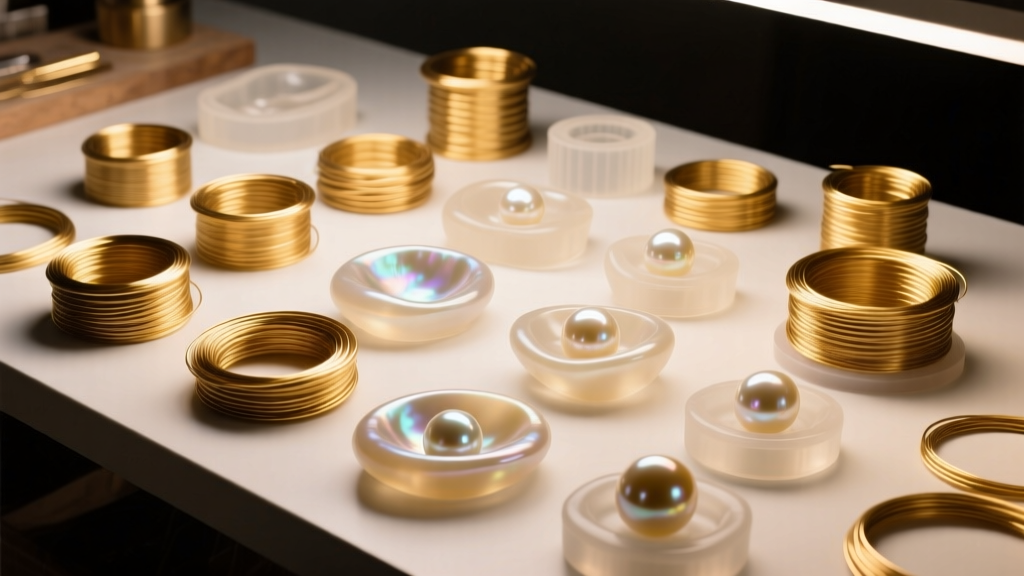
The 2026 Shift: From Crafty to Couture
The landscape of independent jewelry design has undergone a radical transformation. In 2026, the 'quiet luxury' and 'hyper-personalization' movements have completely redefined what consumers expect from independent makers. When learning how to make homemade earrings, the goal is no longer just to string a few glass beads on a headpin. Today’s discerning collectors are looking for bespoke, high-end pieces that rival boutique pricing, featuring architectural silhouettes, mixed-media elements, and flawless metallurgical finishing.
This guide on how to make homemade earrings focuses on elevating your craft from amateur assembly to professional fabrication. We will explore the exact material grades, wire hardness metrics, and finishing protocols required to create luxury-tier dangles, ear cuffs, and cartilage-friendly studs that command premium price points in the modern market.
Sourcing Premium Components: A Material Guide
The most critical differentiator between amateur DIY jewelry and high-end handmade earrings is the base metal. According to industry suppliers like Rio Grande, professional jewelers avoid standard 'craft store' alloy findings, which often contain undisclosed nickel, zinc, or lead. Instead, luxury homemade earrings rely on specific, verifiable metallurgical grades.
| Material | Grade / Specification | Hypoallergenic Profile | Best Application | Est. Cost (Per Pair) |
|---|---|---|---|---|
| Implant-Grade Titanium | ASTM F136 | Excellent (Nickel-Free) | Ear wires, cartilage studs | $4.00 - $8.00 |
| Gold-Filled Wire | 14/20 (5% 14k Gold) | Very Good | Dangles, structural wraps | $6.00 - $12.00 |
| Niobium | 99.9% Pure | Excellent (Anodizable) | Colorful cartilage hoops | $5.00 - $10.00 |
| Surgical Steel | 316L VM | Fair (Contains Nickel) | Heavy pendants, ear cuffs | $1.50 - $3.00 |
For ear wires that penetrate the skin, the Association of Professional Piercers (APP) strongly recommends ASTM F136 implant-grade titanium. It is highly biocompatible, lightweight, and immune to tarnishing, making it the gold standard for luxury homemade earrings intended for sensitive or newly pierced lobes.
Understanding Wire Gauge and Hardness
Mastering how to make homemade earrings requires a deep understanding of wire mechanics. Wire is categorized not just by thickness (gauge), but by its temper or hardness, which dictates how it behaves under stress.
- Dead Soft: Highly malleable. Ideal for tight, intricate wire-wrapping around briolettes or baroque pearls. It will not hold a structural shape on its own.
- Half-Hard: The workhorse of earring making. It offers the perfect balance of malleability for bending and rigidity for holding shape. Always use 20-gauge or 18-gauge half-hard wire for French ear hooks.
- Spring-Hard: Extremely stiff and resistant to bending. Used primarily for making tension clasps, jump rings that must withstand heavy pendants, and structural armatures inside resin casts.
Step-by-Step: Fabricating Mixed-Media Resin & Gold Dangles
One of the dominant 2026 trends is the integration of optical-grade UV resin with upcycled vintage metals and gold-filled wire. Here is how to execute this technique with professional precision.
Step 1: Prepping the Hardware and Armature
Cut a 3-inch length of 20-gauge, 14/20 gold-filled half-hard wire. Using a stepped mandrel, form a perfect French ear hook, ensuring the loop at the base is completely flush. File the end of the wire that enters the ear with a cup burr to create a smooth, rounded tip that will not scratch the ear canal. For the dangle component, create a geometric armature using 16-gauge spring-hard brass wire, soldering the joints with easy-flow silver solder to ensure the resin has a rigid cage to grip.
Step 2: Casting and Curing
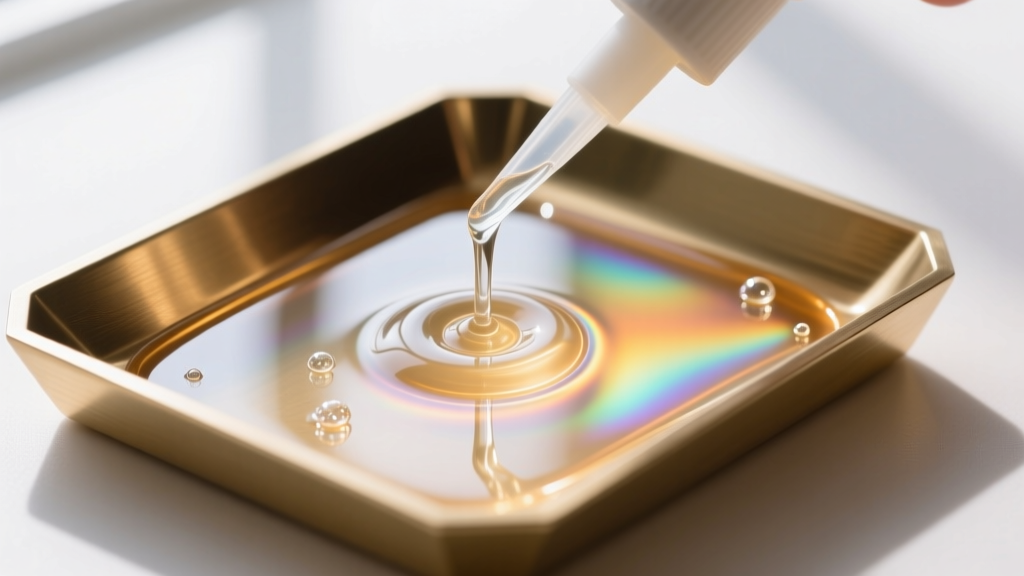
When working with UV resin, depth is your enemy. UV light cannot penetrate deeper than 4-5 millimeters without scattering, leading to a tacky, uncured center. To achieve a luxury, glass-like finish, pour your optical-grade UV resin in 2mm layers. Suspend microscopic inclusions—such as crushed opal or 24k gold leaf flakes—between layers. Cure each layer under a 48W UV lamp for exactly 60 seconds. According to material science guidelines referenced by the Gemological Institute of America (GIA), encapsulating organic materials like pearls or opals requires a non-exothermic curing process to prevent thermal shock and cracking, making low-heat UV resin superior to two-part epoxy for delicate gemstone inclusions.
Trend Forecast: Ear Curation & Asymmetry
In 2026, earrings are rarely sold or worn in isolation. The 'curated ear' trend has evolved into 'asymmetrical storytelling.' Consumers are purchasing coordinated but non-identical sets that span the entire ear anatomy. When designing your collections, think in terms of constellations rather than pairs.

A high-end curated set might include a heavy, resin-cast geometric dangle for the primary lobe piercing, a delicate 18-gauge gold-filled huggie for the upper lobe, and a threaded 16-gauge titanium labret stud featuring a bezel-set sapphire for the helix. Offering these 'ear story' bundles allows makers to increase their average order value while providing clients with a cohesive, stylist-approved look.
Professional Finishing: The Secret to 'Store-Bought' Quality
The final step in learning how to make homemade earrings that look expensive is the finishing process. Amateur jewelers often skip this, leaving tool marks and oxidized solder joints. Professional finishing involves three distinct stages:
- Pre-Polish: Use a series of split-lap muslin wheels charged with tripoli compound to remove scratches and file marks from the metal findings.
- Tumbling: Place the finished metal components (before adding delicate gemstones or resin) into a rotary tumbler with stainless steel shot, a drop of burnishing compound, and distilled water. Tumble for 45 minutes. This work-hardens the wire, closing the metal's pores and creating a brilliant, mirror-like shine that resists tarnishing.
- Final Rouge: Give the ear wires a final, gentle pass with a soft flannel wheel and red jeweler's rouge to achieve a flawless, high-end luster.
Pro-Tip from the Bench: Never tumble gold-filled wire with abrasive ceramic media. The mechanical friction will strip the microscopic layer of 14k gold, exposing the brass core beneath. Always use rounded stainless steel shot for gold-filled and gold-plated components.
Expert Troubleshooting & Safety
Even experienced makers encounter structural and aesthetic failures. Here is how to troubleshoot the most common issues when fabricating luxury homemade earrings:
- Micro-Bubbles in Resin: If you notice tiny bubbles trapped in your UV resin casts, do not poke them with a needle, which leaves visible scars. Instead, pass a butane micro-torch quickly over the surface before curing, or place the piece in a pressure pot at 40 PSI for two hours to compress the bubbles into invisibility.
- Ear Hooks Warping: If your dangle earrings are pulling the ear hooks open, your wire is too soft or too thin. Upgrade to 18-gauge half-hard wire, or add a tiny, soldered jump ring at the base of the hook to distribute the kinetic weight of the dangle.
- Accelerated Tarnishing: High-end earrings must arrive at the customer in pristine condition. Always store your finished gold-filled and silver pieces in zip-seal poly bags with 3M anti-tarnish strips. Never seal jewelry in standard PVC plastics, as the off-gassing chemicals will rapidly oxidize the metals.
By adhering to these stringent material standards, mastering wire mechanics, and employing professional finishing techniques, you can confidently create bespoke, luxury-tier earrings that stand out in the competitive 2026 jewelry market.


