The Ultimate Guide to Earring Support Patches for Heavy Jewelry
Learn how earring support patches prevent lobe tearing and drooping. Discover the best adhesive patches for heavy statement earrings and stretched holes.

What Are Earring Support Patches?
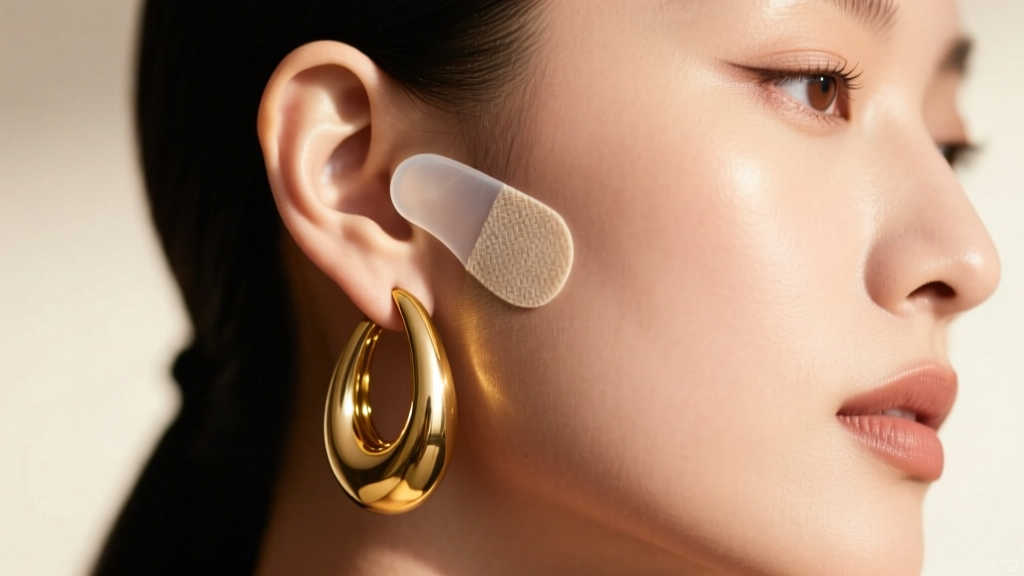
If you have ever taken off a pair of gorgeous, heavy statement earrings only to find your earlobes red, throbbing, and stretched downward, you are not alone. Earring support patches are small, adhesive-backed discs or ovals designed to solve this exact problem. Think of them like snowshoes for your ears: just as a snowshoe distributes your body weight across a wider surface area to prevent you from sinking into the snow, an earring support patch distributes the localized weight of a heavy earring post across a broader section of your earlobe.
For beginners stepping into the world of bold, oversized jewelry, these patches are an absolute game-changer. They sit invisibly behind the earlobe, providing a reinforced barrier that prevents the earring post from slicing through the fistula (the piercing hole) and stops the jewelry from drooping awkwardly forward. Whether you are wearing 30-gram brass hoops or crystal-encrusted chandeliers, understanding how to select and apply these patches is essential for maintaining the structural integrity of your piercings.
The Biomechanics of Earlobe Droop and Tissue Damage
To understand why earring support patches are necessary, we must look at the anatomy of the earlobe. Unlike the upper ear, the lobe contains no cartilage. It is composed entirely of adipose (fat) tissue and fibroareolar connective tissue. While this makes the lobe soft and easy to pierce, it also means the tissue lacks the rigid structural support needed to bear heavy loads.
A standard gold stud earring weighs between 2 and 4 grams. However, contemporary statement earrings frequently weigh between 15 and 40 grams. When a 25-gram earring hangs from a standard 1-millimeter piercing hole, the downward force creates chronic tension on the inferior aspect of the fistula. Over time, this causes micro-tears in the collagen matrix. The body repairs these tears with less elastic scar tissue, leading to permanent elongation of the piercing hole—a condition colloquially known as 'cheese-cutter syndrome,' where the earring slowly migrates downward through the lobe.
Comparing Earring Support Patch Materials
Not all earring support patches are created equal. The market is flooded with options, but they generally fall into three distinct material categories. Choosing the right one depends on the weight of your jewelry and your skin's sensitivity.
| Material Type | Adhesive Chemistry | Best Used For | Avg. Price Range | Breathability |
|---|---|---|---|---|
| Medical-Grade Silicone | Hypoallergenic Acrylic | Heavy drops, sensitive skin, daily wear | $15 - $25 (per 100ct) | Low |
| Polyurethane Foam | Standard Pressure-Sensitive | Ultra-heavy statement pieces, short-term events | $8 - $12 (per 100ct) | Medium |
| Non-Woven Fabric | Medical Tape Adhesive | Medium-weight hoops, highly active/sweaty environments | $10 - $15 (per 100ct) | High |
Why Medical-Grade Silicone is the Gold Standard
For most beginners, medical-grade silicone patches (often sold under brand names like LobeWonder or generic equivalents) are the best entry point. Silicone is naturally inert, meaning it will not react with your skin's pH or your skincare products. The thickness of the silicone (usually around 0.5mm to 1mm) provides a plush cushion that absorbs the kinetic shock of a swinging earring, protecting the delicate fistula from friction burns.
Step-by-Step Application Guide for Maximum Hold
The number one reason beginners report that earring support patches 'don't work' is improper application. The adhesive used on these patches is pressure-sensitive, meaning it requires specific preparation and physical pressure to bond correctly to the skin.
- Degrease the Canvas: Your skin naturally produces sebum, and your moisturizers leave a microscopic film of oils. Use a cotton pad soaked in 70% isopropyl alcohol to wipe the back of your earlobe. Allow it to air dry completely for 30 seconds. Never apply a patch to damp or oily skin.
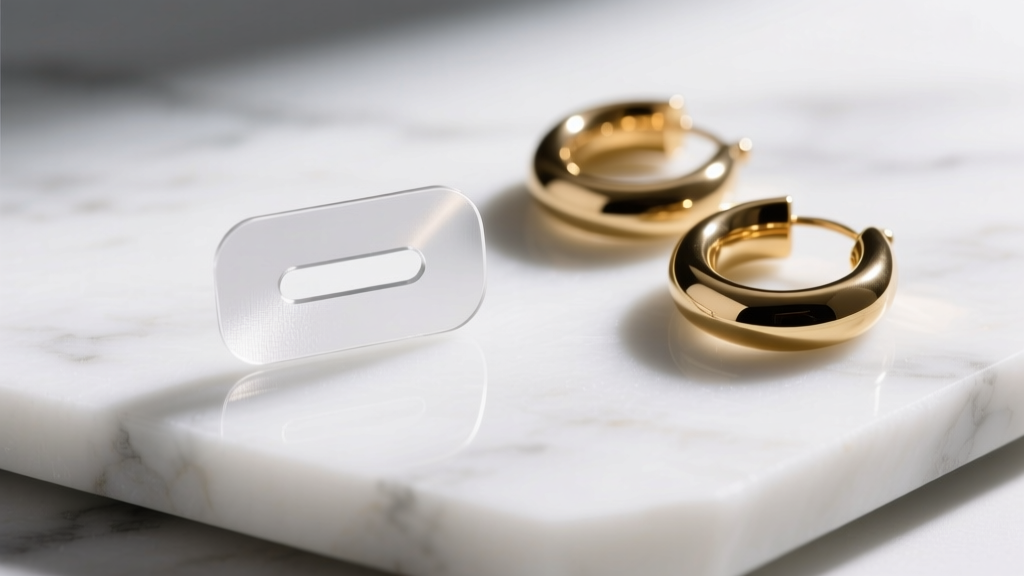
- Pre-Pierce the Slit: Most patches come with a pre-cut slit or a small hole. If your earring post is thick (e.g., 18-gauge or 16-gauge), gently widen the slit with the tip of your earring post before bringing it near your ear.
- Thread and Align: Slide the earring post through your piercing, then thread the post through the slit in the support patch. Ensure the patch is centered directly behind the fistula.
- Activate the Adhesive: Press the patch firmly against the back of your earlobe. Hold it with steady, firm pressure for 10 to 15 seconds. The heat and pressure from your finger will activate the acrylic adhesive, creating a secure bond.
- Secure the Clutch: Slide your earring back (butterfly clutch or screw-back) onto the post. Ensure it is snug against the patch, but not so tight that it cuts off circulation to the lobe or causes the patch to buckle.
Troubleshooting Common Patch Failures
Even with perfect application, you might encounter issues. Here is a troubleshooting framework for the most common failure modes:
Failure Mode 1: The Patch Slides Off Mid-Day
The Culprit: Skincare interference or sweat. Heavy creams, hyaluronic acid serums, and sunscreens will dissolve the adhesive bond. The Fix: Keep your skincare routine strictly to the front of your face and neck. If you are attending a summer outdoor event where sweating is inevitable, switch from silicone patches to non-woven fabric patches, which utilize a more aggressive, porous medical tape adhesive that withstands moisture better.
Failure Mode 2: The Earring Still Droops Forward
The Culprit: Incorrect earring post length. If your earring has a standard 8mm post, adding a 1mm patch and a 3mm clutch leaves no room for the hardware to sit flush. The clutch ends up crushing the patch at an angle, forcing the earring to tilt forward. The Fix: For heavy earrings worn with support patches, you need a longer post. Look for jewelry with a 10mm or 12mm post length to accommodate the extra depth of the patch and the backing securely.
Failure Mode 3: Skin Redness and Itching
The Culprit: Contact dermatitis from the adhesive or trapped moisture. According to the Mayo Clinic, adhesives can trigger allergic contact dermatitis in sensitive individuals, presenting as localized redness, scaling, and intense itching. The Fix: Discontinue use immediately. Switch to a 100% pure silicone patch without acrylic adhesives, or utilize a physical barrier like a silicone O-ring that slides onto the post without sticking to the skin.
Safe Removal and Long-Term Lobe Care
How you remove the patch is just as important as how you apply it. Ripping a support patch off dry skin can cause micro-abrasions and strip the stratum corneum (the outermost layer of skin), leading to hyperpigmentation and weakened tissue over time.
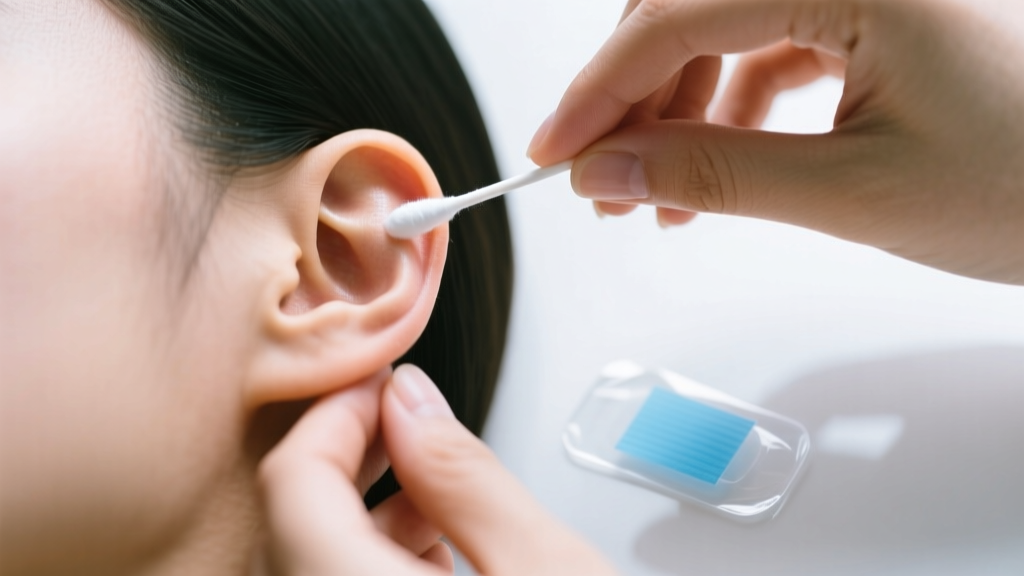
Pro Tip for Removal: Never pull the patch straight away from the ear. Instead, soak a cotton swab in a gentle oil (like jojoba or squalane) and roll it along the edge of the patch. The oil will break down the adhesive bond, allowing the patch to slide off effortlessly without traumatizing the lobe. The American Academy of Dermatology consistently recommends gentle, non-friction removal methods for any medical adhesives to preserve the skin barrier.
When Patches Aren't Enough: Knowing Your Limits
Earring support patches are a phenomenal preventative tool and a great way to wear moderately heavy jewelry comfortably. However, they are not a cure-all for severely damaged tissue. If your piercing hole has already stretched into a visible slit, or if the tissue at the bottom of your lobe is paper-thin and translucent, patches will not provide enough structural reinforcement.
In these advanced cases of lobe elongation, you should consult a board-certified dermatologist or plastic surgeon. Non-surgical options, such as injecting hyaluronic acid dermal fillers into the earlobe, can temporarily plump the tissue and provide a thicker matrix for the earring post to rest against. For permanent correction, a minor in-office surgical procedure called a lobuloplasty can excise the damaged fistula tract and reconstruct a brand-new, structurally sound earlobe.
By understanding the mechanics of earring support patches, selecting the right material for your specific jewelry, and adhering to strict skin-preparation protocols, you can confidently wear your heaviest, most dramatic statement earrings without sacrificing the long-term health of your piercings.


