How to Fix Drooping & Irritation From Upside Down Cross Earrings
Troubleshoot common issues with upside down cross earrings. Learn how to fix forward-leaning lobes, prevent skin irritation, and balance heavy dangles.

The Unique Physics of Inverted Cross Dangles
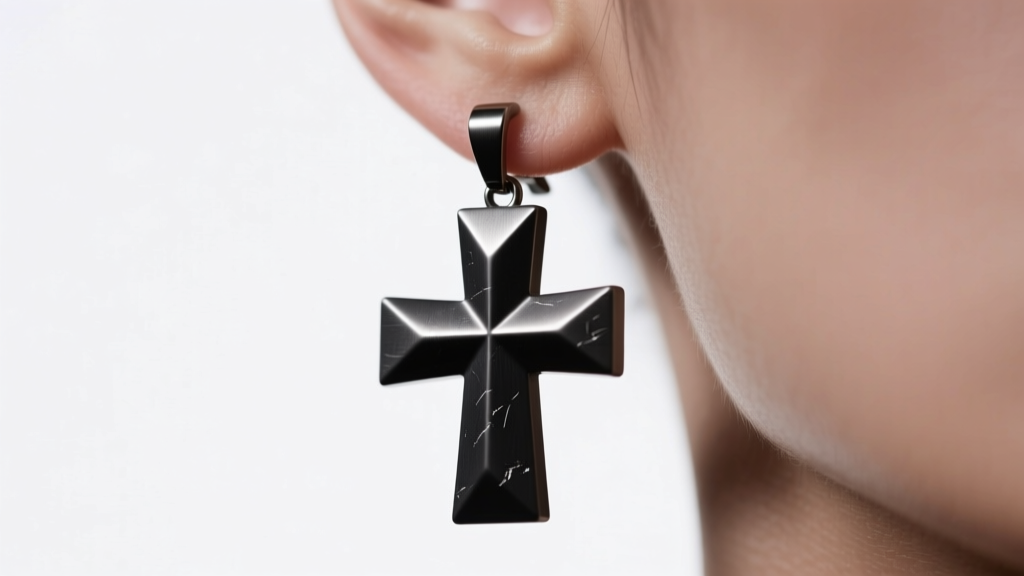
Upside down cross earrings are a definitive staple in alternative, gothic, and grunge fashion. However, their distinct structural geometry often creates unique mechanical problems for the wearer. Unlike traditional Latin crosses, which have a relatively balanced weight distribution, inverted crosses frequently feature an elongated lower arm or a heavy charm drop that shifts the center of gravity far below the piercing axis.
When suspended from a standard earlobe piercing, this top-heavy or bottom-heavy pendulum effect places continuous torque on the fistula (the piercing channel). Over time, this dynamic load leads to a host of troubleshooting issues: the earring constantly points at the floor, the post bends, the lobe stretches, or the skin develops severe contact dermatitis from the cheap base metals often used in fast-fashion alternative jewelry. In this comprehensive guide, we will break down the exact metallurgy, gauge requirements, and mechanical fixes needed to wear inverted cross dangles comfortably and securely.
Troubleshooting Forward-Facing and Drooping Issues
The most frequent complaint regarding upside down cross earrings is the forward-facing droop. Because the longest arm of the cross points downward, gravity pulls the bottom of the earring backward, causing the top of the cross to tilt forward and face the floor. This is exacerbated when the earring hangs from a jump ring rather than being a solid cast piece on a fixed post.
The Earring Back Upgrade Matrix
To counteract the pendulum effect, you must upgrade the earring backing to provide a wider surface area of support against the back of the earlobe. The standard butterfly clutch is entirely insufficient for heavy alternative dangles. Below is a comparison of backing mechanisms ranked by their ability to support inverted cross designs.
| Backing Type | Weight Support | Security Level | Best For |
|---|---|---|---|
| Standard Butterfly | Low (1-4g) | Low | Lightweight studs only |
| Silicone O-Ring | Medium (4-8g) | Medium | Friction grip on smooth posts |
| La Pousette | High (8-15g) | Very High | Heavy dangles and drops |
| Screw Back | High (8-15g) | Maximum | Threaded posts, active wearers |
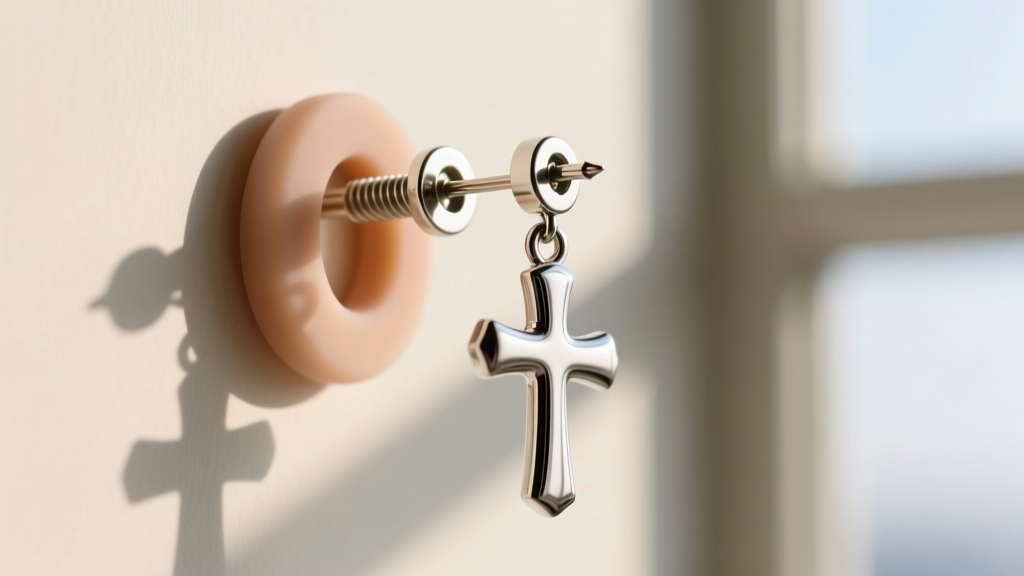
The La Pousette back is the gold standard for heavy upside down cross earrings. Originally designed for fine jewelry, it features a mechanical locking system with two small wings that snap securely into the grooves of a specialized post. This creates a rigid, wide-backed support structure that acts as a counterweight, preventing the earring from tilting forward. If your favorite inverted cross dangles came with standard friction backs, taking them to a local jeweler to have the posts swapped for threaded or grooved La Pousette-compatible posts is a highly recommended investment.
Solving Metal Allergy & Tarnish Problems in Alternative Jewelry
A massive issue in the alternative jewelry market is the prevalence of nickel-heavy base metals. Many mass-market brands selling upside down cross earrings use materials labeled as 'Tibetan Silver,' 'Zinc Alloy,' or 'Antique Brass.' These are often pot metals containing high levels of nickel, lead, or cadmium, which are then plated with a microscopic layer of rhodium or silver. Once that plating wears off from friction against the earlobe, it triggers severe nickel contact dermatitis.
According to the American Academy of Dermatology, nickel allergy is one of the most common causes of allergic contact dermatitis, presenting as red, itchy, and weeping skin directly behind the earlobe. If your inverted crosses are leaving green or black marks on your neck, or causing your lobes to itch intensely after a few hours of wear, the metal is oxidizing and reacting with your skin's natural acids.
Identifying Pot Metal vs. Surgical Steel
To troubleshoot this, you must verify the exact metallurgical grade of your jewelry. The term 'surgical steel' is largely an unregulated marketing buzzword. Instead, you need to look for specific compliance standards. The Association of Professional Piercers (APP) recommends only two metals for long-term wear in healed piercings:
- Implant-Grade 316L Stainless Steel: Contains low nickel content that is tightly bound within the alloy, making it safe for most people with mild sensitivities.
- ASTM F138 Titanium: Completely nickel-free and biocompatible. This is the ultimate solution for wearers who experience severe reactions to alternative goth jewelry.
If you already own a pair of heavy alloy upside down cross earrings that you love but cannot wear due to allergies, you can use a DMG (dimethylglyoxime) spot test kit to confirm the presence of nickel. To salvage the piece, a professional jeweler can remove the cheap alloy post and laser-weld a titanium or 14k gold post onto the back of the cross charm.
Snagging and Hair-Tangling Solutions
The sharp 90-degree intersecting angles of an inverted cross act like tiny grappling hooks for long hair, sweater threads, and scarves. This snagging not only damages your clothing but can also cause sudden, sharp trauma to the earlobe, potentially tearing the fistula.
To troubleshoot the snagging issue without sacrificing the aesthetic, consider the following design modifications and placement strategies:
- Filigree and Cut-Out Designs: Opt for upside down crosses that feature intricate filigree or rounded, melted-gothic edges rather than sharp, geometric angles. Rounded bezels slide through hair rather than catching it.
- Cartilage Relocation: Move the inverted cross from the earlobe to the upper helix or forward helix. By utilizing a flat-back labret post or a huggie hoop on the cartilage, the earring sits flush against the ear, entirely bypassing the hair-tangling zone at the jawline.
- Fixed Post vs. Dangle: Choose a solid cast upside down cross stud on a fixed post rather than a charm dangling from a jump ring. Fixed studs do not swing, drastically reducing the surface area available to catch on passing objects.
Expert Sizing Guide: Gauge and Post Length
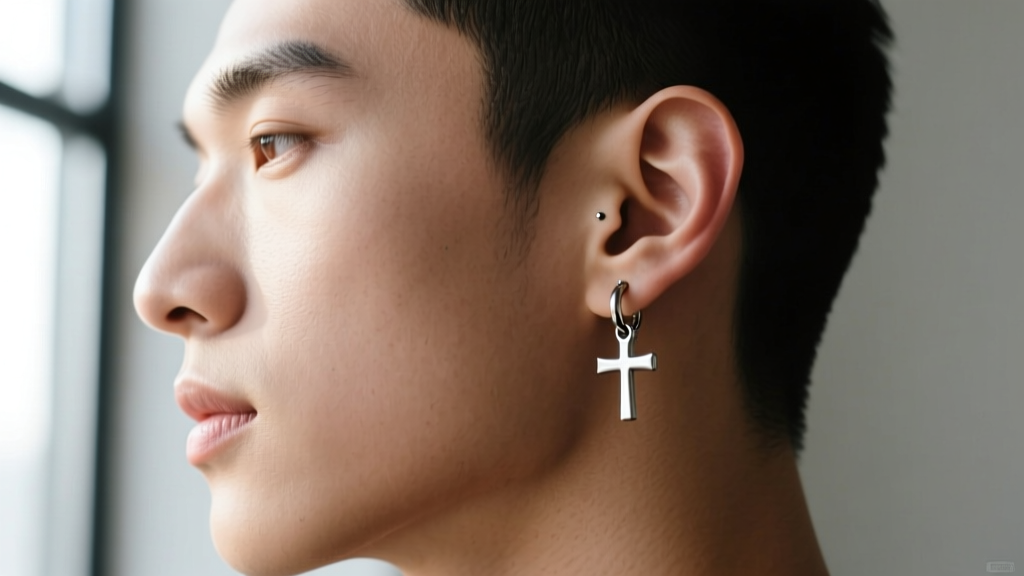
Weight and wire thickness are inextricably linked when troubleshooting lobe strain. The 'cheese-cutter effect' occurs when a thin wire under heavy dynamic load slowly migrates downward through the tissue. If your upside down cross earring weighs more than 7 grams, wearing it on a standard 20-gauge (0.8mm) post is a recipe for permanent lobe stretching.
Quick Reference Chart: Gauge vs. Weight Tolerance
| Wire Gauge | Thickness (mm) | Max Safe Weight (per earring) | Recommended Use |
|---|---|---|---|
| 20 Gauge | 0.81mm | 4 - 6 grams | Small studs, lightweight huggies |
| 18 Gauge | 1.02mm | 7 - 10 grams | Standard dangles, medium inverted crosses |
| 16 Gauge | 1.29mm | 11 - 15 grams | Heavy gothic drops, statement pieces |
| 14 Gauge | 1.63mm | 16+ grams | Intentionally stretched lobes |
Furthermore, post length is critical. Standard earring posts are 10mm long. However, heavy alternative earrings require thicker, more robust backing mechanisms (like the La Pousette or heavy silicone O-rings). If the post is too short, the backing will compress the earlobe tissue, restricting blood flow and causing pressure necrosis or irritation bumps. Always ensure your heavy dangles have a minimum post length of 12mm to allow the lobe to breathe.
Lobe Rehabilitation for Stretched Piercings
If your heavy upside down cross earrings have already caused the fistula to elongate or the piercing hole to become visible when the earring is removed, you must intervene immediately to prevent permanent damage. The tissue of the earlobe is highly elastic, but prolonged downward pressure will break down the collagen matrix.
To rehabilitate a stretched lobe, remove all heavy dangles immediately. Switch to a lightweight, 14k gold or titanium sleeper hoop (18G or 16G) to keep the piercing open without applying downward force. Twice daily, massage the earlobe with pure, cold-pressed jojoba oil or vitamin E oil to promote cellular turnover and maintain tissue elasticity. Avoid wearing any upside down cross dangles heavier than 5 grams for a minimum of six to eight weeks to allow the fistula to shrink and tighten around the smaller gauge wire.


