Malabar Gold Stud Earrings: The Ultimate 2026 Buying Guide
Discover our expert 2026 buying guide for Malabar gold stud earrings. Learn about 22K vs 18K purity, BIS hallmarking, pricing, and secure backings.


Why Malabar Gold Stud Earrings Dominate the 2026 Market
When building a timeless jewelry wardrobe, few pieces carry the cultural weight, material value, and everyday versatility of Malabar gold stud earrings. As one of South Asia’s largest and most trusted jewelry conglomerates, Malabar Gold & Diamonds has set the benchmark for craftsmanship, transparency, and design innovation. In 2026, their stud earring collections bridge the gap between heritage Indian artistry and modern, minimalist aesthetics, making them a top choice for both diaspora buyers and global jewelry enthusiasts.
However, purchasing gold jewelry from a major Indian retailer requires a specific set of knowledge. Unlike Western brands that primarily deal in 14K or 18K gold, Malabar’s inventory is heavily weighted toward high-purity 22K gold, alongside specialized 18K lines for diamond settings. Understanding the nuances of Indian gold pricing, hallmarking mandates, and structural integrity is crucial before you make a purchase. This comprehensive guide breaks down exactly what to look for when investing in Malabar gold stud earrings this year.
Decoding Gold Purity: 22K vs. 18K for Everyday Studs
The most common mistake first-time buyers make is assuming all gold earrings should be 22K. While 22K (91.6% pure gold) is the standard for traditional Indian jewelry, it is fundamentally a soft metal. When you are buying plain gold studs, floral motifs, or temple-inspired designs, 22K is the superior choice for its rich, buttery yellow hue and investment value.
However, if you are browsing Malabar’s diamond or precious gemstone stud collections (such as their Precious or Starlet lines), you must look for 18K (75% pure gold) or even 14K settings. Pure 22K gold lacks the tensile strength required to securely hold diamond prongs over years of daily wear. An 18K alloy, mixed with metals like zinc, copper, or silver, provides the necessary rigidity to prevent stone loss.
The BIS Hallmark Mandate
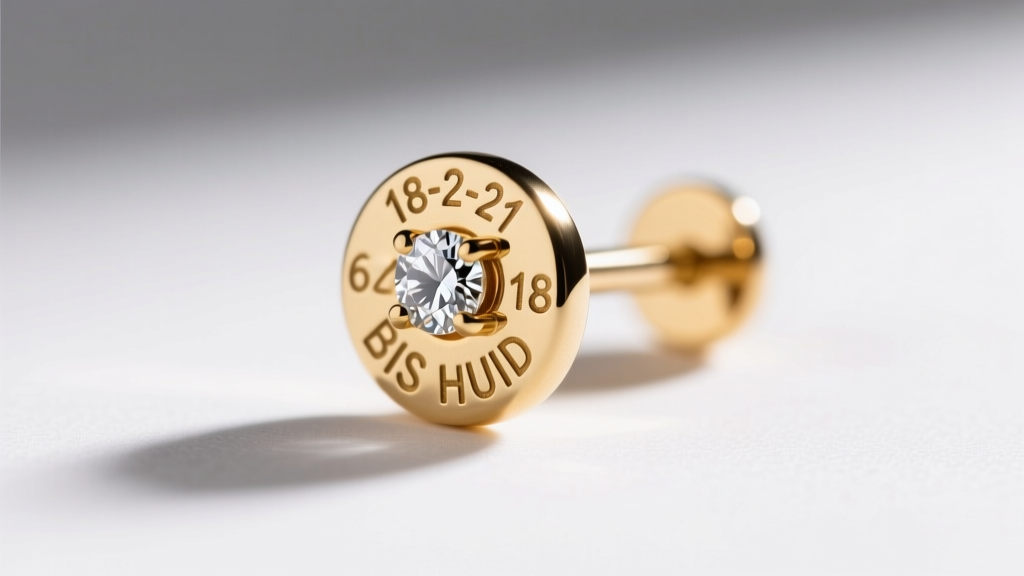
Authenticity is non-negotiable. In India, the Bureau of Indian Standards (BIS) mandates strict hallmarking for all gold jewelry. When inspecting Malabar gold stud earrings, you must verify the presence of the 6-digit HUID (Hallmark Unique Identification) code laser-engraved on the earring post or backing. This code allows you to trace the exact purity and origin of the piece via the official BIS portal. For a deep dive into hallmarking standards, refer to the BIS Hallmarking Guidelines.
Design Categories & Face Shape Pairings
Malabar’s 2026 catalog is vast, but their stud offerings generally fall into three distinct categories. Choosing the right style depends heavily on your face shape, lifestyle, and the gauge of your piercing.
| Design Category | Characteristics & Materials | Best Suited Face Shape | Average Weight (per pair) |
|---|---|---|---|
| Nakshi / Temple | 22K gold, intricate repoussé work, antique finish, often featuring ruby or emerald cabochons. | Square or Heart (softens sharp jawlines and balances wide foreheads). | 4.0g - 8.5g |
| Modern Geometric | 18K or 22K gold, minimalist lines, high-polish or matte textures, lightweight hollow-core construction. | Round or Oval (adds structural angles and elongates the face). | 1.5g - 3.5g |
| Solitaire / Cluster | 18K white or yellow gold, VS/SI grade diamonds, 4-prong or bezel settings. | Any (versatile, sits flush against the lobe, draws attention to the eyes). | 2.0g - 5.0g (including stone weight) |
Pricing Breakdown: What You Actually Pay For
Buying gold jewelry in the Indian market involves a pricing structure that differs vastly from Western retail. When you look at the price tag for Malabar gold stud earrings, you are not just paying for the raw metal. Here is the exact formula used at Malabar showrooms and on their official e-commerce platform:
- Base Gold Rate: Calculated on the daily market price per gram for 22K or 18K gold.
- Making Charges (VA): Also known as Value Addition. For simple studs, this ranges from 12% to 16%. For intricate Nakshi or hand-carved designs, VA can jump to 18% - 24%.
- Stone Charges: If the studs feature diamonds, they are priced separately based on carat weight and clarity, often with a 5% to 10% setting fee.
- GST (Goods and Services Tax): A flat 3% tax applied to the final cumulative total in India.
Pro-Tip for 2026 Buyers: Malabar frequently runs promotional events where making charges (VA) are discounted to 0% or heavily reduced on specific stud collections. Timing your purchase around their anniversary sales or festive seasons (like Diwali or Onam) can save you 15% or more on the final retail price.
Backing Mechanisms: Security vs. Comfort
The structural failure point of any stud earring is the backing. Because Malabar’s traditional 22K gold studs can be surprisingly heavy (often exceeding 4 grams per pair), standard friction push-backs are a liability. The soft nature of 22K gold means that thin posts can easily bend, and smooth posts will slip out of silicone or metal friction backs, leading to lost jewelry.
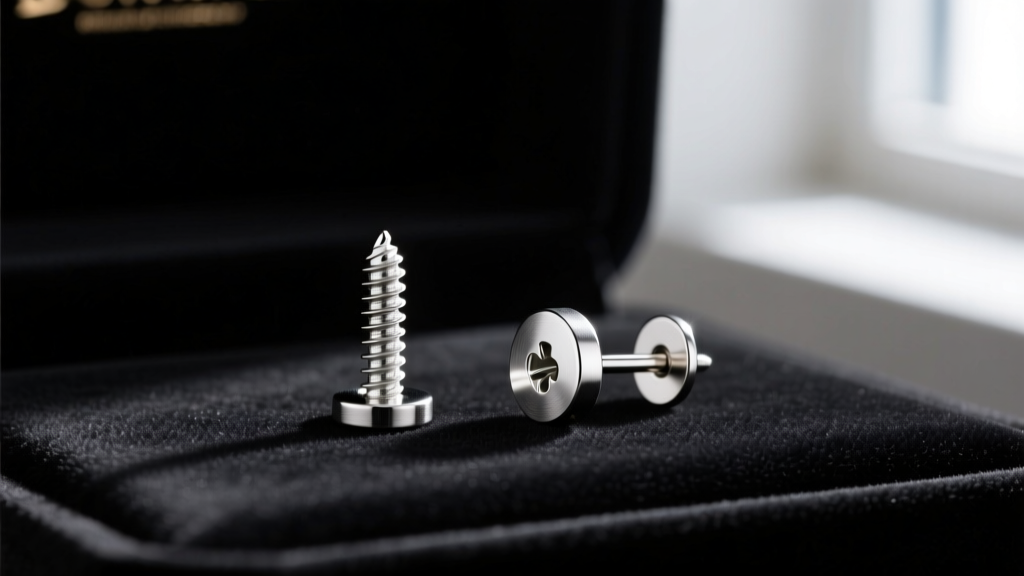
When purchasing heavier Malabar studs, always inspect the post mechanism:
- Screw-Backs (Threaded): The gold standard for heavy Indian jewelry. The post is threaded, and the backing screws onto it. This is mandatory for any stud over 3 grams to prevent loss during sleep or clothing changes.
- Friction Push-Backs (Butterfly): Acceptable only for lightweight, modern 18K diamond studs (under 2 grams). Ensure the post has a small notch at the end to allow the butterfly back to "click" into place.
- La-Clé / Locking Backs: Some premium Malabar lines feature specialized silicone-lined locking backs that grip the post via an internal metal spring mechanism. These offer the security of a screw-back with the ease of a push-back.
Final Verdict: Building Your Core Collection
Investing in Malabar gold stud earrings is a masterclass in balancing cultural heritage with enduring financial value. For the ultimate versatile wardrobe, we recommend starting with a pair of lightweight, 18K diamond solitaires (approx. 0.25 carats total weight) for daily professional wear, and a pair of 22K Nakshi or floral motif studs (approx. 5 grams) for festive and evening occasions. Always verify the 6-digit HUID hallmark, insist on screw-backs for heavier pieces, and carefully review the making charges before checkout. By understanding these technical and financial details, you ensure your jewelry box is filled with pieces that are as secure and valuable as they are beautiful.


