Monstera Earrings Buying Guide: Metals, Enamel & Fit
Discover how to choose the perfect monstera earrings. Our buying guide covers metal grades, enamel quality, gauge sizing, and pricing for botanical jewelry.

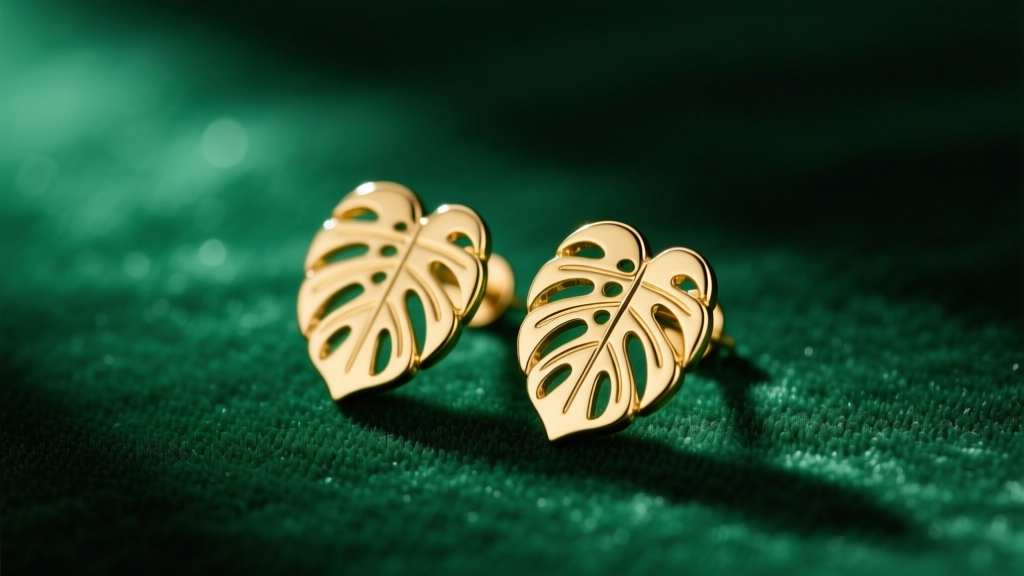
The Monstera deliciosa leaf has transcended its status as a mere houseplant staple to become a permanent fixture in fine and fashion jewelry. As we navigate the jewelry market in 2026, botanical motifs remain highly sought after for their organic asymmetry and tropical elegance. However, buying monstera earrings requires looking past the aesthetic to evaluate structural integrity, metal purity, and weight distribution. Because the monstera leaf features deep natural lobes and fenestrations (the characteristic holes in the leaf), jewelry designers must employ specific engineering techniques to prevent the metal from warping or the enamel from cracking. This comprehensive buying guide breaks down exactly what to look for when investing in monstera earrings, from metallurgical standards to clasp mechanics.
Material Breakdown: Cast Metal vs. Enamel Inlay
The visual impact of a monstera earring relies heavily on how the material captures light and shadow. You will generally encounter two primary manufacturing styles: solid cast metal and enamel inlay. Both require different quality checks.
Solid Gold, Vermeil, and Sterling Silver
For solid metal designs, the alloy composition dictates both the longevity and the price. According to the Gemological Institute of America (GIA), 14k gold (58.3% pure gold) is often the superior choice for intricate botanical studs because the higher copper and zinc content provides necessary tensile strength, preventing the delicate leaf tips from bending. 18k gold offers a richer yellow hue but is softer, making it better suited for smaller, thicker monstera designs.
If you are shopping in the mid-tier market, you will frequently encounter gold vermeil. It is critical to verify the plating thickness. The Federal Trade Commission (FTC) Jewelry Guides strictly mandate that for an item to be legally marketed as 'vermeil,' it must consist of a sterling silver base coated with gold that is at least 2.5 microns thick. Anything less is merely gold-plated and will quickly wear away on the high-friction edges of the leaf motif, exposing the tarnish-prone silver beneath.
Enamel Techniques: Cold vs. Vitreous
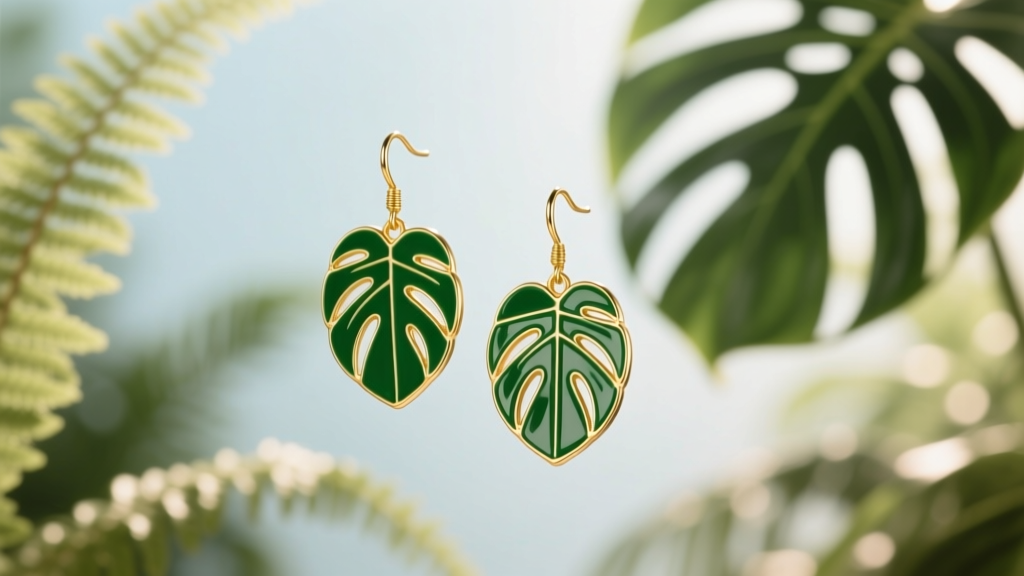
Many monstera earrings utilize green enamel to mimic the vibrant foliage. You must distinguish between cold enamel and vitreous enamel:
- Cold Enamel (Epoxy/Resin): Cured at room temperature. It is cheaper to produce and highly resistant to shattering if dropped. However, cold enamel is porous; it will yellow over time when exposed to UV light and the chemicals found in daily sunscreens and lotions.
- Vitreous Enamel (Kiln-Fired Glass): Fused to the metal at temperatures exceeding 1,400°F. This creates a brilliant, glass-like finish that will never yellow or degrade from chemical exposure. The trade-off is that vitreous enamel can chip or crack if dropped on a hard tile floor.
Sizing, Weight, and the Fenestration Advantage
One of the greatest structural advantages of the monstera design in jewelry is the fenestration. The natural holes in the leaf remove significant metal mass, allowing designers to create larger, dramatic statement pieces without causing earlobe fatigue or tearing. When evaluating size, consider the visual footprint versus the actual gram weight.
| Monstera Style | Average Dimensions | Estimated Weight (14k Gold) | Ideal Placement & Gauge |
|---|---|---|---|
| Micro Stud | 8mm - 12mm | 0.8g - 1.2g | Standard Lobe / Helix (20g - 18g) |
| Medium Dangle | 20mm - 25mm | 2.5g - 3.8g | Standard Lobe (18g recommended) |
| Statement Hoop | 35mm - 45mm | 5.0g - 7.5g | Standard Lobe (16g wire thickness) |
| Ear Cuff (No Piercing) | 15mm - 20mm | 1.5g - 2.0g | Upper Cartilage (Adjustable tension) |
For any monstera dangle exceeding 3.5 grams, avoid thin, hollow-cast designs. Look for solid cast pieces with a reinforced central 'vein' running down the middle of the leaf, which acts as a structural spine to prevent the metal from folding under its own weight.
Post Mechanics and Gauge Specifications
The connection point between the earring post and the monstera leaf is the most common failure point in botanical jewelry. Because the leaf shape is top-heavy and asymmetrical, it creates uneven torque on the post.
Gauge Thickness Matters
Standard lobe piercings are typically 20-gauge (0.81mm) or 18-gauge (1.02mm). For monstera studs wider than 15mm, insist on an 18-gauge post. The extra 0.21mm of thickness drastically reduces the 'droop' effect, where the heavy top of the leaf causes the earring to tilt forward on the earlobe. If you are buying a monstera piece for a cartilage or helix piercing, ensure the post or wire is 16-gauge (1.29mm) to accommodate the thicker tissue and provide stability against snagging.
Clasp and Backing Systems
Standard push-back friction clasps (butterfly backs) often fail to support the wide surface area of a monstera leaf, leading to the earring spinning or sagging. Look for the following upgrades:
- La Pousette Backs: These feature a mechanical locking mechanism that grips the post securely, ideal for heavy 14k gold monstera drops.
- Screw Backs: Excellent for security, though they require a threaded post which can sometimes be limited to 18g or thicker.
- Jumbo Silicone Discs: If buying lighter vermeil or silver pieces, swapping the standard metal back for a 10mm silicone disc provides a wider surface area against the earlobe, distributing the weight of the leaf evenly and keeping it upright.

Styling for Face Shapes
The organic, sweeping curves and inherent asymmetry of the monstera leaf make it a remarkably versatile shape for flattering different facial structures.
- Round Faces: Opt for elongated monstera dangles or drop earrings. The vertical line created by the stem and the downward-pointing lobes help to visually lengthen the face and draw the eye toward the collarbone.
- Square Faces: The soft, scalloped edges and deep curves of the monstera leaf are perfect for softening strong, angular jawlines. Medium-sized, slightly rounded monstera studs or huggie hoops work beautifully here.
- Heart-Shaped Faces: Balance a wider forehead and narrower chin with medium-to-large monstera studs that sit flush against the lobe, adding visual width at the lower half of the face without overwhelming it with excessive length.
Pricing Tiers: What Should You Actually Pay?
Understanding the market tiers prevents overpaying for mass-produced alloys disguised as fine jewelry.
- Fashion Tier ($15 - $45): Typically made from brass or zinc alloys with a thin flash-plating and cold epoxy enamel. Expect the plating to wear off within 3 to 6 months of regular wear. These are fine for occasional use but not for sensitive ears.
- Mid-Tier / Demi-Fine ($60 - $180): The sweet spot for most buyers. Features sterling silver bases with 2.5-micron gold vermeil and high-quality cold enamel or basic vitreous enamel. Posts are usually 18g sterling silver.
- Fine Jewelry ($250 - $900+): Solid 14k or 18k gold, often incorporating pave diamonds along the central leaf veins or utilizing master-crafted kiln-fired vitreous enamel. These pieces are heirloom-quality and hypoallergenic.
Care and Maintenance for Tropical Motifs
To preserve the intricate details of your monstera earrings, specific maintenance is required. The deep crevices of the leaf lobes easily trap sebum, dead skin cells, and cosmetic products. Clean your earrings bi-weekly using a soft-bristled baby toothbrush and a mild solution of warm water and phosphate-free dish soap. Avoid ultrasonic cleaners if your monstera earrings feature vitreous enamel or tension-set gemstones, as the high-frequency vibrations can shatter the glass enamel or loosen the stones. Always apply your perfumes, hairsprays, and sunscreens before putting on your earrings, as the alcohol and chemical filters in these products will rapidly degrade cold enamel and strip gold plating from the delicate leaf edges.


