How to Style and Maintain Your Hugo Kreit Earrings
Learn how to style, clean, and authenticate Hugo Kreit earrings. Our step-by-step guide covers lobe support, resin care, and spotting fakes.


The Appeal of Kinetic Resin Jewelry
Since launching his eponymous label, Central Saint Martins alumnus Hugo Kreit has redefined contemporary fashion jewelry. Known for his playful, kinetic designs and masterful use of cast acrylic, his pieces are less like traditional accessories and more like wearable, moving sculptures. When you invest in Hugo Kreit earrings, you are acquiring statement pieces that feature friction-fitted brass joints, vibrant color-blocking, and substantial architectural volume. However, the unique material combination of heavy gold-plated brass and thick acrylic requires specific styling strategies and specialized maintenance to preserve their structural integrity and visual brilliance.
This comprehensive, step-by-step guide will walk you through exactly how to wear, authenticate, and care for these highly sought-after kinetic pieces, ensuring they remain a staple in your jewelry rotation for years to come.
Step 1: Prepping Your Lobes for Statement Weight
The most common failure mode when wearing oversized acrylic jewelry is lobe tearing or the dreaded "cheese-cutter" effect. While cast acrylic is lighter than glass or natural stone, the sheer volume of material used in Hugo Kreit's designs, combined with solid brass hardware, means a single earring can weigh between 10 and 18 grams.
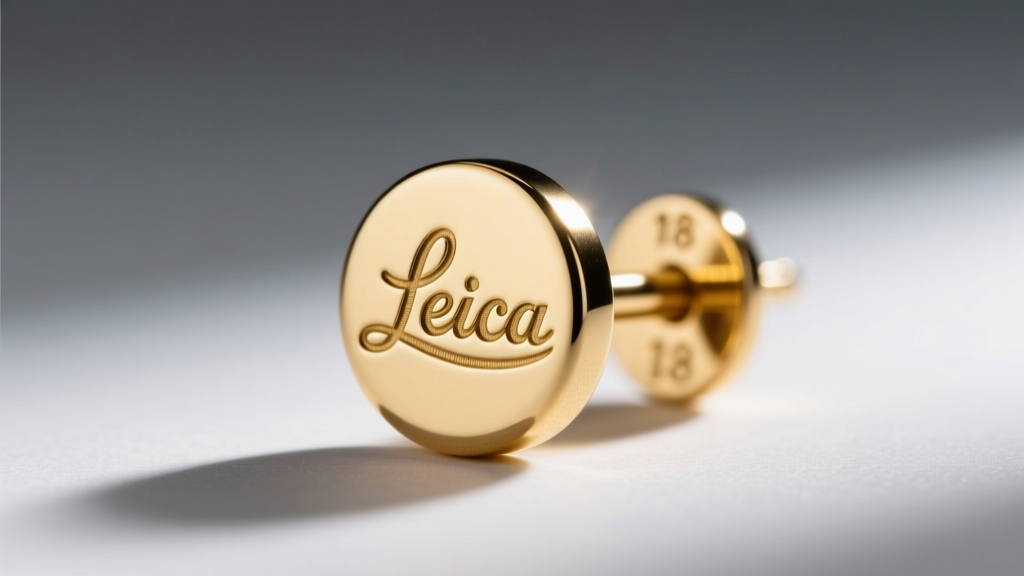
- Check the Gauge: Authentic pieces typically feature an 18-gauge (1.0mm) or 20-gauge (0.8mm) post. If your piercing is stretched or delicate, an 18-gauge post provides better weight distribution.
- Use Silicone Supports: For drops exceeding 3 inches in length, always pair your earrings with silicone lobe support patches (such as LobeWonder or Blingwraps). These adhesive pads distribute the 15+ gram weight across a wider surface area of the earlobe, preventing the post from pulling downward and elongating the piercing hole.
- Secure the Backing: Discard standard butterfly backs. Upgrade to heavy-duty silicone disc backs or locking clutch backs (like LaPousette) to ensure the kinetic movement of the earring doesn't slowly vibrate the backing off the post throughout the day.
Step 2: Styling Proportions and Colorways
Hugo Kreit's aesthetic relies heavily on primary colors, pastel juxtapositions, and the interplay between opaque and transparent acrylics. Styling these requires a deliberate approach to proportion and color theory.
Balancing Facial Proportions
Because these earrings possess significant architectural volume, they act as a focal point that can alter the perceived shape of your face. If you have a round or square face shape, opt for his elongated, vertical kinetic drops. The downward movement draws the eye vertically, creating a lengthening illusion. Conversely, if you have a long or oval face, look for his wider, clustered hoop or stud styles that add horizontal volume and balance your facial proportions.
Color Blocking with Acrylics
Do not attempt to perfectly match the acrylic colors to your outfit; instead, use them as a contrasting anchor. If you are wearing a monochromatic navy or black ensemble, select a pair featuring vibrant cherry red or marigold yellow acrylics. The opacity of Kreit's cast resin catches ambient light beautifully, making them ideal for evening wear or minimalist daytime tailoring. Avoid wearing them with heavily patterned clothing or busy necklines, as the kinetic movement will clash visually with complex fabrics.
Step 3: Authenticating Your Pieces
As the brand's popularity has surged on platforms like SSENSE and Farfetch, the secondary market has been flooded with high-quality replicas. Spotting a fake requires examining the hardware, the acrylic finish, and the kinetic joints.
| Feature | Authentic Hugo Kreit | Common Replica |
|---|---|---|
| Kinetic Joints | Friction-fitted brass pins; smooth, silent movement with slight resistance. | Glued or loosely riveted; wobbles erratically or squeaks when moved. |
| Acrylic Finish | Hand-polished cast acrylic; edges are perfectly smooth and glass-like. | Injection-molded resin; visible seam lines along the edges, dull finish. |
| Hardware & Posts | 14k or 18k gold-plated brass; post is thick (18g) with a deep laser engraving. | Thin, flimsy alloy posts (22g+); shallow or stamped logos that wear off. |
| Pricing (Retail) | $180 to $450+ USD depending on the silhouette and collection. | Typically listed between $25 and $60 USD on unauthorized marketplaces. |
Step 4: Cleaning and Joint Maintenance
The greatest threat to cast acrylic is "crazing"—a network of micro-cracks that form when the material is exposed to harsh chemicals. Furthermore, the kinetic joints require occasional mechanical maintenance to keep their signature movement fluid.
Expert Warning: Never clean your acrylic jewelry with rubbing alcohol, Windex, acetone, or standard jewelry dips. These solvents will instantly cloud the resin and trigger structural crazing, permanently ruining the piece.
The Safe Cleaning Protocol
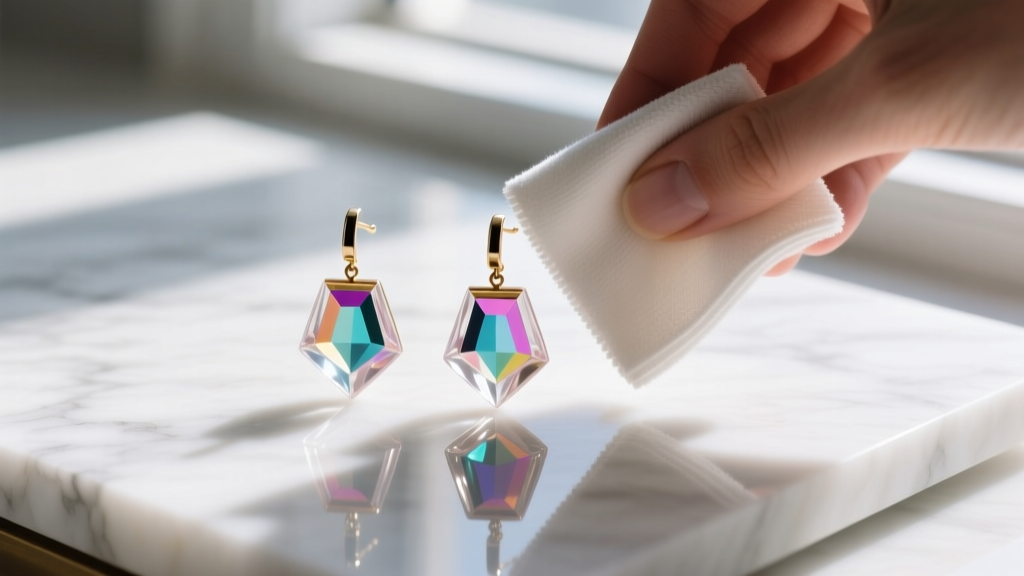
- Dust Removal: Use a clean, dry microfiber cloth to gently wipe away surface dust and skin oils. Do not use paper towels, as the wood pulp fibers will leave microscopic scratches on the acrylic.
- Polishing: Apply a drop of Novus 1 (Plastic Clean & Shine) to a microfiber cloth and buff the acrylic in circular motions. If minor scratches are present, use Novus 2 (Fine Scratch Remover) first, followed by Novus 1.
- Brass Hardware: Use a separate, dry polishing cloth treated with a mild jeweler's rouge to buff the gold-plated brass components. Keep moisture away from the friction joints to prevent internal oxidation.
Tightening Loose Kinetic Joints
Over time, the constant movement of the kinetic parts can cause the brass friction joints to loosen. If an acrylic drop swings too freely or feels like it might detach, you can tighten it. Using a pair of nylon-jaw flat-nose pliers (never bare metal pliers, which will gouge the gold plating), gently squeeze the brass fork or loop that holds the acrylic pin. Apply pressure in micro-millimeter increments until the desired friction resistance is restored.
Sourcing and Pricing in 2026
To guarantee authenticity and support the brand's sustainable production practices, always purchase through authorized luxury retailers. According to industry trackers like The Business of Fashion, contemporary jewelry brands that utilize specialized cast acrylic and small-batch brass casting maintain strict distribution controls.
You can reliably source authentic Hugo Kreit earrings through global luxury platforms such as SSENSE or Farfetch. When shopping the secondary market on platforms like Vestiaire Collective or Depop, always request high-resolution macro photos of the laser-engraved post and the side-profile of the acrylic edges to check for injection-molding seam lines before committing to a purchase.
By understanding the material science behind these pieces and treating them as the kinetic art they are, your collection will retain its vibrant color, structural tension, and undeniable sartorial impact for seasons to come.


