Troubleshooting Fit and Sparkle in 0.25 ct Diamond Earrings
Solve common problems with 0.25 ct diamond earrings. Learn to fix dullness, loose backs, bent posts, and maximize sparkle in quarter-carat studs.

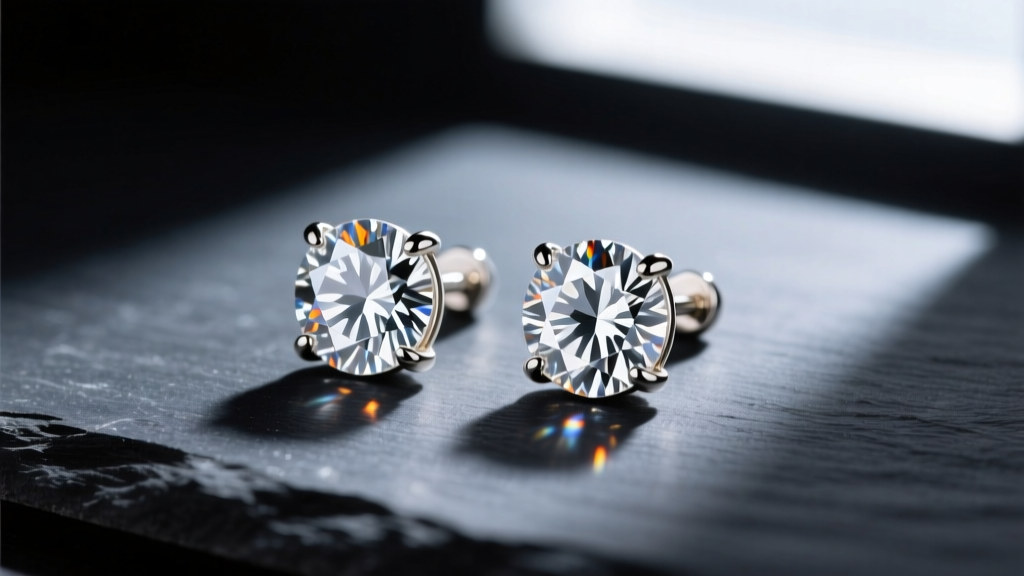
The 0.25 ct Diamond Earring Dilemma: Size vs. Sparkle
Quarter-carat diamond studs are the undisputed champions of everyday fine jewelry. However, owning and wearing 0.25 ct diamond earrings comes with a unique set of mechanical and optical challenges that larger stones simply do not face. Because the physical footprint of a 0.125-carat stone (assuming 0.25 carats total weight) is roughly 3.2 millimeters in diameter, there is significantly less surface area for light return. Furthermore, the lightweight nature of the settings often leads to structural compromises by mass-market manufacturers. Whether your earrings are looking cloudy, the posts are constantly bending, or the settings are catching on your hair, this comprehensive troubleshooting guide will help you diagnose and fix the most common issues associated with small-carat diamond studs.
Troubleshooting Dullness and Cloudiness
The most frequent complaint regarding 0.25 ct diamond earrings is a sudden loss of brilliance. Unlike a 1.0-carat diamond, which has a deep pavilion that can tolerate minor oil buildup, a 3.2mm diamond has a very shallow optical path. When sebum (skin oil), lotion, or hairspray coats the culet and pavilion facets, it alters the refractive index barrier. Instead of reflecting light back through the table, the light leaks out the bottom of the stone, making the diamond look gray or cloudy.
The Proper Cleaning Protocol for Quarter-Carat Stones
Many owners mistakenly toss their small studs into an ultrasonic cleaner. While ultrasonics are excellent for removing microscopic debris, they can be highly destructive to small diamonds if the prongs are even slightly worn. The high-frequency vibrations can easily shake a 3.2mm stone out of a shallow basket setting. According to GIA's official diamond care guidelines, the safest and most effective method for restoring brilliance to small studs is manual agitation.
- The Soak: Mix a few drops of ammonia-free dish soap (like Dawn) in a bowl of warm distilled water. Soak the earrings for 15 minutes to break down lipid bonds.
- The Agitation: Use a baby toothbrush (which has ultra-soft bristles that won't scratch 14k or 18k gold) to gently sweep the underside of the diamond. Focus specifically on the culet and the lower pavilion facets where skin oils accumulate.
- The Rinse: Rinse under a gentle stream of lukewarm water. Crucial: Always place a silicone sink stopper over the drain before rinsing small earrings.
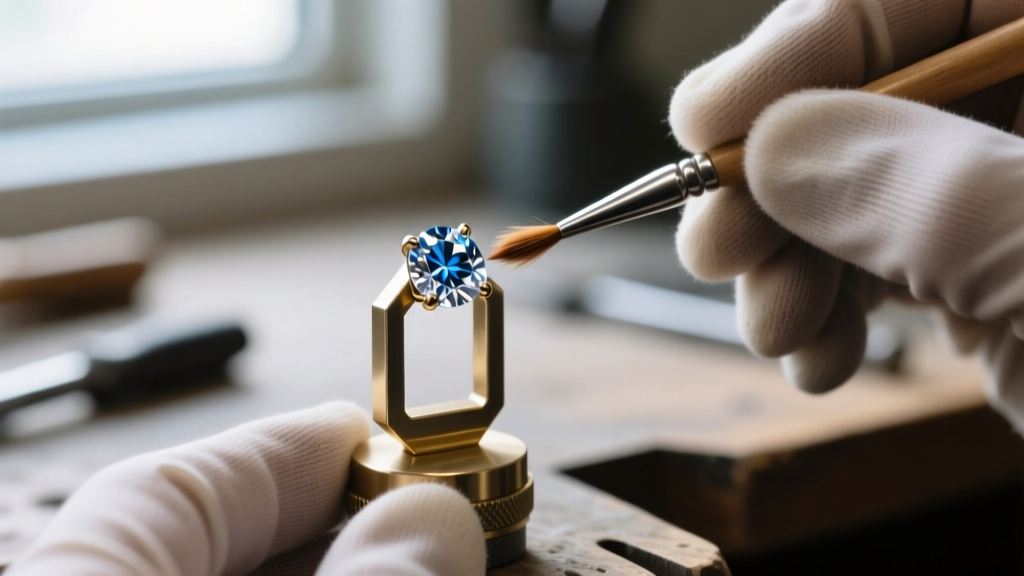
Fixing Mechanical Failures: Posts, Prongs, and Backings
Because 0.25 ct diamond earrings are lightweight, manufacturers often cut costs by using exceptionally thin metal for the earring posts and backings. This leads to a host of structural failures that frustrate the wearer.
Bent Posts and Gauge Sizing
If your earring posts are constantly bending, you are likely dealing with a 22-gauge (0.64mm) or thin 20-gauge (0.81mm) post. Earlobes exert surprising lateral pressure, especially during sleep. A 22-gauge 14k gold post will yield and permanently bend under minimal torque. The Fix: Take your earrings to a local bench jeweler and request a post upgrade. Have them laser-weld an 18-gauge (1.02mm) or 19-gauge post. The 18-gauge wire provides nearly 60% more cross-sectional thickness, virtually eliminating bending issues while still fitting comfortably through standard healed lobe piercings.
Upgrading Your Backing System
Standard friction backs (butterfly backs) rely on a small metal scroll that grips the notch on the post. On thin 20-gauge posts, the notch is often too shallow, causing the backing to slide off easily. Upgrading your backing system is the most cost-effective way to secure your investment.
| Backing Type | Mechanism | Best Post Gauge | Security Level |
|---|---|---|---|
| Standard Friction | Tension scroll grips post notch | 18G - 20G | Low (Prone to slipping) |
| Screw Back | Threaded backing screws onto post | 18G (Threaded) | High (Excellent for sleep) |
| La Pousette | Spring-loaded locking mechanism | 16G - 18G | Very High (Professional grade) |
| Silicone O-Rings | Friction-fit medical-grade silicone | Any Gauge | Medium (Requires monthly replacement) |
Setting Snags: Martini vs. Crown vs. Basket
The metal setting that holds your 0.25 ct diamond earrings dictates not only how large the stone appears but also how it interacts with your environment. Snagging on hair and clothing is a pervasive issue with small diamond studs.
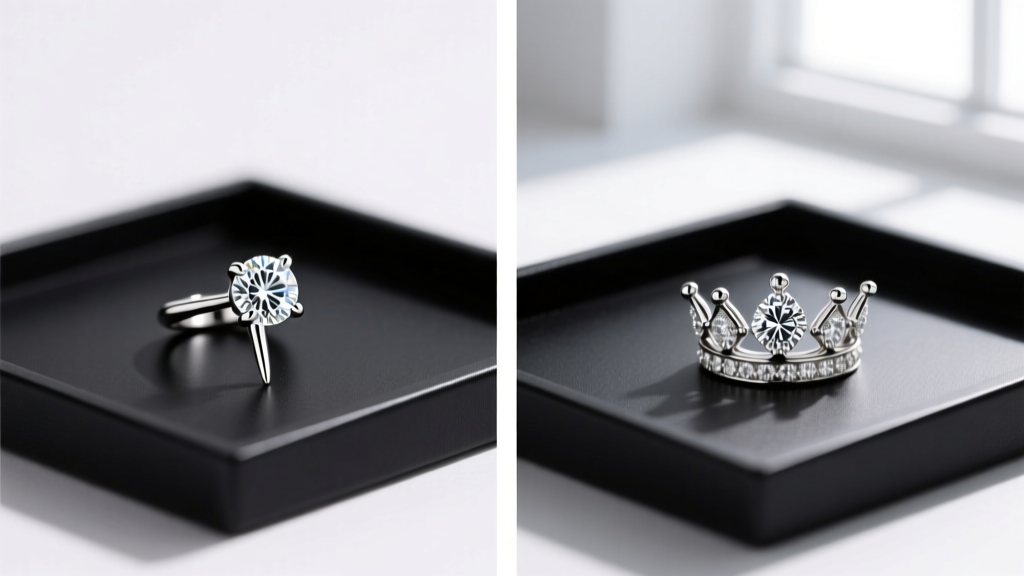
The 3-Prong Martini Setting
The martini setting uses three prongs, leaving more of the diamond exposed to maximize the illusion of size. However, the acute angles where the prongs meet the base act like tiny hooks. If you have fine or easily tangled hair, the martini setting will inevitably catch it. The Fix: Ask a jeweler to "tip" or burnish the prongs, smoothing the sharp V-shaped corners into rounded nubs.
The 4-Prong Crown and Basket Settings
Crown settings elevate the stone slightly, allowing more light to enter from the sides, while basket settings sit flush against the earlobe. If your basket setting looks dark, it is likely because the solid metal base is blocking light from entering the pavilion. Switching to an open-gallery crown setting will immediately improve the perceived brightness of a 0.25 ct stone.
Grading Realities and Durability Concerns
When troubleshooting the physical integrity of your earrings, it is vital to understand the grading realities of quarter-carat diamonds. Stones in the 0.10 to 0.15-carat range (making up a 0.25 ctw pair) are rarely graded by the GIA due to the cost-to-value ratio. They are typically graded by in-house gemologists or labs like IGI, and usually fall into the SI2 to I1 clarity range.
Expert Insight: In I1 clarity diamonds, it is common to find 'feather' inclusions (microscopic internal fractures) that reach the girdle (the outer edge of the stone). If a jeweler applies uneven pressure when tightening the prongs on a 0.25 ct diamond, the stone can easily chip along this feather. Always request that your jeweler examine the stone under 10x magnification for girdle-reaching inclusions before performing any prong tightening or retipping work.
Furthermore, be aware of the distinction between 'Total Weight' and 'Individual Weight.' Many retailers sell '0.25 ct diamond earrings' that are actually 0.25 carats total weight (0.125 ct per ear). If you expected a 0.25-carat stone per ear (0.50 ctw), you may feel the earrings look undersized. Always verify the exact per-stone carat weight and millimeter diameter on your receipt to ensure you received the correct product.
Final Troubleshooting Checklist
Before taking your earrings to a professional, run through this rapid diagnostic checklist to identify the root cause of your issues:
- Is the stone cloudy? Clean the pavilion with dish soap and a baby toothbrush. Avoid ultrasonics if the prongs look thin or lifted.
- Is the post bending? Check the gauge. If it bends easily, it is likely 22G. Upgrade to an 18G post via laser welding.
- Do the backs fall off? Abandon standard friction backs. Upgrade to La Pousette locking backs or screw-backs for secure, all-day wear.
- Is the setting snagging hair? Transition from a 3-prong martini to a 4-prong crown setting, or have the existing prongs burnished and smoothed.
- Is the diamond chipping? Stop wearing them immediately. Have a gemologist check for I1-clarity feathers near the girdle and adjust prong tension accordingly.
By understanding the specific metallurgical and optical nuances of small-carat jewelry, you can transform a frustrating pair of studs into a secure, brilliant, and lifelong staple. For more ongoing maintenance tips, refer to the Jewelers of America care guidelines to ensure your fine jewelry remains in pristine condition for decades.


