Fixing Faded Black and Gold Hoop Earrings: Expert Guide
Is your two-tone jewelry fading? Learn how to troubleshoot, clean, and repair black and gold hoop earrings to restore their finish and clicker hinges.

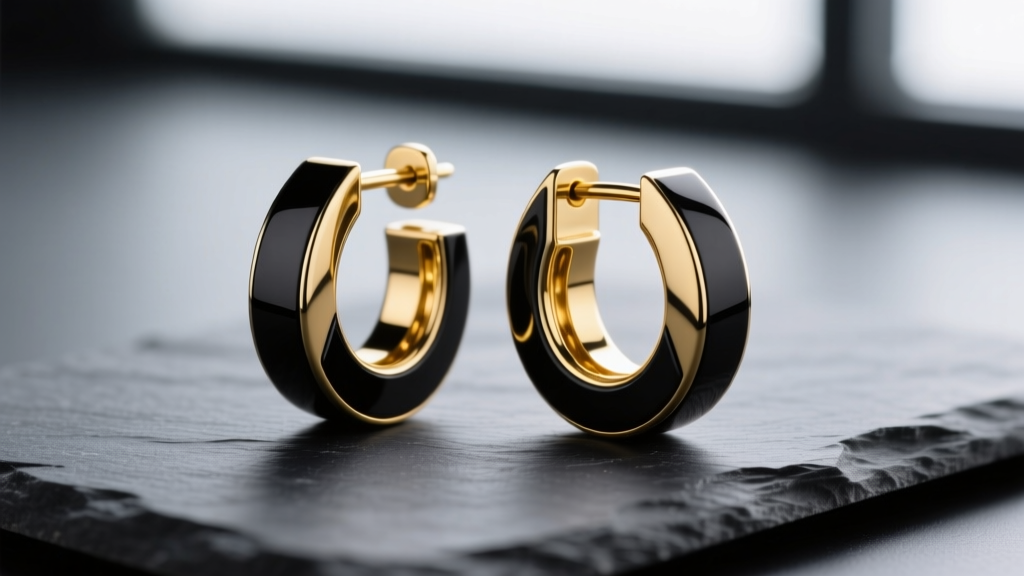
The Anatomy of Two-Tone Black and Gold Finishes
In the 2026 jewelry landscape, black and gold hoop earrings remain a staple for both maximalist and dark-academia aesthetics. The striking contrast between deep, moody black tones and warm, reflective gold creates a versatile look. However, combining a dark finish with a bright metal on a single piece of jewelry introduces significant manufacturing and maintenance challenges. Most mass-market two-tone hoops utilize a brass, 316L stainless steel, or sterling silver base. The gold sections are typically achieved through electroplating (flash-plated at 0.1 to 0.5 microns) or gold-toned Physical Vapor Deposition (PVD). The black sections are created using black rhodium, black ruthenium, oxidized silver, or baked enamel inlays. Understanding which specific finishing technique was used on your earrings is the first critical step in troubleshooting fade, tarnish, or structural wear.
Troubleshooting Finish Loss: Why Your Black Hoops Turn Grey
When your black and gold hoop earrings begin to look patchy, grey, or brassy, you are witnessing galvanic wear and micro-abrasion. Black rhodium, a member of the platinum group, is notoriously soft compared to its white counterpart. According to the Gemological Institute of America (GIA), rhodium plating on high-friction areas like earring posts, hinge mechanisms, and the inner curves of hoops can wear through to the base metal in as little as six months with daily wear. If your black finish is turning a dull, chalky grey, it is likely oxidized sterling silver that has been exposed to sulfur and moisture in the air. Conversely, if the black is chipping away in sharp flakes, you are dealing with a baked enamel or black PVD coating that has suffered impact damage.
Comparing Black Finish Technologies
| Finish Type | Application Method | Durability (Vickers Hardness) | Repairability |
|---|---|---|---|
| Black Rhodium | Electroplating | ~120 HV (Soft) | High (Can be replated by jewelers) |
| Black PVD (ZrN) | Vacuum Chamber Deposition | ~2000+ HV (Extremely Hard) | Low (Requires factory stripping) |
| Oxidized Silver | Chemical Patina (Liver of Sulfur) | N/A (Surface reaction) | High (Can be re-oxidized at home) |
| Baked Enamel | Kiln-Fired Glass Powder | ~500 HV (Brittle) | Medium (Requires specialized enamelist) |
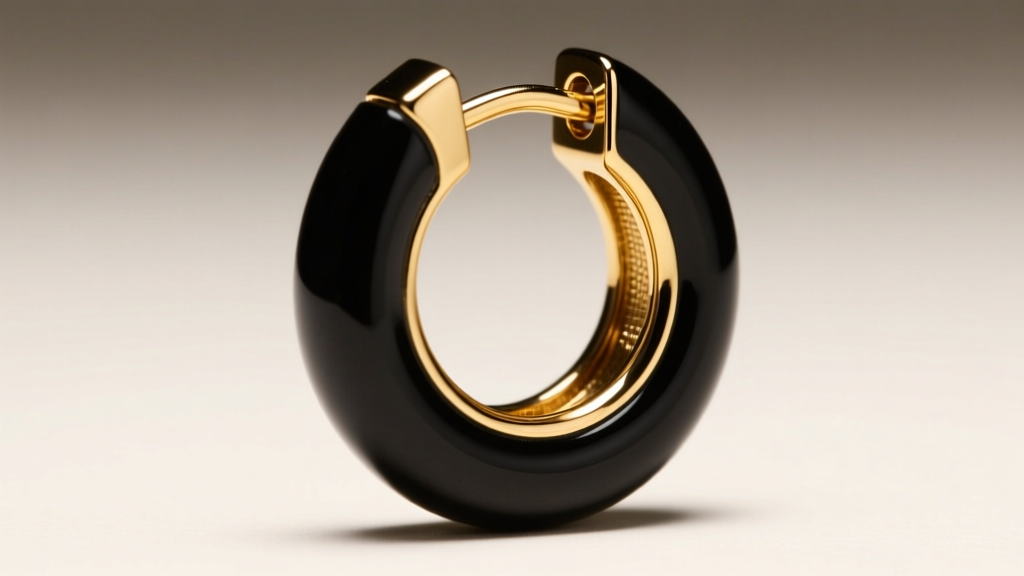
Mechanical Failures: Fixing Stubborn Hinged Clickers
The most common structural failure in medium-to-large black and gold hoops (ranging from 20mm to 45mm in diameter) is the hinged clicker mechanism. Because two-tone plating requires multiple dipping stages or precise masking during the PVD process, excess microscopic layers of metal often build up inside the hinge joint. This causes the clasp to become stiff, fail to 'click' shut securely, or scrape off the black finish every time it is opened. Furthermore, the hinge pin itself is a microscopic steel rod that can easily bend if you force the hoop open laterally rather than pivoting it vertically.
Step-by-Step Hinge Realignment
- Inspect the Post: Use a 10x jeweler's loupe to check the straight gold or black post. If it is bent, do not use standard steel pliers, as they will crush the soft metal and strip the plating.
- Use Nylon-Jaw Pliers: Gently grip the post with nylon-jaw pliers and apply micro-adjustments to straighten it. The post must be perfectly perpendicular to the hinge barrel to click shut.
- Clear the Joint: If the hinge is stiff, dip a wooden toothpick in isopropyl alcohol (90% or higher) and gently run it along the seam of the hinge to dissolve trapped sebum, lotion, and dead skin cells that are acting as an abrasive paste.
- Lubricate Sparingly: Apply a microscopic drop of synthetic watch oil to the hinge pin. Wipe away all excess immediately to prevent the oil from degrading the adjacent black enamel or PVD.
Solving the Earlobe Stretch Problem with Heavy Two-Tone Hoops
Two-tone hoops often require a thicker wire gauge to support the dual-plating process and any added enamel or onyx inlays. A standard 18-gauge (1.0mm) wire concentrates the weight of a heavy 15-gram hoop onto a tiny surface area of the earlobe, leading to micro-tears, elongation, and eventual stretching over time. According to data compiled by The Silver Institute, sterling silver is highly malleable, meaning thin silver hoops will physically warp under their own weight, exacerbating the pulling effect on the piercing.
To troubleshoot this, always look for black and gold hoops crafted in 16-gauge (1.2mm) or 14-gauge (1.6mm) wire, which distributes the downward force more evenly across the fistula. If you already own heavy, thin-wire hoops, you must use transparent silicone earlobe support patches (often called stabilizer discs) worn behind the earlobe. These patches increase the surface area bearing the weight, effectively neutralizing the stretching force while remaining completely invisible from the front.

Safe Cleaning Protocols for Mixed-Metal Hoops
Cleaning black and gold hoop earrings requires navigating a chemical minefield. The most catastrophic mistake owners make is placing two-tone jewelry into an ultrasonic cleaner. Ultrasonic machines operate at frequencies of 40-45 kHz, creating microscopic cavitation bubbles that violently implode against the metal. While this is excellent for removing dirt from solid gold or diamonds, the shockwaves will instantly fracture baked enamel inlays, strip oxidized black patinas, and cause micro-blistering in electroplated black rhodium.
Instead, adopt a gentle, manual cleaning protocol. Mix three drops of pH-neutral, lotion-free dish soap into a bowl of lukewarm distilled water. Submerge the hoops for exactly three minutes to loosen oils. Use an extra-soft baby toothbrush to gently sweep the bristles along the crevices where the black and gold meet. Rinse thoroughly under a gentle stream of distilled water (tap water contains chlorine and minerals that can spot the gold and degrade the black finish). Pat dry with a lint-free microfiber cloth, ensuring no moisture is trapped inside the clicker hinge.
When to Seek Professional Replating
If your black rhodium has completely worn away to reveal the yellow brass or white silver underneath, or if the gold sections have faded to a dull copper tone, at-home polishing will not help. Polishing compounds are mildly abrasive and will only remove more of the remaining microscopic plating. At this stage, the earrings require professional stripping and replating.
A reputable bench jeweler can polish out micro-scratches and re-plate the black sections using a specialized rhodium dipping process. Expect to pay between $45 and $120 for two-tone replating, as the jeweler must meticulously mask off the gold sections with a specialized stop-off lacquer before dipping the piece into the black rhodium electrolyte bath. For PVD-coated stainless steel hoops, traditional jewelers cannot replate them; you must contact the original manufacturer or a specialized industrial PVD coating facility to strip and re-vaporize the zirconium nitride layer.
Expert Storage Tip: Never store black and gold hoop earrings loose in a communal jewelry box. The harder gold-toned PVD or solid gold sections will act like sandpaper against the softer black rhodium or enamel of adjacent pieces. Store each hoop individually in an anti-tarnish flannel pouch with a silica gel desiccant packet to halt environmental oxidation.


