Black Cross Earring Troubleshooting: Fading and Allergies
Is your black cross earring fading or causing irritation? Learn to troubleshoot coating failures, metal allergies, and choose durable PVD or oxidized metals.
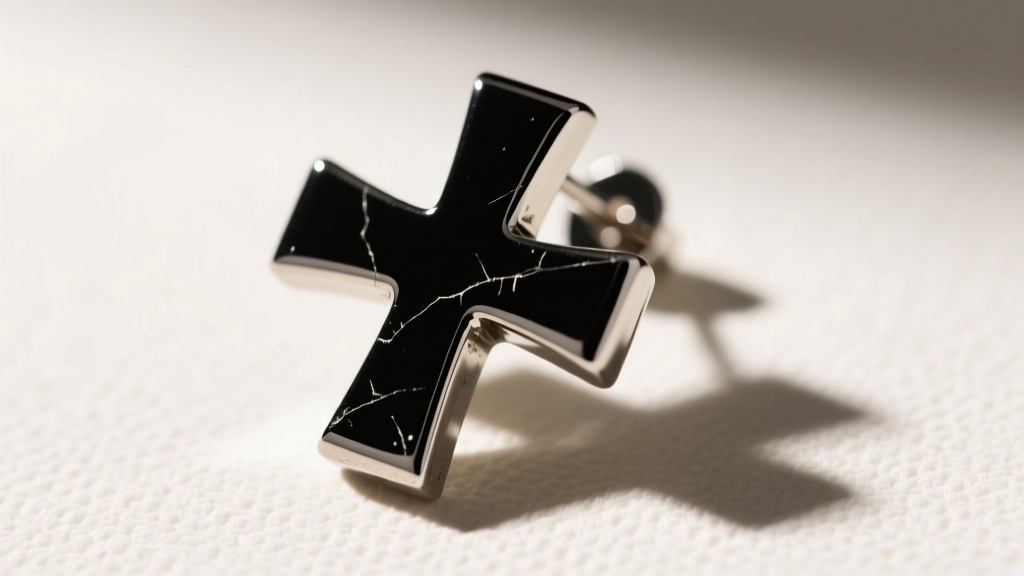

The black cross earring is a staple of alternative, minimalist, and gothic jewelry aesthetics. However, achieving a true, lasting black finish on metal is one of the most persistent challenges in jewelry manufacturing. Whether you are dealing with a beloved piece that has faded to a patchy gray, or a new purchase that is causing severe contact dermatitis, understanding the metallurgy behind black jewelry is essential. In this comprehensive troubleshooting guide, we break down the exact failure modes of black coatings, how to repair mechanical breaks, and how to source pieces that will actually last.
The Anatomy of a Black Cross Earring: Why Coatings Fail
When your favorite black cross earring begins to fade, the culprit is almost always the application method used to achieve the dark color. Jewelers use four primary methods to blacken metal, and each has a distinct lifespan and failure mode. Understanding which method was used on your jewelry is the first step in troubleshooting its deterioration.
Oxidized Sterling Silver vs. Black Rhodium vs. PVD
Oxidation is a chemical process, not a plating. Sterling silver is exposed to sulfur compounds (like liver of sulfur) to create a dark patina on the surface. Because this patina is essentially controlled tarnish, it will naturally wear away on high-friction areas, such as the edges of a cross or the post that rubs against the earlobe.
Black rhodium, on the other hand, is an electroplated coating. It provides a brilliant, gunmetal-black shine but is notoriously brittle. When applied over soft base metals or flexible prongs, black rhodium will micro-fracture and flake off. Physical Vapor Deposition (PVD) is the gold standard for modern black jewelry. In a vacuum chamber, titanium or zirconium is vaporized and bonded to the jewelry at a molecular level, creating a scratch-resistant surface that will not rub off with daily wear.
| Material / Finish | Application Method | Average Lifespan | Common Failure Mode | Price Range |
|---|---|---|---|---|
| Oxidized Silver | Chemical (Liver of Sulfur) | 6-12 months | Rubs off on high-contact edges | $25 - $80 |
| Black Rhodium | Electroplating | 1-2 years | Flaking, patchy micro-fractures | $60 - $150 |
| PVD Titanium | Vacuum Chamber Deposition | 5+ years | Rare; mostly impact chipping | $80 - $250 |
| Black Enamel | Kiln-Fired Glass Powder | 10+ years | Cracking from blunt force | $90 - $300 |
Troubleshooting Skin Irritation and the "Green Ear" Effect
If your earlobe becomes itchy, red, or develops a greenish tint after wearing a black cross earring, you are experiencing a reaction to the base metal, not the black finish itself. According to the Rio Grande Knowledge Base, many mass-market black earrings use a nickel-silver or brass base that is electroplated with black rhodium or black ruthenium.
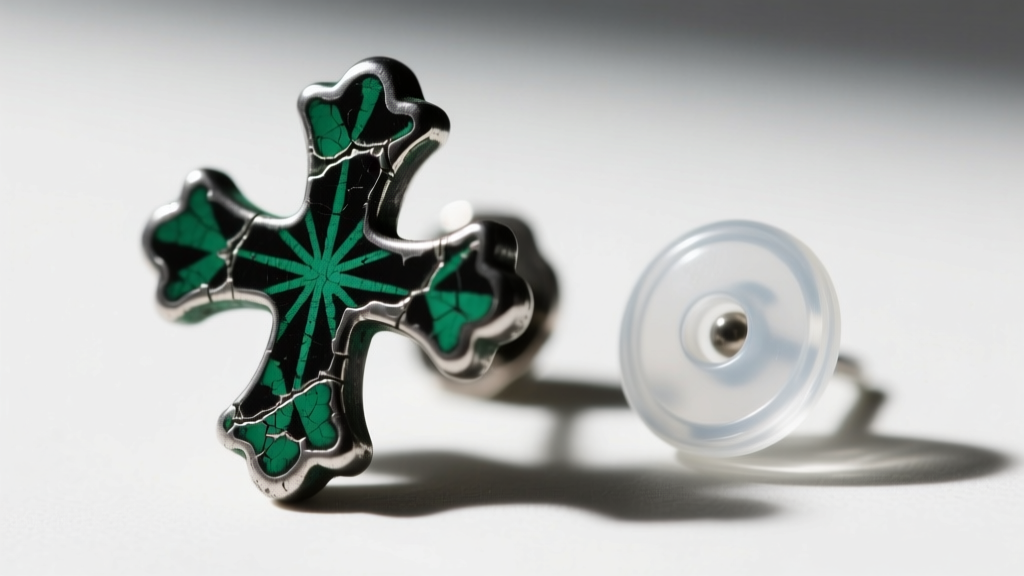
The Nickel Under-Plating Problem
When the microscopic layer of black plating wears thin or develops micro-fractures, your skin's natural acidity reacts with the underlying nickel or copper. This creates copper chloride or nickel salts, resulting in the dreaded green stain and severe contact dermatitis.
The Solution: You must transition to hypoallergenic base metals. Look for black earrings made from Implant Grade Titanium (ASTM F136) or Niobium. These metals are inherently biocompatible. When purchasing, verify that the product description explicitly states "nickel-free base" or "ASTM F136 titanium." If you already own a piece that irritates your skin but you love the design, you can paint the post with a specialized jewelry barrier like Eurotool's Jewelers' Epoxy or a simple coat of clear nail polish to create a temporary physical barrier between the metal and your skin.
Fixing Mechanical Failures in Dangle and Drop Crosses
Heavy dangle crosses place immense shear stress on the earring post. A common failure point is the solder joint where the post meets the back of the cross pendant. If your post has snapped off, do not attempt to reattach it with cyanoacrylate (Super Glue). Skin oils, moisture, and the natural flexing of the earlobe will degrade the glue bond within days, leading to a lost earring.
Soldering vs. Epoxy: Repairing Broken Posts
For sterling silver or gold crosses, the only permanent fix is laser welding or traditional silver soldering, which requires a jeweler's torch and pickling solution to remove oxidation. If the cross is made of base metal or features heat-sensitive enamel, traditional soldering will melt the piece. In these cases, a two-part jeweler's epoxy, such as G-S Hypo Cement or Devcon 5-Minute Epoxy, is required.
- Prep the surface: Lightly score both the earring back and the post base with 400-grit sandpaper to create a mechanical grip.
- Clean thoroughly: Wipe both surfaces with 99% isopropyl alcohol to remove all skin oils.
- Cure time: Clamp the post perfectly perpendicular to the cross using a jewelry holding block and let it cure for a full 24 hours, even if the epoxy claims a 5-minute set time.
Pro-Tip on Gauge Sizes: If you are replacing a broken post on a heavy solid silver cross, upgrade the wire thickness. Standard 20-gauge (0.8mm) posts will bend under the weight of a heavy dangle. Upgrade to an 18-gauge (1.0mm) or 16-gauge (1.2mm) post to ensure structural integrity.
Cleaning and Maintenance: What to Avoid
The fastest way to ruin a black cross earring is by using the wrong cleaning method. Many consumers mistakenly believe that ultrasonic cleaners are safe for all jewelry. According to the Gemological Institute of America (GIA), ultrasonic waves and harsh chemical baths can strip oxidized finishes and shatter kiln-fired enamel.

How to Safely Clean and Re-Oxidize
For PVD titanium and black enamel, simply wash the earrings with warm distilled water and a drop of pH-neutral dish soap, then pat dry with a microfiber cloth. Never use silver polishing dips (like Tarn-X) on an oxidized black cross earring, as these chemicals are designed to strip sulfur compounds, which will instantly remove the black patina and leave you with a bright, shiny silver cross.
If your oxidized sterling silver cross has faded to gray, you can easily re-oxidize it at home. Purchase a small jar of Liver of Sulfur (LOS). Dissolve a pea-sized amount of LOS gel in a cup of warm water. Dip the clean silver cross into the solution for 10 to 15 seconds until it turns completely black. Rinse it in cold water, then use a specialized polishing cloth (like a Sunshine Cloth) to gently buff only the raised, high-contact areas of the cross. This restores the high-contrast, antique black finish that makes the design pop.
Expert Buying Guide: Sourcing Long-Lasting Black Crosses
When investing in a new piece, prioritize construction and material transparency over brand names. For cartilage piercings, such as a helix or conch cross stud, always opt for internally threaded or threadless (push-pin) PVD titanium. Externally threaded posts will tear the delicate fistula of the piercing channel upon insertion, and the threads are prime locations for black plating to chip away.
For lobe dangles, seek out brands that utilize kiln-fired vitreous enamel rather than cold enamel (epoxy resin). Cold enamel will yellow and shrink over time when exposed to UV light and skin acidity, whereas vitreous enamel is essentially glass fused to metal, offering a permanent, vibrant black that will outlast the metal itself. By understanding the metallurgy and mechanics behind your jewelry, you can curate a collection of dark, edgy accessories that remain as striking as the day you bought them.


