Troubleshooting Heavy Vintage Vogue Earrings: Fixes & Care
Learn how to troubleshoot, restore, and comfortably wear heavy vintage vogue earrings with expert fixes for clip-ons, tarnish, and earlobe strain.

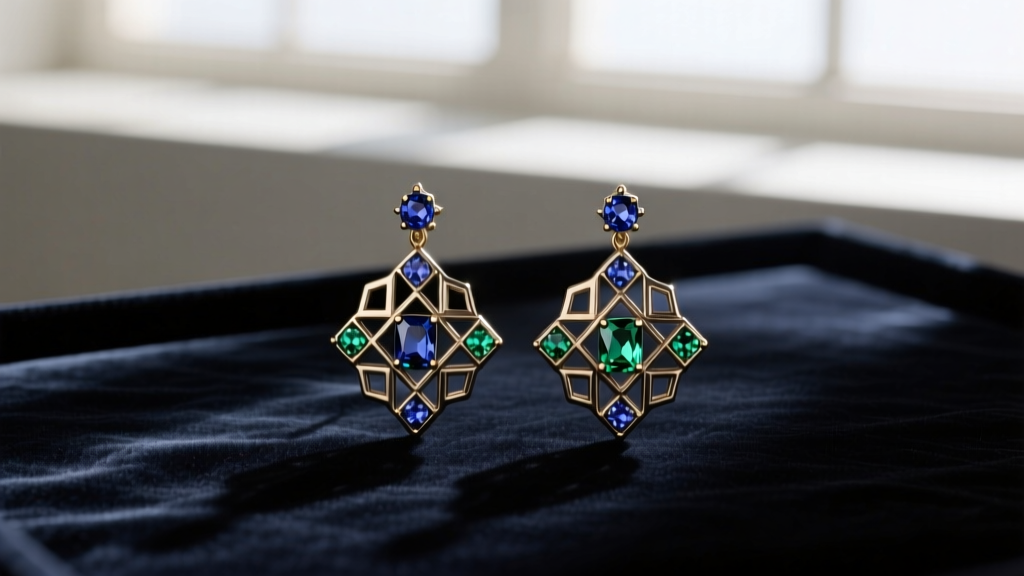
The Unique Challenges of Vintage Vogue and Art Deco Earrings
Collecting and wearing vintage vogue earrings—particularly those originating from the 1920s through the 1960s high-fashion costume jewelry boom—presents a unique set of physical and chemical challenges. Unlike modern, lightweight minimalist jewelry, mid-century and Art Deco pieces were designed with dramatic silhouettes, utilizing heavy brass bases, thick glass chatons, and complex tiered metalwork. While visually stunning, these structural choices often result in severe earlobe strain, degraded base metals, and failing mechanical clasps.
In 2026, the secondary market for authenticated vintage vogue earrings continues to surge, but many buyers are caught off guard by the practical realities of wearing 80-year-old accessories. From stripped screw-back threads to the dreaded 'pot metal disease,' troubleshooting these pieces requires a blend of horological precision and conservation-grade chemistry. This guide provides actionable, expert-level solutions to the most common structural and cosmetic failures found in vintage statement earrings.
Troubleshooting Heavy Earlobe Strain (The 'Droop' Fix)
The most immediate complaint regarding vintage vogue drop earrings is the 'forward droop.' Because these pieces were often cast in solid brass or zinc alloys, a single earring can weigh between 12 and 25 grams. For context, a standard modern gold hoop weighs roughly 3 to 5 grams. This excessive weight pulls the earlobe forward, causing the decorative face of the earring to point toward the floor rather than sitting flush against the face.
Gauge Mismatches and Fistula Tearing
Before addressing the weight, you must address the post thickness. Modern standard earrings are typically 20-gauge (0.81mm) or 18-gauge (1.0mm). However, many vintage pierced earrings from the 1940s and 50s feature thick, un-tapered 16-gauge (1.2mm) or even 14-gauge (1.6mm) posts. Forcing a 16-gauge vintage post into a modern 20-gauge fistula will cause micro-tearing, inflammation, and potential blowouts.
- The Fix: Never force the post. Have a professional jeweler use a tapered broach tool to gently ream the post down to an 18-gauge thickness, or use a 1.2mm taper insertion tool over several weeks to safely stretch the piercing.
- Support Hardware: To counteract the forward droop, utilize 14k gold or medical-grade silicone earlobe support discs (such as Lobe Wonder patches). These 10mm adhesive patches distribute the 20g+ weight across a 314-square-millimeter surface area on the back of the earlobe, preventing the earring post from acting as a lever that slices through the tissue.
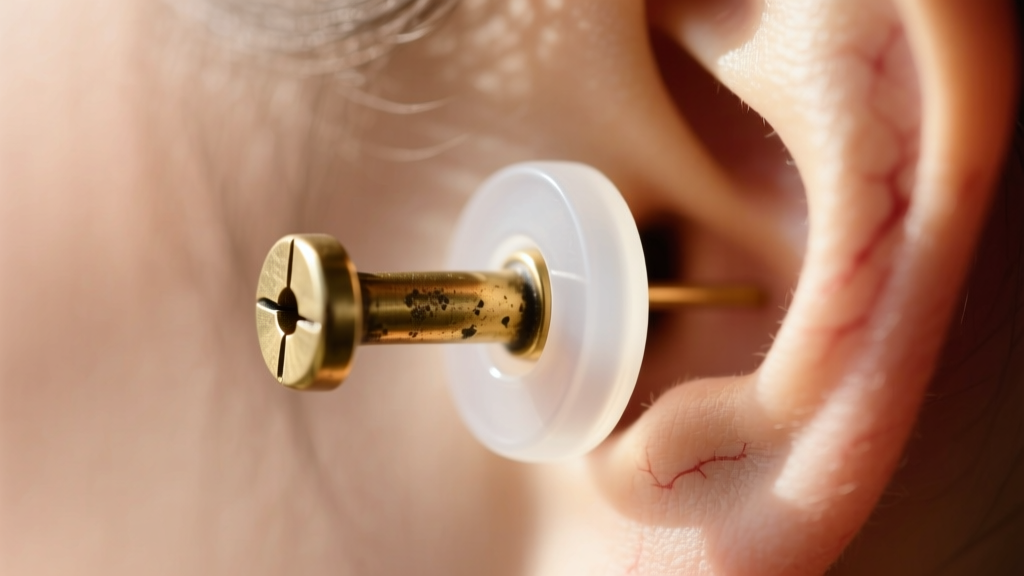
Converting and Fixing Vintage Clip-Ons and Screw-Backs
Before the widespread adoption of ear piercing in the late 1960s, the vast majority of vintage vogue earrings were manufactured as clip-ons or screw-backs. Both mechanisms are notorious for failing after decades of use.
Adjusting Clip-On Tension
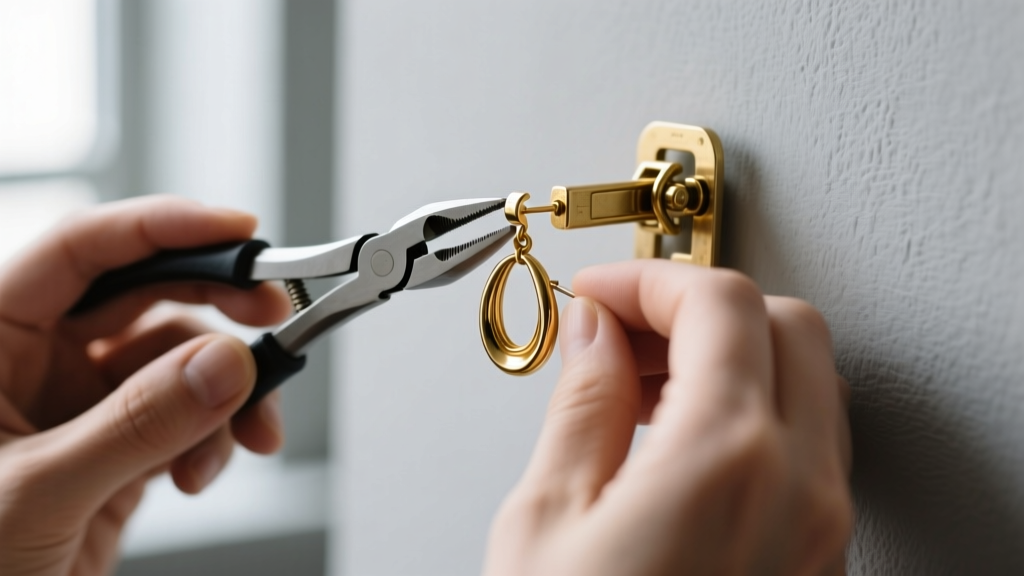
Vintage clip-ons rely on a hinged metal paddle and a tension spring. Over time, the metal fatigues, resulting in a clip that either pinches the cartilage painfully or slides off the lobe entirely. Do not use standard steel jewelry pliers to bend the clip, as they will mar the gold-tone or rhodium plating. Instead, use nylon jaw pliers (like those made by Eurotool) to gently squeeze the hinge barrel, increasing the tension incrementally. Apply a microscopic drop of synthetic watch oil to the hinge pin to eliminate squeaking and metal-on-metal grinding.
The Screw-Back Thread Failure
Screw-back earrings feature a threaded post and an adjustable, bullet-shaped clutch. A common failure mode is the stripping of the clutch's internal threads or the bending of the post itself. If the post is bent, it must be rolled on a flat steel bench block and straightened with a rawhide mallet. If the threads are stripped, the clutch must be replaced with a modern vintage-style reproduction clutch, as modern butterfly backs will not fit the thicker, non-grooved vintage posts.
Conversion Methods: From Clip-On to Pierced
If you prefer to convert a heavy vintage clip-on to a pierced post, the method you choose depends entirely on the base metal. Avoid epoxy at all costs for heavy pieces; the shear stress of a 20-gram earring will snap the epoxy bond within weeks.
| Conversion Method | Cost Estimate | Durability | Best Application |
|---|---|---|---|
| Epoxy Adhesive | $5 - $12 | Low (High failure rate) | Lightweight hollow brass pieces under 5g |
| Soft Soldering | $25 - $45 | Medium (Heat risks) | Solid copper or silver alloys without glued stones |
| Laser Welding | $65 - $120 | Extremely High | Heavy Art Deco drops, pot metal, and rhodium-plated pieces |
Laser welding is the gold standard in 2026 for vintage conversions. It uses a concentrated pulse of light to fuse a modern 18k gold or sterling silver post directly to the vintage base metal without transferring ambient heat, thereby protecting heat-sensitive glued rhinestones and enamel work.
Tackling Base Metal Tarnish and Nickel Allergies
High-fashion vintage costume jewelry was rarely made of solid precious metals. Instead, manufacturers utilized brass, copper, and 'pot metal' (a colloquial term for zinc alloys like Zamak), which were then flash-plated with gold, silver, or rhodium. When this plating wears away, two major problems arise: severe contact dermatitis (due to nickel content in the alloy) and structural degradation.
Identifying 'Zinc Pest' vs. Standard Tarnish
It is critical to differentiate between surface tarnish and 'zinc pest' (intergranular corrosion). Standard tarnish appears as a dark, uniform patina or green verdigris on copper/brass bases. This can be safely removed. Zinc pest, however, manifests as a white, powdery, crystalline bloom that causes the metal to swell, crack, and eventually crumble. Do not attempt to clean zinc pest with liquid dips. The structural integrity is already compromised. According to conservation guidelines from the Victoria and Albert Museum, active zinc pest should be stabilized by keeping the piece in a low-humidity environment (below 40% RH) and sealing it with a micro-crystalline wax.
Sealing Against Nickel Allergies
If your vintage vogue earrings cause itchy, weeping earlobes, the rhodium or gold flash-plating has worn through to the nickel-bearing base metal. While some suggest painting the post with clear nail polish, this is a poor long-term solution as nail polish contains solvents that can degrade vintage adhesives holding the stones in place. Instead, apply a thin coat of Renaissance Wax (a museum-grade micro-crystalline wax) to the post and clutch. This creates a hypoallergenic, moisture-resistant barrier that lasts for months and will not damage the surrounding metal or stones.
Cleaning Rhinestones and Foil-Backed Gems Safely
The brilliance of mid-century vintage vogue earrings relies heavily on foil-backed glass rhinestones, particularly the highly sought-after Aurora Borealis (AB) finishes introduced in the mid-1950s. The 'foil' is a delicate metallic silvering applied to the back of the glass to reflect light. This is the most vulnerable component of the earring.
Expert Warning: Never place vintage foil-backed earrings in an ultrasonic cleaner, and never use ammonia-based jewelry dips (like Tarn-X or Hagerty). The high-frequency vibrations will shatter the glass or dislodge the glue, while ammonia will instantly dissolve the silver foil backing, turning the stone permanently gray and opaque.
According to the Gemological Institute of America (GIA), vintage costume stones should only be cleaned using dry methods or highly controlled damp methods. To clean cloudy rhinestones:
- Use a clean, dry, soft-bristled makeup brush to sweep away surface dust and skin oils from the prongs.
- For stubborn grime, dip a cotton micro-swab in distilled water (never tap water, as minerals will leave spots) and wring it out until it is barely damp.
- Gently roll the swab over the top facet of the stone, avoiding the metal prongs entirely to prevent water from seeping under the stone and rusting the foil.
- Immediately dry the stone with a microfiber cloth and use a can of compressed air to blow out any trapped moisture from the settings.
Summary Checklist for Vintage Earring Maintenance
Maintaining a collection of vintage vogue earrings requires a shift in mindset from modern jewelry care. By respecting the material limitations of mid-century manufacturing, you can preserve these wearable artifacts for future generations. Always store your pieces individually in acid-free tissue paper inside a climate-controlled environment to prevent the metal alloys from reacting with one another. Before wearing, inspect the prongs for lifting, check the posts for micro-bends, and ensure your earlobe support hardware is properly adhered. With these troubleshooting protocols in place, you can confidently wear heavy, historical statement pieces with both comfort and structural security.


