Safety Back Earring Won't Come Off? 5 Safe Removal Tips
Panicking because your safety back earring won't come off? Learn expert, damage-free removal techniques, cleaning tips, and prevention methods.

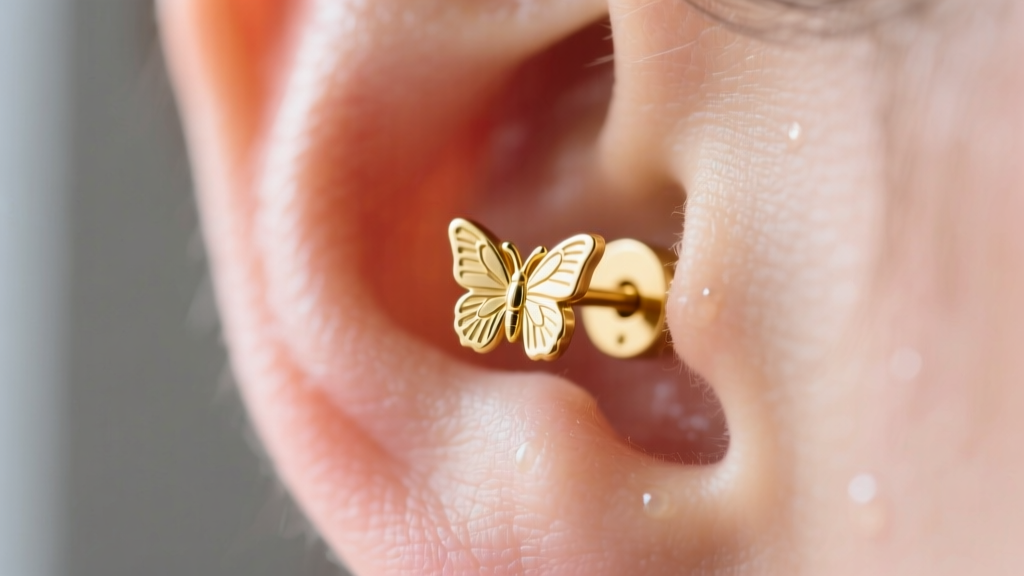
The Anatomy of a Stuck Earring: Why Safety Backs Jam
There are few jewelry emergencies more inducing of sheer panic than realizing your safety back earring won't come off. Whether you are dealing with a standard butterfly clutch, a friction back, or a screw-back mechanism, the inability to remove your jewelry is usually the result of three specific failure modes: biological buildup, mechanical deformation, or allergic tissue swelling.
Standard commercial stud earrings typically feature a 20-gauge (0.81mm) or 18-gauge (1.02mm) post. The butterfly clutch relies on two looped wire prongs that create outward tension, snapping into a small groove or notch near the end of the post. When this mechanism fails, it is rarely due to the metal itself fusing, but rather external factors locking the tension prongs in place.
Biological Buildup (Sebum and Keratin)
The most common culprit is a mixture of sebum (skin oils), dead keratinocytes (skin cells), and environmental dust. Over time, this mixture hardens into a cement-like crust around the post's notch. If you wear your earrings 24/7 without removing them for routine cleaning, this biological debris effectively glues the safety back to the post.
Mechanical Deformation
If you frequently sleep in your earrings, the pressure against your pillow can bend the delicate wire prongs of the butterfly clutch inward. Once the prongs are compressed past the post's groove, pulling the back straight off becomes mechanically impossible without specialized leverage.
Allergic Contact Dermatitis and Swelling
If your earrings are made of surgical steel or low-karat gold, they likely contain nickel or copper. According to the Mayo Clinic, nickel allergies can cause localized contact dermatitis. This causes the earlobe tissue to swell and engorge, literally swallowing the short post of the earring and leaving no room to grip the safety back.
Step-by-Step Guide: What to Do When Your Safety Back Earring Won't Come Off
Do not resort to brute force. Yanking the earring can tear the fistula (the piercing channel), leading to scar tissue formation and blowouts. Follow these progressive, damage-free removal methods.
Method 1: The Warm Saline Soak
If the earring is stuck due to biological crust, you must soften the debris.
- Soak a clean cotton pad or gauze in warm, sterile 0.9% sodium chloride saline wound wash.
- Press the soaked pad firmly against the back of the earlobe, completely enveloping the stuck safety back.
- Hold it in place for 5 to 10 minutes. The warmth increases local blood flow, while the saline breaks down the lipid bonds of the sebum.
- Gently attempt to twist and pull the back. If it yields, slide it off.
Method 2: The Lubrication Technique
If saline fails, you need a safe lubricant to reduce the friction coefficient between the metal post and the clutch prongs.
- Apply a single drop of sterile jojoba oil, vitamin E oil, or even a dab of plain petroleum jelly directly to the seam where the post meets the back.
- Allow it to seep in for 3 minutes.
- Grip the front of the earring stud firmly with one hand to stabilize the post, and use your thumbnail and index finger to wiggle the safety back side-to-side (not just pulling straight out) while applying outward pressure.
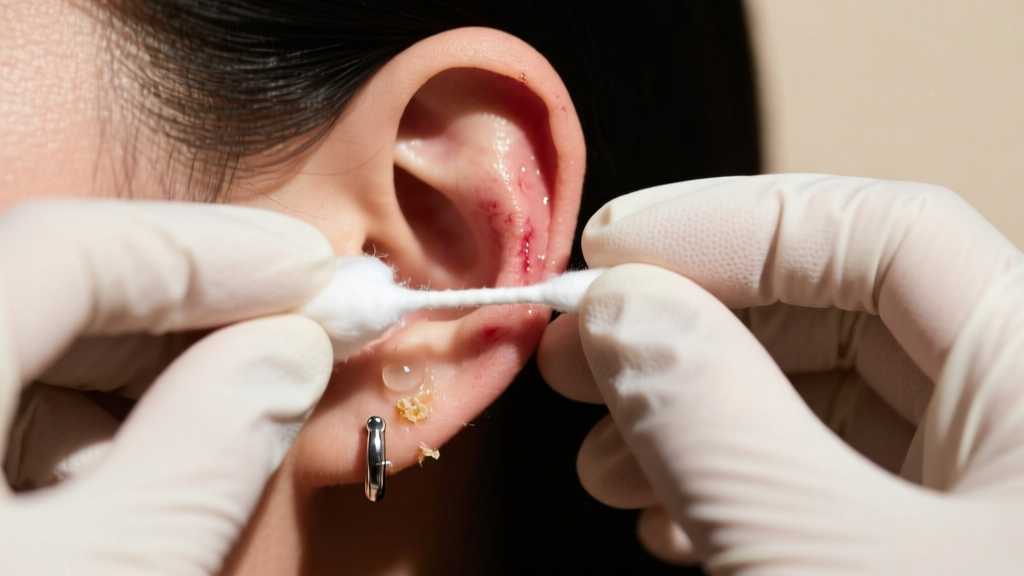
Method 3: Mechanical Leverage (The Pliers Method)
If the clutch is mechanically bent or wedged too tightly, you will need tools.
- Sanitize a pair of flat-nose jewelry pliers with 91% isopropyl alcohol.
- Wrap the tips of the pliers in medical tape or a soft microfiber cloth to prevent scratching the metal or pinching the skin.
- Have a partner gently grip the front stud with their fingers to act as an anchor.
- Use the padded pliers to grip the butterfly back. Apply steady, slow, outward traction. Do not twist violently, as this can snap a thin 20G post.
Troubleshooting Table: Earring Back Types and Specific Stuck Scenarios
Not all earring backs operate on the same mechanical principles. Identifying your specific back type will dictate your removal strategy.
| Back Type | Common Failure Mode | Best Removal Strategy |
|---|---|---|
| Butterfly / Friction Clutch | Prongs bent inward; sebum locking the notch. | Warm saline soak followed by padded flat-nose pliers for steady outward traction. |
| Screw-Back | Cross-threading or stripped internal threads due to forced twisting. | Apply a drop of mineral oil, wait 5 minutes, and use rubber-gripped fingers to turn counter-clockwise with high friction. |
| Silicone O-Ring | Silicone degrades, swells, and fuses to the metal post over time. | Submerge the earlobe in a cup of warm water and mild soap to shrink and lubricate the silicone; use tweezers to peel it off. |
| La Pousette (Locking) | Internal spring mechanism jams due to debris or impact. | Do not force. Requires a professional piercer to use a specialized release tool or cut the post. |
Post-Removal Care: Cleaning and Sanitizing the Lobe and Jewelry
Once the stubborn safety back earring is finally removed, the immediate aftermath requires careful attention to prevent infection and ensure the jewelry is safe to wear again.
Treating the Earlobe
The fistula may be irritated, stretched, or micro-torn from the removal process. Spray the front and back of the lobe with sterile saline wound wash. Avoid hydrogen peroxide or rubbing alcohol on the skin, as these are cytotoxic and will destroy the newly forming epithelial cells, delaying healing. If the tissue is highly inflamed due to a metal allergy, apply a cold compress for 10 minutes to reduce vascular engorgement.
Sanitizing the Jewelry
The removed earring and back are likely coated in oxidized metals and biological matter.
- For solid gold, platinum, or titanium: Submerge the jewelry in a small glass bowl of 91% isopropyl alcohol for 15 minutes. Use a soft-bristled baby toothbrush to gently scrub the post notch and the inside of the clutch.
- For plated or hollow jewelry: Do not soak in alcohol, as it can degrade the plating or seep into hollow components. Instead, wash with warm water and a mild, fragrance-free antibacterial soap, then dry completely with a lint-free cloth.
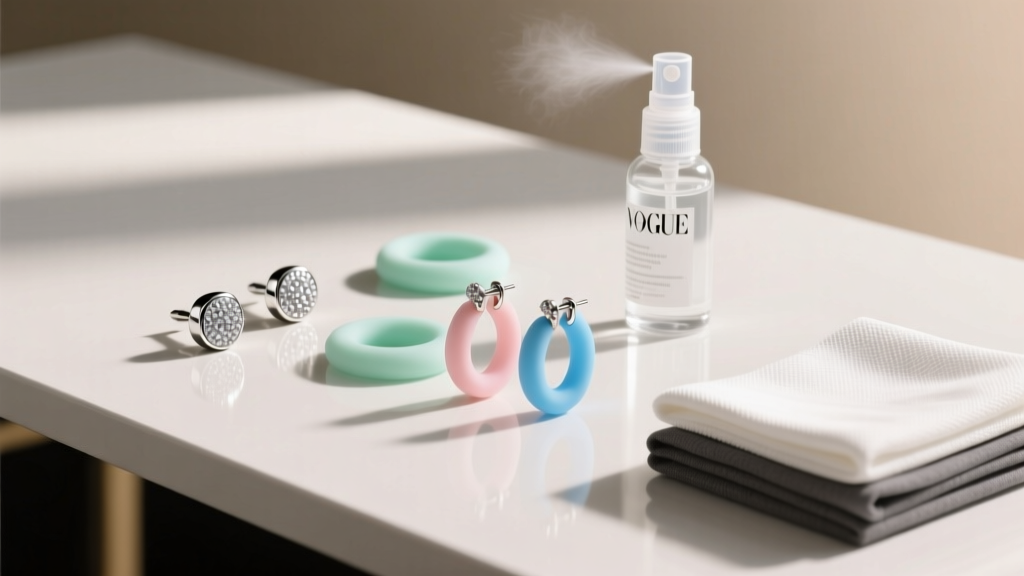
Preventative Maintenance: How to Stop Earring Backs from Jamming Again
The best way to deal with a stuck earring is to engineer your jewelry wardrobe so that it never happens. Professional piercers and jewelry metallurgists recommend the following structural upgrades to your daily wear.
Upgrade to Implant-Grade Titanium
If your earlobes swell, trapping the earring back, you are likely reacting to the nickel in standard "surgical steel." Switch to jewelry certified as Implant-Grade Titanium (ASTM F-136). This specific alloy is entirely nickel-free and biocompatible, eliminating allergic swelling that causes tissue to engulf the earring post. The Association of Professional Piercers (APP) strongly advocates for ASTM F-136 titanium for all healing and sensitive piercings.
Ditch the Butterfly Clutch for Flat-Back Labrets
Butterfly clutches are notoriously difficult to clean and prone to trapping hair and sebum. Consider replacing your standard studs with internally threaded or threadless flat-back labrets. These feature a flat disc that sits flush against the back of the ear, eliminating the crevices where debris accumulates, and they are secured by tension or threading that rarely jams.
Implement a Weekly Maintenance Routine
Do not leave your daily-wear earrings in for months at a time. Once a week, remove them, clean the posts with an alcohol wipe, and wash your earlobes with a gentle cleanser. If you must use friction backs, replace the metal butterfly clutches with medical-grade silicone O-rings every three months, as silicone provides a secure grip without the mechanical failure points of bent metal prongs.
Expert Insight: "If you frequently experience a safety back earring won't come off scenario, check your post length. Standard posts are often 6mm or 7mm. If you have thicker earlobes, the back is forced into the tissue groove, creating a vacuum seal. Upgrading to an 8mm or 10mm post length provides the necessary clearance for easy removal and proper airflow."
By understanding the mechanical and biological reasons behind stuck jewelry, you can safely resolve the issue without damaging your piercing. Upgrading your materials and adopting a rigorous cleaning schedule will ensure your earrings remain comfortable, secure, and easy to remove for years to come.


