Fix & Care Guide: James Avery Cross Earrings Troubleshooting
Solve common issues with James Avery cross earrings. Expert troubleshooting for tarnishing, loose clutches, bent posts, and cleaning intricate silver designs.

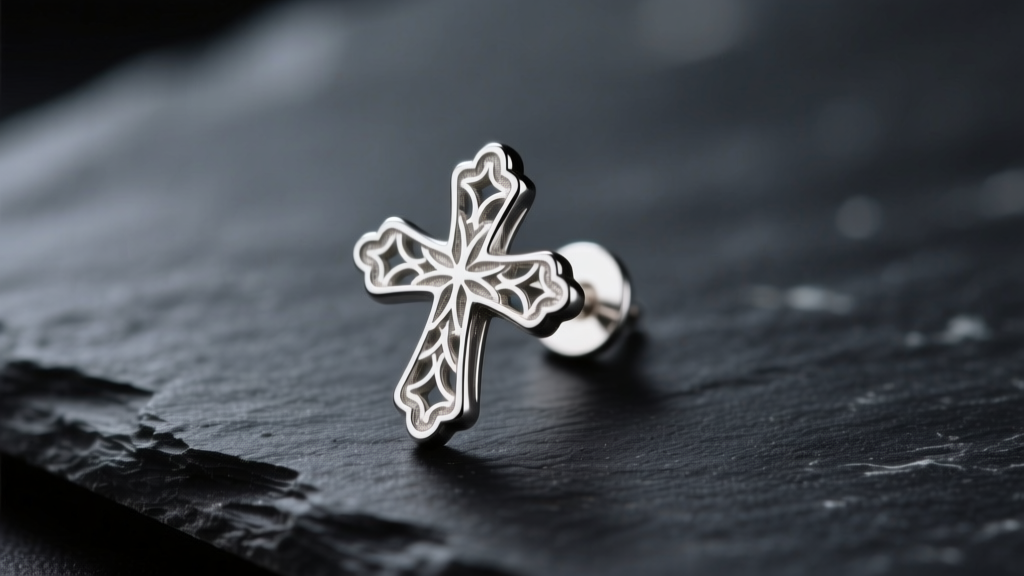
The Legacy and Metallurgy of James Avery Cross Earrings
James Avery Artisan Jewelry has built a formidable legacy since its founding in Kerrville, Texas, utilizing traditional lost-wax casting methods to create heavy, durable, and deeply symbolic jewelry. As of 2026, the secondary market for vintage and inherited James Avery pieces has surged, meaning many collectors and everyday wearers are restoring cross earrings that require specialized troubleshooting. Whether you own the classic Openwork Cross, the Diamond Sideways Cross, or a simple .925 sterling silver stud, these pieces are crafted with specific metallurgical properties that dictate how they age, wear, and respond to repairs.
Troubleshooting these earrings requires an understanding of their material composition. James Avery primarily uses .925 sterling silver (92.5% pure silver and 7.5% copper alloy) and 14k gold. The copper content, while necessary to give the silver structural integrity, is the primary culprit behind tarnishing and oxidation. Furthermore, the brand's signature 'antiquing' process—a deliberate application of dark oxidation in the crevices of the cross designs—can be easily ruined by improper cleaning methods. This guide provides deep, actionable solutions for the most common failure modes associated with James Avery cross earrings.
The Tarnish Dilemma: Preserving Intentional Oxidation
The most frequent issue owners face is the dulling of the sterling silver. Silver reacts with hydrogen sulfide in the air to form silver sulfide, a blackish compound that manifests as tarnish. However, James Avery intentionally applies a dark patina (antiquing) to the recessed areas of their cross designs to create contrast and highlight the intricate filigree or sculpted details.
The Danger of Liquid Silver Dips
Never use thiourea-based liquid silver dips (such as Tarn-X) on James Avery cross earrings. These chemical baths do not discriminate between accidental surface tarnish and intentional antiquing. A three-second submersion will strip the dark patina from the crevices, leaving the cross looking flat, overly bright, and visually diminished. According to the Gemological Institute of America (GIA), chemical dips can also cause micro-pitting in cast silver over time, weakening the structural integrity of delicate openwork designs.
Actionable Fix: The Two-Cloth Polishing Method
To safely restore the high-polish surfaces without damaging the dark recesses, use a dual-sided jeweler's cloth (such as a Sunshine Cloth).
- Step 1: Use the inner, chemically treated microfiber cloth to gently rub only the raised, high-polish surfaces of the cross.
- Step 2: Avoid pressing the cloth into the grooves or filigree cutouts.
- Step 3: Use the outer, untreated flannel cloth to buff the silver to a high shine and remove any residual polishing compound.
Troubleshooting Post and Clutch Mechanics
A frustrating and common failure point is the earring backing. James Avery typically utilizes standard friction backs (butterfly clutches) on their cross studs. The standard post thickness for their sterling silver and 14k gold studs is 20-gauge (0.81mm), though some heavier, larger dangle crosses may feature 18-gauge (1.02mm) posts for added support.
Why Friction Backs Fail
Over years of wear, the metal scrolls inside a standard butterfly clutch experience metal fatigue and expand, causing the clutch to slip off the 20-gauge post. Conversely, if the post becomes slightly bent or develops microscopic burrs from being forced onto a tight clutch, the backing can become permanently stuck.
| Clutch Type | Material | Grip Mechanism | Best Use Case |
|---|---|---|---|
| Standard Butterfly | Sterling Silver / Gold | Metal scroll tension | Everyday wear (requires periodic replacement) |
| Silicone O-Ring | Medical-grade Silicone | Friction and material grip | Active wear, preventing loss of heavy crosses |
| LaPoure Locking Clutch | Gold / Platinum | Internal spring-loaded lock | High-value diamond cross earrings |
| Flat Disc Back | Sterling Silver | Wide surface area friction | Supporting heavy, oversized cross faces |
Expert Fix for Stuck Clutches: If a butterfly back is seized on a James Avery post, do not pull it with standard steel pliers, as this will mar the precious metal and potentially snap the post. Apply a single drop of penetrating oil (like mineral oil) to the junction, let it sit for ten minutes, and use nylon-jaw pliers to gently twist and pull the clutch straight off the 0.81mm post.
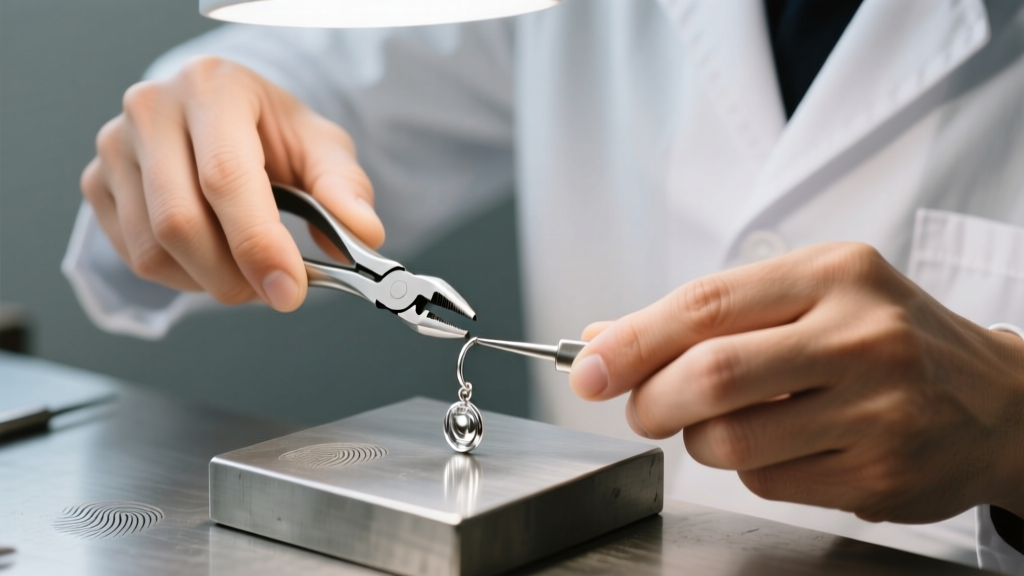
Straightening Bent .925 Silver Posts Without Snapping
Sterling silver is a relatively soft metal. On the Vickers hardness scale, annealed .925 silver sits around 65-70 HV. This means that catching a cross earring on a sweater or sleeping in them can easily bend the 20-gauge post. While bending it back with your fingers seems logical, this introduces a severe risk of work-hardening.
The Work-Hardening Risk
When you bend silver back and forth at room temperature, the crystal lattice structure of the metal compresses and locks, making it brittle. If you bend a post more than two or three times, it will snap cleanly off the base of the cross. To safely straighten a bent post, you must use specialized jewelry bench tools.
- Secure the Cross Face: Place the decorative face of the cross earring into a soft-jaw bench vise or hold it firmly in a leather-padded clamp. Never grip the cross itself with bare steel tools.
- Support the Post: Place the bent post flat against a polished steel bench block.
- Tap, Don't Bend: Using a rawhide or nylon mallet, gently tap the bent section of the post back into alignment. The rawhide transfers force without marring the silver or inducing the severe work-hardening that finger-bending causes.
- Check the Alignment: Roll the post across a flat glass surface. If it wobbles, repeat the tapping process until it rolls perfectly straight.
Deep Cleaning Pave and Gemstone Cross Accents
Many of James Avery's premium cross designs, such as the Diamond Openwork Cross or the Black Onyx Cross, incorporate gemstones. The cleaning protocol changes drastically when diamonds, onyx, or mother-of-pearl are introduced into the cast silver or gold framework.
Expert Warning: Never place James Avery gemstone cross earrings in an ultrasonic cleaner. The high-frequency vibrations can easily fracture included diamonds, shatter porous stones like onyx or turquoise, and shake loose the adhesive or prongs used in pave settings.
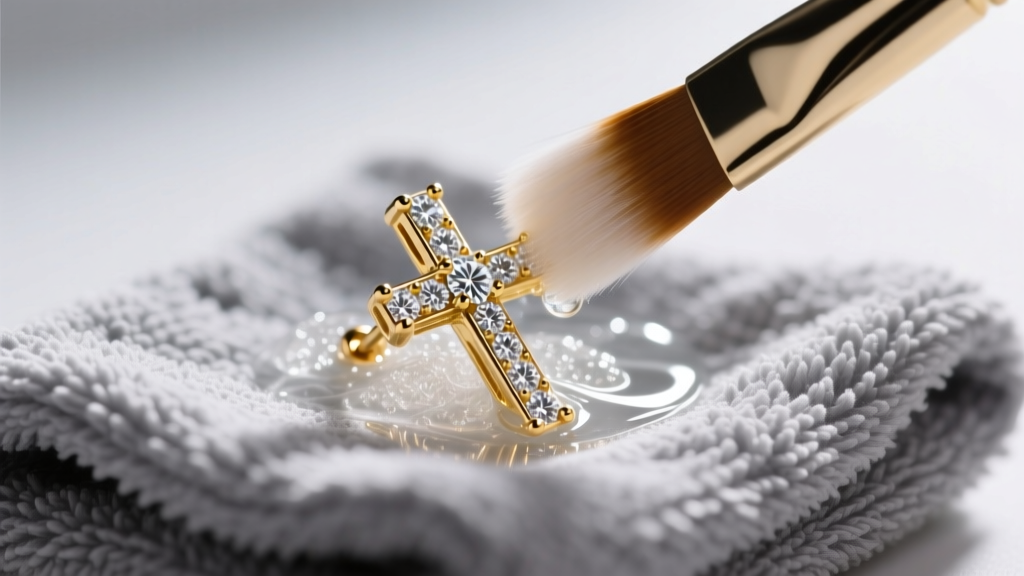
For diamond-accented crosses, the safest and most effective method is a manual soak. Mix a few drops of mild, ammonia-free dish soap (like Dawn) into a bowl of warm distilled water. Let the earrings soak for 15 minutes to loosen sebum and cosmetic buildup trapped behind the diamond girdles. Use a soft baby toothbrush to gently agitate the area where the diamond meets the silver bezel or prong. Rinse under a gentle stream of lukewarm water, ensuring the drain is securely plugged, and pat dry with a lint-free microfiber cloth. For the official brand guidelines on mixed-media care, always refer to the James Avery Jewelry Care portal.
When to Rely on Official Restoration Services
While many issues like tarnish, slipping clutches, and minor bends can be resolved at home, certain catastrophic failures require professional intervention. If a post has completely sheared off the base of the cross, or if a structural arm of an openwork filigree cross has snapped, DIY soldering is highly discouraged. Standard torch soldering can easily melt the intricate details of the cross face or cause thermal shock to any set gemstones.
James Avery offers an official restoration service at their Kerrville workshops, utilizing laser welding technology. Laser welders use a highly focused beam of light to fuse the silver or gold at the exact point of the break, generating virtually no heat transfer to the surrounding metal or stones. If your cross earrings suffer structural failure, package them securely and utilize the brand's official repair assessment service to ensure the piece maintains its structural integrity and heirloom value for decades to come.


