How to Safely Remove and Adjust Tight Earring Backs
Learn how to safely remove stuck butterfly backs and permanently adjust tight earring backs with our expert step-by-step metallurgy and gauge guide.

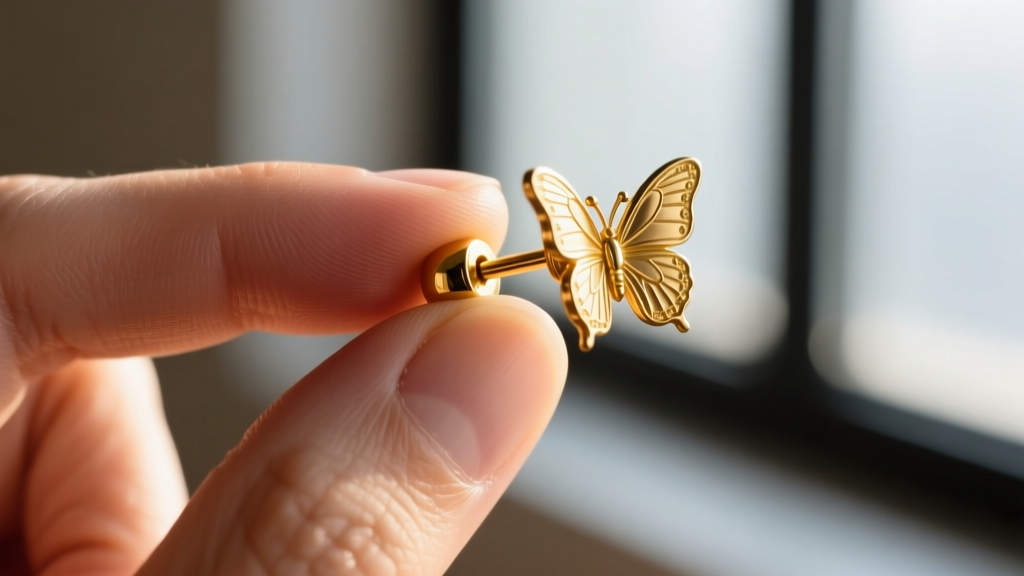
There are few jewelry emergencies quite as frustrating as a stuck earring back. Whether you are dealing with a brand-new pair of diamond studs or a vintage heirloom, tight earring backs can turn a simple accessory change into a painful, panic-inducing ordeal. As jewelry metallurgy and manufacturing standards have evolved, the friction mechanisms on modern posts have become increasingly secure—sometimes too secure for the average wearer to manipulate safely.
In this comprehensive guide, we will explore the mechanical reasons behind stuck friction backs, provide a step-by-step masterclass on safely removing them without damaging the post or your earlobe, and teach you how to permanently adjust the tension. We will also cover alternative backing systems for heavy earrings and thick posts.
The Metallurgy and Mechanics of Tight Earring Backs
Before attempting to force a stuck backing off, it is crucial to understand why it became tight in the first place. The issue almost always boils down to a mismatch in wire gauge or metal work-hardening.
Gauge Mismatch: The 18g vs. 20g Problem
Standard earring posts are typically manufactured in either 20-gauge (0.81mm) or 18-gauge (1.02mm) wire. Butterfly backs are stamped with internal loops designed to grip a specific diameter. If a manufacturer accidentally pairs a 20-gauge friction back with an 18-gauge post, the metal loops will clamp down with excessive force. This creates a vice-like grip that feels completely immovable to human fingers.
Work-Hardening and Debris Buildup
Precious metals like 14k and 18k gold are relatively soft, but they work-harden when subjected to repeated friction and pressure. Over time, the small metal tabs on a butterfly back can stiffen. Additionally, microscopic buildup of dead skin cells, sebum, and cosmetic products can calcify inside the backing's loop, acting like a microscopic cement. According to the Gemological Institute of America (GIA), regular ultrasonic cleaning is required to prevent this calcification from permanently seizing metal components.
Step-by-Step Guide to Removing Stuck Butterfly Backs
If you are currently dealing with a stuck earring back, do not pull blindly. Yanking the post can tear the earlobe or bend the wire, ruining the earring. Follow this three-step protocol.
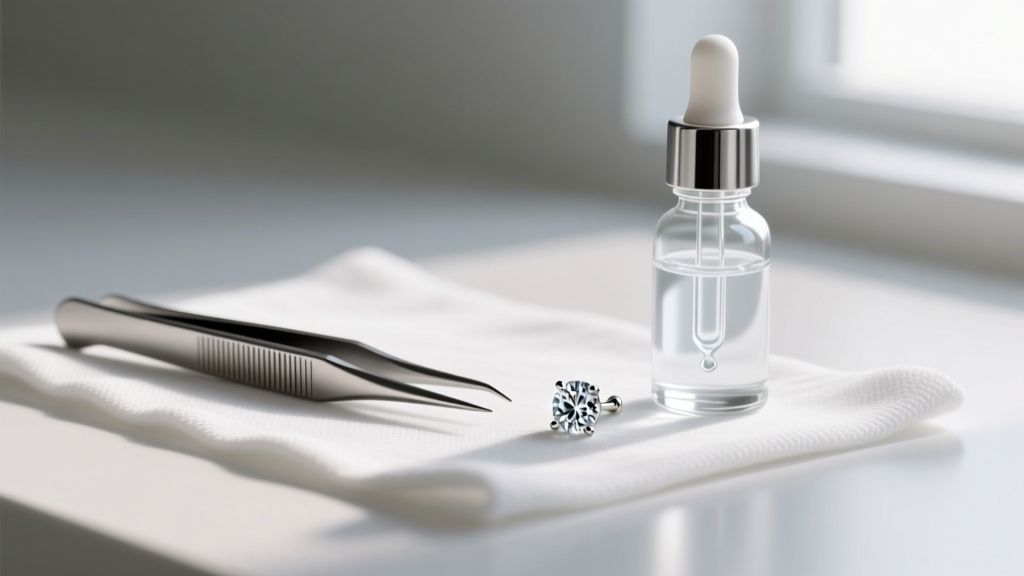
Step 1: The Isopropyl Lubrication Method
Avoid using oil-based lubricants (like baby oil or lotion), as they can degrade silicone components and attract more dirt. Instead, use 99% isopropyl alcohol.
- Soak a cotton swab in 99% isopropyl alcohol.
- Dab it generously around the base of the post where it meets the earring back.
- Allow it to sit for 60 seconds. The alcohol will dissolve sebum and cosmetic buildup while acting as a mild, fast-evaporating lubricant.
Step 2: The Nitrile-Grip Twist
Human skin lacks the micro-friction required to grip smooth metal. Put on a pair of textured nitrile medical gloves. Grip the earring head firmly between the thumb and index finger of your non-dominant hand to stabilize the post. With your dominant hand, grip the butterfly back and apply a gentle twisting motion while pulling outward. The twisting action breaks the microscopic calcification seal without bending the post.
Step 3: The Needle Leverage Technique
If the back still refuses to budge, you need mechanical leverage. Take a standard steel sewing needle or a 0.8mm dental pick. Slide the tip of the needle into the small gap between the earring post and the inner loop of the butterfly back. Gently wiggle the needle to pry the inner loop open by a fraction of a millimeter. This relieves the tension on the post, allowing the back to slide off effortlessly.
Jeweler's Warning: Never use standard steel pliers to grip and pull a gold earring back. Steel is harder than gold and will instantly gouge, scratch, or crush the delicate friction loops, ruining the backing permanently.
How to Permanently Adjust Tight Earring Backs
Once you have successfully removed the tight earring back, you need to adjust the tension so it doesn't get stuck again. The method you use depends entirely on the metal composition.
Adjusting 14k and 18k Gold Backs
Gold is malleable. To loosen a tight gold butterfly back, place it on a hard, flat surface. Insert a thick darning needle or a small, smooth jeweler's awl into the center hole where the post passes through. Gently rock the needle side-to-side to stretch the internal loops outward by 0.1mm. Test the fit on the post; it should slide on with a smooth, firm resistance, requiring only a light push to secure.
Adjusting Platinum and Stainless Steel Backs
Platinum and 316L surgical stainless steel are highly rigid. Attempting to stretch them with a needle can result in the metal snapping or the tool slipping and injuring you. For these metals, use nylon-jaw pliers. Grip the outer wings of the butterfly back with the nylon pliers and apply very light, even pressure to slightly bend the wings outward, which indirectly opens the inner loop.
Alternative Backs for Heavy Earrings and Thick Posts
Sometimes, the solution isn't to fix a tight butterfly back, but to replace it entirely. Heavy drop earrings or large diamond studs require secure tension, but traditional butterfly backs often fail or become uncomfortably tight. Below is a comparison of professional-grade alternatives.
| Backing Type | Best For Gauge | Tension Mechanism | Avg. Price Range |
|---|---|---|---|
| La Pousette (Locking) | 18g - 20g | Spring-loaded internal locking tabs | $40 - $85 / pair |
| Medical Silicone | 20g - 16g | Friction-fit elastomer grip | $5 - $12 / pair |
| Screw Backs | 18g (Threaded) | Threaded post and screw cap | $25 - $50 / pair |
| Jumbo Friction | 16g - 14g | Wide surface area butterfly loops | $15 - $25 / pair |
As noted in the Blue Nile earring education guide, La Pousette backs are the industry standard for high-value diamond studs because their spring-loaded mechanism completely eliminates the risk of the backing sliding off or becoming permanently seized due to friction wear.
Preventing Embedded Earrings and Swelling
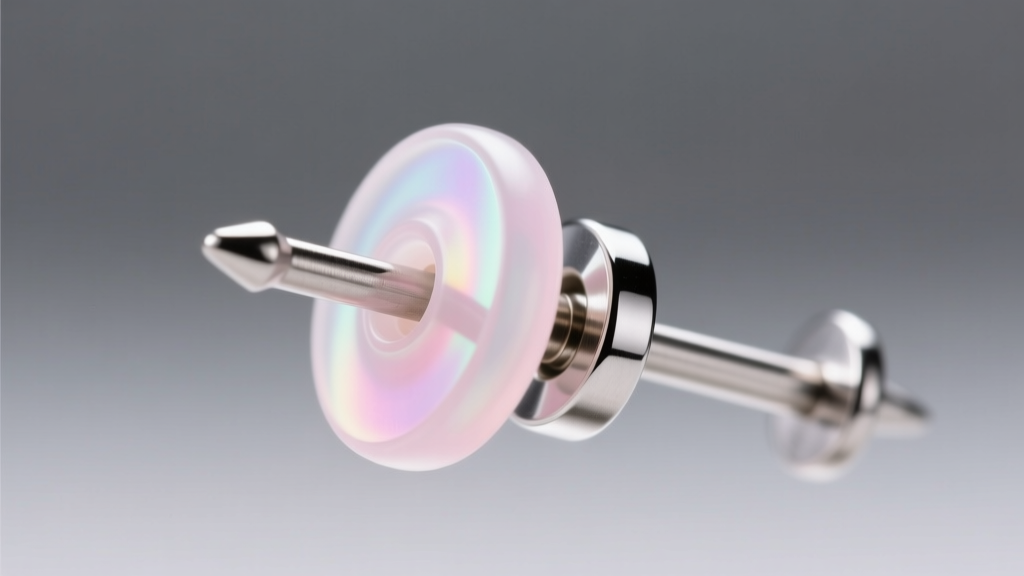
The danger of tight earring backs extends beyond damaged jewelry; it poses a genuine medical risk. If a friction back is pushed too tightly against the earlobe to compensate for a heavy earring, it can restrict blood flow and cause the earlobe to swell around the metal post.
According to the Cleveland Clinic, embedded earrings are a common dermatological issue, particularly in children and individuals with sensitive skin or nickel allergies. When the earlobe swells over the back, it requires minor surgical intervention to remove the jewelry.
The "One-Millimeter" Rule
To prevent embedding, always practice the one-millimeter rule. When securing your earring back, push it onto the post until it holds the earring securely in place, then pull it back exactly one millimeter away from the skin. This gap allows for natural air circulation, accommodates minor daily fluctuations in earlobe swelling, and prevents the metal back from acting as a tourniquet on your tissue.
When to See a Professional Jeweler
If you have tried the isopropyl lubrication and needle leverage methods without success, stop immediately. Continuing to apply force risks snapping the post cleanly off the earring head—a repair that requires laser welding and can cost upwards of $75 to $150 depending on the metal. Take the piece to a local bench jeweler. They possess specialized parallel-jaw pliers and microscopic magnification loupes to safely release the tension without marring the precious metal or damaging the gemstone settings.


