Dangle Cross Earring Troubleshooting: Fix Sagging Lobes
Fix sagging lobes, bent posts, and tangling with our expert dangle cross earring troubleshooting guide. Learn gauge, weight, and backing solutions.

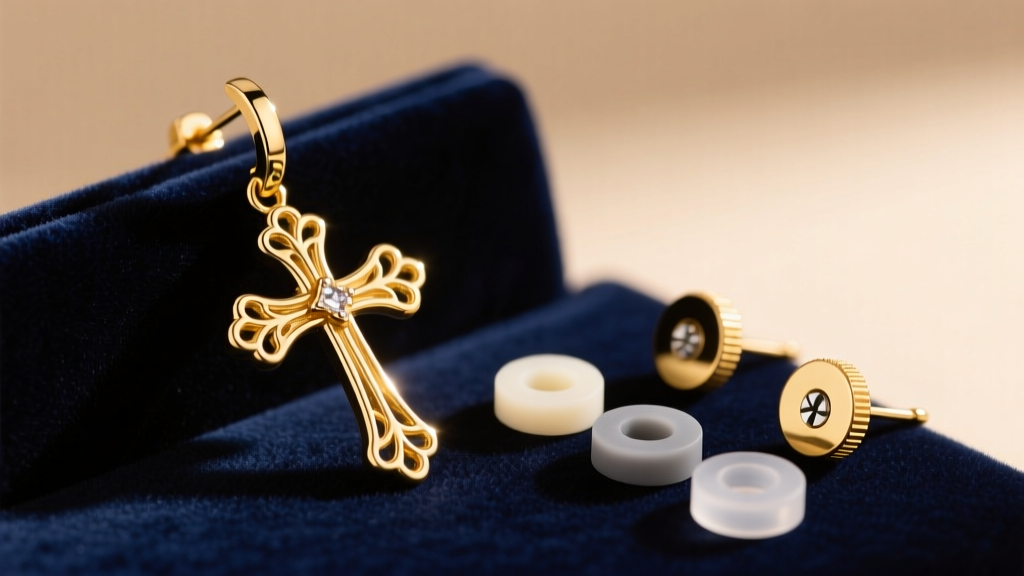
The dangle cross earring is a timeless staple in both religious and fashion jewelry, offering a striking vertical silhouette that draws the eye. However, the very design that makes this style so visually appealing—an elongated, bottom-heavy pendant suspended from a single pivot point—creates a unique set of biomechanical and metallurgical challenges. From stretched fistulas (piercing holes) and bent posts to severe contact dermatitis, wearing a heavy cross pendant on the earlobe requires more than just aesthetic consideration; it demands structural troubleshooting.
In this comprehensive guide, we break down the physics of earlobe stress, identify the failure points of mass-produced religious jewelry, and provide actionable, expert-level solutions to restore comfort and longevity to your favorite pieces.
The Physics of the Droop: Why Crosses Cause Lobe Damage
Unlike a stud or a huggie hoop, a dangle cross earring operates as a pendulum. The center of gravity is often situated 1.5 to 3 inches below the piercing hole. In physics, torque is calculated as Force multiplied by Distance. Even a moderately heavy cross (e.g., 8 grams) generates significant rotational torque on the earlobe tissue. Over time, this constant downward and outward pull causes the collagen and elastin fibers in the earlobe to stretch, leading to the dreaded 'forward droop' or, in severe cases, tissue tearing.
'Any earring exceeding 7 grams requires auxiliary lobe support if worn for more than four hours. The earlobe is not a load-bearing structure; it is a fatty appendage with minimal fibrous scaffolding.' — Principles of Jewelry Ergonomics
Troubleshooting Matrix: Common Issues & Quick Fixes
Before discarding a problematic piece, consult this diagnostic matrix to identify the root cause of your dangle cross earring failures.
| Symptom | Root Cause | Expert Solution |
|---|---|---|
| Forward Drooping | High center of gravity; weak backing | Use flat-front silicone discs or adhesive lobe patches |
| Bent Post | 20-gauge wire too thin for pendant weight | Have a jeweler solder an 18G or 16G post to the bail |
| Hair Snagging | Open jump rings or sharp filigree edges | Solder jump rings shut; file and polish filigree burrs |
| Green Skin / Itching | Copper/nickel base metals reacting to sweat | Switch to ASTM F136 titanium or 14k/18k solid gold |
| Clasp Slipping Off | Smooth post lacking friction notches | Upgrade to locking friction backs or silicone O-rings |
Issue 1: Lobe Sagging and Tearing
If your cross earring points toward the floor rather than hanging parallel to your neck, the issue is a lack of posterior support. Standard butterfly friction backs are entirely insufficient for dangle styles because they only grip the post, not the lobe.
The Fix: Invest in earlobe support patches (such as Lobe Wonder). These are self-adhesive, medical-grade silicone discs with a reinforced center hole. They distribute the torque of the heavy cross across a wider surface area of the ear's posterior. Alternatively, use silicone O-ring backs (1.5mm thickness) combined with a flat-front metal disc to sandwich the lobe securely, preventing the post from tilting downward.
Issue 2: Bent Posts and Jump Ring Failures
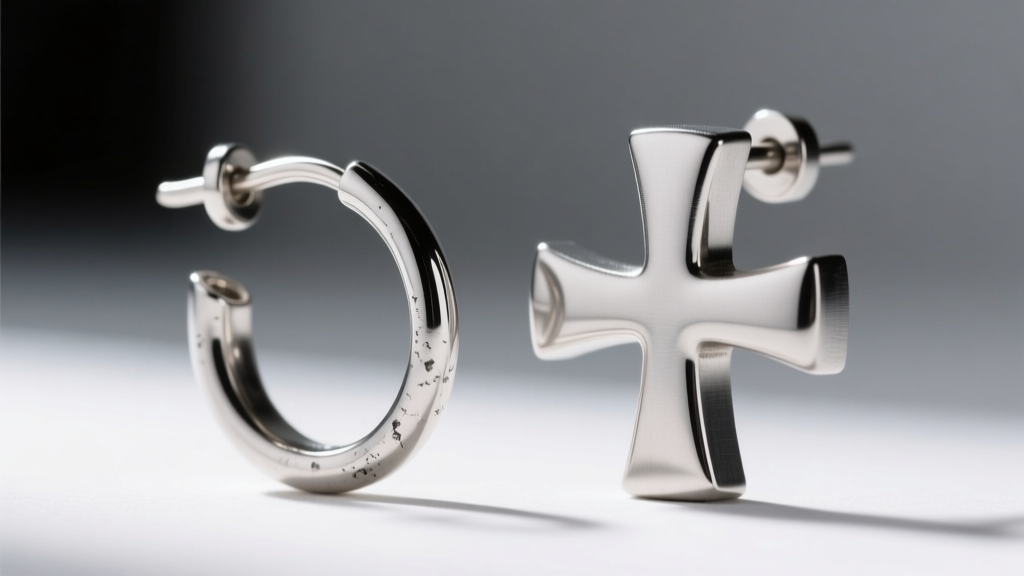
The vast majority of commercial dangle cross earrings are manufactured with 20-gauge (0.81mm) posts to save on precious metal costs. When a heavy cross swings, the 20G post acts as a weak hinge, bending at the base or warping the jump ring that connects the cross to the ear wire. Once a jump ring is pulled even 1mm apart, it becomes a magnet for hair snagging and eventual loss of the pendant.
The Fix: Take the earring to a local bench jeweler and request a post and bail upgrade. Ask them to replace the 20G post with an 18-gauge (1.02mm) or 16-gauge (1.29mm) post in a matching metal. Furthermore, have them solder the jump ring shut. A seamless, soldered ring eliminates the gap where hair catches and guarantees the structural integrity of the dangle mechanism.
Material Red Flags: Avoiding Contact Dermatitis
Novelty and fast-fashion religious jewelry frequently utilize 'Tibetan Silver,' 'Zinc Alloy,' or brass bases plated with a microscopic layer of silver or gold. As the plating wears off from friction against the earlobe, the underlying metals—specifically nickel and copper—are exposed to the skin's natural acidity and sweat. This causes both allergic contact dermatitis and the oxidation process that leaves green or black stains on the skin.
According to the Mayo Clinic, nickel allergy is one of the most common causes of allergic contact dermatitis, affecting up to 36% of women. Because a dangle cross earring constantly swings and rubs against the sensitive skin of the earlobe and neck, the risk of a flare-up is exponentially higher than with a static stud.
Safe Material Specifications
- Implant-Grade Titanium (ASTM F136): The gold standard for sensitive ears. It is entirely nickel-free, lightweight (reducing lobe strain), and highly resistant to corrosion.
- 316L Surgical Stainless Steel: A budget-friendly alternative, though it contains trace amounts of nickel that are usually bound tightly enough not to leach. Not recommended for severe allergies.
- Solid 14k or 18k Gold: Ensure it is solid, not plated. Avoid white gold unless it is rhodium-plated and alloyed with palladium rather than nickel.
- Niobium: A highly reactive metal that is hypoallergenic and can be anodized into deep blacks and purples, offering a modern alternative to traditional silver crosses.
For a deeper understanding of safe body jewelry materials, the Association of Professional Piercers (APP) provides exhaustive guidelines on metallurgical standards that apply equally to heavy fashion earrings.
Upgrading Your Hardware: The Best Backings for Dangles
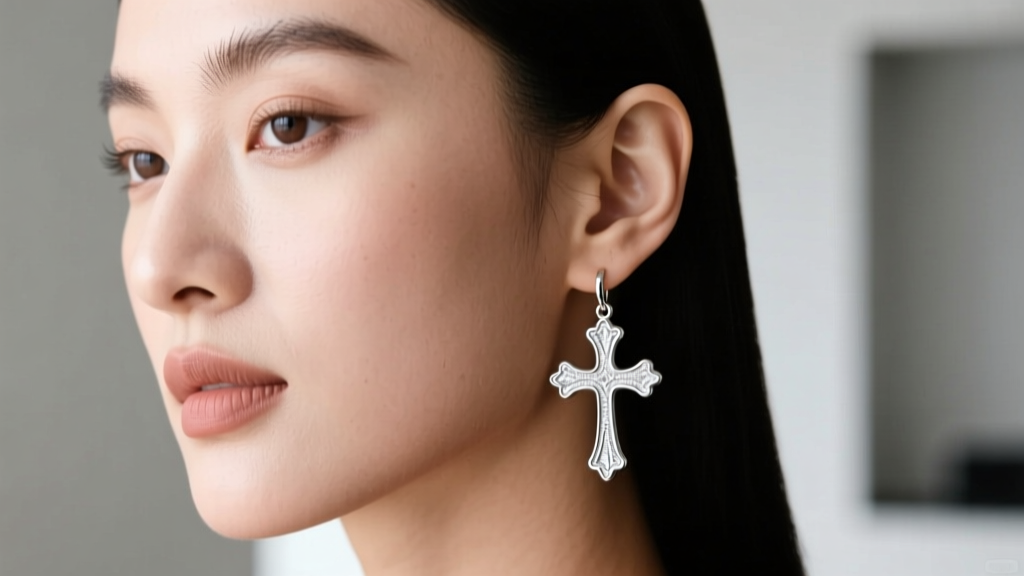
The backing of a dangle cross earring must counteract the pendulum effect. Here is a hierarchy of earring backs, ranked from worst to best for heavy pendants:
- Standard Butterfly Friction Backs (Worst): The sharp edges dig into the neck, and the small surface area fails to prevent forward tilting.
- La Poussiere Locking Backs (Better): These feature a patented locking mechanism that grips the post securely, preventing the earring from falling off if it snags on a sweater. However, they do not solve the forward droop.
- Flat-Disc Silicone Friction Backs (Best for Droop): A wide, 6mm to 8mm flat silicone disc provides a broad cushion against the earlobe, distributing the weight and forcing the post to remain perpendicular to the ground.
- Chrysmeta Earlift Backs (Premium Solution): These are engineered with a curved, ergonomic lever that physically lifts the earlobe and counters the downward torque of heavy dangle jewelry.
Preventative Maintenance for Filigree and Gemstone Crosses
Many dangle cross earring designs feature intricate filigree work or pave-set gemstones. The swinging motion of the earring means it is constantly colliding with hair, clothing, and phones, which can loosen prongs or trap debris in the metalwork.
Cleaning Protocol: Avoid harsh chemical dips, which can strip the patina from oxidized silver crosses or loosen the adhesive in pave settings. Instead, use a soft-bristled baby toothbrush with a drop of mild dish soap and warm water. Gently brush the posterior of the cross where skin oils and lotions accumulate.
The Prong Check: Every three months, run a piece of thin silk fabric or a microfiber cloth over the face of the cross. If the fabric catches on a prong, it has lifted and requires immediate tightening by a jeweler to prevent the loss of the gemstone. By combining proper hardware upgrades with routine maintenance, your dangle cross earring can remain a comfortable, secure, and striking staple in your jewelry rotation for decades.


