How to Clean & Fix Silver Turquoise Hoop Earrings
Discover expert troubleshooting for silver turquoise hoop earrings. Learn how to safely remove tarnish, fix warped hoops, and secure loose stones.

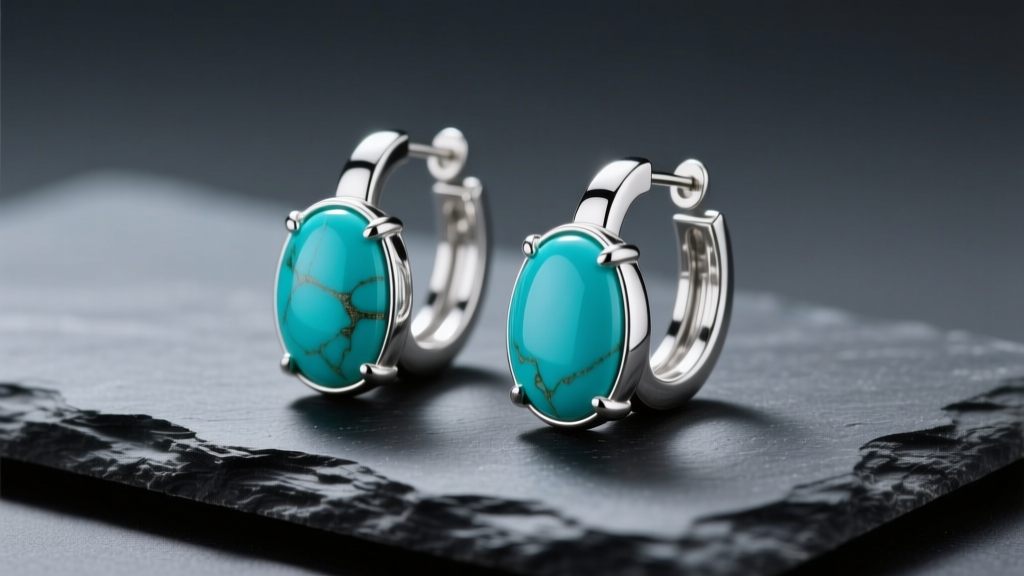
As we move through 2026, the resurgence of Southwestern and boho-chic aesthetics has made silver turquoise hoop earrings an absolute staple in contemporary jewelry collections. However, pairing a highly reactive metal with a remarkably porous gemstone creates a unique maintenance nightmare. Unlike diamond-studded gold hoops that can survive years of neglect, silver and turquoise require a highly specific, proactive care regimen.
Whether your hoops have developed a stubborn black sulfide layer, the wire has warped out of its perfect circle, or the cabochon is rattling in its bezel, this comprehensive troubleshooting guide will help you restore your favorite pieces without causing irreversible damage.
The Material Clash: Porous Stone vs. Reactive Metal
To effectively troubleshoot your jewelry, you must first understand the material science at play. You are dealing with two fundamentally incompatible elements when exposed to standard jewelry cleaners.
The Silver Component
Most high-quality hoops are crafted from .925 sterling silver, meaning they contain 92.5% pure silver and 7.5% copper alloy for structural integrity. Pure silver (999) is too soft to hold a hinge or clasp mechanism. The copper alloy, however, is highly reactive. When exposed to hydrogen sulfide in the air, it forms silver sulfide (Ag2S)—the black tarnish that plagues unworn jewelry.
The Turquoise Component
Turquoise is a hydrous phosphate of copper and aluminum. According to the Gemological Institute of America (GIA), turquoise ranks between 5 and 6 on the Mohs scale of hardness, making it significantly softer than quartz or topaz. More importantly, it is inherently porous. Natural turquoise will absorb oils, lotions, and chemicals, which can permanently alter its color matrix or cause the stone to crack. For hoop earrings, which are prone to being knocked against surfaces, the turquoise is almost always 'stabilized'—infused with a clear epoxy resin to harden the stone and seal its pores.
Troubleshooting Tarnish Without Damaging the Stone
The most common mistake owners make is using commercial silver dip solutions or the viral 'aluminum foil and baking soda' electrochemical bath. While these methods instantly strip tarnish from silver, the highly alkaline solutions will degrade the stabilization resin in your turquoise, leading to a cloudy, chalky appearance that cannot be reversed.
The Safe Cleaning Protocol
To safely remove tarnish from your silver turquoise hoop earrings, follow this targeted approach:
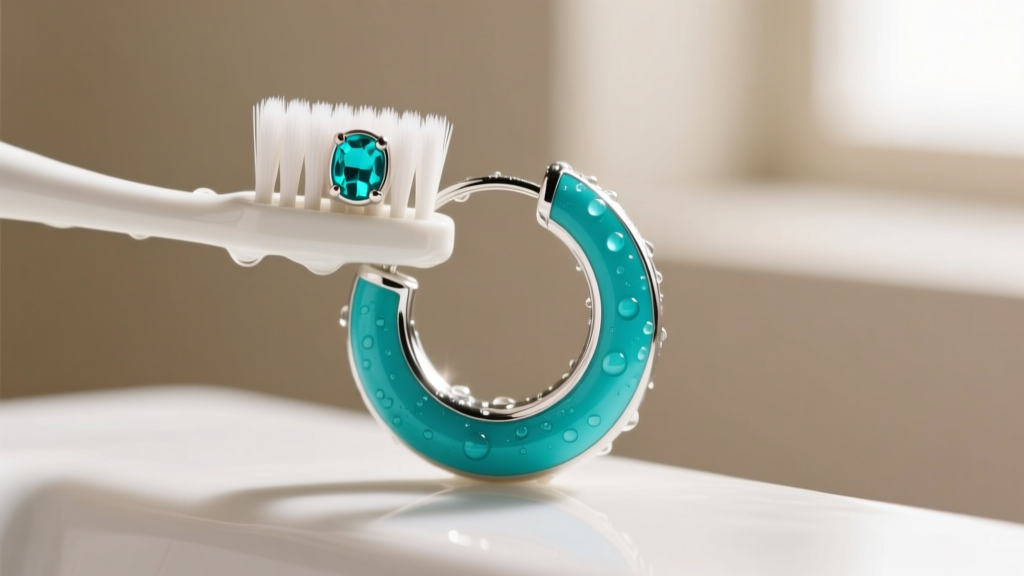
- Prepare a mild solution: Mix three drops of phosphate-free, mild dish soap (like Dawn) into a bowl of distilled water. Avoid tap water, as chlorine and heavy minerals can leave micro-deposits on the silver.
- Isolate the stone: Dip a cotton swab or a soft-bristled baby toothbrush into the solution. Carefully scrub the silver wire, hinge, and back of the bezel. Do not let the soapy water pool over the turquoise cabochon.
- Polish the silver: For stubborn black tarnish in the crevices of the bezel, use a specialized silver polishing cloth that is completely dry. The micro-abrasives in the cloth will lift the silver sulfide without introducing moisture to the stone.
- Dry immediately: Use a lint-free microfiber cloth to dry the silver completely. Any trapped moisture near the hinge can lead to localized oxidation.
Expert Insight: If your turquoise has accidentally absorbed skin oils and looks dull, do not use a silver cleaner to 'brighten' it. Instead, gently buff the stone with a dry, clean chamois leather cloth. The gentle friction will restore the natural waxy luster of the cabochon.
Fixing Structural Failures: Hinges, Clasps, and Warping
Hoops are subjected to immense mechanical stress. They get caught in hair, pulled during clothing changes, and compressed when stored. Troubleshooting structural issues requires an understanding of wire gauges and metal memory.
Reshaping Warped Hoops
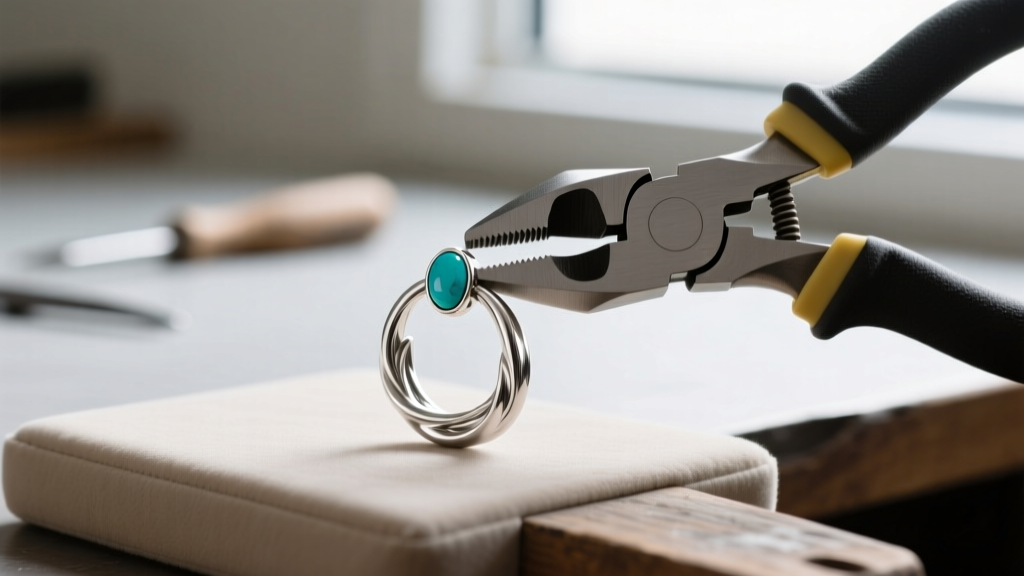
If your hoop has bent into an oval shape, resist the urge to bend it back with your bare hands. Human hands apply uneven pressure, which will create micro-fractures in the sterling silver and potentially crack the turquoise bezel. Instead, use a nylon-jawed ring bending plier. The soft nylon grips the silver wire without marring the finish, allowing you to apply even, radial pressure to restore the perfect circular geometry.
Gauge Thickness and Durability
Many structural failures stem from purchasing hoops with an inappropriate wire gauge for daily wear. Refer to the table below to understand the durability of your earrings:
| Wire Gauge | Millimeter Thickness | Durability Profile | Common Failure Mode |
|---|---|---|---|
| 16 Gauge | 1.29 mm | Extremely High (Heavyweight) | Hinge pin wear over decades |
| 18 Gauge | 1.02 mm | High (Ideal for Daily Wear) | Clasp loosening from repeated tension |
| 20 Gauge | 0.81 mm | Moderate (Lightweight/Comfort) | Wire warping and bending out of shape |
| 22 Gauge | 0.64 mm | Low (Delicate/Occasional Wear) | Snapping at the solder joint near the clasp |
Troubleshooting the Snap-Bar Clasp
The most common clasp on silver hoops is the saddle hinge with a snap-bar closure. Over time, the 'snap' becomes weak, and the earring falls out. This happens because the male wire end compresses slightly. To fix this, take a pair of flat-nose pliers and very gently squeeze the hollow female tube of the clasp to reduce its diameter by a fraction of a millimeter. This restores the tight, satisfying 'click' of the closure.
Stone Loss and Bezel Tightening
Turquoise cabochons in hoop earrings are almost exclusively set in bezels—a continuous rim of silver pushed over the girdle (edge) of the stone. Because turquoise is relatively soft, jewelers cannot use aggressive prong settings without risking fracture.
Diagnosing a Loose Stone
Hold the earring close to your ear and tap it gently. If you hear a faint rattling or clicking sound, the turquoise is loose. This occurs when the silver bezel wall catches on clothing and pulls away from the stone, creating a gap where debris enters and lifts the cabochon.
The Burnishing Fix
If the gap is minor, you can perform a temporary stabilization. Using a wooden or plastic burnisher (never steel, which will scratch the silver), apply firm, downward pressure on the bezel wall, pushing it back over the edge of the turquoise. Work your way around the entire perimeter of the stone in a star pattern (top, bottom, left, right) to ensure even pressure.
Warning: Never use cyanoacrylate (Super Glue) or jewelry epoxy to secure a rattling turquoise stone. These adhesives will seep into the porous edges of the stone, causing permanent discoloration and making professional repair impossible. If the bezel wall is torn or heavily lifted, the piece must be sent to a jeweler for laser soldering and professional bezel pushing.
Solving the 'Green Ear' and Allergy Problem
A frequent complaint with sterling silver turquoise hoop earrings is the green or black discoloration left on the earlobe. This is not a sign of 'fake' silver; it is a natural chemical reaction. The 7.5% copper in the .925 alloy reacts with the acids, salts, and moisture in your sweat to create copper chloride, which transfers to the skin.
Immediate and Long-Term Solutions
- The Clear Polish Hack: For a quick, temporary fix, paint the inside of the hoop wire and the post with a thin layer of clear nail polish. This creates a physical barrier between the copper alloy and your skin. Reapply every few weeks.
- Rhodium Flashing: For a permanent solution, take your earrings to a jeweler and request a rhodium plating. Rhodium is a platinum-group metal that is completely hypoallergenic, highly resistant to tarnish, and provides a brilliant, bright white finish that complements the blue-green hues of the turquoise perfectly.
- Upgrade to Argentium Silver: If you are shopping for new pieces in 2026, look for brands utilizing Argentium silver. This modern alloy replaces some of the copper with germanium, making it virtually tarnish-proof and highly resistant to causing skin discoloration.
Long-Term Storage Framework
How you store your silver turquoise hoop earrings is just as critical as how you clean them. Storing them in a humid bathroom or tossing them into a communal jewelry box guarantees tarnish and scratches.
According to the International Gem Society, controlling the micro-climate of your jewelry storage is the best defense against silver sulfide formation. Store each pair of hoops in an individual, anti-tarnish flannel pouch. Include a small packet of silica gel or a 3M anti-tarnish strip inside the pouch to absorb ambient moisture and neutralize sulfur gases. Keep the pouches in a dark, climate-controlled drawer, far away from direct sunlight, which can cause the UV rays to fade the vibrant copper matrix of the turquoise over time.
By understanding the specific vulnerabilities of both the sterling silver and the porous turquoise, you can troubleshoot issues as they arise and ensure your hoops remain a vibrant, structural staple in your wardrobe for decades to come.


