Material Guide: Finding Your Perfect 25mm Earrings Hoop
Discover the best metals for your 25mm earrings hoop. Compare titanium, 14k gold, and surgical steel for durability, sensitivity, and style.

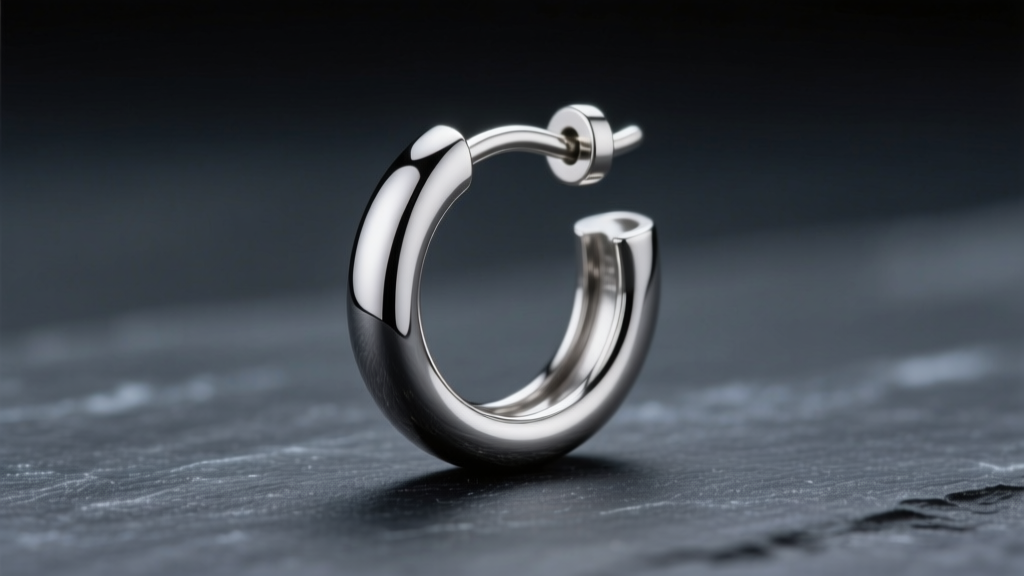
The Anatomy of the 25mm Diameter
In the world of ear styling, the 25mm earrings hoop (approximately 1 inch in diameter) occupies the "Goldilocks zone." It is large enough to make a distinct visual statement and frame the jawline, yet small enough to avoid catching on hair, clothing, or headphones. However, finding the perfect 25mm earrings hoop requires looking far beyond the surface finish. At this specific diameter, the physics of the hoop interact directly with the biology of your earlobe. The material you choose dictates not only the aesthetic but the structural integrity, the weight distribution, and the dermatological safety of the jewelry.
When a 25mm hoop moves, it creates a pendulum effect. This kinetic energy transfers directly to the fistula (the piercing channel). If the metal is too heavy, it causes lobe fatigue; if the alloy contains reactive elements, the friction accelerates contact dermatitis. As we navigate the jewelry landscape in 2026, understanding metallurgical properties is essential for making an informed purchase.
Why Metallurgy Dictates Comfort and Longevity
The human body is remarkably efficient at rejecting foreign materials. According to the Association of Professional Piercers (APP), the surface finish and elemental composition of body jewelry are the primary factors in healing and long-term tissue health. A mirror-polished surface prevents bacterial harboring, but the underlying alloy determines whether your body will tolerate the metal.
The most common culprit for jewelry-related irritation is nickel. The National Center for Biotechnology Information (NCBI) notes that nickel allergy is the most frequent cause of allergic contact dermatitis worldwide. Even if a metal is labeled "hypoallergenic," it may still contain trace nickel that leaches out when exposed to the slightly acidic pH of human skin and sweat. Therefore, evaluating the exact grade of the metal is non-negotiable when selecting your jewelry.
Deep Dive: Metal Grades and Properties
Implant-Grade Titanium (ASTM F-136)
Titanium is the undisputed champion of biocompatibility. However, not all titanium is created equal. You must look for ASTM F-136 compliant implant-grade titanium (specifically Ti-6Al-4V ELI, which stands for Extra Low Interstitial). This grade is entirely nickel-free and features a passive oxide layer that prevents ion leaching. For a 25mm earrings hoop, titanium is exceptionally advantageous because its density (4.43 g/cm³) makes it nearly 45% lighter than surgical steel. This reduced weight minimizes the pendulum effect, protecting the earlobe from stretching over time.
Solid Gold (14k vs. 18k)
Gold is a classic choice, but pure 24k gold is far too soft for jewelry. It must be alloyed with other metals for strength. 14k gold (58.5% pure gold) offers an excellent balance of richness and structural rigidity, making it ideal for continuous hoops that rely on metal tension. 18k gold (75% pure gold) is softer and more prone to warping at thinner gauges. Crucially, you must verify that the gold is alloyed without nickel. Many mass-market white gold hoops use nickel as a whitening agent; always opt for palladium-alloyed white gold or stick to yellow and rose gold to ensure safety.
316L Surgical Steel vs. 430 Stainless
"Surgical steel" is a marketing term, not a regulated metallurgical standard. Most affordable hoops are made from 316L stainless steel, an austenitic alloy that contains between 8% and 10.5% nickel to maintain its crystalline structure and corrosion resistance. While the nickel is largely trapped within the steel matrix, the Mayo Clinic warns that prolonged friction and sweat exposure can cause enough nickel leaching to trigger reactions in highly sensitive individuals. It is safe for fully healed, non-sensitive lobes, but should be avoided by those with known metal allergies.
Niobium: The Hypoallergenic Alternative
Niobium is a highly reactive, elemental metal that is completely nickel-free. Because it is unalloyed, it is incredibly malleable and can be anodized into a spectrum of vibrant colors without using dyes or plating. However, its softness means a 25mm niobium hoop must be crafted in a thicker gauge (usually 18G or 16G) to prevent it from bending out of shape during daily wear.
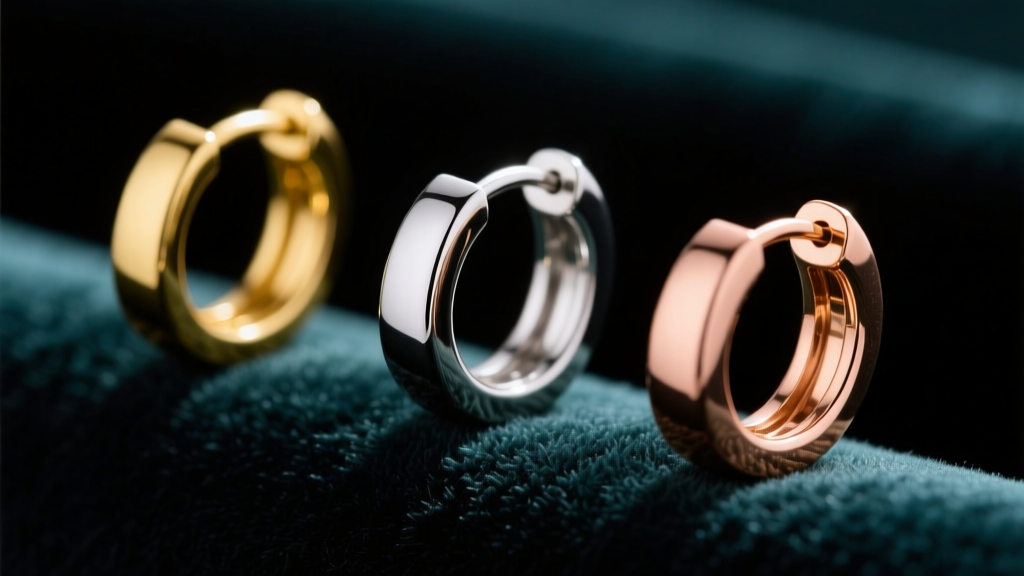
Material Comparison Matrix
Use the following data table to compare the physical and chemical properties of the most common metals used in 25mm hoops:
| Material | Density (g/cm³) | Nickel Content | Ideal Gauge for 25mm | Avg. Price Range |
|---|---|---|---|---|
| ASTM F-136 Titanium | 4.43 | 0% (None) | 18G (1.0mm) - 16G (1.2mm) | $25 - $60 |
| 14k Solid Gold | 12.90 | Varies (Seek Ni-Free) | 20G (0.8mm) - 18G (1.0mm) | $80 - $250+ |
| 316L Surgical Steel | 8.00 | 8% - 10.5% | 20G (0.8mm) - 18G (1.0mm) | $8 - $20 |
| Pure Niobium | 8.57 | 0% (None) | 18G (1.0mm) - 16G (1.2mm) | $15 - $40 |
Structural Integrity: Wire Gauge and Closure Mechanics
The diameter of a hoop is only half the equation; the wire thickness (gauge) and closure type determine how the 25mm earrings hoop behaves in the ear. The standard lobe piercing is usually done at 20G (0.81mm) or 18G (1.02mm).
- Continuous (Endless) Hoops: These rely on a thin wire that bends to create tension inside the opposite tube. For a 25mm diameter, 18k gold or titanium will fail here—gold will warp permanently, and titanium is too rigid to bend safely. 14k gold or 316L steel in 20G or 18G are the only viable options for continuous closures.
- Hinged Segment Rings (Clickers):strong> Featuring a mechanical hinge and a satisfying "click" closure, these are structurally superior. Because the hinge takes the mechanical stress, clickers can be made from rigid, lightweight titanium. However, the hinge mechanism adds a tiny amount of bulk, which is why they are usually crafted in 16G (1.29mm) to ensure the hinge doesn't snap under pressure.
- Latch-Back Closures: Common in fashion jewelry, the latch-back relies on a thin wire hooking into a groove. At a 25mm diameter, the lever arm effect puts immense stress on that thin hook, making it the most common failure point for metal fatigue and snapping.
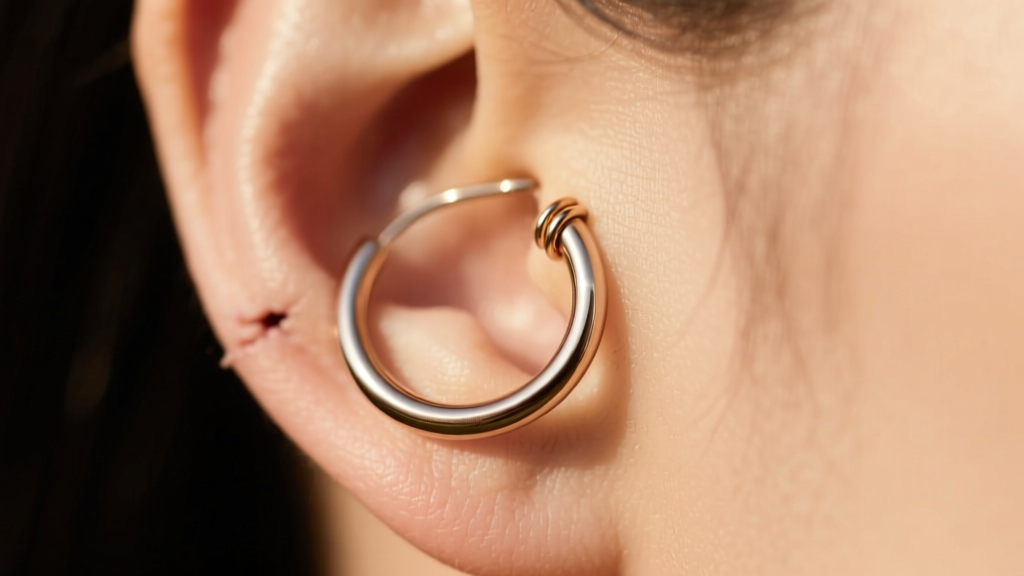
Real-World Troubleshooting & Failure Modes
Even high-quality metals can present issues if the design is flawed. Here is how to troubleshoot common problems associated with medium-sized hoops:
- The "Cheese-Cutter" Effect: If your 25mm hoop is 22G or 20G and made of a dense metal like steel, the weight and movement can slowly slice downward through the earlobe tissue. Solution: Upgrade to an 18G or 16G wire to distribute the kinetic force over a wider surface area inside the fistula.
- Green Skin Discoloration: This is not an infection; it is a chemical reaction. It occurs when copper (used as an alloying agent in lower-karat gold or brass-plated metals) oxidizes and mixes with skin acids. Solution: Switch to elemental metals like Niobium or Titanium, which do not contain copper.
- Hinge Snapping: If your clicker hoop breaks at the hinge, it is likely due to lateral torque (twisting the hoop sideways while inserting it). Solution: Always open and close hinged rings by pushing the segment straight up and down, never twisting it sideways.
Final Verdict
Choosing the right metal for your 25mm earrings hoop is an exercise in balancing metallurgy, anatomy, and lifestyle. For those with sensitive skin or active lifestyles, ASTM F-136 Titanium in a 16G hinged clicker design offers the ultimate combination of featherlight comfort and indestructible durability. If you prefer the warmth and prestige of precious metals, a 14k Nickel-Free Gold continuous hoop in 18G provides the perfect tension and structural memory to maintain its flawless circular shape for decades. By prioritizing verified material grades and appropriate wire gauges, you ensure your jewelry remains a safe, stunning staple in your collection.


