Troubleshooting Stuck or Stripped Gold Screw Back Earrings
Learn how to safely remove stuck gold screw back earrings, fix stripped threads, and prevent irritation with expert troubleshooting tips.

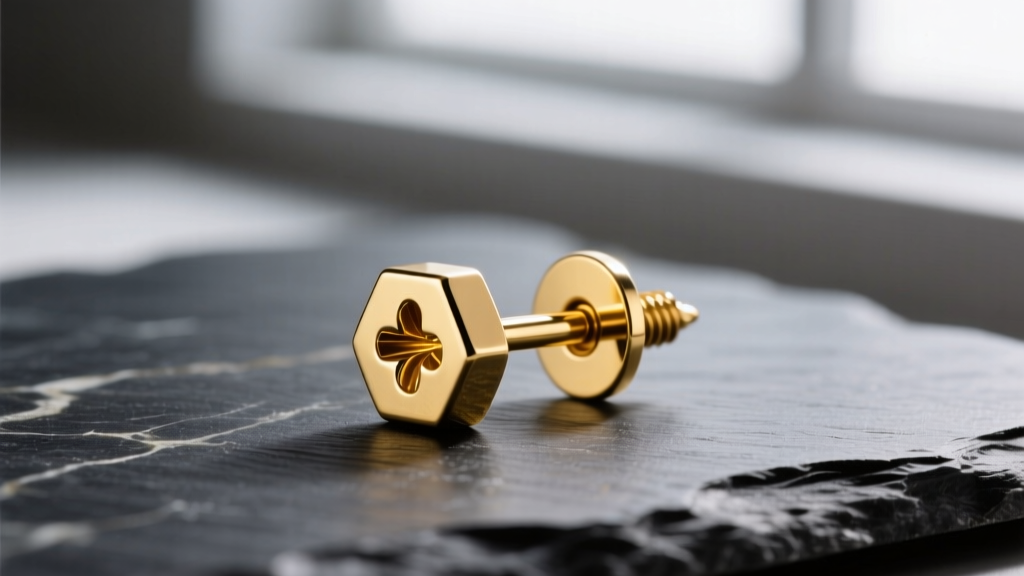
There are few jewelry-related frustrations as universally aggravating as a stuck earring back. When you are dealing with gold screw back earrings, the problem is compounded by the softness of the metal and the delicate nature of the threading. Whether your earring is fused in place by years of sebum buildup, or the threads have completely stripped leaving the backing spinning endlessly, troubleshooting requires a methodical approach. As a domain expert in jewelry mechanics and piercing aftercare, I have compiled this comprehensive guide to help you safely remove, repair, and maintain your gold threaded earrings without causing damage to the metal or trauma to your earlobes.
The Metallurgy of Threading: Why Gold Screw Backs Fail
To understand why gold screw back earrings fail, we must first look at the metallurgy of gold alloys. Pure 24-karat gold is far too soft for jewelry mechanics, which is why it is alloyed with metals like copper, silver, and zinc. According to the Gemological Institute of America (GIA), the karat weight directly dictates the Vickers hardness (HV) of the metal, which in turn determines how well it holds a machined thread.
- 14k Gold (approx. 120-150 HV): The industry standard for threaded earring posts. It offers the best balance of gold content and structural integrity, making it highly resistant to thread stripping.
- 18k Gold (approx. 90-110 HV): Significantly softer and more prone to cross-threading and stripping. If you own 18k gold screw back earrings, you must be exceptionally gentle when attaching the backing.
- 20k+ Gold: Rarely used for threaded posts due to extreme malleability. If threaded, the grooves will deform after just a few uses.
Furthermore, standard lobe earrings are typically crafted in 20-gauge (0.81mm) or 18-gauge (1.02mm) thicknesses. Machining external threads onto a 0.81mm post leaves very little metal at the root of the thread, making 20k gold or poorly machined 18k gold highly susceptible to shearing under rotational stress.
Step-by-Step Guide to Removing Stuck Gold Screw Back Earrings
When a backing refuses to unscrew, brute force is your worst enemy. Applying excessive torque will twist the post, potentially tearing the earlobe or snapping the earring entirely. Follow these progressive troubleshooting methods to free the jewelry safely.
Method 1: The Nitrile Glove Grip Technique
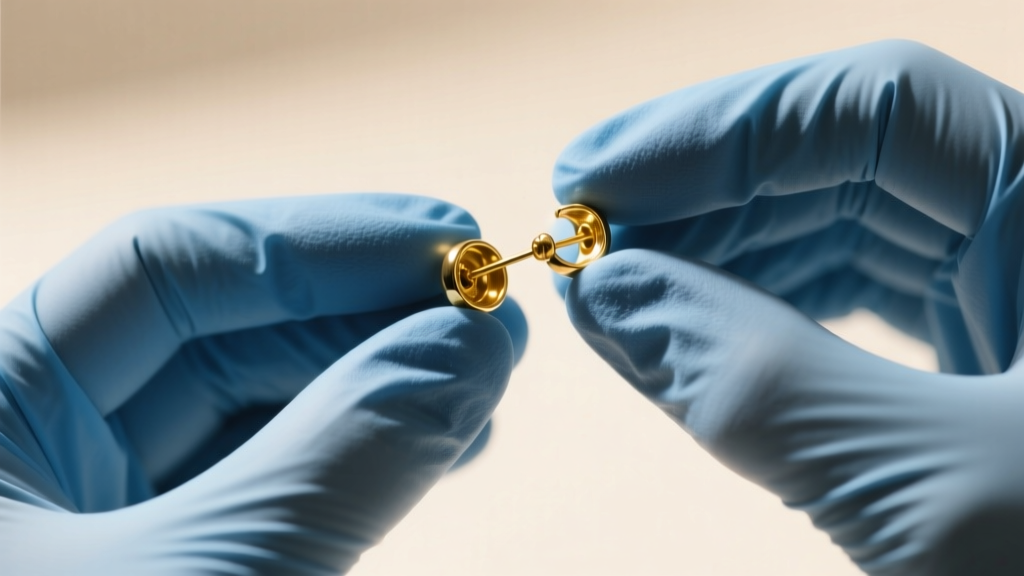
The most common reason a gold screw back feels stuck is a lack of friction, not actual mechanical binding. Fingers naturally carry oils that cause them to slip against smooth gold. Put on a pair of tight-fitting nitrile or latex medical gloves. The rubber provides immense tactile grip. Pinch the earring front firmly with your non-dominant hand to prevent the post from twisting inside the piercing, and use your gloved dominant hand to turn the backing counter-clockwise. In 80% of cases, this added friction is enough to break the initial seal.
Method 2: The Warm Saline Soak
If the glove method fails, the threads are likely bound by calcified sebum, dead skin cells, or dried hairspray. These organic compounds act like biological glue.
The Protocol:
1. Mix a sterile saline solution (0.9% sodium chloride) or use warm water with a drop of mild, fragrance-free dish soap.
2. Soak a clean cotton pad in the warm solution and hold it against the front and back of the earlobe for 5 to 10 minutes.
3. The warmth expands the metal microscopically while the moisture breaks down the lipid bonds of the sebum.
4. Attempt the nitrile glove grip again immediately after drying the area.
Method 3: Nylon Jaw Pliers (The Last Resort)
If the backing is mechanically seized due to cross-threading or impact damage, you may need mechanical leverage. Never use standard steel pliers on gold. Steel is significantly harder than gold and will instantly crush the post and gouge the backing. Instead, use jewelry-specific nylon jaw pliers. Clamp the nylon jaws gently onto the backing, hold the earring front with a padded cloth, and apply slow, steady counter-clockwise pressure. If it does not yield, stop immediately to avoid tearing the piercing.
Diagnosing and Managing Stripped Threads
If the backing spins endlessly without loosening or tightening, the threads are stripped. This usually happens when the backing is forced on at an angle (cross-threading), which acts like a tap and shaves the delicate gold threads right off the post.
| Failure Mode | Visual Symptom | Repairability | Solution |
|---|---|---|---|
| Cross-Threading | Backing goes on crooked and jams halfway. | Low | Replace the post; the structural integrity is compromised. |
| Worn Threads | Backing feels loose and wobbles before tightening. | Medium | A jeweler can sometimes re-cut the threads using a micro-die. |
| Sheared Post | The threaded tip breaks off entirely inside the backing. | None | The backing must be cut off by a professional; earring is destroyed. |
| Galled Threads | Friction welding of gold-to-gold due to overtightening. | Low | Requires professional ultrasonic vibration or cutting. |
If your gold screw back earrings are stripped, a local bench jeweler might be able to solder a new post onto the existing earring head, which is usually more cost-effective than replacing a solid 14k or 18k gold diamond stud.
The Hidden Danger: Bacterial Build-up and Piercing Irritation
Beyond mechanical failure, external threading on gold screw back earrings presents a significant biological hazard. The microscopic grooves of the thread act as a haven for bacteria, yeast, and sebum. When you push a threaded post through a healing or even fully healed piercing, those sharp, microscopic metal ridges can cause micro-tears in the fistula (the skin tube of the piercing).
"Externally threaded jewelry can cause unnecessary trauma to the piercing channel. The threads can harbor bacteria and act like a file against the delicate tissue inside the ear." - Association of Professional Piercers (APP)
If you experience chronic itching, localized swelling, or a foul odor from your earlobes, the external threading is likely the culprit. The micro-tears allow normal skin flora to enter the deeper tissue layers, resulting in low-grade, chronic contact dermatitis or localized infections.
Proper Maintenance and Cleaning Protocols
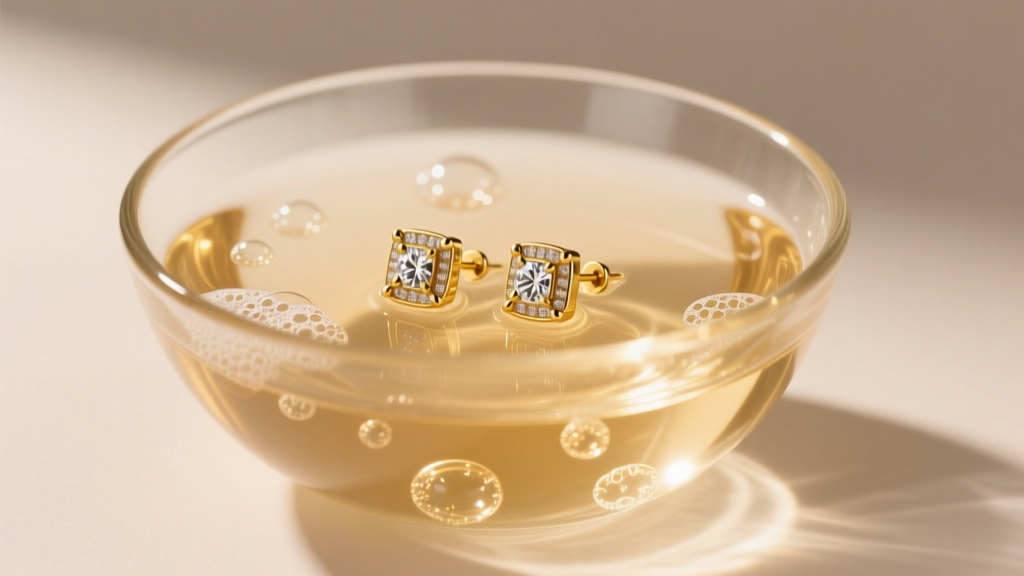
To extend the lifespan of your gold screw back earrings and prevent the issues outlined above, implement a strict bi-weekly cleaning routine. Avoid harsh chemicals like bleach or ammonia, which can degrade the alloy metals in 14k and 18k gold, leading to discoloration and metal fatigue.
- Ultrasonic Cleaning: For diamond or sapphire gold studs, an ultrasonic cleaner filled with warm water and a few drops of mild dish detergent will vibrate debris out of the thread grooves in just three minutes.
- Manual Brushing: For porous gems like pearls or opals, do not use ultrasonic cleaners. Instead, use an extra-soft baby toothbrush to gently sweep the threads in the direction of the grooves.
- Drying: Always dry the threads completely with a lint-free microfiber cloth before storing. Trapped moisture in the threads accelerates oxidation of the copper and silver alloys within the gold.
The Ultimate Solution: Internally Threaded and Threadless Alternatives
If you are continually battling stuck or stripped gold screw back earrings, it is time to rethink your jewelry mechanics. The modern jewelry industry, heavily influenced by professional piercers, has largely moved away from external threading for high-end body jewelry.
Internally Threaded Earrings: In this design, the threads are machined into the inside of the backing or the decorative end, while the post that passes through the ear is completely smooth. This eliminates micro-tearing and vastly reduces bacterial harbor. While more expensive to manufacture, 14k gold internally threaded labrets and studs offer a vastly superior wearing experience.
Threadless (Push-Pin) Earrings: Utilizing a tension-fit mechanism, threadless gold earrings feature a slightly bent pin that inserts into a hollow, smooth post. The tension of the bent gold wire holds the jewelry securely in place without a single thread. This completely eliminates the risk of cross-threading, stripped grooves, and stuck backings, making it the gold standard for both comfort and security in modern fine jewelry.


