Troubleshooting Gold Chain Link Earrings: Snags & Fixes
Learn how to fix tangled, broken, or tarnished gold chain link earrings. Expert troubleshooting for snags, jump ring failures, and metal wear.

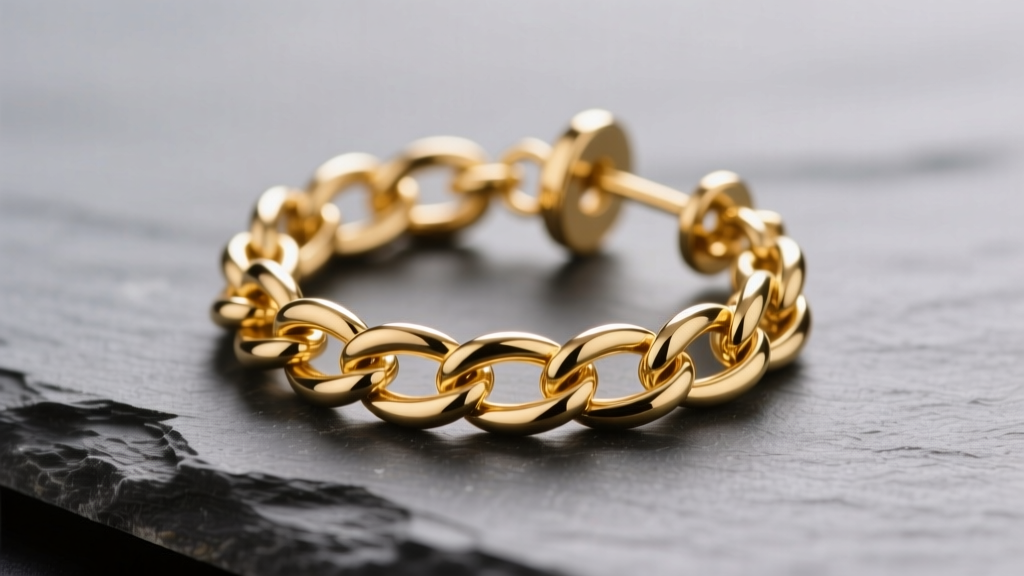
Gold chain link earrings have remained a staple in fine jewelry, but their intricate mechanics often lead to frustrating issues. As we navigate the jewelry landscape of 2026, consumers are increasingly investing in heritage-quality pieces, meaning the expectation for durability is higher than ever. Yet, even the most beautifully crafted gold chain link earrings are prone to specific structural failures: hair snagging, jump ring separation, link stretching, and localized tarnishing. Troubleshooting these issues requires a deep understanding of jewelry metallurgy, link geometry, and stress distribution. This comprehensive guide will walk you through the exact failure modes of chain link earrings and provide actionable, jeweler-grade solutions to restore and maintain your pieces.
The Anatomy of Chain Link Earring Failures
Before attempting any repairs, it is crucial to understand where and why gold chain link earrings fail. A chain is only as strong as its weakest connection point. In dangle and drop earrings featuring chain links, there are three primary stress zones:
- The Jump Ring Connection: The small circular wire that connects the ear wire, post, or hook to the main chain body. This is the single most common point of failure.
- The Link Intersections: The friction points where individual links rub against one another, leading to gradual metal thinning over years of wear.
- The Clasp Mechanism: Specifically, the internal spring of a lobster clasp or the tension wire of a spring ring, which can fatigue and fail to close securely.
Most lightweight gold chain link earrings are constructed using 20-gauge to 22-gauge wire. While this provides a delicate, elegant drape, it drastically reduces the tensile strength of the piece. A standard 4mm jump ring made of 20-gauge 14k gold wire will begin to deform laterally under approximately 3.5 pounds of force—a threshold easily exceeded when an earring catches on a sweater or a brush.
Troubleshooting Hair Snagging and Pulling
One of the most painful and common complaints regarding gold chain link earrings is their tendency to catch and pull fine hair. This is not a defect in the gold itself, but rather a geometric flaw inherent to specific link styles.
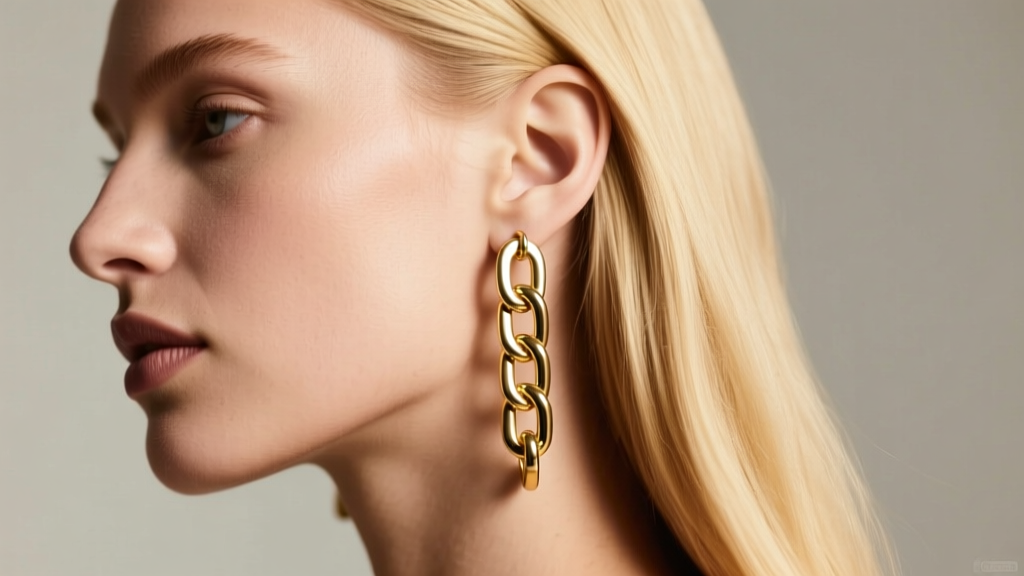
Why Rolo and Cable Links Catch Hair
Cable chains (oval links) and Rolo chains (round links) feature perpendicular gaps between each interlocking piece. When the chain moves, these gaps open and close slightly. Fine strands of hair easily slip into these microscopic V-shaped intersections. Once the chain shifts, the hair is trapped against the rigid gold wire, leading to painful pulling and tangled knots that are nearly impossible to untangle without cutting the hair or the chain.
Actionable Solutions for Snagging
If you already own Rolo or cable link earrings that snag, you have a few troubleshooting options:
- Upgrade to Soldered Links: Take your earrings to a master jeweler and request that the individual links be laser-soldered shut. This eliminates the micro-gaps entirely, creating a smooth, continuous surface that hair cannot penetrate.
- Switch to Curb or Figaro Styles: If you are purchasing new gold chain link earrings, opt for Curb chains. Curb links are twisted and flattened so they interlock tightly and lay flush against one another. This flat geometry leaves virtually no exposed gaps for hair to enter.
- Apply a Jewelry Shield: As a temporary, non-destructive fix, you can apply a microscopic layer of clear, flexible jewelry coating (like polyurethane-based nail polish or specialized jewelry sealants) to the back-facing side of the chain links. This fills the gaps with a smooth, clear barrier.
Fixing Broken Links and Clasp Malfunctions
When a chain breaks, the instinct is often to bend the metal back into place. However, gold is highly malleable, and repeatedly bending a broken link will cause work-hardening, eventually leading to a brittle snap. Proper troubleshooting requires addressing the root cause of the break.
The Jump Ring Pull-Apart
If your earring detached from the chain, the jump ring likely pulled apart laterally (side-to-side) rather than snapping. Standard split jump rings are cut with a simple saw blade, leaving a straight seam. When subjected to lateral tension, the seam peels open. The Fix: Replace all split jump rings with soldered closed jump rings. A laser-welded or torch-soldered jump ring forms a continuous circle that cannot be pulled apart laterally, increasing the connection's strength by over 300%.
Link Stretching and Thinning
If you notice that the links near the top of your dangle earrings are becoming oval-shaped instead of round, the gold is stretching. This is particularly common in 18k and 22k gold, which have higher pure gold content and lower tensile strength. According to the Gemological Institute of America (GIA), alloying metals like copper and silver are what give gold its structural integrity; thus, 14k gold (58.5% pure gold) is significantly more resistant to stretching than 18k gold (75% pure gold). The Fix: Stretched links cannot be compressed back to their original shape without compromising the metal's integrity. A jeweler must cut out the deformed links and solder in new, matching gauge replacements.
| Chain Link Style | Snag Risk | Tensile Strength (14k) | Repair Complexity |
|---|---|---|---|
| Rolo (Round) | High | Moderate | Moderate (requires soldering gaps) |
| Cable (Oval) | High | Low | High (prone to sequential stretching) |
| Curb (Flat) | Low | High | Low (links interlock securely) |
| Wheat (Braided) | Very Low | Very High | Very High (complex multi-wire weaving) |
| Figaro (Patterned) | Medium | Moderate | Moderate (requires pattern matching) |
Solving the "Green Ear" and Tarnish Problem
Discoloration on the earlobe or tarnishing of the chain itself is a frequent issue with gold chain link earrings, particularly those that are not solid gold throughout. Troubleshooting this requires identifying the exact metallurgical composition of your piece.
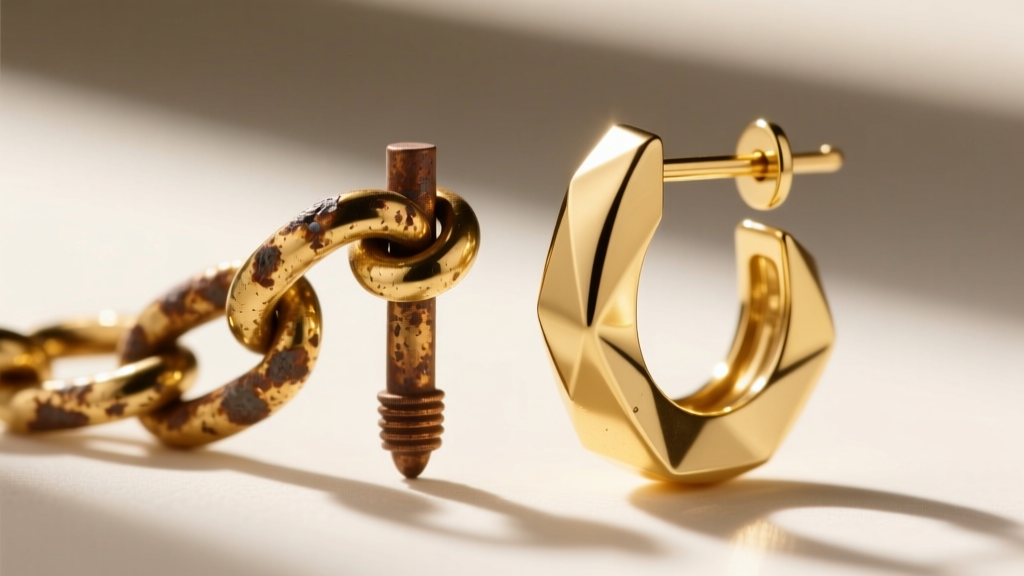
Understanding Gold Vermeil vs. Gold Plated
Many consumers mistake gold-plated brass or copper earrings for solid gold. When the microscopic layer of gold (often less than 0.5 microns thick) wears away due to friction against the earlobe, the base metal is exposed to the acidic pH of human skin and environmental moisture. This causes a rapid oxidation reaction, resulting in the dreaded green or black smudges on the skin. Gold vermeil, which features a much thicker layer of gold (minimum 2.5 microns) over a sterling silver base, is a superior alternative, though it will still eventually wear through at high-friction points like the ear post.
Restoring and Preventing Tarnish
If your gold chain link earrings are tarnishing, follow these expert protocols:
- Ultrasonic Cleaning Warning: Never place gold-plated or gold vermeil chain link earrings in an ultrasonic cleaner. The high-frequency cavitation will strip the remaining gold layer directly off the base metal. Only use ultrasonic cleaners for solid 14k or 18k gold.
- Polishing Restrictions: Do not use abrasive silver polishing cloths on gold-plated chains. The mild abrasives designed to remove silver sulfide will instantly erase gold plating. Instead, use a soft microfiber cloth with a drop of mild, phosphate-free dish soap and warm water.
- Rhodium Plating: If you have white gold chain link earrings that are turning yellow, the rhodium plating has worn off. A jeweler can easily re-plate the earrings, restoring their bright, silvery-white finish and adding a protective barrier against skin oils.
"The longevity of chain link earrings is dictated not just by the karat of the gold, but by the precision of the soldering at the jump rings. A perfectly soldered 14k jump ring will outlast a poorly closed 18k jump ring by decades." — Master Bench Jeweler
Preventative Maintenance Framework
To ensure your gold chain link earrings remain structurally sound and visually pristine, implement this monthly maintenance checklist, aligning with best practices recommended by Jewelers of America:
- The Tug Test: Once a month, gently apply lateral pressure to the jump rings connecting the ear wire to the chain. If you see even a hairline gap opening at the seam, take the piece to a jeweler for laser soldering before it fails completely.
- Proper Storage Geometry: Never toss chain link earrings loosely into a jewelry box. The interlocking links will inevitably tangle with other pieces, creating micro-scratches and stressing the joints. Store them hanging from a specialized earring rack or lay them completely flat in a dedicated, anti-tarnish suede pouch.
- Chemical Avoidance: Chlorine is highly destructive to gold alloys, particularly the copper and zinc used in 14k gold. Exposure to chlorinated pool water or harsh household cleaners can cause a phenomenon known as "stress corrosion cracking," where the links become brittle and shatter under minimal pressure. Always remove your earrings before swimming or cleaning.
By understanding the mechanical and chemical vulnerabilities of your jewelry, you can transition from reactive repairs to proactive preservation. Whether you are dealing with a stubborn tangle in a Rolo chain or a weakened jump ring on a vintage Curb link, applying these targeted troubleshooting techniques will ensure your gold chain link earrings remain a flawless, enduring part of your collection.


