Troubleshooting Tarnished or Cloudy Crystal and Gold Earrings
Learn how to troubleshoot, clean, and restore tarnished or cloudy crystal and gold earrings with expert tips on alloys, prongs, and safe cleaning methods.

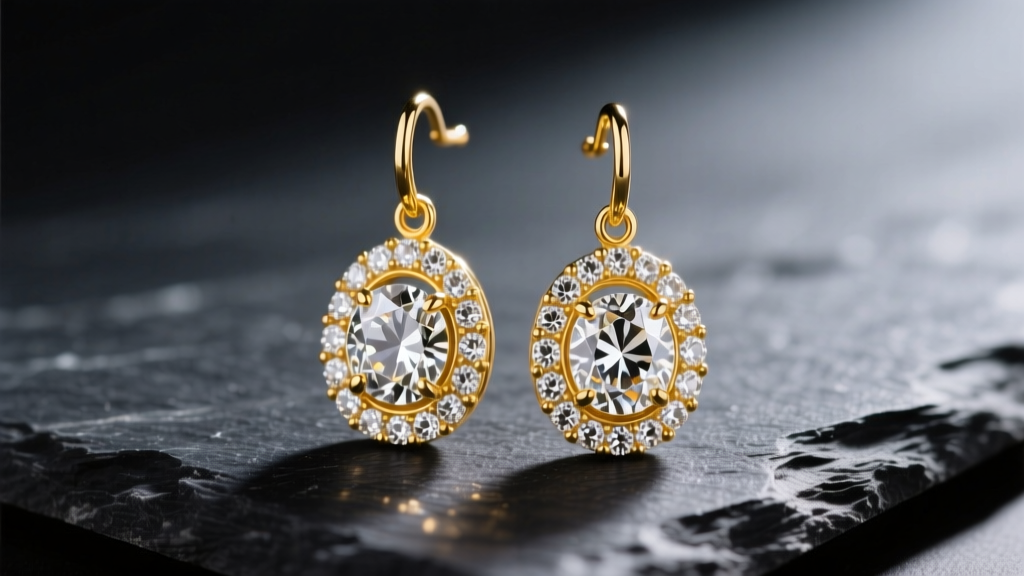
The Anatomy of Crystal and Gold Earrings: Why They Fail
There is nothing more frustrating than reaching for your favorite pair of crystal and gold earrings, only to find the metal looking dull and the stones lacking their signature fire. Unlike solid diamonds or pure platinum, the combination of gold alloys and faceted crystals presents a unique set of chemical and structural vulnerabilities. In 2026, with the rise of advanced skincare routines featuring potent active ingredients like L-ascorbic acid (Vitamin C), retinoids, and chemical exfoliants, the environmental factors degrading your jewelry have multiplied. To effectively troubleshoot your earrings, we first need to understand the exact failure points where metal meets stone.
Most commercial and designer crystal and gold earrings rely on one of two setting methods: mechanical prongs or chemical adhesives (like UV-cured resin or two-part epoxy). When troubleshooting cloudiness, discoloration, or stone loss, identifying the setting method and the specific gold karat is your mandatory first step. According to the Gemological Institute of America (GIA), improper cleaning techniques cause more damage to mixed-material jewelry than daily wear and tear.
Troubleshooting Gold Tarnish and Discoloration
Pure gold (24k) is a noble metal; it does not tarnish, rust, or corrode. However, pure gold is far too soft to securely hold a crystal. Therefore, your earrings are made from gold alloys—mixtures of gold with metals like copper, silver, zinc, or nickel to add strength. Tarnish occurs when these alloy metals react with sulfur, oxygen, or the acids in your skin and skincare products.
Identifying Your Gold Karat and Alloy Vulnerabilities
If your crystal and gold earrings are developing a dark, brassy, or reddish film, you are likely dealing with a lower-karat gold or a high-copper alloy (like rose gold). Below is a diagnostic matrix to help you understand your jewelry's susceptibility to tarnish and structural failure.
| Gold Karat | Alloy Content | Tarnish Risk | Prong Durability | Common Failure Mode |
|---|---|---|---|---|
| 24k | 0% | None | Very Poor (Too Soft) | Prongs bend back, dropping crystals |
| 18k | 25% | Low | Moderate | Prong wear over time; minor surface scratches |
| 14k | 41.7% | Moderate | Excellent | Surface oxidation from skincare acids; copper tinting |
| 10k | 58.3% | High | Very Stiff | Severe tarnishing; high risk of contact dermatitis |
The Skincare Factor in 2026
Modern anti-aging serums and chemical sunscreens are highly acidic. If you apply your skincare routine and immediately put on your 14k gold earrings, the acids will accelerate the oxidation of the copper and zinc alloys. The Fix: Always apply jewelry as the absolute final step of your morning routine, after your SPF and moisturizers have fully absorbed and dried.
Rescuing Cloudy, Scratched, or Loose Crystals
When the crystals in your earrings lose their brilliance, the culprit is usually trapped sebum, cosmetic residue, or degradation of the stone's backing. Troubleshooting this requires knowing exactly what type of "crystal" you are dealing with.
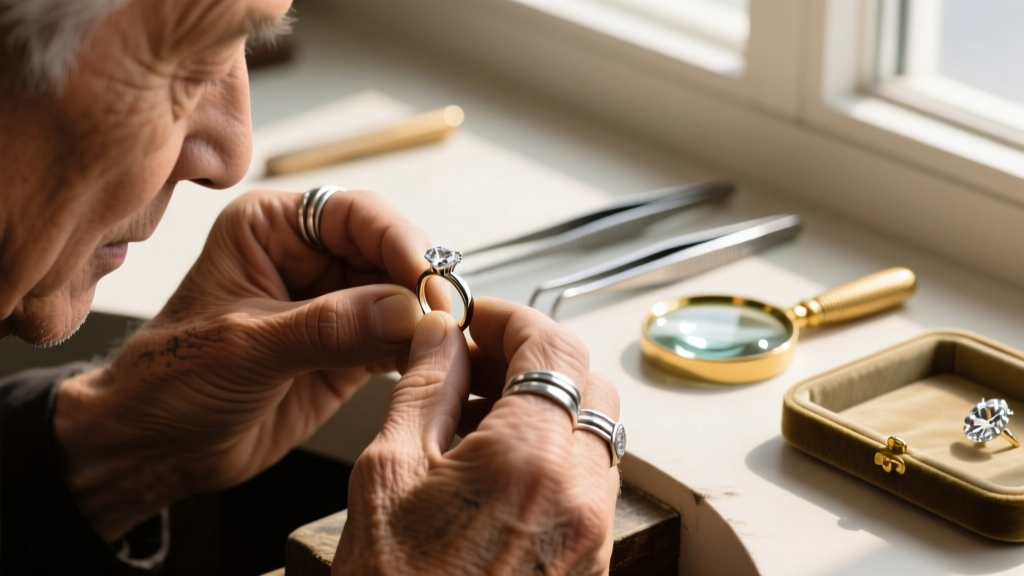
The Ultrasonic Cleaner Trap
Many well-meaning owners ruin their crystal and gold earrings by dropping them into an ultrasonic cleaner. While ultrasonic waves are excellent for removing dirt from solid diamonds, they are devastating to certain crystals:
- Foil-Backed Glass (e.g., Vintage Swarovski): The high-frequency vibrations will shatter the delicate metallic foil backing that gives the crystal its sparkle, leaving it permanently gray and dead.
- Epoxy-Set Stones: The heat generated by ultrasonic cavitation softens jewelry epoxies (like E6000), causing the crystals to fall out of their bezels.
- Fractured Cubic Zirconia (CZ): If a CZ has microscopic internal fractures, the ultrasonic waves will cause it to split completely.
The Fix: Never use ultrasonic cleaners on crystal jewelry unless you have verified with the manufacturer that the stones are solid, un-backed synthetic corundum or high-grade CZ set strictly in mechanical prongs.
Re-securing Loose Prongs and Pavé Settings
If you notice a crystal rattling or sitting crooked in its gold setting, do not attempt to push the prongs back down with your fingernail or a pair of household pliers. Gold alloys work-harden; if bent back and forth too many times, the prong will snap off entirely. Use a specialized jeweler's bezel pusher or take the piece to a professional to have the prongs re-tipped.
Solving the "Green Ear" and Contact Dermatitis Problem
A common troubleshooting complaint is the dreaded "green ear" or an itchy, red rash on the earlobe after wearing crystal and gold earrings. This is rarely an allergy to gold itself.
Expert Insight: If your white gold crystal earrings are causing a rash, the issue is almost always the nickel alloy or the depletion of the rhodium plating. White gold is naturally yellowish and is plated with rhodium to achieve a bright white finish. Once that plating wears down to a thickness of less than 0.75 microns, the nickel-copper alloy beneath is exposed to your skin's microbiome, triggering contact dermatitis.
The Fix for Green Ears: Clean the earring posts with rubbing alcohol before every wear to remove oxidized copper salts. If you are highly sensitive, have a local jeweler re-plate your white gold earrings with a thick layer (1.0 to 1.5 microns) of rhodium, or switch to 18k yellow gold, which typically uses silver and copper rather than nickel for its alloy mix. For an immediate barrier, coat the earring posts in a thin layer of clear, flexible nail polish or a specialized jewelry shield coating.
Step-by-Step Restoration Guide for Home Maintenance
To safely restore the brilliance of your crystal and gold earrings without risking the settings or the metal's finish, follow this exact protocol recommended by the American Gem Society (AGS).
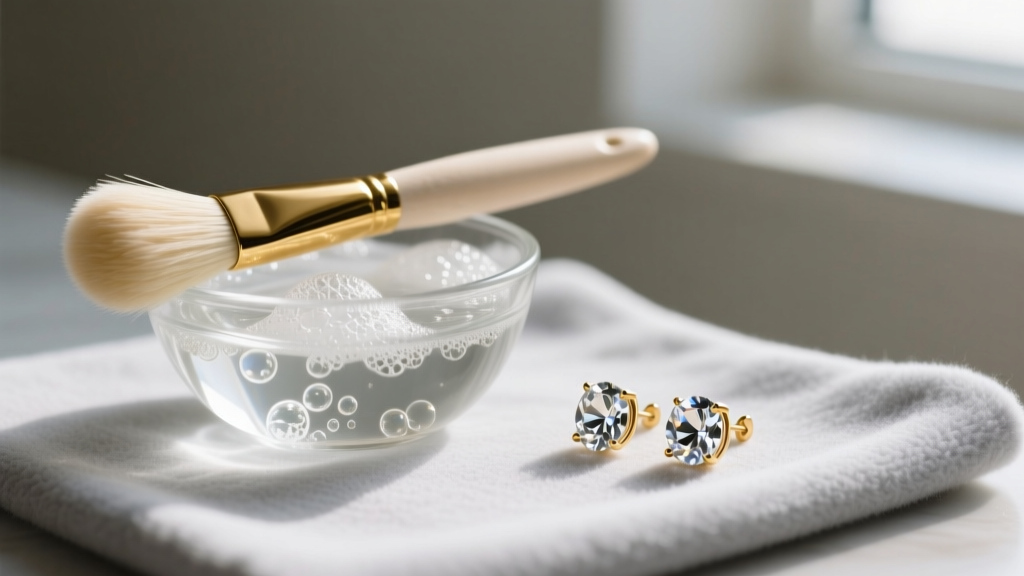
The Safe Soak and Sweep Method
- Prepare the Solution: Fill a small glass bowl with warm (not hot) distilled water. Tap water contains chlorine and hard minerals that can leave a film on crystals. Add exactly two drops of mild, lotion-free dish soap (like original blue Dawn).
- The Brief Soak: Submerge the earrings for no more than 3 to 5 minutes. This is enough time to soften sebum and cosmetic buildup without compromising any water-sensitive adhesives.
- The Sweep: Using a brand-new, ultra-soft baby toothbrush, gently sweep the bristles across the back of the crystals (the pavilion) and the earring posts. The back of the stone is where 90% of light-blocking grease accumulates. Do not scrub the gold aggressively, as trapped dust can cause micro-scratches.
- The Rinse: Rinse the earrings under a gentle stream of lukewarm distilled water. Ensure the drain is securely plugged or use a small mesh strainer.
- The Dry: Do not rub the crystals with a cloth, as this can generate static or snag on pavé prongs. Instead, use a can of compressed air (held upright to avoid propellant spray) to blow the water droplets out from under the crystal settings. Finish by patting the gold gently with a lint-free microfiber cloth.
When to Seek Professional Jeweler Intervention
While home troubleshooting can resolve surface tarnish, cloudiness from grease, and minor skin reactions, certain problems require a professional bench jeweler. Seek professional help if:
- Deep Scratches in Gold: If your 18k gold hoops have deep gouges, a jeweler must use a motorized polishing wheel with rouge compound to remove a microscopic layer of metal and restore the mirror finish.
- Missing or Chipped Crystals: Sourcing exact-match replacement crystals for specific designer pavé settings requires specialized gemological matching tools.
- Severe Structural Bending: If a huggie or hoop earring has been bent out of its circular shape, attempting to bend it back by hand will weaken the hinge and the clasp mechanism, leading to eventual snapping.
By understanding the specific material science behind your crystal and gold earrings, you can move beyond guesswork and apply targeted, effective solutions that keep your jewelry sparkling and structurally sound for decades.


