Troubleshooting & Restoring Vintage Givenchy Clip On Earrings
Learn how to authenticate, adjust tension, and restore vintage Givenchy clip on earrings with expert troubleshooting tips and hallmark guides.

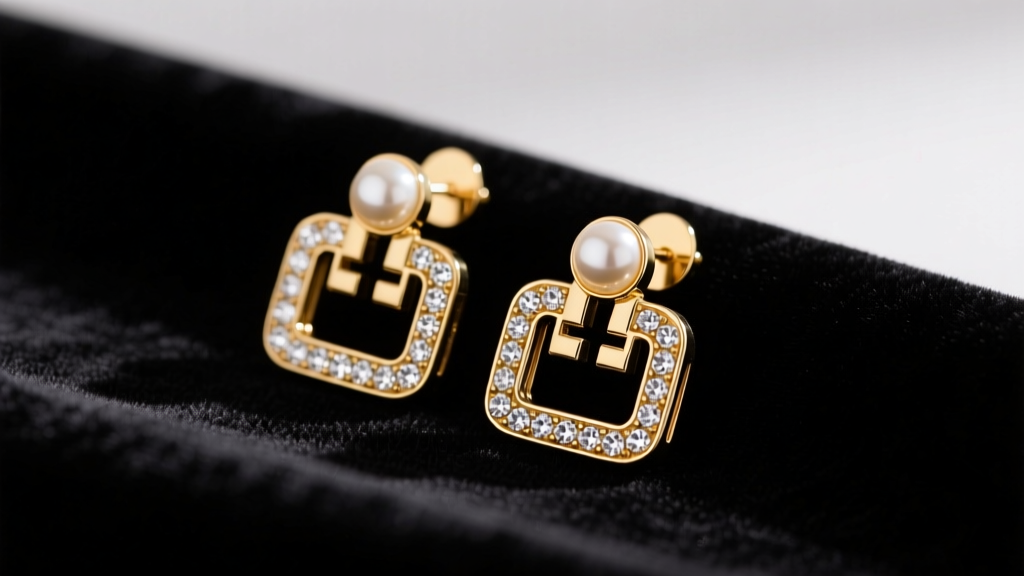
Collecting and wearing vintage designer jewelry is a thrilling pursuit, but it often comes with unique maintenance challenges. Among the most coveted pieces in the secondary market are vintage Givenchy clip on earrings. Known for their bold, maximalist designs and exceptional mid-century craftsmanship, these earrings are a staple for collectors of 1980s and 1990s costume jewelry. However, because they were designed decades ago, modern wearers frequently encounter issues ranging from painful clip tension and tarnished gold-tone plating to broken hinges and the ever-present threat of counterfeit hallmarks.
This comprehensive troubleshooting guide will walk you through the exact methods for authenticating, adjusting, and restoring vintage Givenchy clip on earrings, ensuring your collection remains both wearable and historically accurate.
The Anatomy and Materials of Givenchy Clip-Ons
Before attempting any repairs, it is crucial to understand the materials you are working with. The vast majority of vintage Givenchy clip on earrings from the 1970s through the 1990s were crafted from a base metal—typically brass or a zinc alloy—and finished with a heavy electroplated layer of 18k or 22k gold-tone or silver-tone metal. Unlike modern fashion jewelry, which uses flash plating measured in microns, vintage French and American costume jewelry often featured much thicker plating, which is why so many pieces survive today with minimal wear.
The clip-on mechanisms themselves were usually manufactured by specialized findings companies and then soldered to the earring body. The most common mechanism is the standard spring-hinge paddle clip, though some heavier, oversized runway pieces utilized screw-back fittings with adjustable tension pads to distribute the weight across the earlobe.
Authentication: Decoding the Hallmarks
The market is flooded with counterfeit vintage Givenchy jewelry. Authenticating vintage Givenchy clip on earrings requires a close inspection of the hallmark, usually stamped directly into the metal on the back of the earring or on the clip mechanism itself. According to archival data from Collectors Weekly, the hallmarks evolved significantly over the decades.
| Era | Hallmark Characteristics | Common Red Flags (Fakes) |
|---|---|---|
| 1970s | 'Givenchy' in a sleek, modern sans-serif font. Often accompanied by a copyright symbol (©) and 'Paris'. | Blurry stamping, incorrect font weight, missing copyright symbol. |
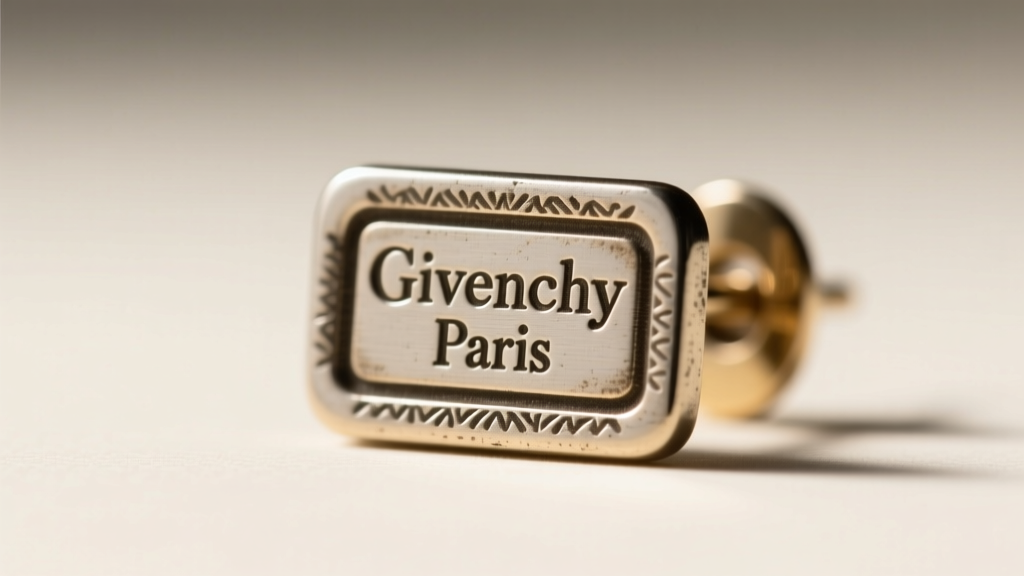
| 1980s | Stamped inside a distinct rectangular cartouche. Reads 'Givenchy © Paris'. Deep, crisp engraving. | Cartouche is painted on rather than stamped; shallow or misaligned lettering. |
| 1990s | Addition of 'Made in France' or specific collection marks. Sometimes laser-etched rather than deeply stamped. | 'Made in China' stamps on pieces claiming to be 90s vintage; poorly cast metal edges. |
Expert Note: Hubert de Givenchy occasionally collaborated with the legendary Maison Gripoix for high-end runway pieces, utilizing poured glass (pâte de verre) rather than standard faceted rhinestones. If a piece features poured glass, the hallmark may be accompanied by a Gripoix signature or specific atelier marks, drastically increasing the value.
Troubleshooting Tension: Fixing Painful Clips
The most common complaint regarding vintage Givenchy clip on earrings is that they pinch the earlobe, causing pain after just a few minutes of wear. This is rarely due to the original design; rather, it is the result of metal fatigue, decades of being squeezed open by previous owners, or a bent paddle mechanism.
The Plier Adjustment Method
Never use standard steel pliers directly on the gold-tone metal, as they will permanently scratch and strip the plating. Instead, use nylon-jaw pliers.
- Grip the base of the clip (the part soldered to the earring) firmly with your non-dominant hand.
- Using the nylon-jaw pliers, gently grip the curved paddle of the clip.
- Apply very slight outward pressure to widen the gap between the paddle and the earring back. You only need to adjust this by 1 to 2 millimeters.
- Test the tension on your earlobe. If it still pinches, repeat the process incrementally.
Adding Silicone Pads for Comfort
If adjusting the metal does not solve the issue, or if the earring is simply too heavy for your lobes, apply self-adhesive silicone earring cushions. Look for 10mm or 12mm round silicone pads specifically designed for clip-ons. Clean the metal paddle with a small amount of isopropyl alcohol to remove skin oils, let it dry completely, and press the silicone pad firmly into place. This creates a high-friction grip that prevents the earring from sliding down the lobe, which is the primary cause of clip-on fatigue.
Restoring Tarnished Gold-Tone and Rhinestones
Over time, the brass base metal can oxidize, causing the gold-tone plating to look dull, dark, or greenish. Furthermore, the rhinestones—often glass chatons with silver foil backing—can accumulate decades of hairspray, perfume, and skin oils, rendering them cloudy.
CRITICAL WARNING: Never place vintage Givenchy clip on earrings in an ultrasonic cleaner. The high-frequency vibrations will shatter the glass rhinestones and strip the delicate aurora borealis (AB) coatings. Similarly, avoid ammonia-based cleaners like Windex, which will dissolve the silver foil backing behind the stones, turning them permanently black.
The Safe Cleaning Protocol
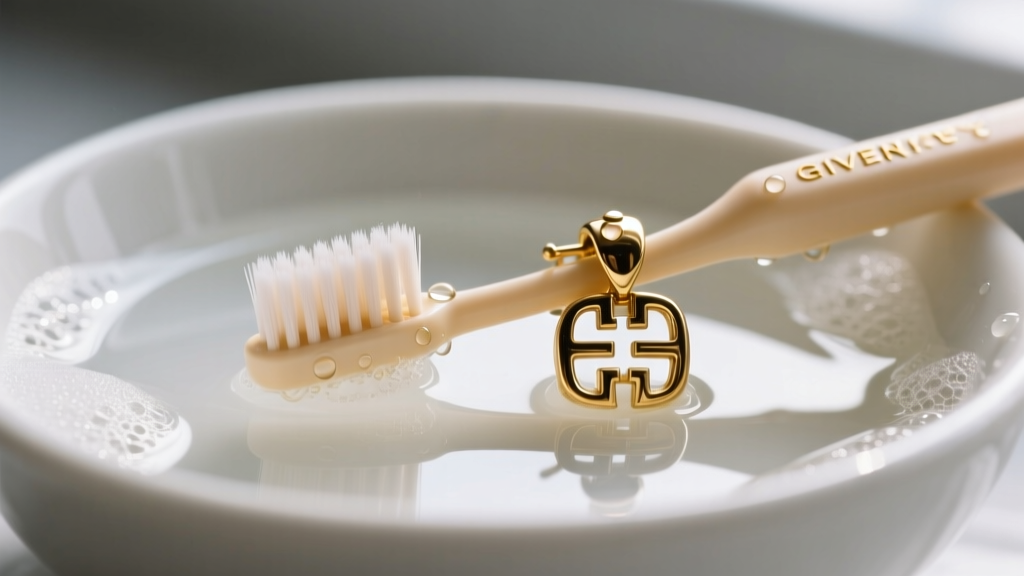
- Step 1: Mix a few drops of mild, phosphate-free dish soap (like Dawn) into a bowl of lukewarm water.
- Step 2: Dip a soft-bristled baby toothbrush into the solution. Do not submerge the earring; you want to avoid water seeping behind the stone settings.
- Step 3: Gently scrub the metalwork and the surface of the rhinestones in small, circular motions.
- Step 4: Wipe the earring down with a damp microfiber cloth to remove soap residue.
- Step 5: Dry immediately and thoroughly with a lint-free towel, then use a hairdryer on the 'cool' setting to blow out any trapped moisture from under the prongs.
Sourcing Replacement Parts and Hinge Repair
If the spring mechanism inside the clip-on hinge has snapped, the earring will not stay closed. Repairing this requires micro-soldering or replacing the entire clip finding. Because original 1980s Givenchy findings are no longer manufactured, your best option is to source 'donor' pieces. Search online marketplaces for damaged Givenchy earrings with missing stones but intact clip mechanisms. Carefully desolder the donor clip using a precision soldering iron and low-temperature silver solder, then attach it to your prized piece. For collectors uncomfortable with soldering, a professional jeweler who specializes in vintage costume jewelry can perform this repair, typically costing between $45 and $85 per earring.
Market Value and Pricing Guide
Understanding the market value of vintage Givenchy clip on earrings is essential whether you are buying, selling, or insuring your collection. Prices fluctuate based on condition, rarity, and the presence of original components.
'The provenance and condition of the hallmark are just as important as the visual design. A rare 1980s Gripoix collaboration in mint condition can command upwards of $1,500, while a standard 1990s gold-tone logo clip-on might only fetch $40.' — Archive notes from Jewels Du Jour.
- Standard Logo Clip-Ons (1990s): $35 - $75. Common designs featuring the interlocking 'G' or simple gold-tone hoops.
- Maximalist Rhinestone/Pearl Clips (1980s): $120 - $350. Highly sought after for their bold, shoulder-dusting designs and excellent craftsmanship.
- Runway/Gripoix Collaborations: $800 - $2,500+. Rare, poured glass pieces with documented runway provenance.
- Damaged/Unauthenticated Pieces: $15 - $30. Valued only for their scrap metal or donor parts.
By mastering these troubleshooting and restoration techniques, you can rescue damaged vintage Givenchy clip on earrings from the bottom of a jewelry box and return them to their former glory, preserving a vital piece of fashion history for the next generation of collectors.


