Fixing Cloudy Prehnite Earrings: A Troubleshooting Guide
Is your prehnite jewelry losing its luster? Discover expert troubleshooting for cloudy prehnite earrings, loose settings, and safe cleaning methods.

The Unique Vulnerabilities of Prehnite in Jewelry
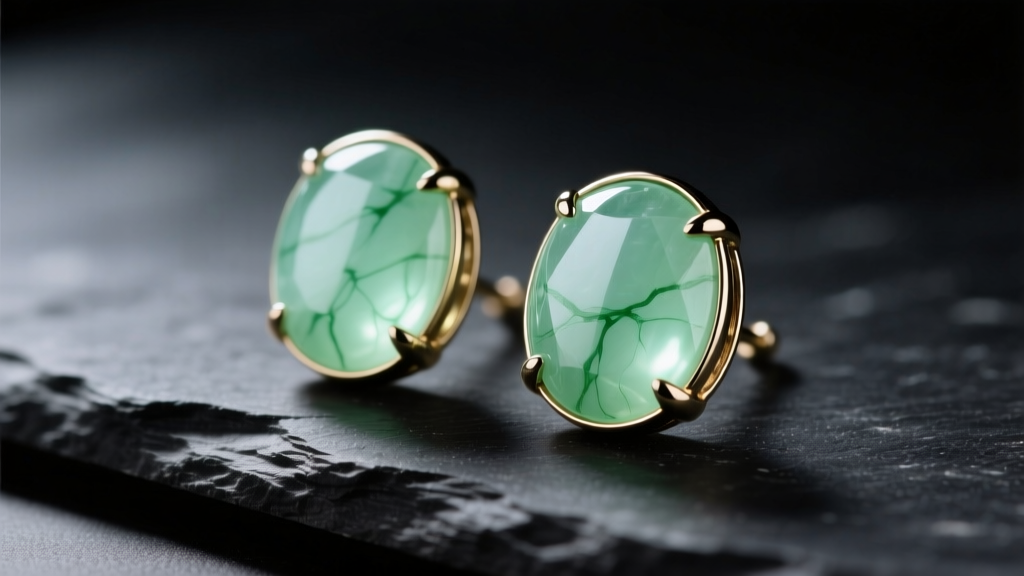
Prehnite is a captivating calcium aluminum silicate gemstone, beloved for its soft, milky apple-green hues and distinctive translucency. However, as any seasoned lapidary or jeweler will tell you, prehnite earrings present a unique set of maintenance challenges. Ranking at 6 to 6.5 on the Mohs hardness scale, prehnite is significantly softer than quartz or beryl, making it highly susceptible to surface abrasion, chemical etching, and mechanical stress.
In 2026, the resurgence of earthy, botanical-toned gemstones has pushed prehnite back into the spotlight. Yet, many wearers find their favorite pieces quickly turning dull, cloudy, or suffering from loose stones. Troubleshooting these issues requires an understanding of the stone's crystalline structure. According to the Gemological Institute of America (GIA), prehnite often forms in botryoidal or stalactitic habits and possesses indistinct cleavage, meaning it can fracture unpredictably under thermal or acoustic shock. Let us break down the most common problems plaguing prehnite earrings and how to solve them with professional-grade precision.
Troubleshooting Cloudiness: Why Your Prehnite Looks Dull
The most frequent complaint regarding prehnite earrings is a sudden loss of luster, resulting in a cloudy or "dead" appearance. Unlike diamonds or sapphires, prehnite has a slightly porous surface at the microscopic level. Daily exposure to sebum (skin oils), cosmetics, and hard water creates a filmy buildup that scatters light, robbing the cabochon of its signature inner glow.
The Ultrasonic and Steam Cleaner Disaster
If your prehnite earrings look cloudy and fractured, you may have accidentally used an ultrasonic cleaner. Never use ultrasonic or steam cleaners on prehnite. The high-frequency vibrations can exploit microscopic internal stress fractures, causing the stone to craze or split entirely. Furthermore, sudden temperature changes from steam can induce thermal shock, permanently clouding the stone from the inside out.
Step-by-Step Safe Cleaning Protocol
To restore clarity to cloudy prehnite earrings without risking structural damage, follow this gentle, lapidary-approved method:
- Preparation: Mix a few drops of pH-neutral dish soap (like Dawn) into a bowl of lukewarm, distilled water. Avoid tap water, as dissolved minerals can leave microscopic calcium deposits on the stone.
- Soaking: Submerge the earrings for exactly 3 to 5 minutes. Do not exceed this, as prolonged water exposure can weaken certain adhesive backing or oxidize porous metal settings.
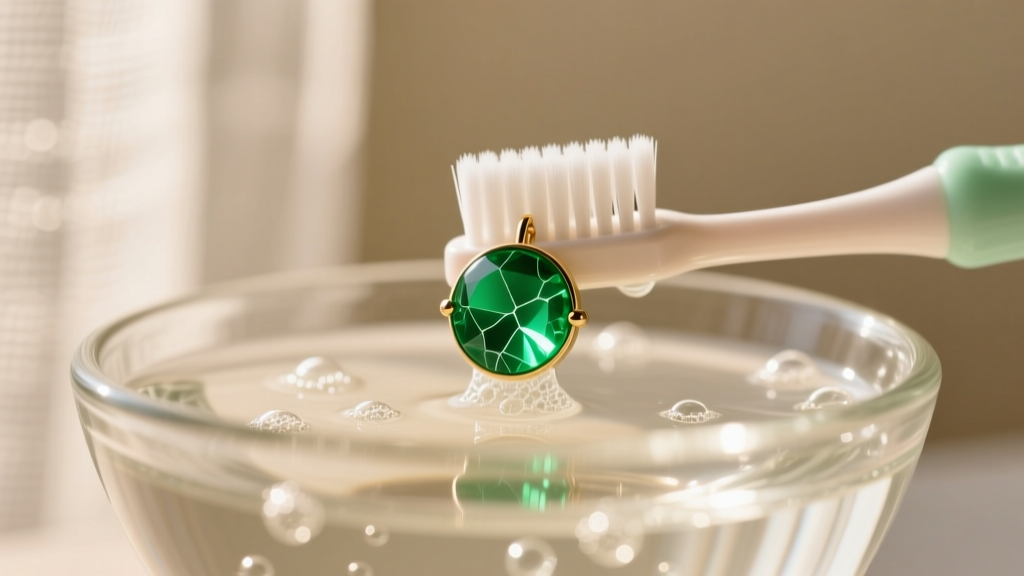
- Agitation: Use an extra-soft baby toothbrush to gently sweep the surface of the prehnite and the back of the setting. Focus on the girdle edge where oil accumulates.
- Rinsing and Drying: Rinse under a gentle stream of distilled water and pat dry with a lint-free microfiber cloth. Allow them to air dry completely before storing.
Mechanical Failures: Loose Stones and Setting Fatigue
Because prehnite is almost exclusively cut en cabochon (smooth and domed rather than faceted), it presents a unique challenge for jewelry settings. Cabochons lack the sharp geometric girdles that prongs easily grip, making them prone to slipping out if the metal experiences even minor deformation.
Prong vs. Bezel Settings for Cabochon Prehnite
If you are constantly troubleshooting a loose prehnite stone, the fault likely lies in the setting architecture. Below is a diagnostic comparison to help you determine if your earrings require a setting upgrade.
| Setting Type | Risk Level for Prehnite | Troubleshooting & Repair Advice |
|---|---|---|
| Traditional Prong | High | Prongs can easily slip off the smooth dome. Have a jeweler add a "bearing" or notch to the prong heads to grip the stone's curvature better. |
| Bezel | Low (Recommended) | The metal rim fully encircles the stone. If loose, a jeweler can use a burnishing tool to gently push the metal rim back against the prehnite. |
| Adhesive/Glue | Moderate | Often used for flat-back prehnite. If the stone pops out, clean off old epoxy with acetone and re-set using a flexible, jewelry-grade two-part resin. |
The "Cheese-Cutter" Effect: Wire Gauge Troubleshooting
Prehnite is a relatively dense stone (specific gravity of 2.80 to 2.95). When fashioned into large teardrop dangles or heavy hoops, the weight of the gemstone can cause severe discomfort and physical damage to the earlobe. This is known in the jewelry industry as the "cheese-cutter effect," where a thin wire slowly slices through the piercing fistula.
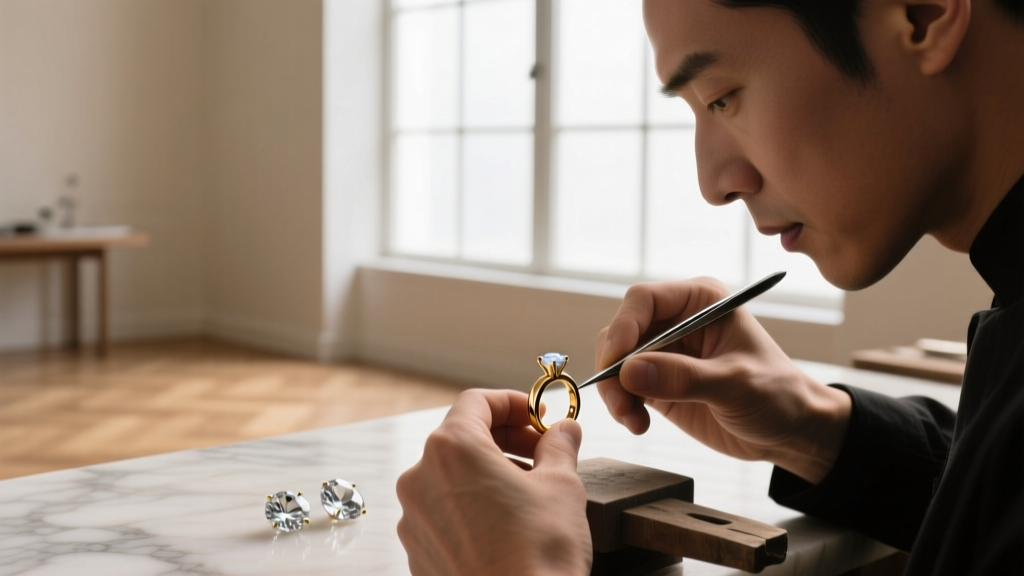
Standard fashion earrings often use 22-gauge (0.64mm) or 20-gauge (0.81mm) wire. For heavy prehnite drop earrings, this is wholly inadequate. If your earlobes are sore, stretched, or the earrings constantly droop forward, you must troubleshoot the wire gauge. Seek out designs that utilize 18-gauge (1.0mm) or 16-gauge (1.29mm) ear wires. Thicker gauges distribute the weight of the dense prehnite cabochon over a wider surface area inside the piercing, preventing migration and tearing while keeping the earring oriented correctly on the ear.
Scratch Mitigation and Surface Abrasion
With a Mohs hardness of 6 to 6.5, prehnite is easily scratched by everyday dust (which contains quartz particles at a hardness of 7). If your prehnite earrings look cloudy even after a thorough cleaning, the surface may be micro-scratched, diffusing light rather than transmitting it.
Unfortunately, you cannot buff out scratches on prehnite at home with standard silver polishing cloths or abrasive pastes. Doing so will create flat spots on the cabochon dome, ruining its optical symmetry. According to mineralogical data from Mindat.org, prehnite requires specialized lapidary polishing using cerium oxide on a felt wheel to restore its glassy to pearly luster. If your stones are heavily abraded, take them to a professional bench jeweler or lapidary artist for a "re-dome" and polish. This process removes a microscopic layer of the stone, revealing the pristine, unscratched material beneath.
Quick Diagnostic Checklist for Prehnite Earring Damage
Use this rapid troubleshooting matrix to identify the root cause of your prehnite jewelry issues:
- Symptom: Milky, opaque film on the surface.
Diagnosis: Sebum and cosmetic buildup. Action: Wash with distilled water and pH-neutral soap. - Symptom: Internal spiderweb fractures or sudden cloudiness.
Diagnosis: Ultrasonic or thermal shock damage. Action: Irreversible; consult a jeweler for potential replacement stones. - Symptom: Stone rattles or shifts when touched.
Diagnosis: Prong tension loss or bezel deformation. Action: Stop wearing immediately; have a jeweler tighten or burnish the setting. - Symptom: Earlobe pain or forward drooping.
Diagnosis: Wire gauge too thin for the stone's mass. Action: Swap to 18G or 16G ear wires or add silicone earring backs for support.
Expert Appraisal Tip: Because high-quality, translucent prehnite with distinct epidote inclusions is becoming increasingly rare in the commercial market, always ensure your premium prehnite earrings are documented with a macro-photograph and specific carat weight by a certified gemologist. This ensures accurate replacement value in the event of irreversible setting failure or stone loss.
By respecting the unique physical properties of this beautiful green gemstone and avoiding the harsh chemical and mechanical treatments designed for harder diamonds, your prehnite earrings will maintain their ethereal, botanical glow for decades to come.


