Fixing Fragile Clay Earring Ideas: A Troubleshooting Guide
Struggling with broken posts or heavy designs? Discover expert troubleshooting for clay earring ideas, covering hardware, gauges, and durability.

The Hidden Pitfalls of Trending Clay Earring Ideas
As we navigate the jewelry landscape in 2026, polymer clay remains a dominant force in the handmade and independent designer market. The barrier to entry is low, leading to an explosion of creative clay earring ideas across social platforms. However, a beautiful design concept often collapses when faced with the structural realities of daily wear. Earrings are subjected to constant kinetic stress, temperature fluctuations, and the natural oils of human skin. When makers prioritize aesthetics over structural engineering, the result is a high rate of customer returns, broken posts, and severe earlobe fatigue.
This guide moves beyond basic crafting tutorials to address the critical failure modes of polymer clay earrings. Whether you are a seasoned maker looking to refine your production line or a jewelry enthusiast trying to understand why your favorite pair snapped, we will troubleshoot the exact metallurgical, ergonomic, and chemical pitfalls that ruin otherwise brilliant clay earring ideas.
Troubleshooting Hardware Failures: Posts and Jump Rings
The most common point of failure in any dangle or drop earring is the junction where the metal meets the clay. Many makers default to bulk-purchased, mystery-metal earring posts with tiny 4mm flat pads. This creates a catastrophic leverage problem.
The Leverage Effect and Pad Sizing
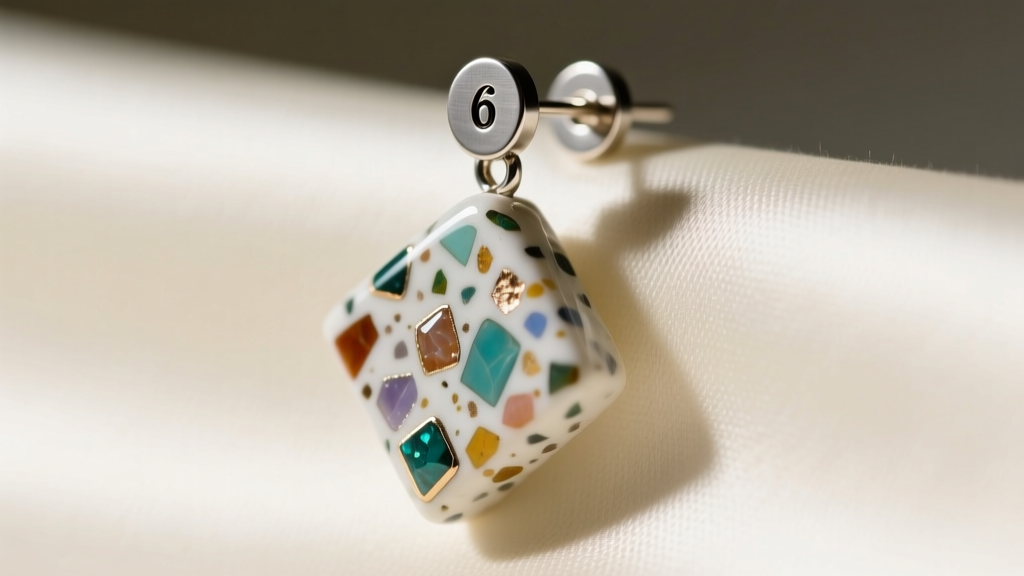
When a large clay dangle (e.g., a 2-inch terrazzo arch) hangs from a 4mm pad, the torque applied to the adhesive bond is immense. Every time the wearer turns their head, the earring swings, acting as a lever that pries the pad off the clay. To solve this, you must increase the surface area of the bond. For any earring component exceeding 1.5 inches in length, upgrade to 6mm or 8mm flat earring pads. This distributes the kinetic force and reduces the peel-stress on the adhesive.
Gauge Thickness and Metallurgy
Standard earring posts are typically 20-gauge (0.81mm). While fine for lightweight studs, 20-gauge wire will easily bend under the weight of dense polymer clay, causing the earring to droop or fall out of the ear. For structural integrity, source 18-gauge (1.02mm) posts for heavier dangles. Furthermore, avoid "surgical steel" which often contains nickel. According to metallurgical standards outlined by jewelry suppliers like Rio Grande, you should exclusively use ASTM F136 implant-grade titanium or pure niobium for posts to guarantee biocompatibility and prevent contact dermatitis.
The Adhesive Failure Mode
Stop using E6000 for clay-to-metal bonds. Polymer clay retains a microscopic degree of flexibility even after curing, while E6000 remains a flexible, rubbery adhesive that degrades when exposed to skin oils and UV light over time. The professional standard is a two-part epoxy (like Loctite Epoxy) or a high-viscosity UV resin. UV resin creates a rigid, glass-like bridge that locks the metal pad into the clay's surface texture, provided the clay has been lightly sanded with 400-grit sandpaper prior to bonding to create mechanical tooth.
Solving the Weight Distribution Problem
Heavy earrings cause earlobe stretching, micro-tears, and chronic discomfort. If your clay earring ideas involve large, solid geometric shapes, you are likely using a clay brand that is too dense. Not all polymer clays share the same specific gravity. Choosing the right material is a crucial troubleshooting step for ergonomic jewelry design.
| Clay Brand | Weight Profile | Flexibility Post-Cure | Best Application |
|---|---|---|---|
| Pardo Professional Art Clay | Ultra-Lightweight | High (Bendable) | Large dangles, thin arches, statement pieces |
| Premo! Sculpey | Medium | Medium | Mixed media, detailed surface textures, canes |
| Sculpey III | Heavy / Dense | Low (Brittle when thin) | Sculptural studs, thick pendants (avoid for large dangles) |
| Sculpey Soufflé | Lightweight | Medium-High | Everyday wear, matte finish designs, comfortable drops |
By swapping a dense clay like Sculpey III for Pardo Art Clay, you can reduce the overall weight of a 2-inch earring by up to 40%, instantly transforming a painful design into an all-day comfort piece.
Preventing Surface Cracking and Curing Disasters
A frequent complaint among buyers of handmade clay earrings is that the jewelry snapped cleanly in half after a few weeks of wear. This is almost always a result of improper curing, not a flaw in the design itself. Polymer clay does not air-dry; it requires a precise thermal reaction to fuse the PVC particles and plasticizers.
The Oven Thermometer Mandate
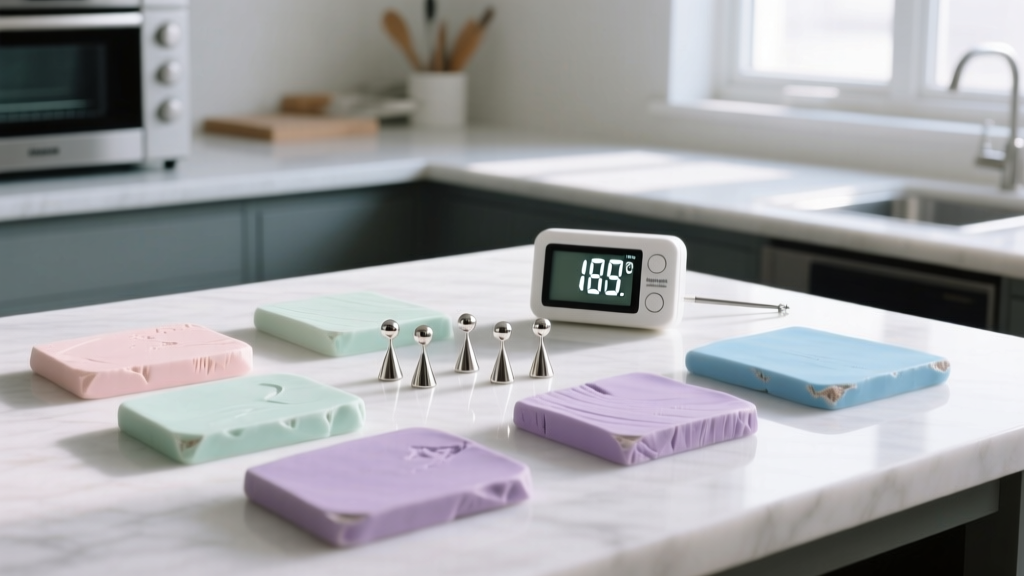
Never trust the dial on a standard home oven. Domestic ovens can fluctuate by as much as 50°F (10°C) during a baking cycle. If your oven spikes to 325°F while targeting 275°F, the clay will scorch internally, becoming brittle and prone to snapping. Conversely, underbaking leaves the plasticizers unbound, resulting in a crumbly texture that shatters under pressure. You must use an independent, standalone digital oven thermometer placed directly next to the earring tray. As noted in the official curing guidelines by Polyform (Sculpey), maintaining a strict, verified temperature is non-negotiable for structural integrity.
Tenting and Thermal Mass
To prevent the heating elements from scorching the surface of light-colored clays (like white or pastel pink), makers must "tent" their creations using aluminum foil or a dedicated metal baking pan. Additionally, baking clay on a ceramic tile provides thermal mass, ensuring the temperature remains stable when the oven door is opened or when the heating element cycles off and on.
Upgrading Your Clay Earring Ideas for Sensitive Ears
The modern consumer is highly educated about metal allergies. Nickel sensitivity affects roughly 10-15% of the population, and contact dermatitis can ruin a brand's reputation overnight. Troubleshooting skin reactions requires looking beyond just the earring post.
"The term 'hypoallergenic' is largely unregulated in the jewelry industry. It simply means the manufacturer believes it won't cause a reaction, but it offers no legal or chemical guarantee. Always look for specific alloy designations like ASTM F136 Titanium or 99.9% Pure Niobium."
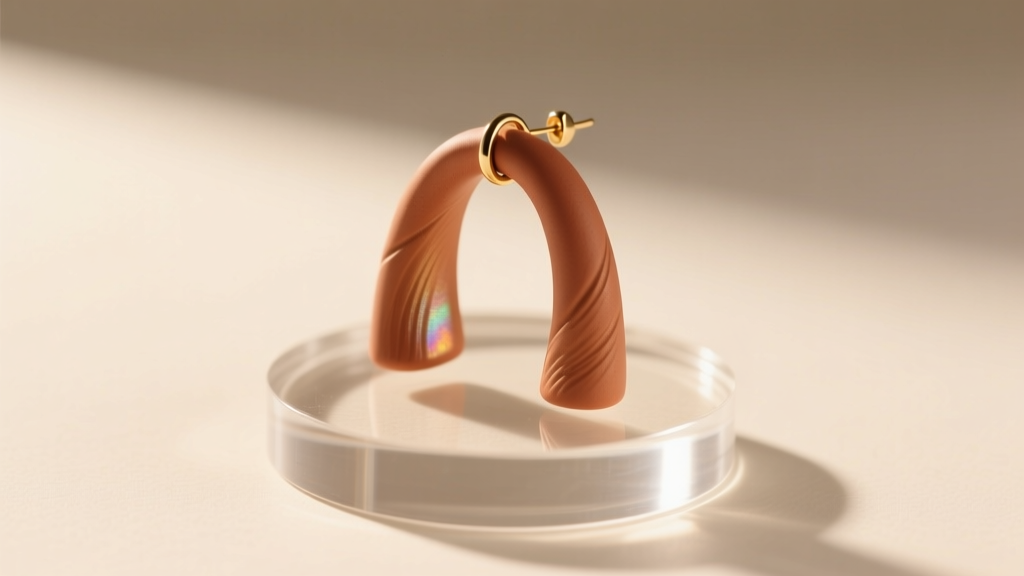
Furthermore, consider the earring back (the clutch or scroll). Many makers use cheap, plated brass butterfly backs that contain high levels of nickel. Upgrade your packaging to include silicone friction backs or titanium bullet clutches. If your clay earring ideas involve wire-wrapping or hand-forged ear wires, ensure you are drawing from spools of pure, unalloyed niobium wire, which is naturally hypoallergenic and can be anodized into vibrant colors without the use of chemical dyes or plating.
Final Checklist for Professional-Grade Clay Earrings
Before listing your next batch of designs or gifting them to a client, run your pieces through this rigorous quality assurance checklist to ensure they meet the highest standards of 2026 jewelry craftsmanship:
- Hardware Check: Are all posts 18-gauge or thicker for dangles? Are pads at least 6mm for large surface areas?
- Adhesive Verification: Is the bond secured with 2-part epoxy or UV resin rather than flexible craft glues?
- Weight Test: Does the earring pull noticeably on the lobe? If so, re-evaluate the clay brand or hollow out the back.
- Cure Audit: Was the batch baked with an independent thermometer to verify exact thermal adherence?
- Skin Safety: Are all metal components verified as implant-grade titanium, pure niobium, or high-karat gold?
By treating polymer clay not just as a craft medium, but as a serious jewelry material requiring precise engineering, you elevate your work from fragile novelties to enduring, heirloom-quality accessories. Troubleshooting these foundational elements ensures your creative vision survives the realities of daily wear.


