Expert Guide to Buying Dangle Red Earrings: Styles & Stones
Discover what to look for when buying dangle red earrings. Learn about gemstone grades, metal durability, gauge sizes, and face-shape styling tips.

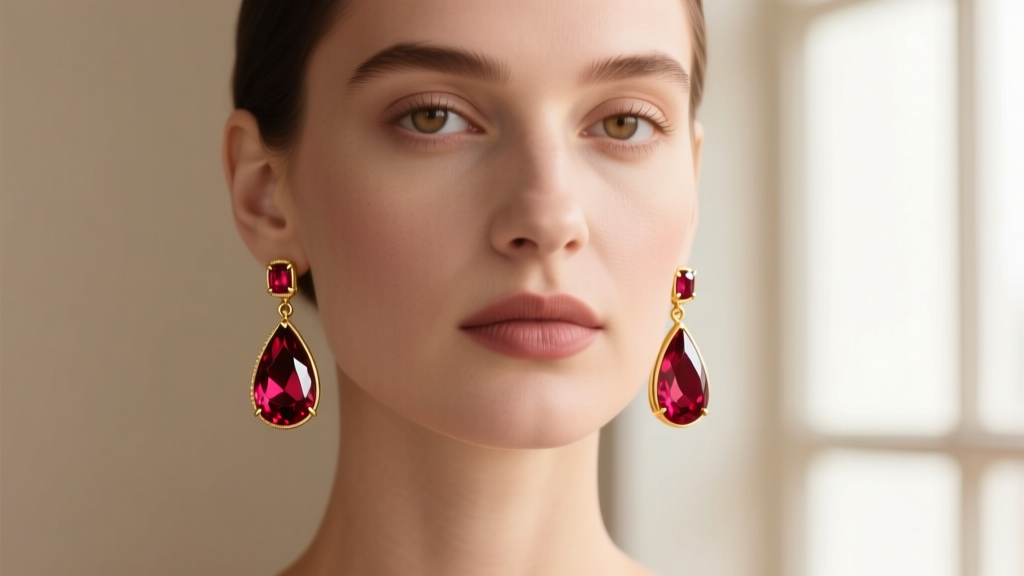
The Structural Anatomy of Dangle Earrings
When shopping for dangle red earrings, the aesthetic appeal of the gemstone often overshadows the mechanical engineering required to keep them securely on your ears. Unlike studs, dangles are kinetic It is crucial to ensure the gemstone is securely set and the metal is durable enough to withstand daily wear. According to the American Gem Society, understanding these material properties is essential for making an informed investment in fine jewelry.
| Gemstone | Mohs Hardness | Cleavage Risk | Avg. Price/Carat (2026) |
|---|---|---|---|
| Natural Ruby | 9.0 | None | $3,500 - $15,000+ |
| Red Spinel | 8.0 | None | $1,200 - $5,000 |
| Rubellite Tourmaline | 7.0 - 7.5 | Indistinct | $400 - $1,500 |
| Pyrope Garnet | 7.0 - 7.5 | None | $50 - $300 |
Furthermore, the cut of the red gemstone drastically affects how it performs in a dangle setting. A deep pavilion cut, often seen in native-cut rubies, adds unnecessary weight and can cause the earring to hang awkwardly. Look for precision-cut stones with optimal light return, which not only look more vibrant as they catch the light in motion but also keep the overall carat weight (and physical mass) manageable.
Treated vs. Untreated Stones
As detailed by the Gemological Institute of America (GIA), heat treatment is standard and stable for rubies and sapphires. However, you must strictly avoid 'fracture-filled' or 'glass-filled' rubies for dangle earrings. The lead-glass filling is extremely soft and can be damaged by a simple knock against a doorway or the citric acid in everyday cosmetics. Always demand a lab report confirming that no glass or flux filling is present.
Metal Alloys: Durability vs. Hypoallergenic Needs
The metal holding your red gemstone must withstand constant kinetic movement. While 18k gold is prized for its rich color and hypoallergenic properties, it is relatively soft. For heavy dangle red earrings, 14k gold offers superior structural integrity. The higher alloy content (usually copper and zinc) makes the prongs stiffer and more resistant to the constant kinetic stress of a swinging dangle. While 18k gold boasts a richer, warmer yellow hue that beautifully complements warm-toned red garnets, its softer nature means prongs may require more frequent re-tipping.
Platinum is the ultimate choice for security. Its density and durability mean prongs will rarely break, but platinum is heavy. Adding a platinum setting to an already heavy dangle earring might push the total weight past the comfortable 12-gram threshold. Titanium is an emerging alternative in 2026 for those with severe metal allergies, offering incredible strength-to-weight ratios, though it is harder to resize or repair.
For those seeking the warmth of gold without the structural compromise, consider 14k gold for the ear wire and structural components, paired with an 18k gold bezel or decorative elements. This hybrid approach, increasingly popular among bespoke jewelers in 2026, ensures the high-stress areas remain rigid while the visible framing retains that luxurious, deep yellow luster.
Proportion, Kinetics, and Face Shape
Dangle earrings are inherently dynamic. A well-designed pair will swing gracefully and return to a forward-facing position. Poorly balanced earrings will constantly flip backward, hiding the red gemstone against your neck. Look for earrings with a 'bail' or jump ring that allows the stone to pivot independently of the ear wire.
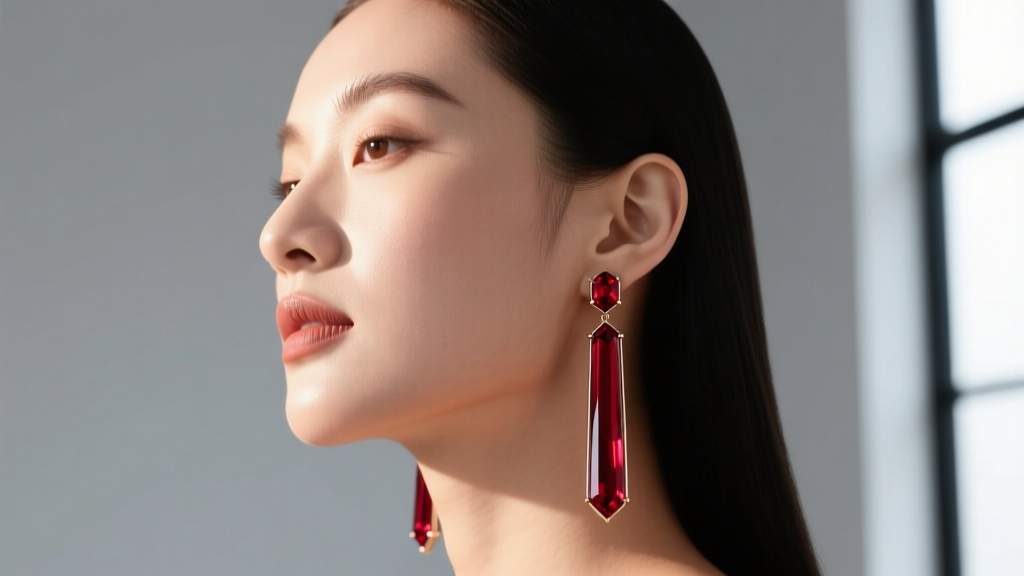
Styling for Your Face Shape
- Round Faces: Opt for long, linear dangle red earrings. The vertical lines create an optical illusion that elongates the face and sharpens the jawline. Avoid circular hoops or short, chunky drops.
- Square Faces: Choose dangles with curved silhouettes, such as teardrop rubies or oval rubellites. The soft curves help balance and soften strong angular jawlines.
- Heart-Shaped Faces: Bottom-heavy chandelier dangles or pear-shaped drops add necessary volume to the lower half of the face, balancing a wider forehead.
- Oval Faces: You have the versatility to pull off almost any style, from geometric Art Deco drops to sweeping chandeliers.
Common Failure Modes and How to Spot Them
Before finalizing your purchase, inspect the piece for these common manufacturing flaws that lead to broken or lost earrings:
'The number one reason dangle earrings break is an unsoldered jump ring. If the tiny metal ring connecting the gemstone drop to the ear wire has a visible gap and isn't soldered shut, it will eventually pull open and drop your stone.' — Master Jeweler Bench Notes, 2025.
Additionally, check the prong height. If the prongs holding your red gemstone extend too far above the stone's table, they will act like tiny hooks, snagging on knitted sweaters and hair. Prongs should be filed smooth and sit flush or slightly below the gemstone's crown.
Final Buying Checklist
Use this quick checklist when evaluating dangle red earrings, whether shopping online or in a boutique:
- Verify the gemstone identity and treatment disclosure (e.g., natural heated ruby vs. glass-filled).
- Check the ear wire gauge (18G or thicker for stones over 3 carats total weight).
- Ensure all jump rings are fully soldered shut.
- Test the clasp tension (leverbacks should snap firmly; fishhooks should be paired with secure backs).
- Weigh the earrings; avoid anything over 12 grams per ear for all-day wear.
By prioritizing structural integrity and gemstone quality alongside visual appeal, your dangle red earrings will remain a vibrant, secure staple in your jewelry rotation for decades to come.


