Heavy Kim Kardashian Balenciaga Elizabeth Taylor Earrings Fixes
Learn how to wear heavy Kim Kardashian Balenciaga Elizabeth Taylor earrings without earlobe damage. Expert fixes for sagging, tearing, and forward tilt.

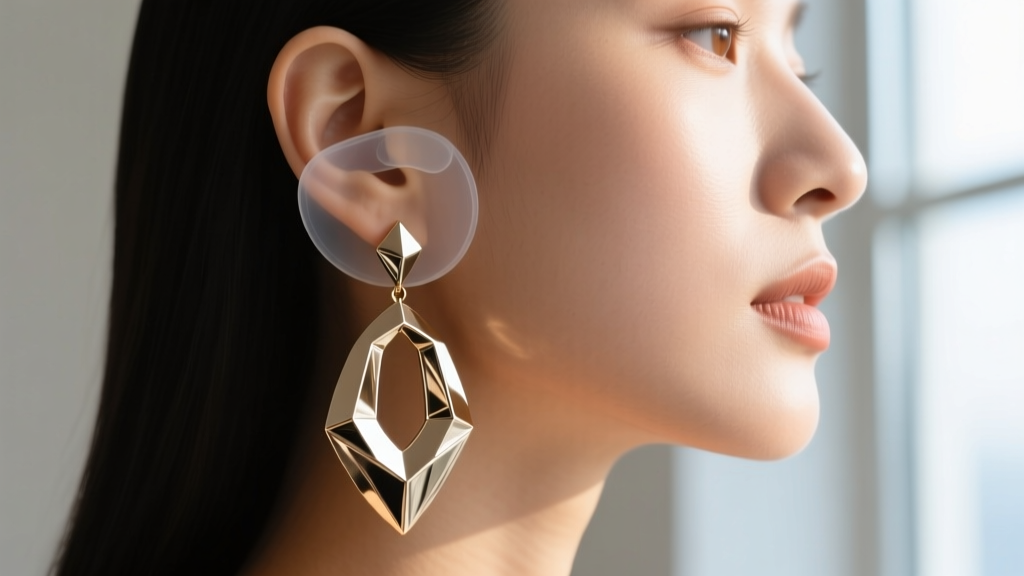
The Anatomy of the Archival Avant-Garde Earlobe Crisis
The modern collector's ultimate grail often falls into a highly specific niche: the search for kim kardashian balenciaga elizabeth taylor earrings. This isn't just a random string of luxury names; it represents a distinct stylistic collision. You are blending the historic, gravity-defying gemstone drops of Taylor’s archival Bulgari pieces with the brutalist, oversized hardware Kardashian debuted in recent Balenciaga campaigns. As we navigate the 2026 runway season and the continued dominance of 'archival avant-garde' styling, the aesthetic is undeniable. The physical toll on your earlobes, however, is a massive problem.
Standard earlobes are not engineered to support 30-gram brass hardware or 40-carat emerald drops. When you attempt to wear these monumental pieces, you immediately encounter three structural failures: the 'cheese wire' tearing effect, the forward-tilt droop, and post-bend fatigue. Below, we break down the exact physics of these failures and provide actionable, professional-grade troubleshooting steps to save your lobes while maintaining the dramatic silhouette.
Troubleshooting the 'Cheese Wire' Tearing Effect
The most common failure mode when wearing heavy statement earrings is lobe tearing. This occurs when the surface area of the earring post is too small for the weight it carries, creating immense downward pressure per square millimeter. According to the American Academy of Dermatology, repetitive stress from heavy jewelry is a leading cause of acquired earlobe clefts.
Upgrading Your Post Gauge
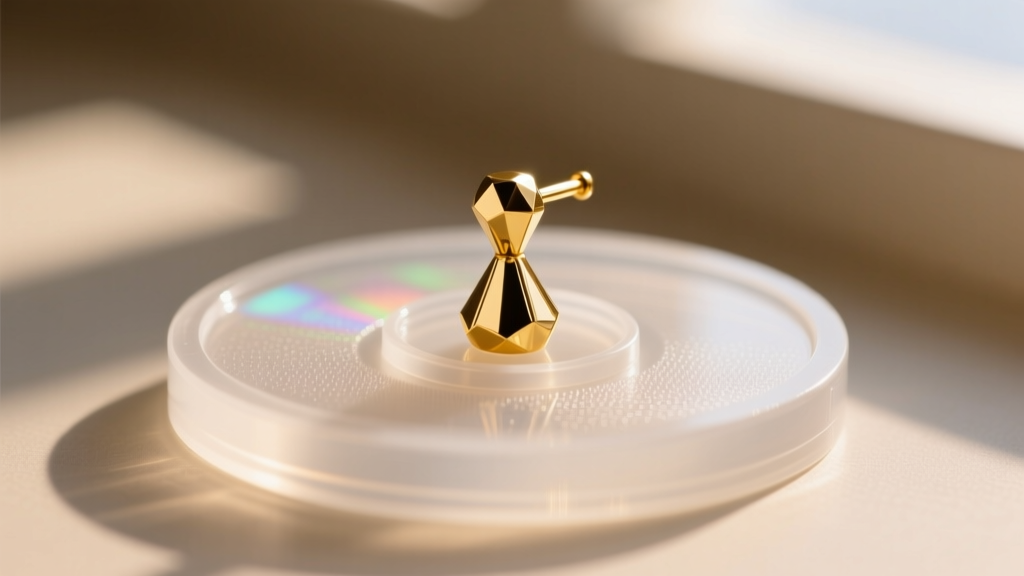
Most commercial fashion earrings, even high-end designer pieces, utilize a standard 20-gauge (0.8mm) or 18-gauge (1.0mm) post. For any earring exceeding 15 grams, this is structurally insufficient.
- 16-Gauge (1.2mm): The absolute minimum for 15g–25g drops. This thickness distributes the shear force across a wider tissue area.
- 14-Gauge (1.6mm): Required for brutalist Balenciaga-style metal drops or heavy gemstone clusters exceeding 30g. Note that you may need a professional piercer to gently taper your existing piercing to accommodate this thickness.
Pro Tip: If you cannot replace the post on an archival vintage piece, use a 14k gold or implant-grade titanium sleeve (a hollow tube that slides over the existing post) to artificially increase the gauge without altering the original jewelry.
Fixing the 'Forward Tilt' and Droop
Heavy earrings pull the earlobe forward, causing the decorative drop to face the floor rather than dangling parallel to the neck. This ruins the visual impact of the piece and puts uneven torque on the piercing channel. To solve this, you must counterbalance the forward center of gravity.
The Silicone Cone & Patch Method
Standard metal butterfly backs are useless for heavy earrings; they slip and pinch. Instead, utilize medical-grade silicone stabilizers. Look for silicone with a Shore A hardness of 40-50, which provides enough rigidity to hold the lobe upright without causing contact dermatitis.
- Front Support: Apply an invisible polyurethane earlobe support patch (like Lobe Wonder) to the front of the earlobe. This creates a rigid splint that prevents the tissue from folding forward under the weight of the earring head.
- Rear Stabilization: Replace the backing with a jumbo silicone cone. The wide base of the cone (usually 10mm to 12mm in diameter) acts as a kickstand, pushing the back of the lobe forward and forcing the earring to hang perfectly straight.
Weight Distribution Matrix for Statement Drops
Not all heavy earrings are created equal. A dense, compact 20-gram gold hoop exerts different torque than a 20-gram elongated crystal chandelier. Use this decision matrix to determine your support strategy before attending an event.
| Earring Weight | Design Profile | Minimum Gauge | Required Backing System | Max Safe Wear Time |
|---|---|---|---|---|
| 10g - 15g | Compact / Hoops | 18G (1.0mm) | Jumbo Silicone Disc | 8 - 10 Hours |
| 16g - 25g | Elongated Drops | 16G (1.2mm) | Front Patch + Silicone Cone | 4 - 6 Hours |
| 26g - 40g | Archival Gemstones | 14G (1.6mm) | Tension Clip + Lobe Tape | 2 - 3 Hours |
| 40g+ | Brutalist Hardware | N/A (Do not pierce) | Padded Magnetic Clip-On | 1 - 2 Hours |
Bypassing the Lobe: Cartilage Support and Ear Cuffs
When dealing with the extreme weight of historic gemstone archives or avant-garde runway pieces, the most effective troubleshooting step is to remove the load from the earlobe entirely. The cartilage of the upper ear is significantly more rigid and can support structural weight when properly harnessed.
The Chain-Drape Technique
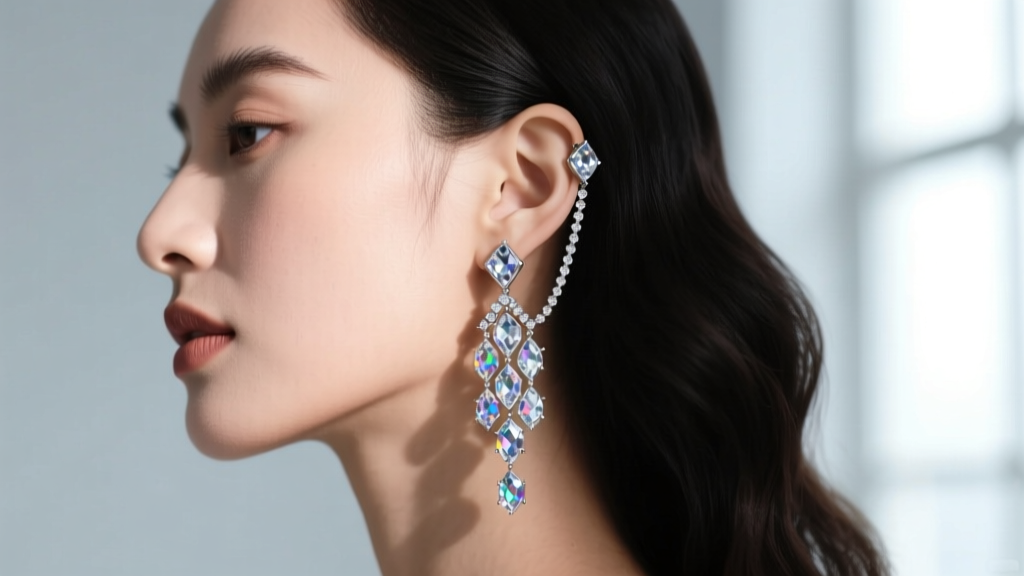
If you have a helix or conch piercing, you can use a delicate 14k gold ear chain to connect your heavy lobe earring to the upper ear. The cartilage piercing acts as an anchor, taking up to 60% of the downward vector force off the earlobe. Ensure the chain is measured precisely; if it is too tight, it will pull the lobe upward unnaturally; if too loose, it provides zero support.
Magnetic and Padded Clip-On Conversions
For pieces exceeding 45 grams, piercing is simply not a viable option for prolonged wear. The Gemological Institute of America (GIA) frequently notes that historic museum pieces were often designed with screw-back or clip-on mechanisms precisely because of their immense carat weight. Have a master jeweler remove the post and solder on a padded, hinged omega-clip or a high-tension magnetic clasp. Modern neodymium magnetic clasps, when paired with a silicone grip pad, can hold up to 50 grams securely without the pinching associated with vintage clip-ons.
Post-Wear Earlobe Rehabilitation
Even with perfect support systems, wearing 30-gram Balenciaga-style hardware or heavy vintage drops causes micro-trauma to the earlobe tissue. Proper post-wear rehabilitation is critical to prevent permanent stretching.
"Tissue memory is real. If you repeatedly stretch the collagen matrix of the earlobe without allowing for cellular recovery, the sagging becomes permanent, requiring surgical intervention or dermal fillers to correct."
The 48-Hour Recovery Protocol
- Cold Compression: Immediately after removing heavy earrings, apply a cold compress for 5 minutes to reduce localized edema and restrict dilated capillaries.
- Collagen Massage: Gently massage the lobe with a peptide-rich or hyaluronic acid serum to promote tissue elasticity and hydration.
- The Resting Period: For every hour you wear earrings over 20 grams, you must give your lobes 24 hours of complete rest, wearing only lightweight, implant-grade titanium studs (under 2 grams) to keep the channel open without applying stress.
By respecting the physics of heavy jewelry and implementing these structural safeguards, you can successfully channel the dramatic, boundary-pushing aesthetics of modern avant-garde and vintage Hollywood without sacrificing the long-term health of your piercings.


