Real Diamond Male Earrings: 2026 Metal & Setting Guide
Discover the best metals and settings for real diamond male earrings in 2026. Compare platinum, gold, and titanium for durability and style.


The landscape of men's fine jewelry has shifted dramatically over the last decade, moving away from novelty pieces toward enduring, high-quality staples. At the forefront of this evolution are real diamond male earrings. No longer confined to flashy, oversized solitaires, the modern man's diamond stud is an exercise in metallurgical precision, ergonomic design, and understated luxury. As we navigate the 2026 market, the focus has pivoted heavily toward material longevity, hypoallergenic properties, and setting security. Whether you are investing in your first pair of diamond studs or upgrading to a heavier carat weight, understanding the interplay between metal alloys, post gauges, and setting architectures is critical to making a purchase that lasts a lifetime.
The Metal Matrix: Choosing the Right Alloy
The metal you choose dictates not only the aesthetic of the earring but also its structural integrity, weight, and maintenance requirements. Men's jewelry is often subjected to more physical stress, friction, and environmental exposure than women's, making the metallurgical composition paramount. According to GIA's guide on platinum jewelry, the purity and alloying elements of your chosen metal will directly impact how the prongs or bezels hold the diamond over decades of wear.
| Metal Type | Composition | Pros | Cons | Price Premium |
|---|---|---|---|---|
| Platinum 950 | 95% Platinum, 5% Ruthenium/Cobalt | Hypoallergenic, develops a patina rather than losing metal, extremely secure prongs. | Heaviest metal, highest upfront cost, scratches easily (patina). | High |
| 18k Yellow Gold | 75% Gold, 25% Copper/Silver | Rich, warm color that masks lower diamond color grades (I-J), classic aesthetic. | Softer than 14k, prongs can bend under heavy impact, requires occasional polishing. | Medium-High |
| 14k White Gold | 58.5% Gold, alloyed with Nickel/Palladium | Excellent hardness (Vickers ~165 HV), lower cost than platinum, bright initial finish. | Rhodium plating wears off in 12-18 months revealing a pale yellow undertone. | Medium |
| Grade 5 Titanium | Ti-6Al-4V (Aerospace Grade) | Featherweight, 100% hypoallergenic, immune to tarnish and corrosion. | Cannot be resized or soldered; if a prong breaks, the setting must be replaced. | Low (Metal), High (Labor) |
For men who work with their hands or engage in frequent physical activity, Platinum 950 remains the undisputed champion. While it develops a satin-like patina over time, the metal merely displaces rather than flakes away, ensuring the diamond remains secure. Conversely, if you prefer a maintenance-free, modern aesthetic and have severe metal sensitivities, Grade 5 Titanium offers an incredible strength-to-weight ratio, though you must commit to a bezel setting due to the metal's resistance to traditional prong soldering.
Prong vs. Bezel: Security and Aesthetics
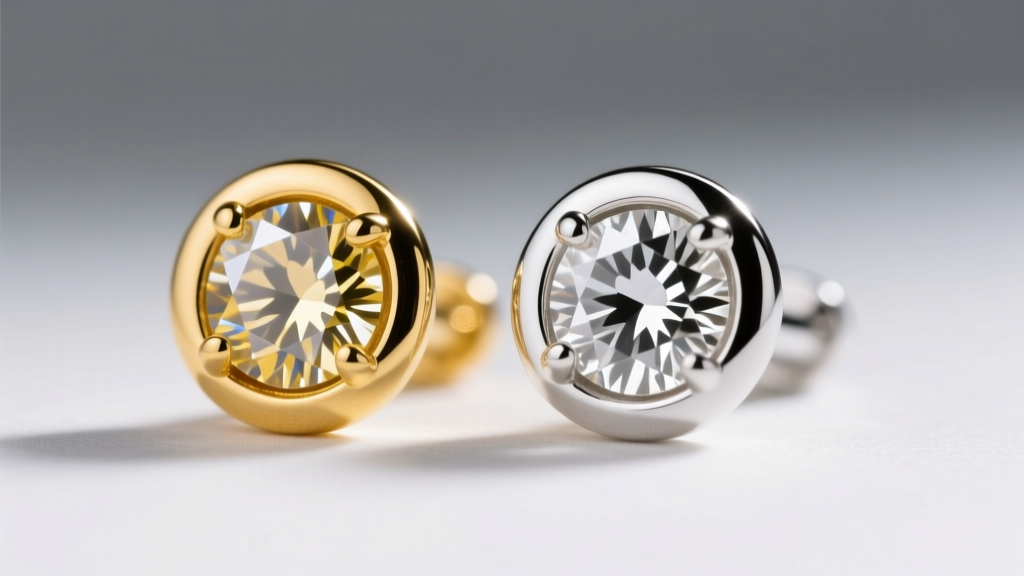
The setting architecture determines how much light enters the diamond and how well the stone is protected from lateral impacts. When shopping for real diamond male earrings, the choice between prong and bezel settings is both a stylistic and practical one.
The 4-Prong Martini Setting
The martini setting is a classic three-prong or four-prong design that tapers down to a narrow base, resembling a cocktail glass. Its primary advantage is maximum light exposure, which enhances the diamond's brilliance and fire. However, the narrow base creates a higher center of gravity. On thinner earlobes, a heavy martini setting (especially those holding diamonds over 0.75 carats each) can cause the earring to droop forward. To counteract this, jewelers often pair martini settings with larger, more rigid friction backs or screw-backs to distribute the weight.
The Bezel and Flush Advantage
For the active man, the bezel setting is the ultimate utilitarian choice. A full bezel encircles the diamond's girdle in a continuous rim of metal. While it sacrifices about 10-15% of the diamond's visible surface area and slightly reduces light return, it offers unparalleled protection against chipping the girdle. Furthermore, bezel settings have a lower profile and a wider base, sitting flush against the earlobe without drooping. In 2026, we are seeing a massive surge in men opting for brushed-finish bezels, which provide a rugged, matte contrast to the high-polish brilliance of the diamond.
Technical Specifications: Gauges, Posts, and Backings
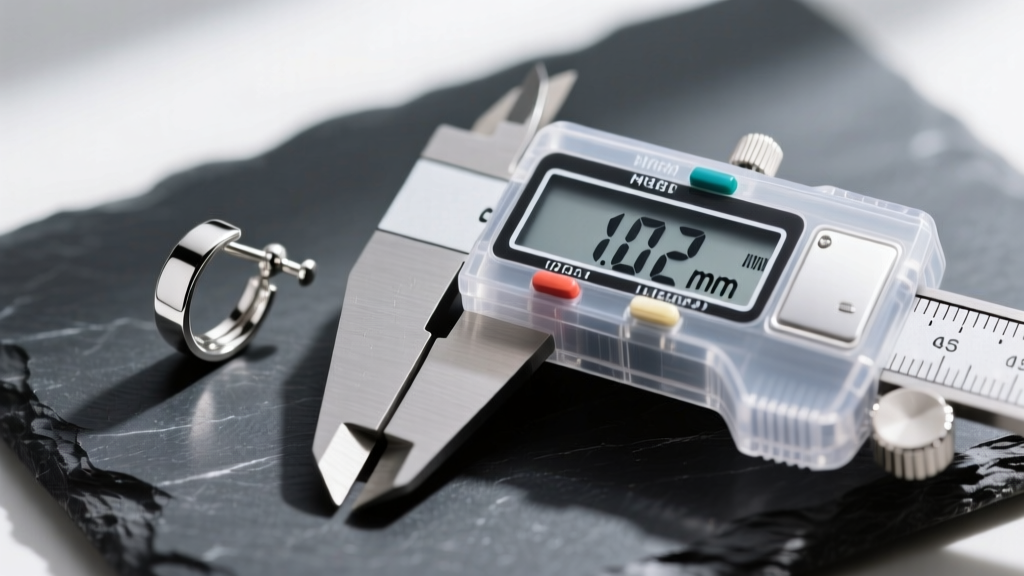
One of the most overlooked aspects of buying men's diamond earrings is the post thickness, measured in gauges. The standard lobe piercing for women is typically 20-gauge (0.81mm) or 22-gauge. However, men's earlobes are generally thicker, and the earrings themselves are often heavier.
- 18-Gauge (1.02mm): The gold standard for men's diamond studs. This thickness provides the necessary rigidity to support heavier settings without bending, while still being comfortable enough to slide through a standard healed piercing.
- 16-Gauge (1.29mm): Often used for larger, statement pieces or cartilage piercings. If you are buying a 2.00 CTW pair of diamond studs, an 18k gold or platinum 16-gauge post is highly recommended to prevent the post from warping under the weight of the metal and stone.
- Post Length: Standard posts are 6mm to 8mm. Men with thicker earlobes should specifically request 9mm or 10mm posts to ensure the backing does not pinch the skin, which can lead to moisture buildup and localized infections.
Regarding backings, abandon the standard "butterfly" friction back for any diamond over 0.50 carats per ear. The tiny grooves on the post will wear down over time, leading to lost stones. Invest in La Pousette backs (which use a spring-loaded mechanism) or screw-backs, which thread onto a specially grooved post and are virtually impossible to lose during sleep or physical activity.
Diamond Grading: Where to Compromise and Where to Invest
Because stud earrings are viewed from a distance and lack the direct, side-by-side comparison of a ring on a hand, you can strategically allocate your budget. The Gemological Institute of America (GIA) notes that clarity and color can be optimized differently for earrings than for center stones in engagement rings.
Cut: Never compromise here. An "Excellent" or "Ideal" cut is non-negotiable, as it is the cut that generates the brilliance and scintillation visible from across a room.
Color: For white metals (Platinum, White Gold), aim for G-H color grades. Anything lower (I-J) will show a faint yellow tint against the bright white metal. For 18k Yellow Gold, you can safely drop to J-K, as the warm metal will mask the diamond's natural warmth, saving you significant capital.
Clarity: SI1 (Slightly Included) is the sweet spot. Inclusions in an SI1 stone are typically invisible to the naked eye, especially when obscured by prongs or the reflections of a brilliant cut. Avoid "clarity-enhanced" or fracture-filled diamonds, as the fillers can degrade over time with exposure to sweat and environmental chemicals.
2026 Pricing Benchmarks: Lab-Grown vs. Earth-Mined
The pricing landscape for real diamond male earrings has been entirely rewritten by the maturation of the lab-grown diamond market. As of 2026, lab-grown diamonds are chemically, physically, and optically identical to earth-mined diamonds, but they trade at a fraction of the cost due to scalable CVD (Chemical Vapor Deposition) manufacturing.
For a high-quality 1.00 Carat Total Weight (CTW) pair of round brilliant studs (0.50ct per ear, G/VS2):
- Earth-Mined (GIA Certified): $3,200 - $4,500
- Lab-Grown (IGI/GIA Certified): $450 - $750
This massive price differential allows men to either purchase a significantly larger carat weight (e.g., stepping up to 2.00 CTW) or to invest the savings into a superior metal like Platinum 950 and a custom-engineered screw-back bezel setting. Ultimately, the best real diamond male earrings are those that align with your daily lifestyle, prioritizing structural security and metallurgical excellence over sheer, unprotected carat weight.


