Troubleshooting the Steve Martin Earring: Single Stud Styling Fixes
Master the Steve Martin earring look. Troubleshoot facial asymmetry, lobe strain, and styling errors when wearing a single statement stud or drop.

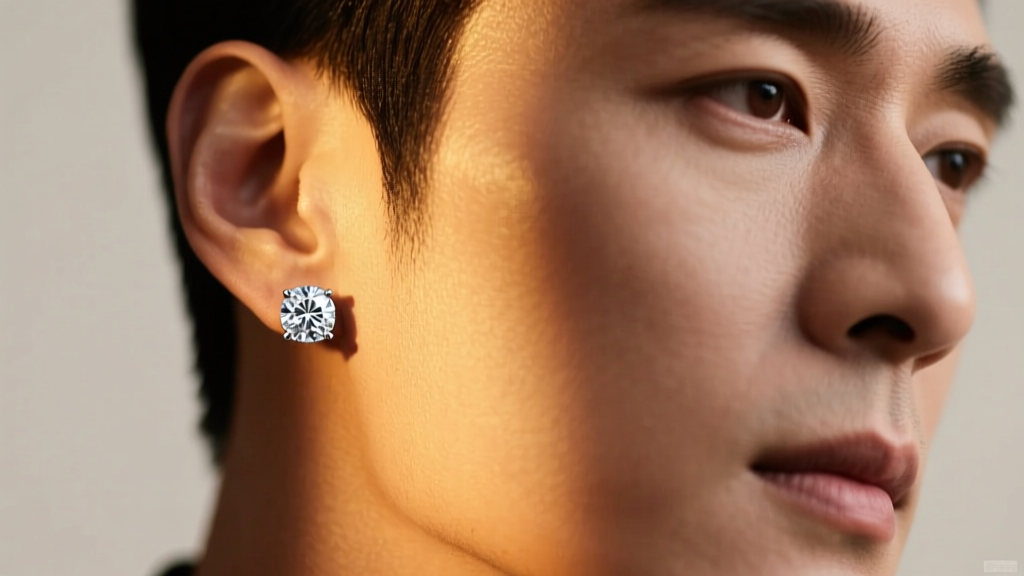
The 'Steve Martin Earring' Phenomenon: Intentional vs. Accidental
When stylists and jewelers refer to the 'Steve Martin earring,' they are typically referencing one of two iconic aesthetics: the sophisticated, single statement stud (often a large diamond or South Sea pearl) worn on the red carpet, or the legendary comedy prop earrings (like the arrow-through-the-ear) from his 1970s and 80s stand-up specials. In 2026, the single earring trend has evolved into a mainstream, gender-neutral styling staple. However, wearing a single, heavy, or oversized earring introduces unique structural and visual challenges that standard paired earrings do not.
The most common failure mode when attempting this asymmetrical look is the 'lost earring stigma'—where the styling appears accidental rather than deliberate. Beyond aesthetics, a single heavy statement piece places uneven kinetic and gravitational stress on one earlobe, leading to accelerated tissue stretching. This guide troubleshoots the physical and visual pitfalls of the single earring trend, providing actionable frameworks to master the look safely.
Troubleshooting Facial Asymmetry and Visual Weight
Human faces are naturally asymmetrical, but introducing a high-visual-weight object to only one side of the head can exaggerate these imbalances. A standard 1-carat diamond stud weighs approximately 0.2 grams and measures 6.5mm in diameter. However, statement 'Steve Martin' style studs or drops often feature 2-carat to 4-carat center stones (8.2mm to 10.2mm) or large 14mm pearls, drastically shifting the visual center of gravity.
If you have a round or square face shape, a single heavy drop earring can visually drag one side of your jawline downward. Conversely, those with oblong face shapes can use a single, wide horizontal stud (like a cluster or a geometric cuff) to create the illusion of width on one side, breaking up verticality.
The Balancing Act: Hair and Neckline Frameworks
To prevent the single earring from looking like a mistake, you must anchor it with your hair and wardrobe. Here is the 2026 framework for balancing asymmetrical ear curation:
- The Deep Side Part: Sweep your hair to the opposite side of the earring. This exposes the ear entirely, signaling that the single piece is a deliberate focal point, not a missing half of a pair.
- Asymmetrical Necklines: Pair the earring with one-shoulder tops or off-the-shoulder garments that expose the collarbone on the same side as the jewelry. This creates a continuous diagonal line of styling.
- Contralateral Anchoring: If wearing a heavy single drop on the left ear, wear a subtle, non-earring accessory on the right side of your face or neck (like a thin choker or a bold lip color) to redistribute visual weight.
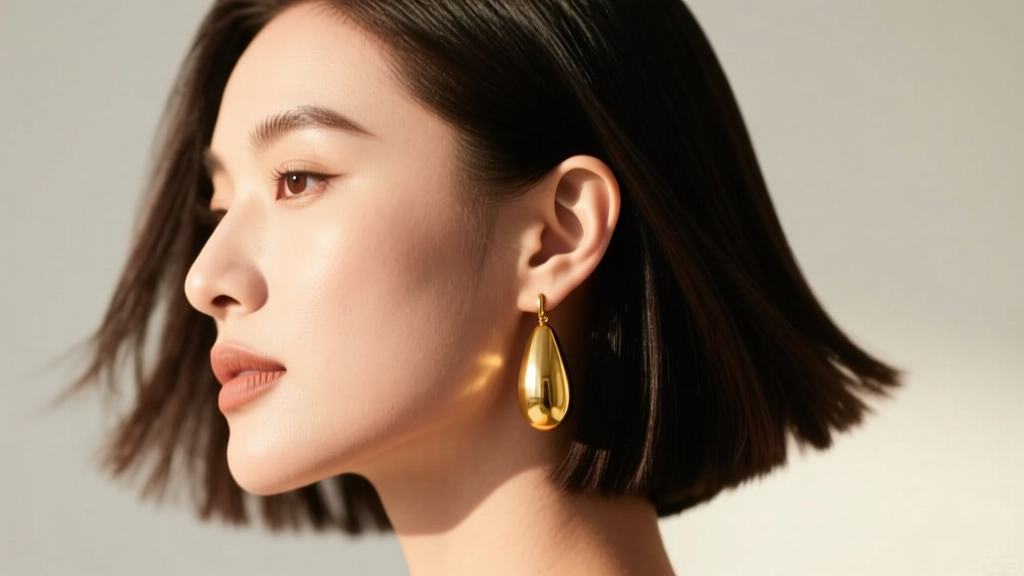
Solving Lobe Strain from Heavy Single Studs
The physical reality of wearing a single, oversized earring is that the pierced fistula (the hole in the earlobe) bears 100% of the kinetic load without a partner to share the daily wear-and-tear. According to a comprehensive NCBI study on auricular reconstruction and earlobe tearing, the inferior margin of the earlobe is highly susceptible to splitting when subjected to continuous downward traction from heavy jewelry.
Standard lobe piercings are typically done at 20-gauge (0.81mm) or 18-gauge (1.02mm). A heavy 15-gram statement earring swinging on a thin 20G post acts like a cheese wire, slowly migrating downward through the tissue. To troubleshoot this, you must upgrade the post thickness and the backing mechanism.
| Earring Weight | Effect on Lobe Tissue | Required Post Gauge | Recommended Backing Mechanism |
|---|---|---|---|
| 1 - 5 grams | No strain, sits flush | 20G (0.81mm) | Standard butterfly friction back |
| 6 - 12 grams | Mild sagging over 8+ hours | 18G (1.02mm) | Silicone earring lifters / O-rings |
| 13 - 20 grams | Visible stretching, mild pain | 16G (1.29mm) | La Pousette locking clutch |
| 20+ grams | High risk of acute tearing | 14G (1.63mm) or custom | Earlobe support patches + screw back |
Support Hacks: Earring Lifters and O-Rings
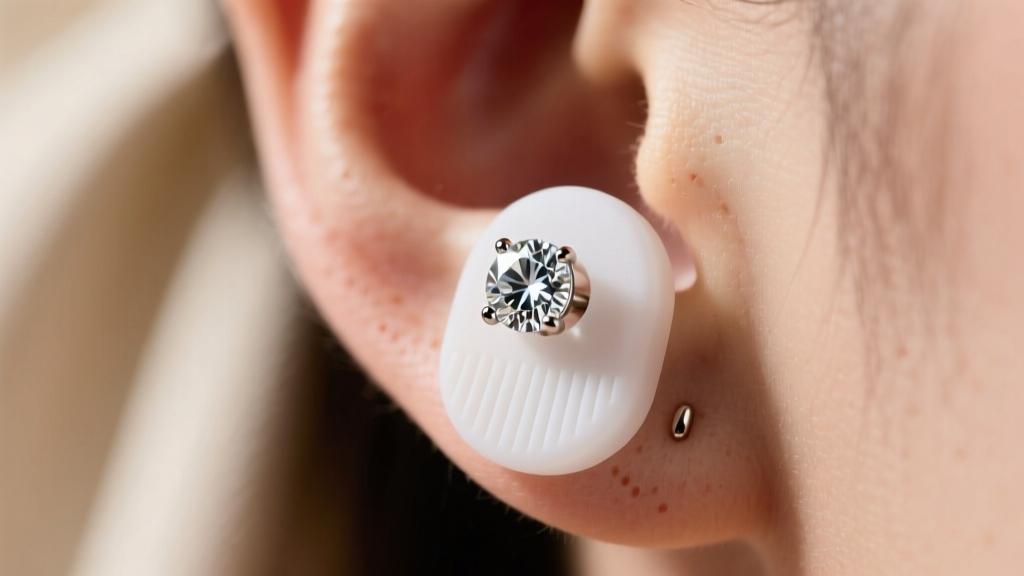
If your favorite statement stud causes the lobe to droop forward (a condition jewelers call 'nodding'), you need structural intervention. Silicone earring lifters are small, concave discs that slide onto the post behind the earlobe. They distribute the weight of the earring across a 12mm surface area rather than a 2mm puncture point. For heavy gold or platinum pieces, swap standard metal push-backs for 18k gold O-rings or screw-backs, which prevent the earring from sliding down the post and pulling the lobe outward.
Novelty and Prop Earrings: Avoiding Cartilage Damage
We cannot discuss the 'Steve Martin earring' without addressing his legendary comedy props—most notably the rigid arrow seemingly piercing through the head or ear. While modern novelty earrings are less extreme, oversized geometric shapes, rigid metal cuffs, and long dangling props remain popular in avant-garde styling.
The primary failure mode with novelty earrings is the use of rigid, non-flexible posts in active environments. If a rigid 3-inch metal arrow or geometric rod catches on a sweater or hairbrush, the kinetic energy transfers directly to the cartilage or lobe, causing immediate blowout trauma. To troubleshoot this, always opt for novelty pieces that utilize hinged connections or flexible silicone tubing at the stress points. Furthermore, if a prop earring wraps around the ear (like an ear cuff designed to look like a piercing), ensure the cuff is lined with medical-grade silicone to prevent friction alopecia or cartilage bruising along the helix.
Expert Insight: When purchasing heavy or novelty single earrings, always check the GIA diamond anatomy and jewelry mounting guidelines to ensure the prongs and basket are reinforced. A heavy single stone in a flimsy 4-prong setting is highly likely to snap at the solder joint if bumped.
Quick-Fix Decision Matrix for Single Earring Styling
Use this troubleshooting matrix to diagnose and fix common single earring styling and physical issues on the fly.
| The Problem | The Root Cause | The Immediate Fix |
|---|---|---|
| Earring points downward ('Nodding') | Center of gravity is below the piercing hole | Add a silicone lifter pad behind the lobe to push the basket up |
| Look appears accidental/unbalanced | Hair is covering the ear or symmetry is unbroken | Tuck hair behind the earring ear; add a bold lip or asymmetrical top |
| Earlobe throbs after 4 hours | Post gauge is too thin for the earring's total weight | Switch to a lighter hollow-metal version or use an earlobe support patch |
| Novelty earring catches on clothing | Rigid post lacks a breakaway or hinge mechanism | Replace the rigid post with a flexible silicone loop or magnetic clasp |
Final Thoughts on Asymmetrical Ear Curation
The 'Steve Martin earring' concept—whether interpreted as a classic, oversized single diamond stud or an avant-garde novelty piece—requires a shift in how we think about jewelry mechanics. By treating the single earring not just as an accessory, but as a structural load on your anatomy, you can avoid the pitfalls of lobe tearing and visual imbalance. In 2026, the most sophisticated asymmetrical looks are those that marry deliberate, high-contrast styling with invisible, ergonomic support systems. Choose your gauge wisely, anchor your visual weight, and wear the single statement piece with absolute intention.


