Technical Guide to Pink and Orange Earrings: Gems, Alloys & Settings
Discover the technical gemology, metallurgy, and setting mechanics behind fine pink and orange earrings. Expert guide on stones, alloys, and care.

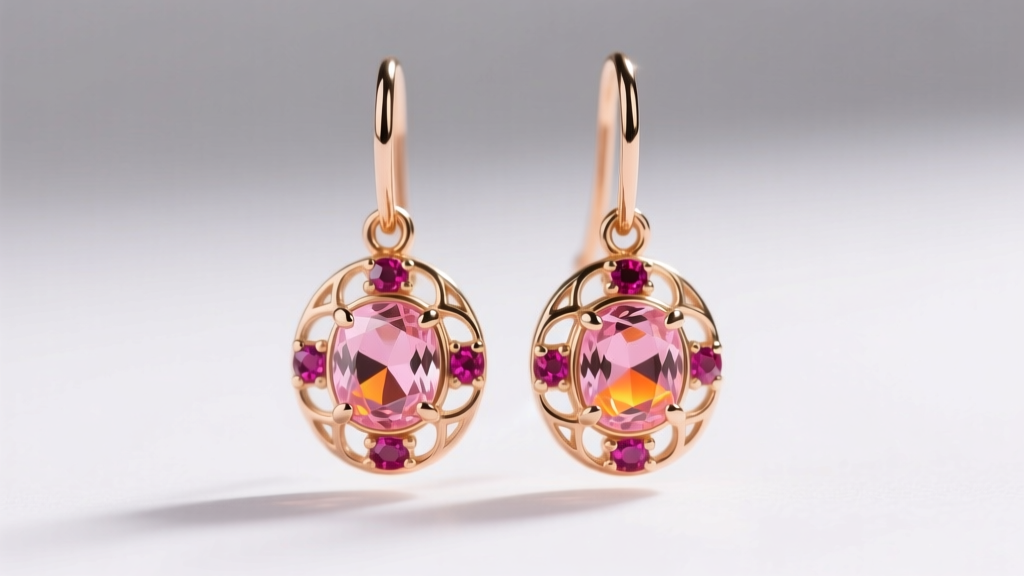
Designing and sourcing high-quality pink and orange earrings requires navigating a complex intersection of gemology, metallurgy, and structural engineering. While warm-toned jewelry is highly sought after for its vibrant, sun-kissed aesthetic, achieving these specific hues in fine jewelry involves precise chemical compositions and careful setting mechanics. This expert deep dive explores the material science behind these colors, from the trace elements that color rare gemstones to the specific gold alloys and enamel techniques that bring these designs to life.
The Gemological Science of Warm-Toned Stones
The pink and orange color spectrum in fine jewelry is dominated by four primary gemstones, each with distinct chemical properties, hardness levels, and market values. Understanding these differences is critical for both jewelers and informed collectors.
Padparadscha Sapphire
The rarest and most valuable sapphire variety, Padparadscha exhibits a delicate pinkish-orange to salmon hue. According to the Gemological Institute of America (GIA), this color is caused by a precise balance of chromium (pink) and iron (yellow/orange) trace elements within the corundum crystal lattice. With a Mohs hardness of 9, it is exceptionally durable for everyday earring wear. However, buyers must demand lab reports verifying that the stone has not undergone beryllium lattice diffusion, a common treatment used to artificially induce the Padparadscha color in less valuable pink sapphires.
Spessartite Garnet
Spessartite garnet derives its vivid, saturated orange color from high concentrations of manganese. Unlike many other gems, spessartite is rarely treated, making it a favorite among purists. It ranks 7 to 7.5 on the Mohs scale. Because it lacks cleavage planes, it is relatively tough, though it can be brittle at the girdle if cut too thinly. High-quality 'mandarin' spessartite commands premium prices, often ranging from $800 to $2,500 per carat for stones with high clarity and pure orange saturation.
Rubellite Tourmaline and Fire Opal
Rubellite (pink to red tourmaline) is colored by manganese and occasionally copper. It is heavily included by nature; finding an eye-clean rubellite over 2 carats is exceptionally rare. Fire opal, primarily sourced from Mexico, offers a translucent to transparent orange body color. Unlike precious opal, fire opal does not always display play-of-color. With a Mohs hardness of just 5.5 to 6.5 and a high water content, fire opal is highly susceptible to thermal shock and dehydration, making it a poor candidate for everyday stud earrings but suitable for occasional-wear drops.
Metallurgical Pairings: Rose Gold Alloys Explained
To amplify pink and orange gemstones, jewelers predominantly utilize rose gold. The warm reflection of the metal acts as a secondary light source, bouncing warm wavelengths back through the stone's pavilion. However, 'rose gold' is not a standardized single recipe; it is an alloy whose exact color depends on the copper-to-silver ratio.
- 18k Rose Gold: Composed of 75% pure gold, 22.25% copper, and 2.75% silver. This yields a soft, subtle pink hue. It is highly hypoallergenic but softer, making it less ideal for heavy tension settings.
- 14k Rose Gold: Composed of 58.5% pure gold, 31% copper, and 10.5% silver/zinc. The higher copper content creates a deeper, more pronounced orange-pink color that pairs flawlessly with spessartite garnet. It also offers superior tensile strength for prong settings.
Expert Note: Copper oxidation can occasionally cause skin discoloration (green/black smudging) for wearers with highly acidic skin pH. To combat this without losing the warm visual tone, some high-end manufacturers use a proprietary rhodium flash on the earring posts and backs only, leaving the visible bezel and basket un-plated.
Vitreous Enamel: Achieving Opaque Pink and Orange Hues
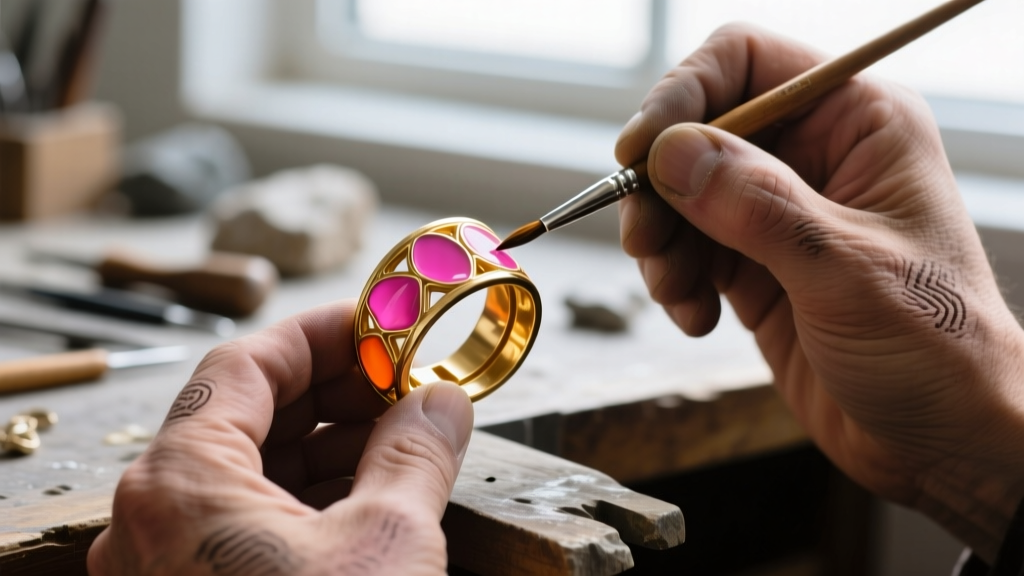
When gemstones are too cost-prohibitive or fragile for a specific earring design, master jewelers turn to vitreous enamel. Unlike cheap 'cold enamel' (which is essentially colored epoxy resin that yellows and chips within a few years), vitreous enamel is powdered glass fused to a metal substrate at extreme temperatures.
'True vitreous enamel requires firing in a kiln at approximately 1,400°F to 1,500°F (760°C to 815°C). The pink and orange pigments are derived from metal oxides—such as iron oxide for warm oranges and gold chloride for delicate pinks—suspended in the glass matrix.' — Rio Grande Jewelry Supply
For pink and orange ear cuffs or huggie hoops, the champlevé technique is most common. The jeweler carves troughs into a thick 14k gold base, fills them with the enamel powder, and fires the piece. The resulting glass-like finish is highly resistant to UV fading and chemical degradation, ensuring the vibrant sunset colors remain intact for generations.
Setting Mechanics and Hardware Specifications
The physical properties of pink and orange gems dictate how they must be secured. A gemstone's cleavage (the tendency to split along structural planes) and its Mohs hardness determine the safest setting style.
| Gemstone | Mohs Hardness | Cleavage / Parting | Recommended Setting Style | Hardware Requirement |
|---|---|---|---|---|
| Padparadscha Sapphire | 9 | None | 4-Prong or 6-Prong Basket | Standard 20-gauge (0.81mm) post |
| Spessartite Garnet | 7 - 7.5 | None (but brittle) | Bezel or Half-Bezel | Heavy 18-gauge (1.02mm) post |
| Rubellite Tourmaline | 7 - 7.5 | Distinct | Full Bezel (protects girdle) | Reinforced basket, La Pousette back |
| Mexican Fire Opal | 5.5 - 6.5 | None | Cabochon Bezel with padded base | Clip-on or thick 16-gauge wire |
Post Gauges and Backing Mechanisms
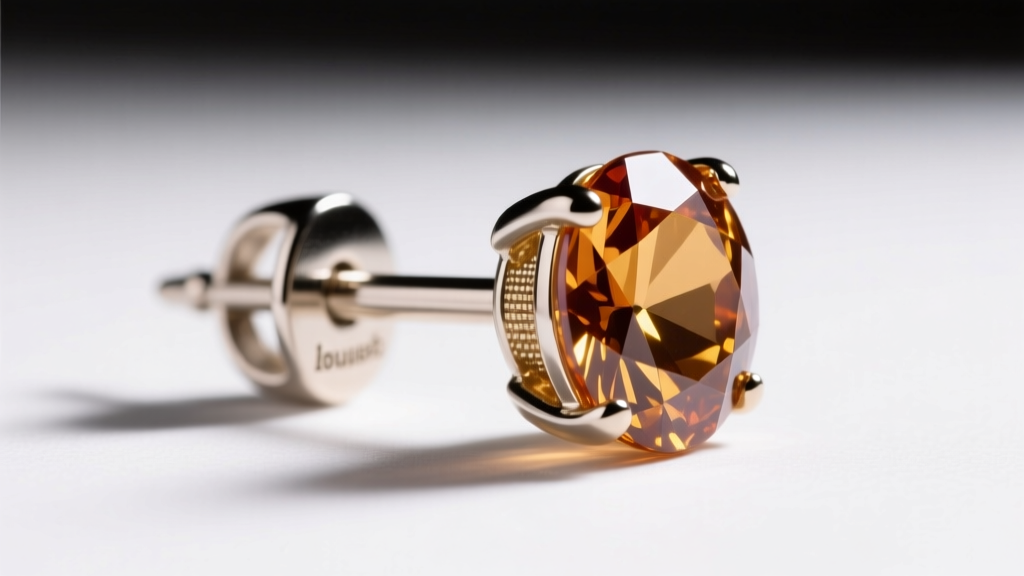
Orange gems like spessartite garnet are often cut in deep, heavy pavilions to maximize color saturation, resulting in a higher carat weight relative to their face-up millimeter size. A 4-carat spessartite drop earring can easily exceed 3.5 grams. Using a standard 20-gauge (0.81mm) post for this weight will cause the earring to droop, stretching the earlobe piercing over time. Expert bench jewelers will fabricate these drops with an 18-gauge (1.02mm) or even 16-gauge (1.29mm) solid post, paired with a wide-diameter silicone or metal friction back to distribute the weight across a larger surface area of the earlobe.
Care Protocols for Treated and Included Gems
Maintaining the structural integrity and optical brilliance of pink and orange earrings requires strict adherence to material-specific care protocols. The most common mistake consumers make is utilizing ultrasonic cleaners indiscriminately.
- Never use ultrasonics on Fire Opal: The high-frequency vibrations and heat can cause the water trapped within the opal's silica spheres to expand, leading to catastrophic internal fracturing (crazing).
- Avoid steam cleaners on Rubellite: Tourmaline is naturally heavily included with microscopic liquid and gas-filled fissures. Sudden thermal shock from a steam cleaner can cause these inclusions to expand and shatter the stone.
- Fracture-Filled Stones: Many commercial-grade pink sapphires and rubellites are fracture-filled with lead-glass or synthetic resins to improve apparent clarity. These fillers are highly reactive to mild acids, including citrus juice and household cleaners, which can etch the filler and leave the stone looking cloudy and white.
For all pink and orange fine jewelry, the safest and most effective cleaning method is a soak in lukewarm distilled water with a drop of pH-neutral dish soap, followed by gentle agitation with a baby-soft toothbrush. This preserves both the delicate trace-element coloration of the gems and the polished finish of the rose gold alloys.