Troubleshooting .75 Carat Diamond Earrings: A Repair Guide
Is your .75 carat diamond earrings pair drooping or looking cloudy? Discover expert troubleshooting tips for posts, backings, and diamond sparkle.

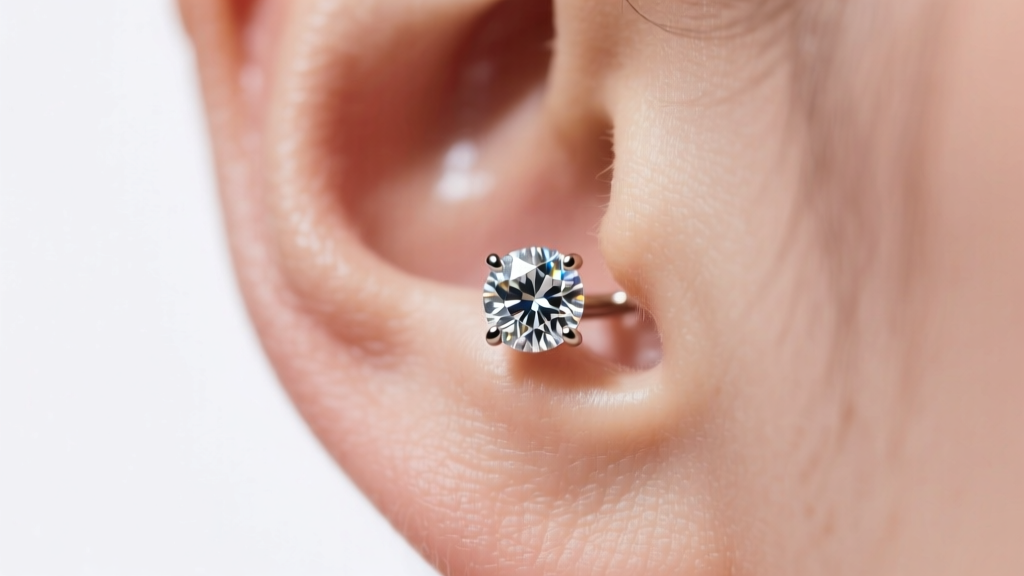
When investing in fine jewelry, few pieces offer the timeless versatility of diamond studs. However, owning and wearing a pair of .75 carat diamond earrings comes with a unique set of mechanical and aesthetic challenges. Whether your pair is 0.75 carats total weight (CTW) or a more substantial 0.75 carats per ear (1.50 CTW), the physics of how the diamonds sit on your earlobe, the tensile strength of the posts, and the optical clarity of the stones require specific maintenance. In this comprehensive troubleshooting guide, we diagnose the most common hardware failures, structural droops, and sparkle-loss issues, providing actionable, jeweler-level solutions to restore your earrings to their original glory.
The Physics of the Droop: Center of Gravity Issues
The most frequent complaint regarding .75 carat diamond earrings is the dreaded "forward droop," where the diamond tilts downward instead of sitting flush against the earlobe. This is rarely an issue with the earlobe itself, but rather a miscalculation in the center of gravity relative to the earring post placement.
Basket vs. Martini Settings
If your earrings feature a traditional 4-prong basket setting, the diamond sits higher off the earlobe. For a 0.75-carat single stone (measuring approximately 5.8mm in diameter), this elevated center of gravity acts as a lever, pulling the top of the earring away from the ear. The solution is a setting swap. Transitioning to a 3-prong or 4-prong Martini setting drops the pavilion (the bottom cone of the diamond) closer to the skin, lowering the center of gravity and allowing the earlobe to support the weight naturally. If a setting swap is outside your budget (typically $150–$300 per earring), utilizing a silicone earring support disc or a specialized plastic earring jacket behind the lobe can provide the necessary structural scaffolding to keep the stud upright.
Hardware Failures: Posts, Gauges, and Backings
A bent post or a lost backing isn't just an inconvenience; it is a critical failure point that risks losing your investment. Standard friction backings are the default for most commercial jewelry, but they are wholly inadequate for the weight and value of .75 carat diamond earrings.
The Gauge Size Dilemma
Most diamond studs are manufactured with 20-gauge (0.81mm) posts to maximize the yield of the precious metal and keep manufacturing costs low. However, 20-gauge 14k or 18k gold is highly susceptible to bending if you sleep in your earrings or apply pressure while styling your hair. For stones weighing 0.38 carats or more per ear, upgrading to an 18-gauge (1.02mm) or even 16-gauge (1.29mm) post is highly recommended. A jeweler can easily snip and laser-weld a thicker, custom post to your existing setting for roughly $45 to $85 per earring.
Upgrading Your Backing Mechanism
To prevent loss and provide counter-tension against drooping, you must upgrade your backings. Below is a troubleshooting matrix for selecting the correct hardware.
| Backing Type | Security Level | Best For | Drawbacks |
|---|---|---|---|
| Friction (Push) | Low | Lightweight studs (<0.25ct) | Slips off easily; worsens drooping. |
| Screw Back | Medium-High | Everyday wear; active lifestyles | Threads can strip over time; slow to put on. |
| La Pousette (Locking) | Very High | Heavy .75ct+ studs; high security | More expensive ($40-$70/pair); requires two hands. |
| Silicone O-Rings | Medium | Temporary droop support; travel | Degrades with lotions/perfumes; looks casual. |
Prong Snags and Catching: Setting Diagnostics
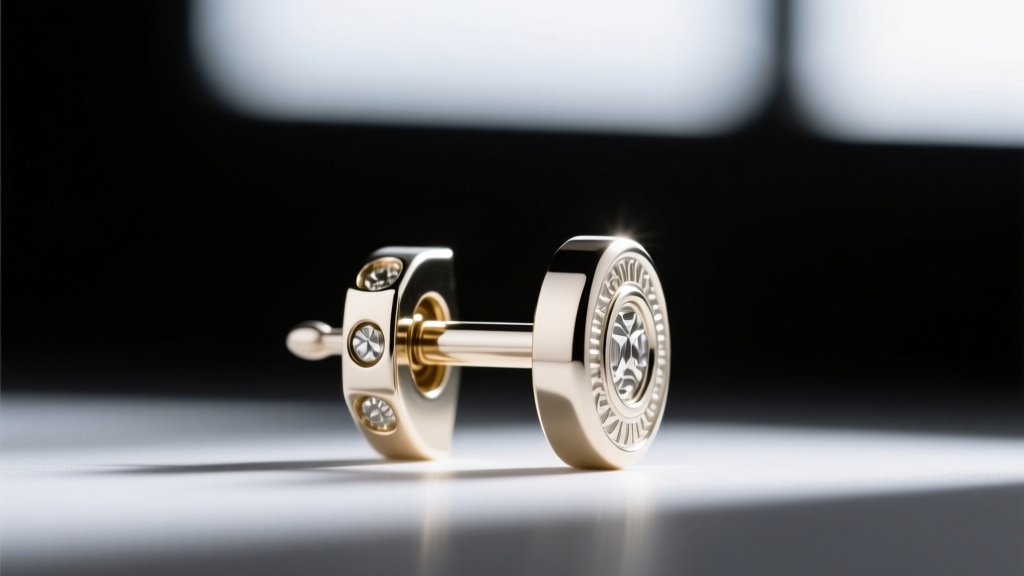
If your .75 carat diamond earrings constantly catch on your hair, sweaters, or silk pillowcases, the issue lies in the prong profile. Over time, the tiny metal claws holding your diamond can lift slightly due to micro-impacts.
For round brilliant cuts, a 4-prong setting is standard, but the prongs must be "tipped" (filed and polished into smooth, rounded beads) by a professional. If you have princess-cut (square) diamonds, the sharp 90-degree corners are highly vulnerable to chipping. Troubleshooting this requires a jeweler to install "V-prongs," which wrap around the sharp corners in a protective metal shield. Never attempt to push down a lifted prong yourself with pliers; diamond girdles are fragile, and uneven pressure will cause the stone to cleave or fracture instantly.
Troubleshooting Cloudiness and Sparkle Loss
Diamonds are lipophilic, meaning they naturally attract and hold onto oils. When your .75 carat diamond earrings suddenly look dull, cloudy, or smaller than you remember, they are likely coated in a microscopic layer of sebum, hairspray, and hard water minerals. This film prevents light from entering the crown and reflecting back through the table.
The Safe Cleaning Protocol
While ultrasonic cleaners are popular, they pose a severe risk if your diamonds are fracture-filled or have been treated with laser drilling. The high-frequency vibrations can shatter treated stones or loosen the adhesive used in fracture filling. According to the Gemological Institute of America (GIA), the safest and most effective method for restoring brilliance at home is a chemical and mechanical approach.
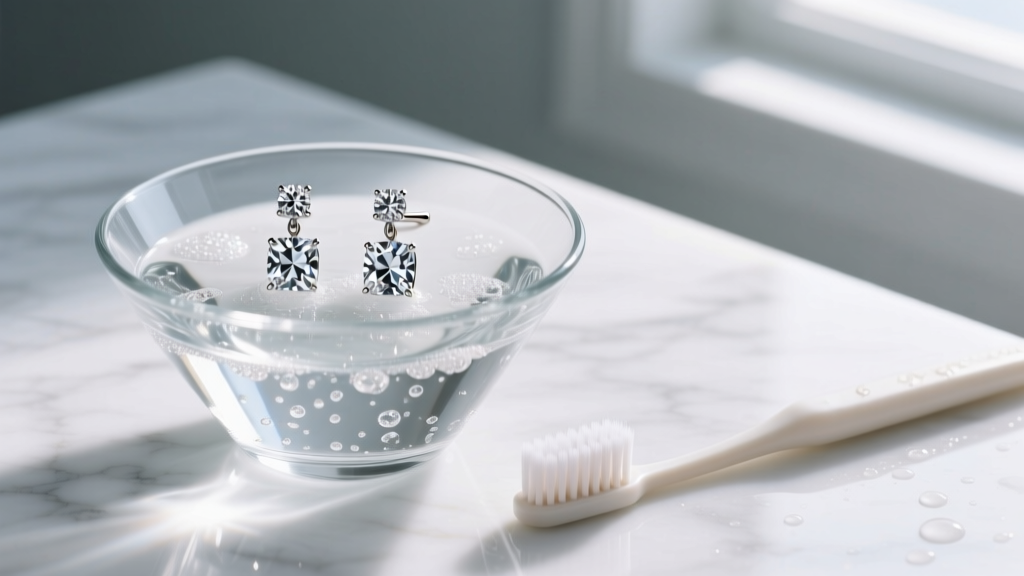
- Mix a solution of warm water and a few drops of mild, ammonia-free dish soap (avoid harsh detergents with heavy moisturizers).
- Soak the earrings for 15 to 20 minutes to break down lipid bonds.
- Use a brand-new, ultra-soft baby toothbrush to gently agitate the pavilion (the underside of the diamond), where the majority of grime accumulates.
- Rinse under lukewarm running water and dry with a lint-free microfiber cloth.
Metal Fatigue and Structural Integrity
Gold and platinum are relatively soft metals. If you frequently remove your earrings by pulling on the diamond head rather than gripping the post, you will eventually cause metal fatigue at the solder joint where the post meets the basket. This manifests as a subtle "wiggle" when you touch the stone. If left unaddressed, the head will snap off. As noted by Jewelers of America, an annual professional inspection is critical. A jeweler will use a loupe to check the solder joints and prong wear, re-tipping any thinned claws before the diamond is lost. Expect to pay between $25 and $50 per prong for re-tipping services.
Expert Maintenance Schedule
The Jeweler's Rule of Thumb: Never put on your .75 carat diamond earrings until after your makeup, hairspray, and perfume have fully dried. Aerosolized cosmetics create a baked-on film that requires professional steam cleaning to remove, accelerating the wear on your precious metal settings.
By addressing the center of gravity, upgrading to locking backings, and adhering to a strict, non-ultrasonic cleaning regimen, you can ensure your diamond earrings remain secure, upright, and brilliantly reflective for decades to come.


