Flapper Earrings: Technical Guide to Weight, Gauge & Lobe Support
Master the structural mechanics of flapper earrings. Explore gauge sizes, weight distribution, and lobe-support techniques for heavy Art Deco drops.

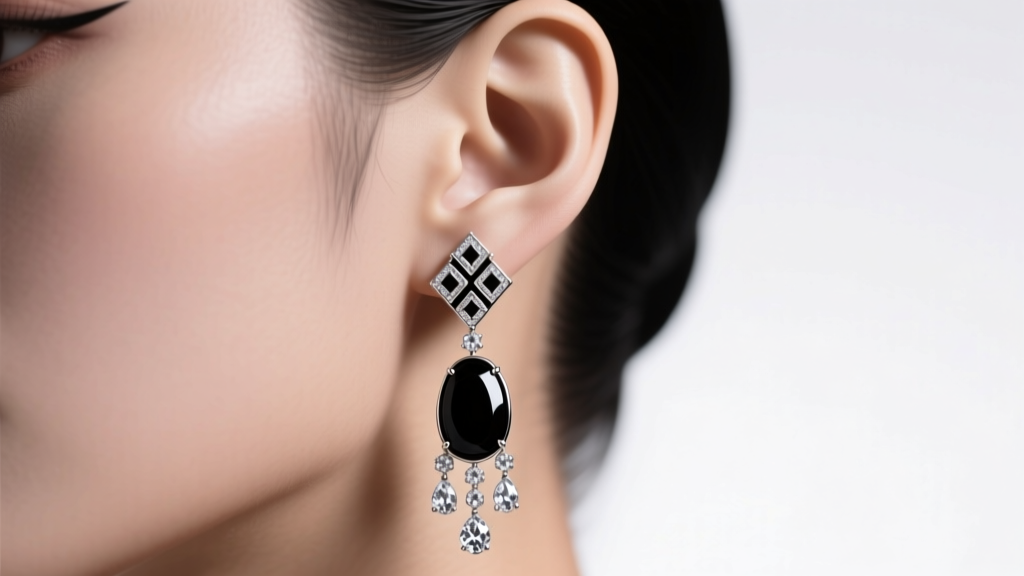
The Biomechanics of the Earlobe vs. Articulated Drops
When discussing the iconic silhouettes of the 1920s, flapper earrings represent a triumph of aesthetic ambition over structural pragmatism. Characterized by their elongated, articulated, and heavily beaded designs, these Art Deco masterpieces introduce complex biomechanical challenges to the human earlobe. The standard earlobe fistula (the piercing channel) is composed of soft tissue lacking cartilaginous support. While a static weight of 7 to 10 grams is generally well-tolerated for short durations, flapper earrings frequently exceed 15 to 25 grams per ear.
The true danger to the tissue is not merely static weight, but kinetic shear stress. Because flapper earrings are designed with multiple articulated hinges—allowing the geometric drops to sway with the wearer's movement—they act as pendulums. According to basic physics, the kinetic force exerted on the piercing channel during a brisk walk or a dance can momentarily spike to two or three times the static weight of the earring. This repetitive micro-trauma leads to the notorious "cheese-wire" effect, where the ear wire slowly migrates downward, thinning the lower lobe tissue and eventually causing a complete blowout.
Material Density and Weight Thresholds
To understand how to engineer or select a safe pair of flapper earrings, we must analyze the material density of both vintage originals and modern 2026 reproductions. Vintage pieces relied heavily on glass, early plastics, and dense base metals, whereas contemporary jewelers utilize advanced metallurgy to cheat the scales.
| Material Era & Type | Average Density | Typical Weight (Per Pair) | Structural Risk Profile |
|---|---|---|---|
| 1920s Vintage Glass & Pot Metal | High (2.5 - 7.1 g/cm³) | 22g - 35g | Extreme. High risk of lobe tearing without external support. |
| 1920s Vintage Bakelite & Rhinestone | Medium (1.3 - 3.0 g/cm³) | 14g - 20g | Moderate to High. Manageable for 2-3 hours of wear. |
| 2026 CNC Hollow-Form Titanium | Low (4.5 g/cm³, but hollow) | 6g - 9g | Minimal. Mimics visual bulk without the destructive mass. |
| Modern High-Density Acrylic Resin | Very Low (1.18 g/cm³) | 4g - 8g | None. Ideal for oversized, shoulder-duster flapper styles. |
As noted by the Victoria and Albert Museum's archives on Art Deco jewelry, the 1920s fascination with "white metals" led to the widespread use of pot metal (zinc alloys mixed with lead, tin, and antimony). While visually striking when plated, these alloys are incredibly dense and brittle, making surviving vintage flapper earrings both heavy and prone to catastrophic snapping at the solder joints.
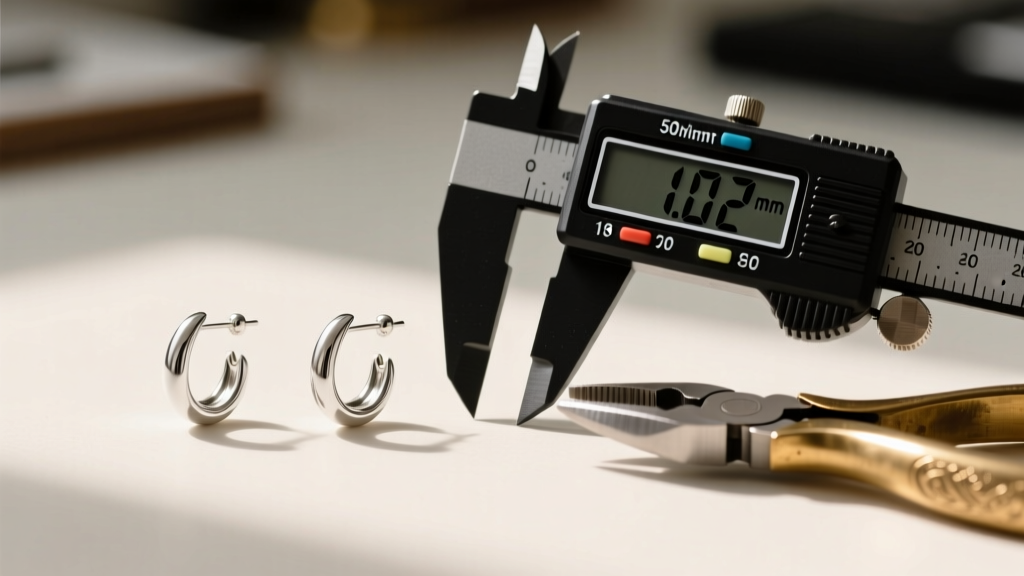
Wire Gauge and Post Engineering
The single most critical point of failure in any heavy dangle earring is the ear wire. Standard commercial earrings are typically manufactured using 20-gauge (0.81mm) or 22-gauge (0.64mm) wire. When supporting a 20-gram flapper earring, a 22-gauge wire will physically deform, bending outward and placing uneven pressure on the bottom of the fistula.
The Failure Point: Where Vintage Flapper Earrings Break
If you are restoring or wearing authentic 1920s flapper earrings, you must inspect the jump rings connecting the articulated segments. Vintage jewelers often used low-temperature lead-tin solders. Over a century of oxidation and galvanic corrosion, these micro-solder joints become highly friable. The kinetic swing of the earring will eventually cause metal fatigue at the topmost jump ring. For any flapper earring exceeding 12 grams, structural best practices dictate upgrading the primary ear wire to an 18-gauge (1.02mm) or 16-gauge (1.29mm) hardened wire. According to metallurgical guidelines from jewelry supply experts at Rio Grande, half-hard sterling silver or titanium wire at 18-gauge provides the necessary tensile strength to resist deformation under dynamic pendulum loads while remaining thin enough to pass through a standard 20G piercing hole without causing insertion trauma.
Furthermore, the clasp mechanism matters. French wires (fishhooks) offer zero security for heavy drops; a sudden head turn will launch a heavy glass-beaded earring across the room. Leverback closures or locking French wires with a secondary silicone O-ring stopper are mandatory for securing high-mass flapper styles.
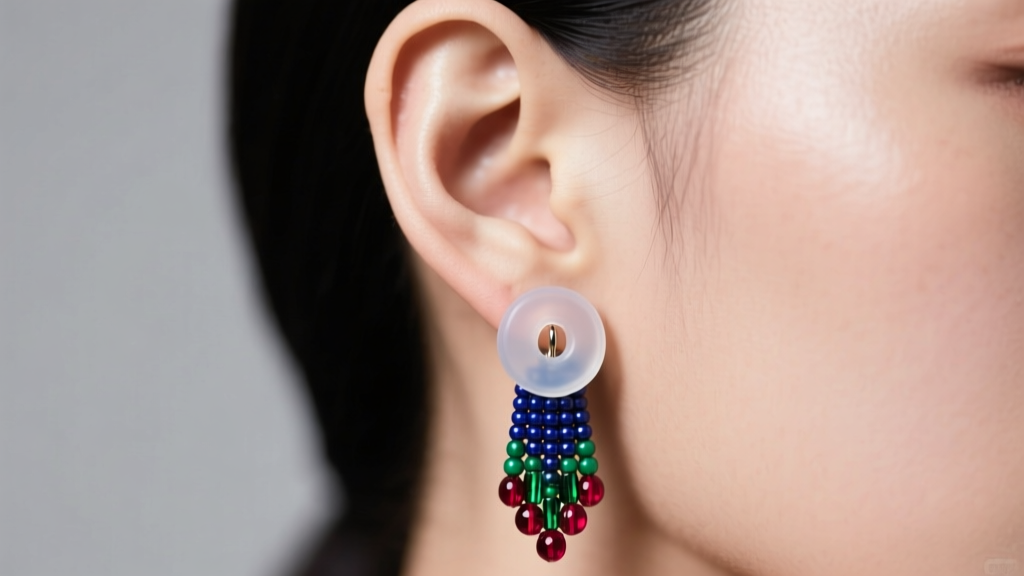
Advanced Lobe Support Systems for Heavy Dangles
When the aesthetic demands a heavy, authentic vintage flapper earring, but the earlobe tissue cannot withstand the shear stress, you must implement external load-bearing systems. Relying solely on the piercing channel is a recipe for permanent tissue distortion. Here are three professional-grade support methodologies:
- Friction-Backed Silicone Splints: Commercial silicone earring support discs (often sold as "lobe patches") feature a central slit that slides over the post. By distributing the downward torque across a 12mm surface area on the back of the earlobe, they reduce localized PSI (pounds per square inch) on the fistula by up to 60%.
- The Invisible Monofilament Harness: For shoulder-duster flapper earrings exceeding 30 grams, theatrical jewelers use a 0.2mm clear nylon monofilament thread. The thread is tied to the top jump ring of the earring, looped up and over the helix (upper ear cartilage), and secured with a micro-drop of skin-safe adhesive. This transfers 80% of the static weight off the soft lobe and onto the rigid cartilage structure.
- Adhesive Lobe Taping: Using double-sided, hypoallergenic medical tape (such as 3M Tegaderm) between the front bezel of the earring and the skin of the lobe creates a secondary friction anchor. This prevents the pendulum swing, effectively neutralizing the kinetic shear stress that causes micro-tearing.
Sourcing and Authenticating 1920s vs. Modern Reproductions
The market is currently flooded with "vintage-style" flapper earrings. Distinguishing between a true 1920s artifact and a 2026 CNC-milled reproduction requires examining the structural anatomy of the piece. Authentic 1920s pieces will feature hand-cut pavé settings, often with foil-backed glass rhinestones that have degraded or blackened due to moisture ingress. The metalwork will show microscopic file marks, and the articulation hinges will be constructed from folded sheet metal rather than cast jump rings.
Modern reproductions, while vastly superior in weight distribution and hypoallergenic safety (often utilizing 316L surgical steel or anodized niobium), lack the microscopic imperfections of hand-fabricated Art Deco originals. If your priority is historical accuracy, you must be prepared to retrofit the ear wires and employ the support systems mentioned above. If your priority is daily wearability and structural integrity, opt for modern interpretations that utilize hollow-form engineering and acrylic resins to capture the flapper silhouette without sacrificing the long-term health of your earlobe tissue.
Final Calibration
Flapper earrings remain one of the most dramatic and visually striking categories in jewelry history. However, treating them merely as decorative accessories ignores the serious biomechanical realities of wearing articulated, high-mass objects on soft tissue. By understanding the physics of the pendulum swing, upgrading to 18-gauge structural ear wires, and employing silicone or monofilament load-distribution harnesses, you can safely enjoy the roaring elegance of the Art Deco era without compromising the structural integrity of your piercings.


