How Do Flat Back Earrings Work? An Expert Anatomy Guide
Discover exactly how flat back earrings work. Our expert guide covers threadless vs. threaded mechanisms, gauge sizes, and implant-grade materials.

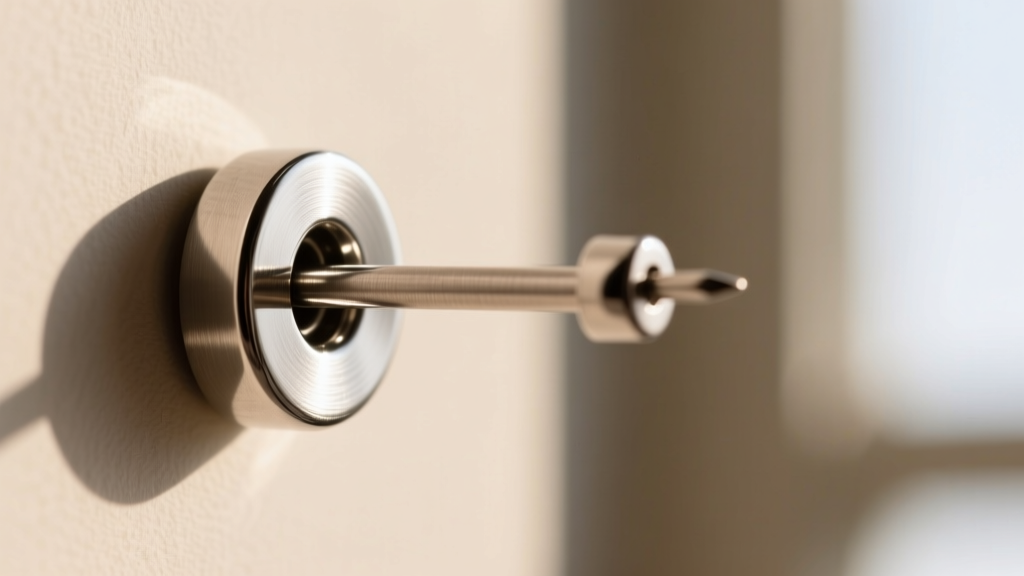
The Core Mechanics: Anatomy of a Flat Back Earring
When navigating the world of fine body jewelry, understanding how do flat back earrings work is essential for anyone with cartilage piercings, lobes, or specialized placements like the tragus and conch. Unlike traditional butterfly clutches—which rely on a weak friction groove and often dig into the posterior of the ear—flat back earrings (clinically referred to as labret studs) utilize a flush-fitting disc that distributes pressure evenly across the skin. This eliminates the dreaded 'cheese-cutter' effect and provides a stable foundation for heavy or intricate decorative ends.
A standard flat back earring consists of three primary components: the flat disc base, the hollow post (or shaft), and the decorative front end. The engineering brilliance lies in how the front end secures to the post without compromising the delicate fistula (the piercing channel). To achieve this, high-end body jewelry manufacturers utilize two distinct mechanical systems: threadless tension pins and internal threading. Both methods ensure that no sharp edges or external screws pass through the tissue during insertion or removal.
Threaded vs. Threadless: The Engineering Debate
The mechanism securing your jewelry dictates its longevity, ease of use, and safety. The industry standard for premium flat back earrings is split between two highly engineered attachment methods.
Internal Threading Mechanics
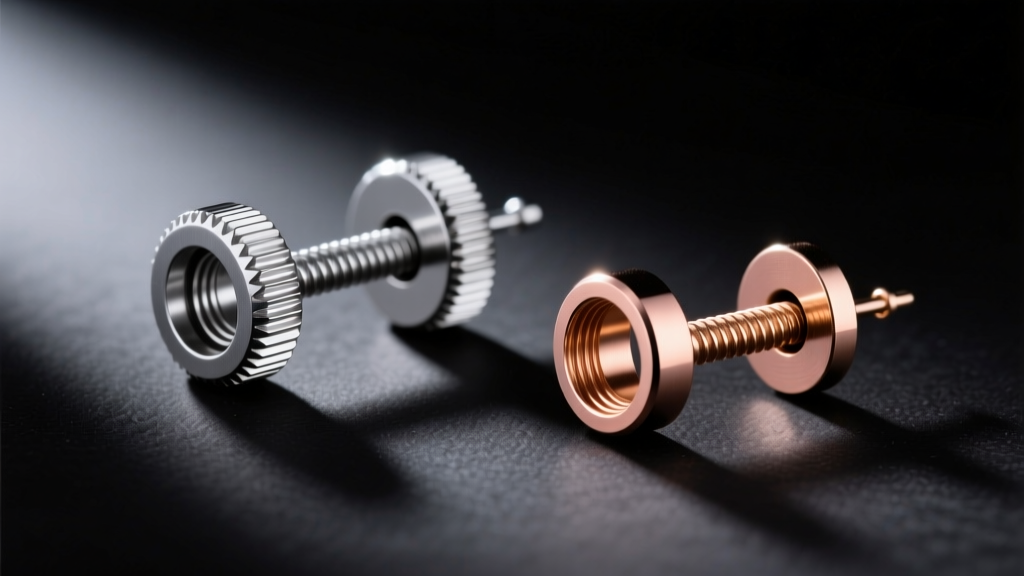
In an internally threaded flat back earring, the screw mechanism is located on the back of the decorative gem or end, not on the post itself. The post is completely smooth and hollow, featuring internal threads at its tip. Typically utilizing an M2 or M3 screw pitch, the decorative end screws directly into the post. This design is critical for fresh piercings because the smooth post glides through the fistula without scraping or tearing the healing tissue. According to the Association of Professional Piercers (APP), internally threaded jewelry is the minimum acceptable standard for initial piercings to prevent micro-tears that can lead to irritation bumps and delayed healing.
Threadless (Push-Pin) Tension Systems
Threadless flat back earrings, pioneered by brands like Neometal, rely on tensile friction rather than screws. If you have ever wondered how do flat back earrings work without threads, the answer lies in metallurgical spring tension. The decorative end features a solid, slightly flexible pin. Before insertion, the piercer or wearer bends this pin approximately 1 to 2 millimeters at a 10-to-15-degree angle. When the bent pin is pushed into the hollow post, the metal attempts to straighten out, creating a powerful, continuous outward spring tension against the inner wall of the post.
The beauty of the threadless system is its customizability. If the end feels too loose, you remove it and bend the pin slightly more. If it is too difficult to insert, you straighten it a fraction of a millimeter. However, a known failure mode of threadless pins is metal fatigue; repeatedly bending the pin back and forth will eventually cause it to snap. High-quality brands use ASTM F136 titanium or niobium for these pins to maximize flexibility and fatigue resistance.
Sizing Matrix: Gauge Thickness and Post Length
Understanding the mechanics is only half the battle; proper sizing is what prevents embedding and migration. Flat back earrings are manufactured in precise millimeter increments. Wearing a post that is too long will cause the jewelry to snag on hair and clothing, while a post that is too short will compress the tissue, restricting lymphatic drainage and causing severe swelling.
| Gauge (Thickness) | Millimeter Equivalent | Standard Post Lengths | Ideal Placement |
|---|---|---|---|
| 18g | 1.0mm | 5mm, 6mm, 8mm | Standard Lobe, Nostril, Rook |
| 16g | 1.2mm | 6mm, 8mm, 10mm | Helix, Conch, Tragus, Forward Helix |
| 14g | 1.6mm | 8mm, 10mm, 12mm | Industrial, Daith, Snug, Thick Lobes |
For fresh cartilage piercings, piercers typically start with a 16-gauge, 10mm (3/8-inch) post to accommodate initial swelling. Once the piercing has fully healed and the swelling has subsided (usually between 3 to 6 months), a 'downsize' to an 8mm or 6mm post is mandatory. Skipping the downsize is the leading cause of irritation bumps, as the excess post length allows the jewelry to move at an angle, repeatedly striking the healing fistula.
Material Science: Why ASTM F136 Titanium is Non-Negotiable
The mechanical function of a flat back earring is heavily dependent on the material it is milled from. While many commercial retailers sell 'surgical steel,' this is largely a marketing term that lacks strict regulatory oversight for body jewelry. 316L surgical steel contains up to 14% nickel, a known allergen that can cause contact dermatitis and hypergranulation in healing piercings.
Expert piercers and high-end jewelers exclusively use Implant-Grade Titanium, specifically certified to ASTM F136 or F1295 standards. This specific alloy (Ti-6Al-4V-ELI) is the exact same material used in orthopedic joint replacements and pacemaker enclosures. It contains zero nickel, is highly corrosion-resistant, and features a passive oxide layer that prevents the body's immune system from reacting to the metal. When evaluating how do flat back earrings work in a healing environment, the biocompatibility of ASTM F136 titanium ensures that the tension or threading mechanisms do not leach harmful ions into the surrounding tissue.
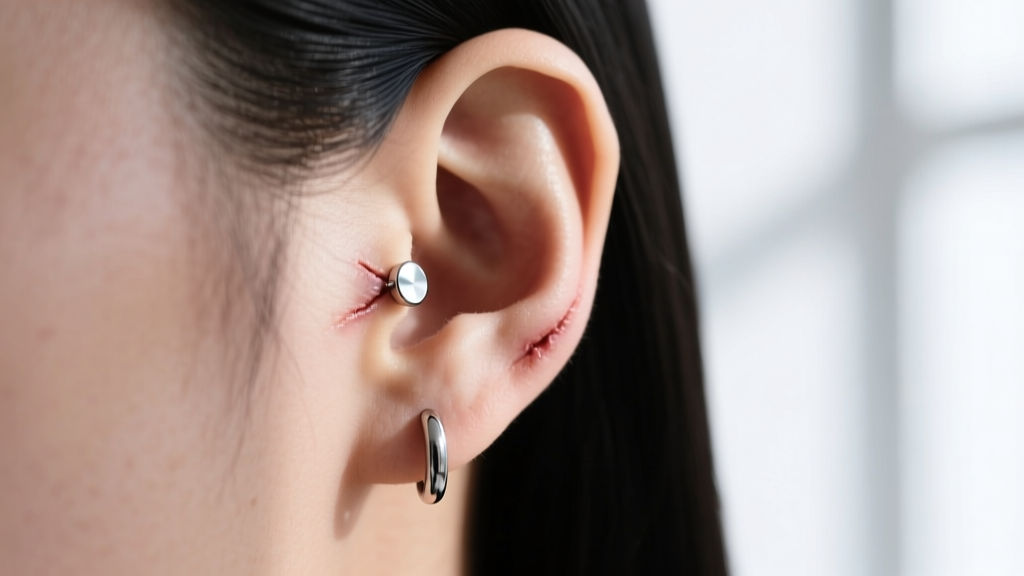
Step-by-Step Insertion and Troubleshooting Stuck Backs
Because flat back earrings lack the easy-squeeze mechanism of butterfly backs, insertion and removal require specific techniques. Here is an expert troubleshooting framework for the most common mechanical issues.
Inserting a Threadless Earring
- Insert the flat back post through the piercing from behind.
- Take the decorative end and insert the pin about halfway into the post.
- Remove the end, bend the pin slightly (about 1mm), and reinsert.
- Push the end firmly into the post until it clicks or sits completely flush. The tension should require moderate thumb pressure to close the final millimeter.
Removing a Stuck Threadless End
The most common panic-inducing issue is a threadless end that refuses to budge. This usually happens when the pin was bent too aggressively, or when dried lymph and soap residue act as an adhesive inside the post. Do not pull straight out with brute force. Instead, grip the flat back disc firmly with one hand, and grip the decorative end with the other. Twist the decorative end while pulling outward. The twisting motion breaks the vacuum seal and friction bond. If your fingers are slipping, wear a pair of latex or nitrile medical gloves for enhanced grip.
Unscrewing Internal Threading
For internally threaded pieces, remember the golden rule: the screw is on the front. Hold the flat back disc completely still against the back of your ear, and twist the decorative gem counter-clockwise (lefty-loosey). If the post spins inside the piercing, grip the flat back with a piece of sterile gauze to increase friction and stabilize it while you twist the front.
Expert Verdict on Flat Back Mechanics
Ultimately, the mechanics of flat back earrings represent the pinnacle of modern body jewelry engineering. By eliminating external threads and utilizing either precision M2 internal screws or calibrated tensile friction pins, these earrings protect the integrity of the fistula while providing a secure, comfortable fit. While a high-quality 16-gauge ASTM F136 titanium flat back setup may cost between $40 and $120 depending on the gemstone and brand, the investment in proper mechanics and biocompatible materials prevents costly and painful piercing complications down the line.


