Flower Diamond Earring Settings: Platinum vs Gold Guide
Compare platinum, 18k white gold, and rose gold for your flower diamond earring. Learn which metal best secures intricate floral prongs and stones.

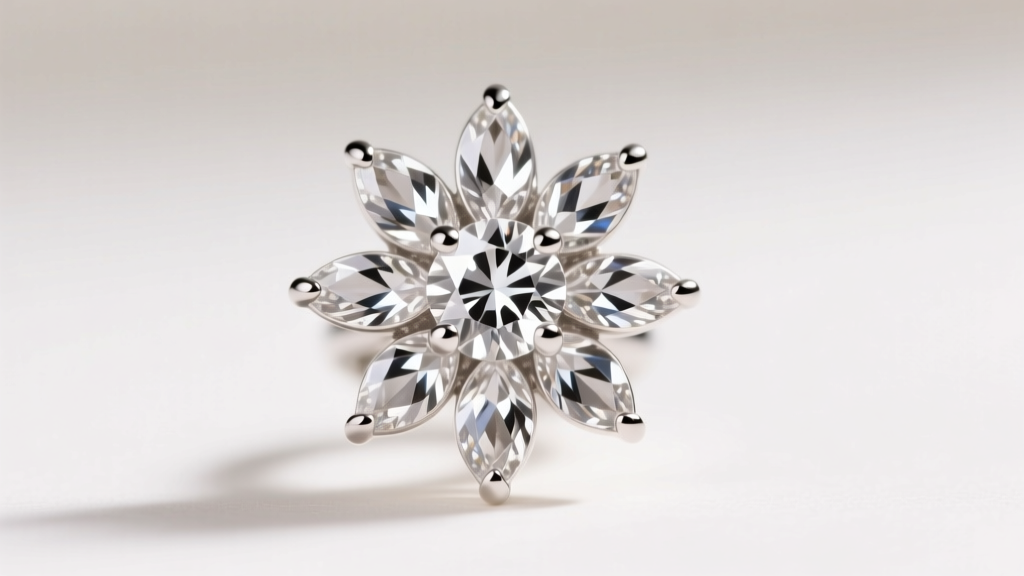
The Anatomy of a Flower Diamond Earring
A true floral cluster earring is a marvel of micro-engineering. Unlike a standard solitaire stud, a flower diamond earring relies on a complex matrix of melee stones (the petals) surrounding a larger center stone (the pistil). This intricate silhouette demands exceptional metalwork. The setting must not only secure the center diamond but also cradle delicate marquise, pear, or oval melee stones at precise angles to mimic the natural curve of a blooming flower. Because the structural integrity of these petal prongs is paramount, the choice of precious metal dictates the longevity, maintenance, and ultimate security of your jewelry.
When evaluating material properties for floral silhouettes, jewelers must balance malleability (the ability to bend prongs over stones without cracking) with tensile strength (the resistance to pulling or snagging). In 2026, the debate between platinum, 18k white gold, and 14k rose gold remains central to fine jewelry design. Each alloy behaves differently under the stress of daily wear, particularly when subjected to the micro-impacts that earring posts and cluster settings endure.
Material Showdown: Platinum vs. White Gold vs. Rose Gold
The metal you choose serves as the skeleton of your floral design. According to the Gemological Institute of America (GIA), the metallurgical composition of your setting directly impacts how the prongs will age over a decade of wear. Let us break down the specific alloy properties relevant to cluster settings.
950 Platinum: The Benchmark for Prong Security
Platinum used in fine jewelry is typically 95% pure platinum, alloyed with 5% ruthenium or iridium. Its defining characteristic is its density and its unique response to stress. Unlike gold, which loses microscopic particles of metal when scratched or bent (metal fatigue), platinum simply displaces. If a platinum petal prong is snagged on clothing, it will bend but rarely snap. For a flower diamond earring featuring V-prongs on the pointed tips of marquise melee stones, platinum is the undisputed champion of security. However, it develops a natural patina over time, which can slightly reduce the brilliant white reflection desired in diamond-heavy floral designs unless periodically polished.
18k White Gold: The Rhodium Illusion
18k white gold consists of 75% pure gold alloyed with 25% white metals like palladium or nickel. Out of the crucible, white gold has a faint yellowish-gray hue. To achieve the bright, mirror-like finish that complements colorless diamonds, it is electroplated with a microscopic layer of rhodium. For floral earrings, white gold offers a stiffer initial prong than platinum, which some setters prefer for holding small melee stones tightly. However, white gold is susceptible to metal fatigue. After 5 to 7 years of daily wear, repeated micro-bending can cause white gold prongs to snap entirely, risking the loss of a diamond petal. Furthermore, as the rhodium wears off on the high-contact edges of the flower setting, the underlying gray alloy becomes visible, requiring replating.
14k Rose Gold: Aesthetic Contrast and Copper Content
Rose gold achieves its warm, pinkish hue through a high copper content (often up to 20-25% copper, mixed with silver and 58.5% pure gold). While visually stunning and highly complementary to warmer skin tones and vintage-inspired floral motifs, the copper content makes the alloy harder but more brittle than platinum. It does not require rhodium plating, making it lower maintenance in terms of color consistency. However, jewelers must exercise extreme caution when setting fragile diamond points in rose gold, as the metal's stiffness increases the risk of chipping the diamond girdle during the setting process.
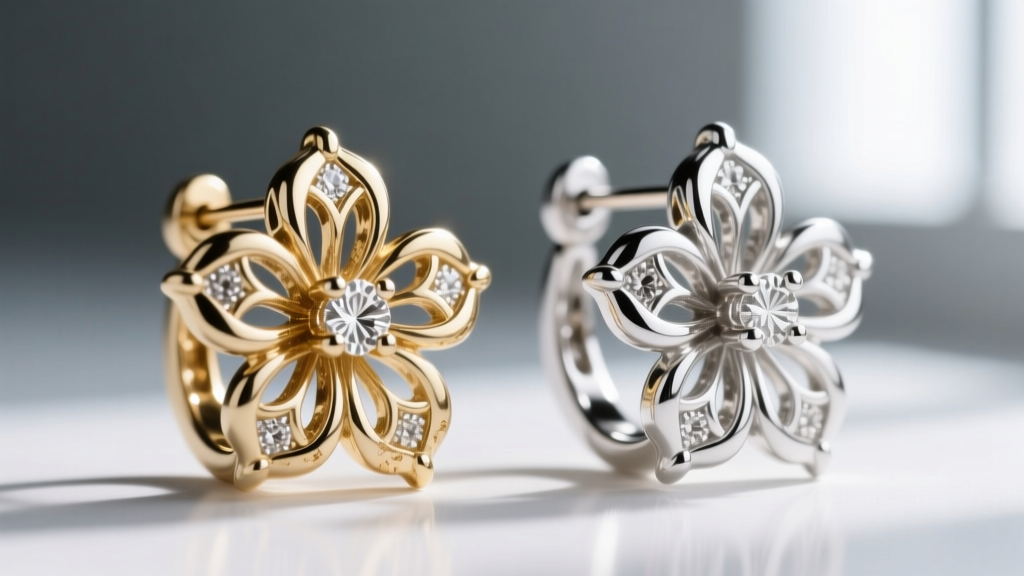
Metallurgical Comparison Chart for Floral Settings
| Metal Alloy | Composition | Vickers Hardness (HV) | Prong Security Profile | Maintenance Requirements |
|---|---|---|---|---|
| 950 Platinum | 95% Pt, 5% Ru/Ir | 125-140 HV | Exceptional (Displaces, won't snap) | Polishing to remove patina |
| 18k White Gold | 75% Au, 25% Pd/Ni | 130-150 HV | Good (Risk of fatigue snapping) | Rhodium replating every 1-2 years |
| 14k Rose Gold | 58.5% Au, 41.5% Cu/Ag | 140-160 HV | Fair (Stiff, higher setting risk) | Minimal, no plating required |
Diamond Selection for Floral Cluster Settings
The metal is only half the equation. The optical success of a flower diamond earring relies entirely on the precise matching of the melee diamonds to the center stone. A floral cluster typically utilizes between 0.25 and 1.50 carats of total diamond weight, with the majority distributed among the petal stones.
The Melee Stone Dilemma: Color and Clarity Matching
Melee diamonds (those weighing less than 0.18 carats) are graded differently than center stones. To create the illusion of a single, massive blooming flower, the petal stones must seamlessly blend with the center stone. If your center stone is a D, E, or F color grade, your melee petals must be graded G or H. Using I or J color melee stones next to a colorless center will immediately expose the floral illusion, making the outer edges of the earring look noticeably yellow.
Regarding clarity, the GIA Diamond Clarity Grading scale notes that inclusions in melee stones are often invisible to the naked eye due to their small surface area. Therefore, paying a premium for VVS (Very Very Slightly Included) melee is a waste of capital. SI1 (Slightly Included) or even clean I1 melee stones are the industry standard for floral petals, allowing you to redirect your budget toward a higher quality center stone or a superior platinum setting.
Lab-Grown vs. Natural Diamonds in Floral Designs
Because floral earrings require a high volume of melee stones, the cost of natural diamonds can escalate rapidly. According to GIA Lab-Grown Diamond Reports, modern Chemical Vapor Deposition (CVD) and High Pressure High Temperature (HPHT) methods produce lab-grown melee that is chemically and optically identical to mined diamonds. Opting for lab-grown melee petals paired with a natural center stone is a common industry practice to maximize carat weight and visual impact without compromising the structural integrity or aesthetic brilliance of the flower design.
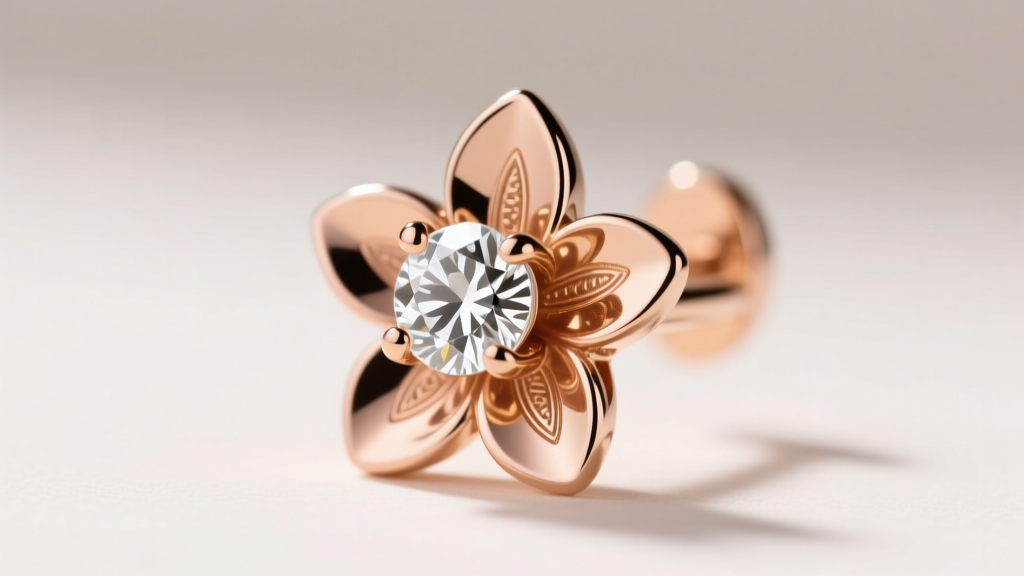
Prong Architecture: Securing the Petals
The specific shape of your flower diamond earring dictates the prong architecture required. Round brilliant melee stones can be secured with standard U-prongs or bead settings. However, high-end floral designs frequently employ marquise or pear-shaped diamonds to create pointed, organic petal tips.
Pointed stones require V-prongs—metal folds that wrap securely around the sharp tip of the diamond to prevent chipping. This is where material choice becomes a critical failure point. V-prongs require the metal to be bent at a sharp 90-degree angle. Platinum handles this fold beautifully due to its high malleability. White gold, particularly if it has a high nickel content for hardness, can develop micro-fractures at the fold of the V-prong, leading to catastrophic prong failure years down the line. When commissioning or purchasing a floral earring with pointed petals, always inspect the V-prongs under a 10x jeweler's loupe to ensure the metal is flush against the diamond girdle with no light gaps.
Pricing Breakdown and Value Retention
Understanding the pricing tiers for floral diamond earrings helps set realistic expectations. Prices vary wildly based on the metal weight, total carat weight (TCW), and diamond origin.
- Entry-Level (14k White/Yellow Gold, Lab-Grown Melee, 0.50 TCW): $800 – $1,500. Excellent for everyday wear, though prong checks are recommended annually.
- Mid-Tier (18k White Gold or 14k Rose Gold, Natural Melee, 1.00 TCW): $2,500 – $4,500. Offers superior color saturation and traditional luxury appeal.
- Heirloom Tier (950 Platinum, Natural Center, Lab Melee, 2.00+ TCW): $6,000 – $12,000+. The ultimate choice for generational durability and maximum optical brilliance.
Final Verdict: Which Metal Wins for Floral Silhouettes?
If your priority is absolute security and heirloom longevity, 950 Platinum is the superior choice for a flower diamond earring. Its ability to withstand metal fatigue ensures that the intricate V-prongs securing your diamond petals will remain intact for decades. While it requires occasional polishing to maintain its bright white luster, the trade-off is unmatched peace of mind.
However, if you prefer a lower upfront cost and do not mind periodic maintenance, 18k Palladium-based White Gold is a fantastic alternative. Palladium white gold is naturally whiter than nickel-based alloys, meaning it requires less rhodium plating to maintain its bright, reflective surface, which is crucial for maximizing the light return in a dense floral cluster. Ultimately, the perfect flower diamond earring marries the optical precision of color-matched melee stones with a metal skeleton engineered to protect them for a lifetime.


