The French Hook Earring: 2026 Style & Trend Guide
Explore 2026 trends, material science, and styling frameworks for the french hook earring. Expert insights on gauge, security, and face shapes.

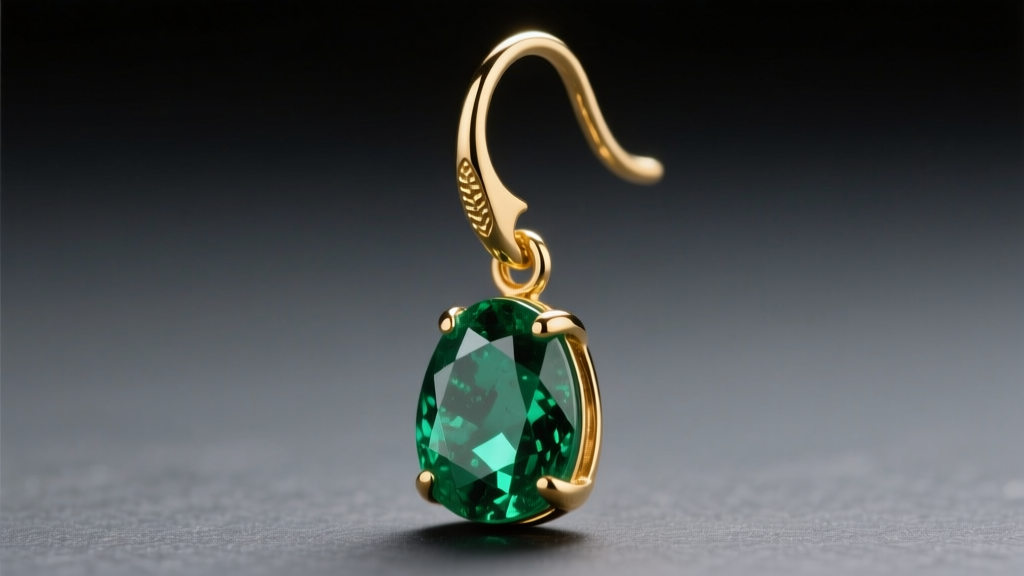
The Enduring Architecture of the French Hook Earring
The french hook earring—colloquially known as the fishhook wire—is arguably the most ubiquitous finding in fine and fashion jewelry. Yet, treating it as a mere utility component is a critical mistake. In 2026, the french hook has evolved from a simple bent wire into a highly engineered foundation for modular styling, ear-scaping, and kinetic movement. As a jewelry stylist and trend analyst, I see the french hook not just as a delivery mechanism for a gemstone, but as a structural element that dictates how a piece interacts with the anatomy of the earlobe and the drape of the jawline.
However, the market is saturated with poorly manufactured hooks that warp, irritate, and fail. To truly master this category, we must dissect the metallurgy, the gauge science, and the emerging styling frameworks that are defining the 2026 landscape. Whether you are curating a luxury collection or building a personal capsule, understanding the technical nuances of the french hook earring is non-negotiable.
Anatomy and Gauge Science: Why 22-Gauge is a Failure Mode
The most common point of failure in drop earrings is the wire gauge. The industry standard for a premium french hook earring is 20-gauge (0.81mm) or 21-gauge (0.72mm). These dimensions provide the necessary tensile strength to support the weight of a gemstone drop without permanently deforming when the wearer inserts or removes the jewelry.
Many fast-fashion and entry-level brands utilize 22-gauge (0.64mm) wire to cut material costs. This is a catastrophic design flaw. A 22-gauge wire lacks the Vickers hardness required to maintain its structural arc. When pushed through the fistula (the piercing hole), the thin wire bends, creating micro-abrasions on the earlobe tissue. Furthermore, according to technical specifications from Rio Grande jewelry supply, wire temper is just as critical as gauge. A 20-gauge wire in a 'half-hard' temper will snap back to its original hook shape after mild stress, whereas a 'dead-soft' wire of the exact same gauge will permanently warp.
Another anatomical feature to look for is the French wire coil—a tiny, spring-like wrap of fine wire located near the top bend of the hook. Historically, this coil protected the main wire from friction wear caused by the dangle component rubbing against it. While modern CNC-milled hooks often replace the coil with a reinforced, polished shoulder, vintage-inspired 2026 collections are bringing the hand-wrapped coil back as a mark of artisanal craftsmanship.
2026 Trend Analysis: The Modular and Asymmetrical Shift
The styling paradigm for the french hook earring has shifted dramatically this year. We are moving away from static, heavy chandeliers and toward kinetic, personalized ear architecture.
The Convertible 'Day-to-Night' Hook
The dominant trend of 2026 is the modular french hook. Designers are engineering hooks with a discreet, spring-loaded micro-clasp or a tension-fit bead just above the earlobe. This allows the wearer to slide off the heavy gemstone dangle during the day, leaving behind a sleek, minimalist curved wire that mimics an ear cuff or a delicate threader. This modularity maximizes the cost-per-wear of fine jewelry investments.
The 'Ear-Scape' Descending Stack
Instead of a single statement piece, stylists are utilizing multiple miniature french hook earrings to create a descending 'waterfall' effect along the lobe. By utilizing 4 to 5 tiny bezel-set stones (typically 2mm to 3mm in diameter) on short-drop french hooks, wearers can create a highly curated, asymmetrical look that follows the natural curve of the jaw. This trend heavily favors 14k solid gold due to its structural rigidity in miniature scales.
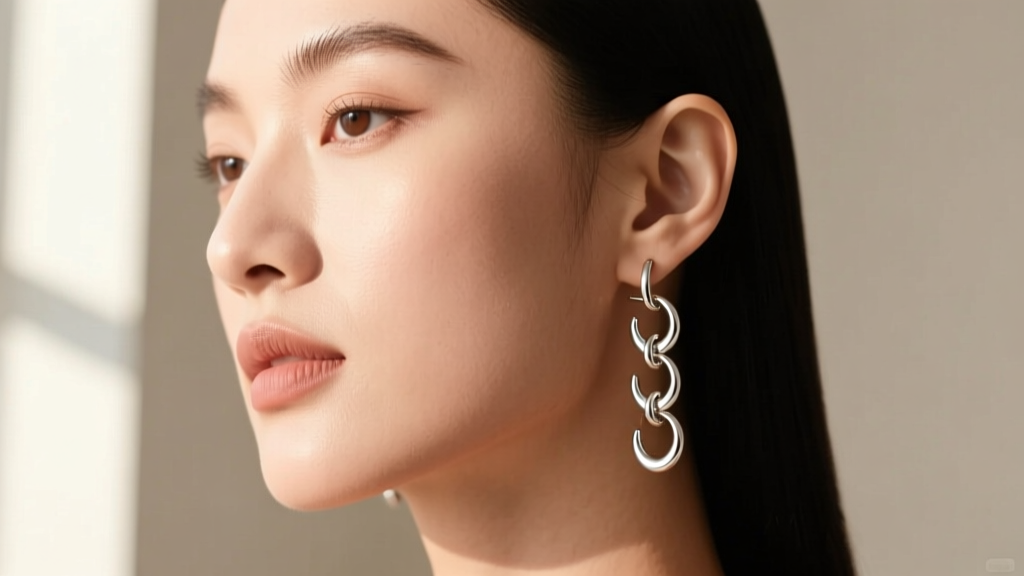
Material Integrity and Hypoallergenic Realities
Because the french hook passes entirely through the ear tissue and rests in the fistula, material biocompatibility is paramount. The friction of the wire against the skin, combined with the natural acidity of the sebum in the earlobe, can rapidly degrade inferior alloys, leading to contact dermatitis.
For clients with reactive skin, I exclusively recommend Implant-Grade Titanium or high-purity Niobium. The Association of Professional Piercers strictly advocates for ASTM F136 compliant titanium for any jewelry that interacts with healing or sensitive tissue. Unlike 'surgical steel'—a largely unregulated marketing term that often contains nickel—ASTM F136 titanium is entirely nickel-free and possesses a mirror-polish capability that prevents bacterial adhesion.
| Material | Grade / Standard | Gauge Durability | Price Range (Per Pair) | Best Application |
|---|---|---|---|---|
| Implant-Grade Titanium | ASTM F136 | High (Springy) | $35 - $85 | Sensitive lobes, daily wear |
| Niobium | 99.9% Pure | Medium (Malleable) | $25 - $60 | Reactive skin, custom anodizing |
| 14k Solid Gold | 58.5% Gold Alloy | High (Stiff) | $120 - $350 | Heirloom, luxury investment |
| Gold Vermeil | 2.5µm over Silver | Low (Prone to wear) | $45 - $95 | Occasional trend-driven wear |
Note on Gold Alloys: While 18k gold is highly prized for its rich color and purity, it is metallurgically softer than 14k gold. For a french hook earring bearing a heavy gemstone drop, 14k gold is the superior structural choice for the wire itself, as it resists warping under continuous kinetic stress.
Solving the Security Failure Mode
The most frequent complaint regarding the french hook earring is security. Gravity and the natural movement of the head often cause the hook to slide forward and drop out of the ear entirely. The traditional 'butterfly' friction back is useless here, as it cannot grip the smooth, curved wire effectively.
The 2026 Solutions:
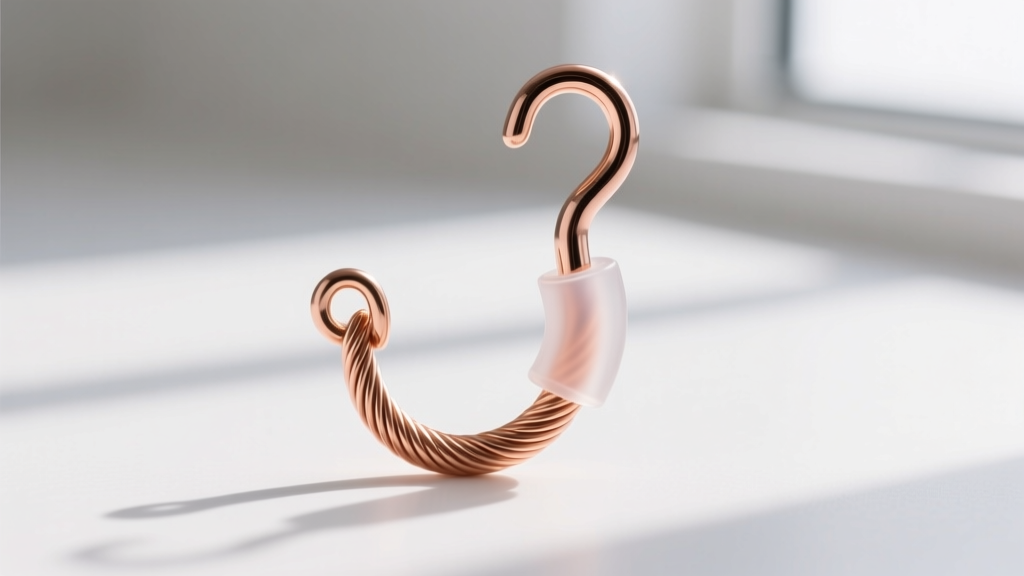
- Silicone O-Rings: The most effective, low-profile solution. Using a 1.5mm inner-diameter silicone O-ring (often sold as 'earring stoppers') provides immense friction against the metal wire without adding visual bulk.
- Locking Leverback Hybrids: Several contemporary jewelers are redesigning the french hook to include a microscopic, hinged latch that clicks shut against the front of the wire, effectively turning it into a secure hoop while maintaining the visual silhouette of a drop hook.
- Tension-Coil Backings: Small, gold-filled spiral coils that twist onto the end of the hook wire, providing a physical barrier that is much more secure than standard rubber clutches.
Face Shape Proportion Matrix
Styling a french hook earring requires an understanding of visual weight and facial geometry. The elongated nature of the hook naturally draws the eye downward, making it a powerful tool for balancing facial proportions.
- Round Faces: Opt for elongated, narrow drops suspended from long french hooks. Avoid wide, circular dangles or hoops attached to the hook, as these will emphasize the width of the face. Linear bar drops or raw, vertical crystal cuts are ideal.
- Square Faces: Soften strong jawlines by utilizing french hooks with curved, organic dangles. Teardrop shapes, smooth pearls, or hammered metal discs suspended from the hook will introduce necessary softness to the profile.
- Heart-Shaped Faces: Balance a narrow chin by choosing french hook earrings that feature bottom-heavy volume. A subtle chandelier or a flared geometric shape that sits just below the earlobe will draw the eye outward and create equilibrium.
- Oval Faces: The universal canvas. In 2026, oval faces are best complemented by the ultra-minimalist, architectural french hook designs featuring stark geometric lines and mixed-metal tension settings.
Curating Your Capsule: Final Thoughts
The french hook earring is far more than a basic jewelry finding; it is a dynamic intersection of material science, structural engineering, and personal style. By demanding 20-gauge half-hard wires, prioritizing ASTM-compliant metals, and embracing the modular styling trends of 2026, you elevate your jewelry collection from disposable accessories to enduring, ergonomic art. Always inspect the temper of the wire, invest in proper silicone friction backs, and let the kinetic movement of the hook enhance your unique facial architecture.


