Gold and Diamond Drop Earrings: An Expert Technical Guide
Master the metallurgy and gemology of gold and diamond drop earrings. Explore structural integrity, 4Cs grading, and secure clasp engineering.

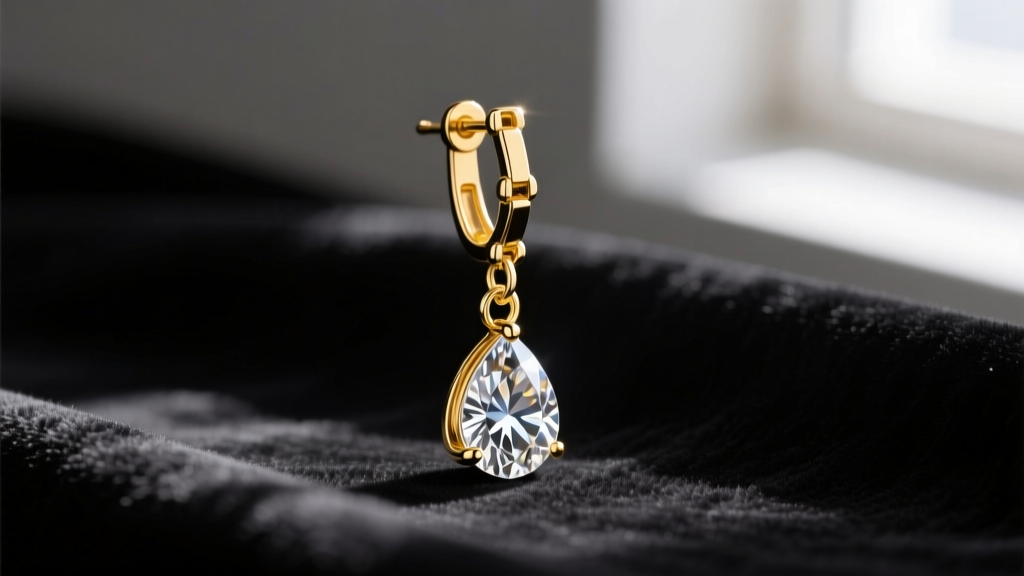
The Engineering of Kinetic Jewelry
Unlike static stud earrings, gold and diamond drop earrings belong to a specialized category of kinetic jewelry. Every movement of the wearer's head creates a pendulum effect, subjecting the earring's structural components to continuous micro-stress, tensile strain, and shifting gravitational loads. Designing and selecting high-end drop earrings requires a rigorous understanding of metallurgy, gemological optics, and mechanical engineering. In this technical deep dive, we deconstruct the precise specifications that separate heirloom-quality drop earrings from fragile, mass-produced alternatives.
Metallurgical Foundations: Gold Alloys and Tensile Strength
The choice of gold alloy is the first critical failure point in drop earring design. While consumers often equate higher karatage with superior quality, 24k and 22k gold are metallurgically unsuited for the articulated hinges and thin wire jump rings required in drop earrings. Pure gold possesses a Vickers Hardness (HV) of merely 25-30, making it highly susceptible to deformation under the kinetic load of a swinging diamond.
The 18k vs. 14k Debate for Articulated Drops
For premium gold and diamond drop earrings, 18k yellow gold (75% pure gold, typically alloyed with 15% copper and 10% silver) is the industry sweet spot. It yields a Vickers Hardness of approximately 125 HV. This specific alloy composition provides enough malleability for jewelers to form and solder microscopic jump rings without introducing metal fatigue, while retaining the deep, rich luster expected of luxury jewelry.
Conversely, 14k gold (58.5% pure gold) registers a higher hardness of roughly 140-150 HV. While more resistant to scratching, 14k gold's increased brittleness can lead to catastrophic failure in thin wire components. When a 14k gold jump ring connecting a heavy diamond drop is repeatedly stressed by pendulum motion, it is more prone to work-hardening and snapping than its 18k counterpart. According to metallurgical guidelines documented by the Ganoksin Project, the fatigue limit of 18k gold alloys makes them vastly superior for moving joints in fine jewelry.
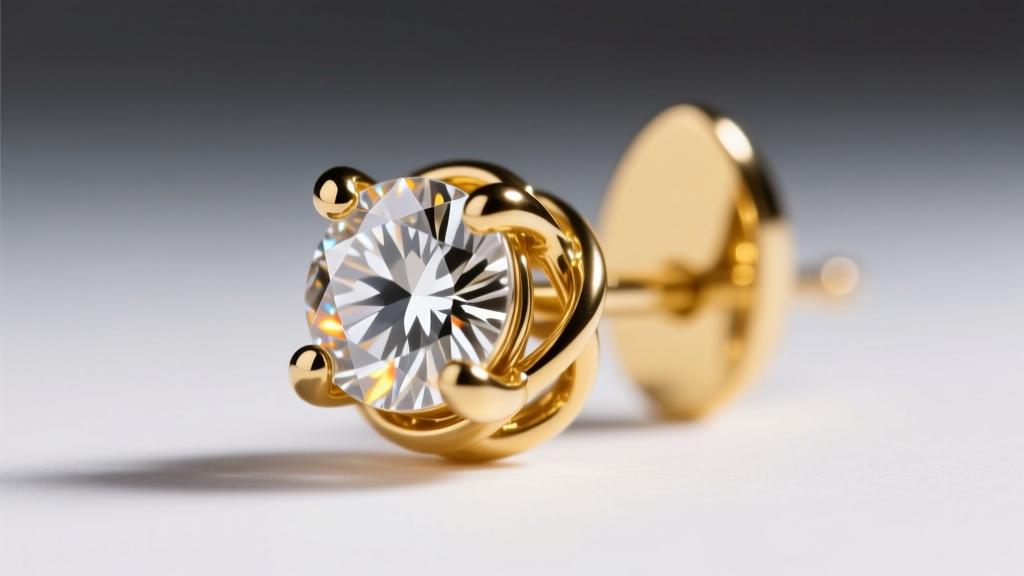
Gemological Precision: Diamond Selection for Dynamic Light Return
Selecting diamonds for drop earrings requires a fundamentally different approach than selecting stones for static rings or studs. Because the earrings are in constant motion, light enters the diamond's pavilion from continuously shifting, often sub-optimal angles. A diamond with mediocre cut proportions will exhibit "extinction" (dark, lifeless zones) the moment it swings away from a direct light source.
Proportions and Optical Symmetry
To ensure maximum brilliance regardless of the earring's physical orientation, you must restrict your selection to GIA Triple Excellent or AGS Ideal cut grades. However, even within the "Excellent" category, you must scrutinize the specific proportions. For round brilliant drops, demand a table percentage between 54% and 57%, and a total depth between 60.5% and 62%. Furthermore, optical symmetry (often marketed as Hearts and Arrows) is non-negotiable for kinetic stones, as it guarantees uniform light return from off-axis angles. The Gemological Institute of America (GIA) emphasizes that cut precision is the primary driver of a diamond's ability to interact with dynamic light environments.
Clarity and Color Grading Matrix
Because drop earrings hang below the earlobe, they are frequently viewed from a distance and in profile. This allows for strategic compromises in color and clarity that do not apply to engagement rings, provided the cut is flawless.
| Parameter | Stud Earrings (Static) | Drop Earrings (Kinetic) | Technical Rationale |
|---|---|---|---|
| Cut Grade | Very Good / Excellent | Excellent / Ideal Only | Kinetic motion exposes poor light return and extinction. |
| Clarity | VS1 / VS2 | SI1 (Eye-Clean) / VS2 | Distance from the observer's eye masks minor inclusions. |
| Color | F / G | G / H | Yellow gold settings and motion blur mask slight warmth. |
| Fluorescence | None / Faint | Medium / Strong (Acceptable) | UV reaction in sunlight enhances perceived brilliance in motion. |
Structural Engineering: Posts, Hinges, and Clutches
The most common point of failure in gold and diamond drop earrings is not the gold chain or the diamond setting, but the post and clutch mechanism. The physics of a drop earring create a lever arm; the heavier the diamond drop, the more torque is applied to the earlobe and the post.
Post Gauge and Center of Gravity
Standard earring posts are manufactured at 20 gauge (0.81mm) or 19 gauge (0.91mm). For drop earrings exceeding 3.5 grams per ear, a 19 gauge post is structurally insufficient and will bend, causing the earring to droop forward and irritate the piercing fistula. Expert jewelers will machine heavy drop posts at 18 gauge (1.02mm) or even 16 gauge (1.29mm). Additionally, the solder point of the post to the earring head must be positioned precisely at the center of gravity. If the post is soldered even 0.5mm too high, the kinetic weight of the drop will pull the top of the earring away from the lobe.
Advanced Clutch Mechanisms
Standard friction clutches (butterfly backs) rely on the tension of two thin metal scrolls. Over time, the pendulum motion of a drop earring will wear down the post's notches and stretch the clutch scrolls, leading to accidental loss. For valuable diamond drops, you must specify advanced locking mechanisms:
- La Pousette Clutches: Utilizing a spring-loaded internal mechanism with dual locking tabs, these clutches grip the post securely and require a deliberate pinching motion to release. They are the gold standard for heavy kinetic earrings.
- Screw Backs: The post is threaded, and the backing screws on. While highly secure, the threads can strip if cross-threaded, and they require a thicker post (minimum 1.0mm) to accommodate the lathe-cut threads without compromising the core wire's tensile strength.
- Omega Backs: For exceptionally heavy, chandelier-style drops, an omega back provides a wide, hinged surface area that distributes the weight across the back of the earlobe, preventing tissue tearing.
Troubleshooting Common Failure Modes
Even meticulously crafted gold and diamond drop earrings require maintenance due to the unforgiving nature of kinetic stress. Understanding these failure modes allows collectors and buyers to inspect vintage or new pieces with a critical eye.
"The greatest enemy of articulated jewelry is not impact, but the slow, invisible accumulation of metal fatigue at the articulation points."
Jump Ring Ovalization
The jump ring connecting the upper stud to the lower drop section is highly vulnerable. Continuous swinging causes the circular ring to rub against the connecting wire, slowly wearing it into an oval shape. Eventually, the wire thins and snaps. Solution: Inspect jump rings under a 10x loupe. High-end manufacturers will use laser-welded or hard-soldered jump rings that cannot open, or they will use hardened steel wire concealed within a gold sleeve.
Prong Work-Hardening and Snagging
Drop earrings frequently catch on hair, scarves, and clothing. This lateral pulling force can lift the prongs away from the diamond's girdle. Furthermore, repeated snagging work-hardens the gold prongs, making them brittle. Solution: Opt for bezel settings or half-bezel settings for the lower suspended stones. If prongs are necessary for maximum light entry, ensure they are V-prongs on pear or marquise cuts, and have a jeweler re-tip and polish them every 24 months to relieve internal metal stress.
Hinge Stiffening and Debris Accumulation
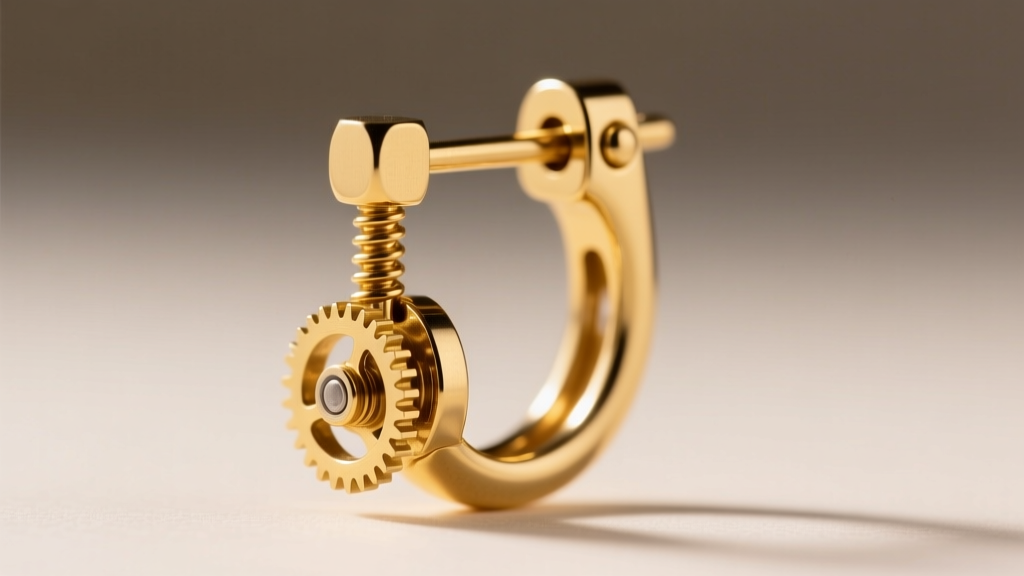
For drop earrings that utilize a mechanical hinge rather than a jump ring (common in Art Deco revival pieces), skin oils, cosmetics, and microscopic dust will infiltrate the hinge pin, causing it to stiffen. When the hinge cannot move freely, the kinetic energy transfers directly into the gold framework, risking structural fracture. Solution: Ultrasonic cleaning every six months, followed by the application of a microscopic drop of synthetic watch oil to the hinge pin to maintain frictionless articulation.
Conclusion: The Intersection of Art and Physics
Evaluating gold and diamond drop earrings requires looking far beyond the traditional 4Cs. True luxury in kinetic jewelry is defined by the invisible engineering: the precise Vickers hardness of the 18k gold alloy, the optical symmetry of a diamond cut for dynamic light environments, and the robust mechanical security of an 18-gauge post paired with a La Pousette clutch. By demanding these technical specifications, you ensure that your drop earrings remain not just visually breathtaking, but structurally enduring for generations of continuous wear.


