How to Choose the Best Hook in Earrings: A Buying Guide
Discover what to look for when buying hook in earrings. Learn about wire gauges, hypoallergenic metals, and secure closures for heavy drops.

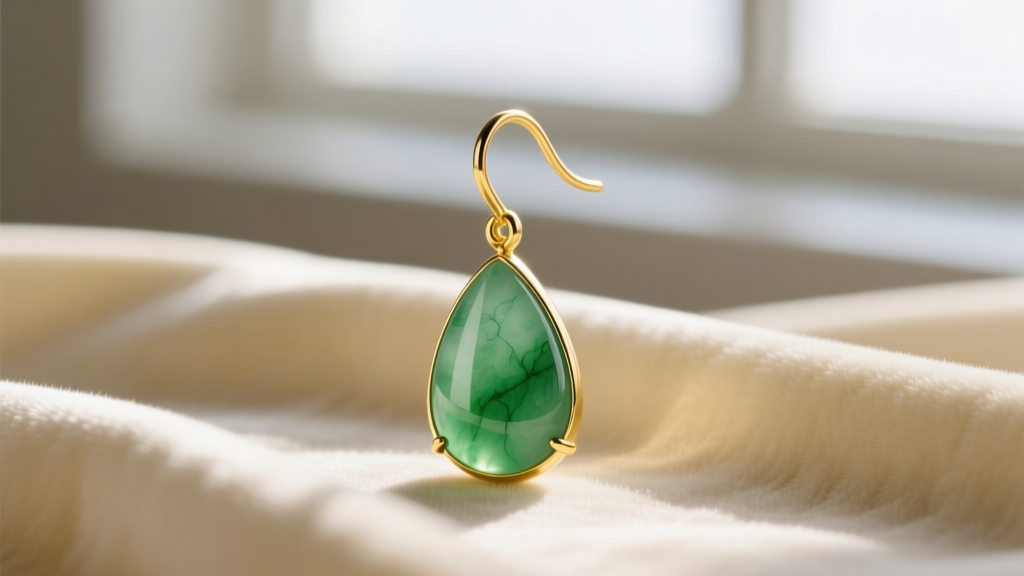
The Definitive Guide to Selecting Hook in Earrings
When navigating the expansive jewelry market in 2026, the dangle and drop earring categories remain dominant. Yet, the structural integrity and comfort of these pieces rely entirely on a single, often-overlooked component: the ear wire. Understanding the mechanics of the hook in earrings is crucial for anyone looking to invest in high-quality, comfortable, and secure jewelry. Often referred to as French hooks, fishhooks, or shepherd hooks, these wires dictate how a dangle sits on your earlobe, how it moves, and whether it will trigger contact dermatitis.
This comprehensive buying guide strips away the marketing fluff to focus on the metallurgical, structural, and anatomical realities of ear wires. Whether you are sourcing components for custom designs or shopping for fine jewelry drops, knowing what to look for will save you from lost earrings, stretched piercings, and allergic reactions.
Decoding Wire Gauges: Thickness and Tensile Strength
The most common point of failure when purchasing drop earrings is a mismatch between the wire gauge and the weight of the dangle. Wire thickness is measured in gauges (G); counterintuitively, the higher the gauge number, the thinner the wire. Selecting the correct gauge ensures the hook does not bend out of shape or slice through the earlobe over time.
| Gauge (G) | Millimeter (mm) | Best Use Case | Weight Capacity |
|---|---|---|---|
| 22G | 0.64mm | Delicate, lightweight charms, sleepers | Low (Under 5g) |
| 20G | 0.81mm | Standard drops, everyday commercial wear | Medium (5g - 15g) |
| 18G | 1.02mm | Heavy gemstones, statement architectural pieces | High (15g+) |
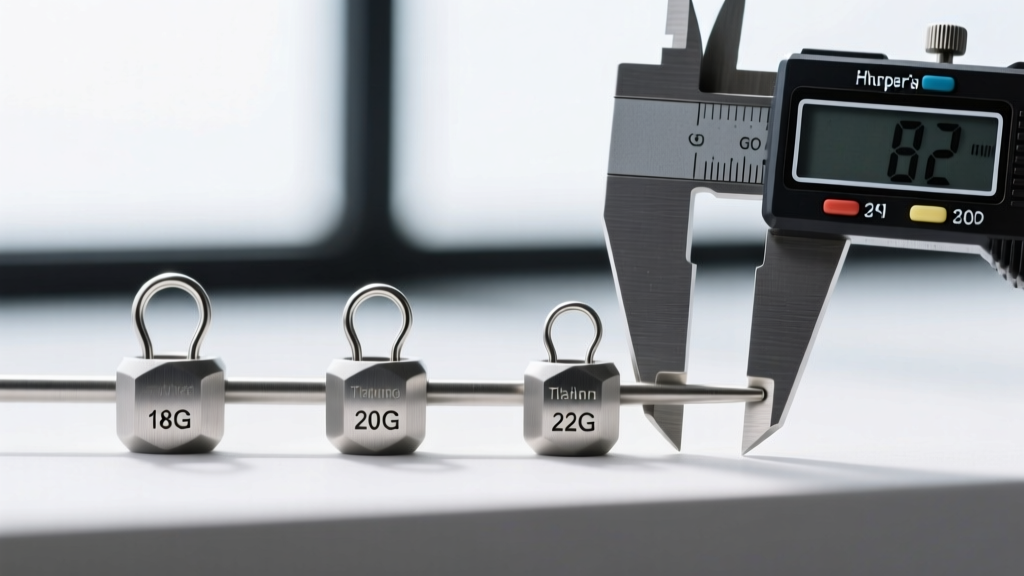
Standard lobe piercings done with a needle are typically 18G or 16G, while gun piercings often result in 20G holes. If you purchase 22G French hooks for a heavy gemstone drop, the thin wire will act like a cheese cutter against your earlobe, causing micro-tears and gradual migration. Conversely, forcing an 18G hook into a tight 20G piercing can cause immediate trauma. Always verify the gauge specifications before purchasing, especially when shopping from artisan marketplaces where sizing can be inconsistent.
Material Grades: Navigating Hypoallergenic Claims
The term 'hypoallergenic' is largely unregulated in the global jewelry industry. To avoid allergic contact dermatitis, you must look past marketing buzzwords and demand specific metallurgical grades. The friction point of a hook in earrings is highly susceptible to microscopic wear, which can expose base metals if the piece is merely plated.
- ASTM F-136 Implant-Grade Titanium: The gold standard for sensitive ears. According to the Association of Professional Piercers (APP), this specific alloy contains zero nickel and is biocompatible, making it ideal for fresh piercings or hyper-reactive lobes.
- Niobium: A highly reactive elemental metal that is naturally nickel-free. It can be anodized to produce vibrant colors without the use of toxic dyes or plating. It is slightly softer than titanium, making it excellent for bending and adjusting custom hook shapes.
- 14k or 18k Solid Gold: Ensure the piece is solid, not gold-filled or vermeil. The Gemological Institute of America (GIA) notes that 18k gold (75% pure gold) offers a beautiful rich color but is softer, while 14k (58.3% pure gold) provides better tensile strength for ear wires that need to hold their shape.
- Avoid 'Surgical Steel': Commercial 'surgical steel' (often 316L) contains up to 10-14% nickel. While the nickel is bound in the alloy, the friction of inserting and removing the hook can cause microscopic leaching, triggering severe reactions in sensitized individuals.
Security Mechanisms: Preventing the Dreaded Drop
The inherent design flaw of the traditional fishhook is its open back, making it notoriously easy to lose. When evaluating the security of a hook in earrings, examine the accompanying stoppers and the structural loop of the wire itself.
French Wire Closures vs. Bullet Clutches
For high-value drops, avoid standard butterfly clutches. They grip the thin wire poorly and easily slide off. Instead, look for silicone disc stoppers or specialized French wire ear nuts that feature a coiled metal spring inside a plastic housing, designed specifically to grip the curvature of a shepherd hook. Some premium jewelers now integrate a tiny silicone O-ring directly onto the wire before the closing loop, acting as a built-in physical barrier that prevents the earring from sliding off the earlobe entirely.
Weight Distribution and Soldered Loops
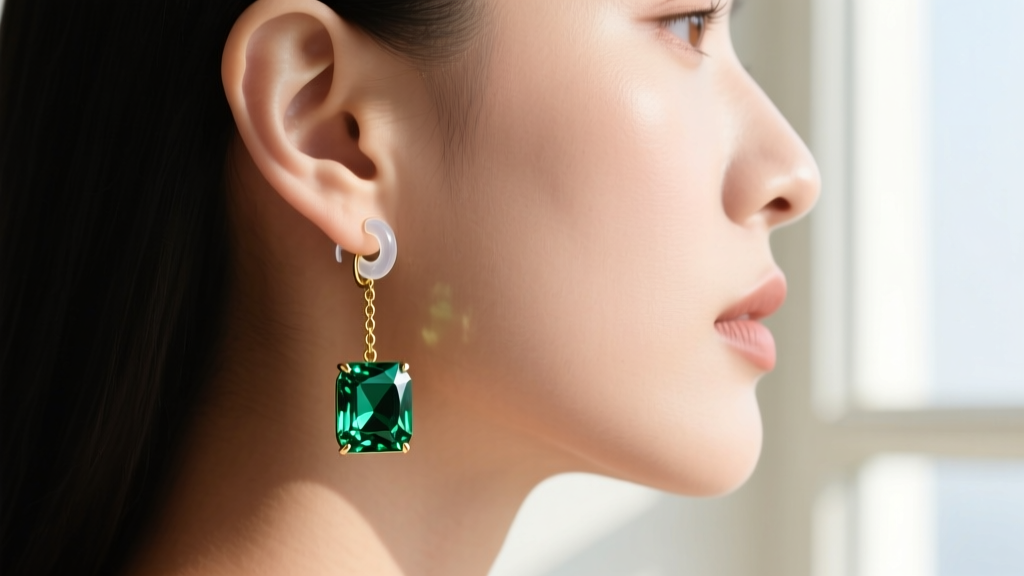
When a heavy dangle swings, it creates a pendulum effect that exerts lateral force on the loop connecting the hook to the drop. If the jump ring connecting the components is an 'open loop' (a simple wire circle with a slit), the kinetic energy of the heavy drop will eventually pull the slit apart, resulting in a lost earring.
The Expert Fix: Always inspect the connection point. High-end manufacturers use soldered jump rings or seamlessly closed loops. If you are buying vintage or artisan hook earrings, perform a gentle tug test on the connection loop. If you see a visible gap or the wire shifts, take the piece to a bench jeweler to have the loop laser-welded or soldered shut before wearing it.
Face Shape Pairing: Styling Your Hook Drops
Because hook in earrings allow the decorative element to dangle freely below the earlobe, they are powerful tools for balancing facial proportions. The movement of the hook draws the eye downward, making drop length a critical styling variable.
- Round Faces: Opt for long, linear drops (2.5 to 4 inches) hanging from standard 20G hooks. The vertical movement elongates the jawline. Avoid short, wide hoops on hooks, which emphasize circularity.
- Square Faces: Choose curved, teardrop-shaped dangles on slightly thicker 18G hooks. The organic curves soften strong angular jawlines.
- Heart-Shaped Faces: Chandelier drops that widen at the bottom help balance a narrower chin. Ensure the hooks are reinforced, as chandeliers catch on hair and clothing, requiring higher tensile strength.
Expert Troubleshooting: Common Hook Failures
Even well-made hook earrings can present functional issues. Here is how to troubleshoot the most common complaints from jewelry collectors:
Problem: The hook constantly rotates forward, showing the back of the earring.
Cause: The center of gravity is off. The decorative drop is too heavy for the length of the front curve of the hook.
Solution: Use a small piece of museum wax or a clear silicone stabilizer on the back of the earlobe to hold the drop flush, or have a jeweler add a tiny counterweight bead to the back of the fishhook.
Problem: The piercing feels sore and stretched at the end of the day.
Cause: The gauge is too thin (22G or higher) for the weight of the drop, creating high-pressure points on the fistula.
Solution: Upgrade to an 18G or 16G hook wire. The thicker surface area distributes the weight of the drop more evenly across the piercing channel.
Problem: The metal turns black or tarnishes rapidly.
Cause: The hooks are made of sterling silver without a rhodium plating, or they are brass with a thin flash plating that has worn off at the friction point.
Solution: Switch to solid 14k gold, platinum, or anodized niobium. Sterling silver is highly prone to sulfur tarnishing and is generally not recommended for the friction-heavy environment of an ear piercing.
Final Verdict: The 2026 Sizing Framework
Buying the perfect hook in earrings requires looking past the gemstone and focusing on the hardware. For everyday wear, demand 20G (0.81mm) wires crafted from ASTM F-136 titanium or solid 14k gold. For statement pieces exceeding 15 grams, insist on 18G (1.02mm) wires with soldered connection loops and silicone disc stoppers. By prioritizing structural integrity and biocompatible metallurgy, you ensure your favorite drops remain secure, comfortable, and beautifully displayed for years to come.


