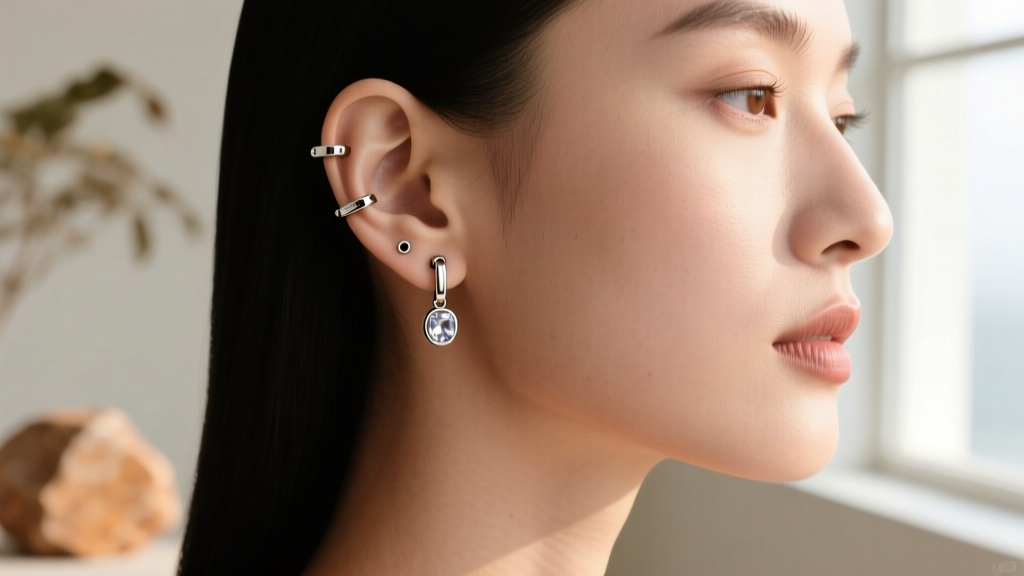
Material Science of Gap Earrings: Which Metals Hold Their Shape?
Discover which metals perform best for gap earrings. We compare tensile strength, spring-back, and biocompatibility to prevent loss and irritation.

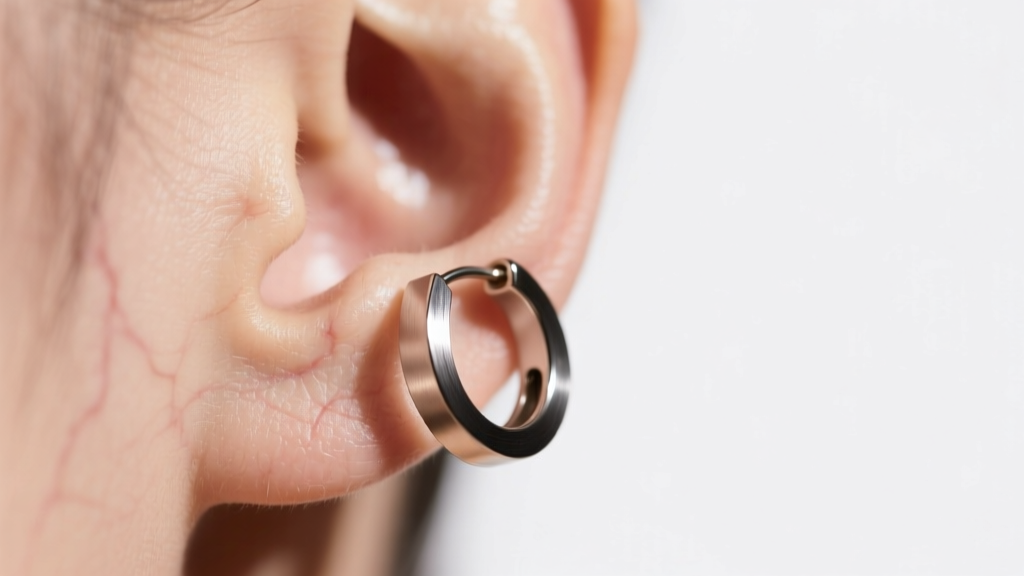
The Physics of Gap Earrings: Why Material Tension Matters
Gap earrings—encompassing open hoops, tension cuffs, and segmented continuous rings with a deliberate opening—represent a unique challenge in jewelry design. Unlike standard latch-back hoops or butterfly-back studs, gap earrings rely entirely on the metal's structural memory and clamping force to stay secured to the earlobe or cartilage. When you slide a gap earring into a piercing or clamp it around the conch, you are actively testing the metal's elastic limit.
If a metal lacks sufficient yield strength, the gap will permanently widen over time, leading to a loose fit and eventual loss of the earring. Conversely, if the metal is too rigid, attempting to adjust the gap to fit your unique anatomy can cause micro-fractures. Understanding the metallurgy behind these designs is critical for both longevity and comfort. In this guide, we break down the material properties that dictate how gap earrings perform in real-world wear.
Metal Memory and Spring-Back: The Core Metrics
To evaluate materials for open-style jewelry, metallurgists and master jewelers look at Yield Strength (measured in Megapascals, or MPa) and Elasticity. Yield strength determines how much stress the metal can endure before it permanently bends out of shape. Elasticity, or 'spring-back,' is the metal's ability to return to its original form after being flexed to accommodate the ear's curvature.
| Metal Type | Yield Strength (MPa) | Spring-Back / Memory | Biocompatibility | Avg. Price (16g Hoop) |
|---|---|---|---|---|
| Implant-Grade Titanium (ASTM F136) | ~895 MPa | Excellent | Hypoallergenic | $45 - $120 |
| Niobium (Unalloyed) | ~195 MPa | Moderate (Highly Adjustable) | Hypoallergenic | $30 - $85 |
| 14k Gold (Alloyed) | 400 - 600 MPa | Good | Varies (Nickel Risk) | $150 - $400 |
| 18k Gold (Alloyed) | 250 - 350 MPa | Poor (Prone to Bending) | Excellent | $250 - $800 |
| Sterling Silver (925) | ~250 MPa | Poor (Work Hardens) | Tarnish/Copper Risk | $20 - $60 |
Deep Dive: Reactive vs. Precious Metals in Open Designs
The choice of metal drastically alters the user experience of gap earrings. What works beautifully for a static, closed hoop can be disastrous for an open-tension design.
Titanium (Grade 23 / ASTM F136)
For cartilage gap earrings, implant-grade titanium (Ti6Al4V ELI) is the undisputed champion. According to standards set by ASTM International, Grade 23 titanium offers an exceptional strength-to-weight ratio. Because it possesses a high elastic limit, a titanium gap hoop can be gently squeezed to navigate through a 16-gauge or 14-gauge fistula and will immediately 'spring' back to its original circular geometry. Furthermore, its complete lack of nickel makes it ideal for the high-friction, high-pressure zones created by tension cuffs, eliminating the risk of contact dermatitis.
Niobium: The Adjustable Alternative
Niobium is a highly malleable, reactive metal that behaves very differently from titanium. With a much lower yield strength, niobium gap earrings do not possess aggressive spring-back. Instead, they are plastically adjustable. If you are buying an ear cuff or a conch gap ring that needs to be custom-molded to the exact curve of your ear, niobium is the superior choice. You can bend it to close the gap slightly, and it will stay exactly where you left it without fighting back against your anatomy.
The Precious Metal Paradox: Gold and Silver
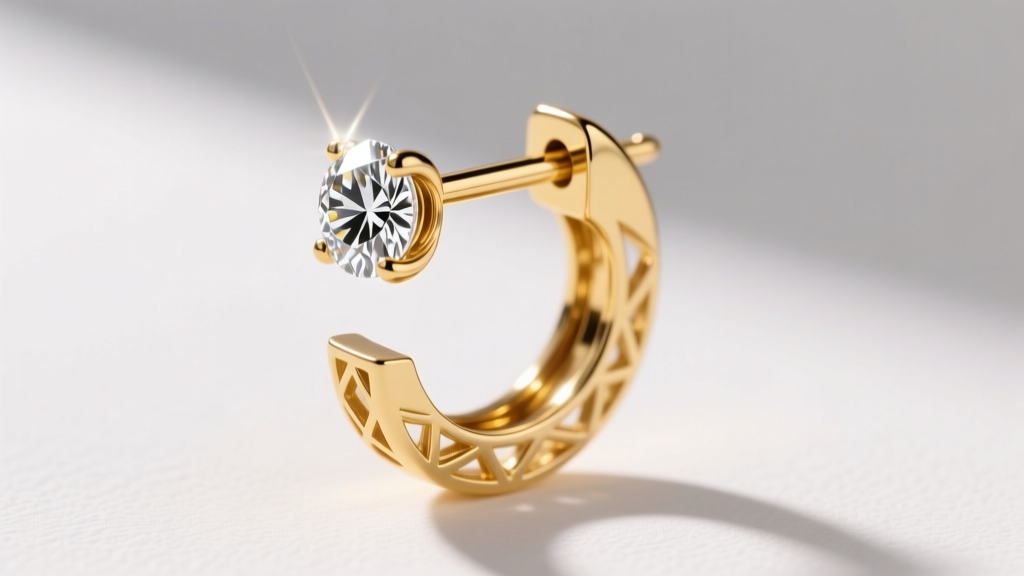
Precious metals introduce complex alloy dynamics that directly impact the functionality of gap earrings.
14k vs. 18k Gold: The Alloy Factor
Counterintuitively, 14k gold is often mechanically superior to 18k gold for gap earrings. Pure 24k gold is far too soft to hold a tension gap; it will deform the first time it is snagged on a sweater. To create 18k gold (75% pure gold), jewelers add copper and silver, but the resulting alloy remains relatively soft and prone to permanent gap-widening. 14k gold (58.3% pure gold) contains a higher percentage of structural alloys like zinc and copper, granting it the tensile rigidity required to maintain a consistent clamping force on the earlobe over years of daily wear.
The Sterling Silver Trap (Work Hardening)
Sterling silver (92.5% silver, 7.5% copper) is a popular, budget-friendly choice, but it suffers from a metallurgical phenomenon known as work hardening. Every time you open and close the gap of a silver earring to put it on, you create microscopic dislocations in the metal's crystal lattice. Over time, these tangles cause the silver to become brittle. If you repeatedly adjust the gap of a sterling silver continuous hoop, it will eventually snap cleanly in half. Silver gap earrings should be treated as semi-permanent: adjust them once to fit your ear, and leave them alone.
'Jewelry that relies on tension and clamping force must be crafted from metals with high elastic limits. Repeated mechanical stress on low-yield metals leads to structural fatigue, resulting in both the loss of the jewelry and potential tissue trauma from jagged fracture points.' — Principles of Body Jewelry Metallurgy, via the Association of Professional Piercers (APP)
Failure Modes: Why Your Gap Earrings Keep Falling Off
If you are constantly losing your open hoop earrings, the issue usually stems from a mismatch between the metal's properties and the mechanical stress of your lifestyle. Here are the primary failure modes:
- Plastic Deformation from Snagging: If your gap earring catches on a hairbrush or towel, the gap is forcefully widened. Metals like 18k gold or silver will not spring back, permanently ruining the tension.
- Gauge Mismatch: Using an 18-gauge (1.0mm) wire for a large-diameter gap hoop provides insufficient structural mass. The lever-action of a large hoop amplifies stress on the thin wire, causing it to warp.
- Sweat and Corrosion Fatigue: While titanium and niobium are impervious to sweat, brass-based or poorly plated gap earrings will suffer from stress-corrosion cracking. The combination of skin acids and physical tension causes the metal to degrade and snap at the gap's edge.
Gauge Thickness and Gap Sizing Framework
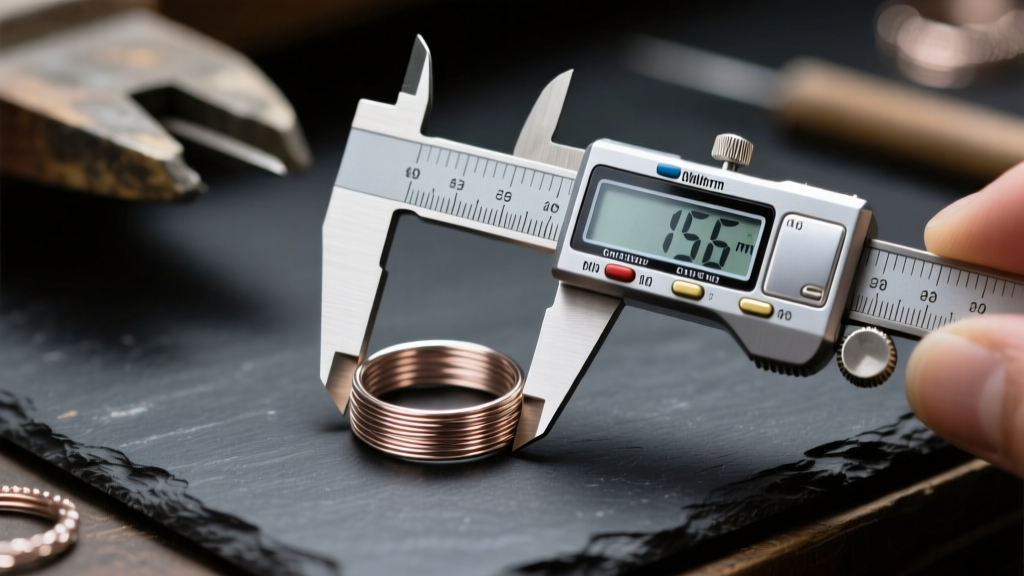
Selecting the correct wire thickness (gauge) is just as important as selecting the metal. The wider the gap, and the larger the overall diameter of the hoop, the thicker the wire must be to compensate for the loss of structural integrity. Use this framework when shopping for or designing gap earrings:
- 18 Gauge (1.0mm): Suitable only for small-diameter (under 10mm) huggies with a micro-gap, crafted from high-yield metals like titanium or spring-hardened 14k gold. Never use 18g for wide-gap ear cuffs.
- 16 Gauge (1.2mm): The industry standard for most cartilage and lobe gap hoops. Provides an excellent balance of comfort during insertion and enough mass to resist accidental bending.
- 14 Gauge (1.6mm): Mandatory for large statement gap earrings (over 20mm in diameter) or heavy ear cuffs. The increased cross-sectional area prevents the 'lever effect' from warping the circle.
Final Verdict: Choosing the Right Metal for Your Anatomy
The perfect gap earring does not exist in a vacuum; it depends entirely on how you interact with your jewelry. If you want a 'set it and forget it' cartilage hoop that will survive gym sessions, sleep, and snags without losing its shape, Implant-Grade Titanium is your only logical choice. If you are looking for an ornate, adjustable conch cuff that you can mold perfectly to your ear's unique ridge, opt for Niobium. For luxury and heirloom value, choose 14k Gold over 18k, and ensure the wire gauge is thick enough to support the tension. By respecting the physics of metallurgy, you can ensure your gap earrings stay exactly where they belong.