How to Wear and Style a Front Back Earring: Beginner Guide
Discover how to wear, style, and secure a front back earring. Our beginner guide covers materials, face shapes, and mechanics for flawless styling.

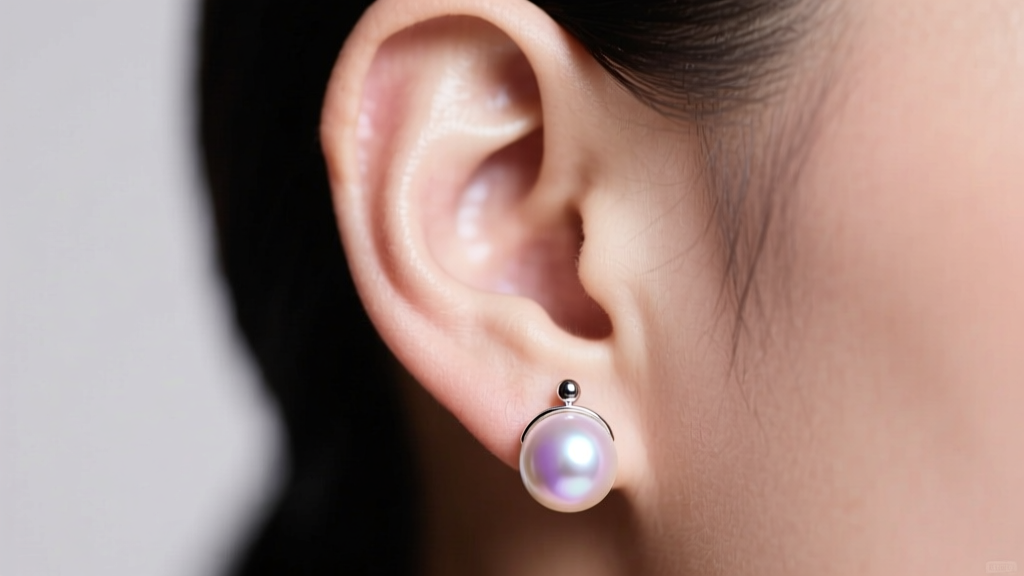
The front back earring, frequently referred to in the jewelry industry as an 'ear jacket' or 'double-sided earring', has evolved from a fleeting runway trend into a permanent fixture in modern fine jewelry collections. Unlike traditional studs that sit flush against the earlobe, or drop earrings that dangle freely below, a front back earring creates a three-dimensional illusion. It features a decorative element on the front of the lobe and a secondary, often larger, design element that rests behind the earlobe. For beginners, this unique architecture can seem intimidating to put on and style. However, mastering the mechanics of the front back earring unlocks a versatile styling tool that frames the face and adds architectural depth to any jewelry curation.
What Exactly Is a Front Back Earring?
At its core, a front back earring consists of three main components: the front stud, the connecting post, and the back 'jacket'. The front piece is typically a smaller, understated gemstone or metal bead (such as a 4mm pearl or a subtle diamond solitaire). The post extends through the ear piercing, and the back jacket—which can range from a large metallic sphere to a cascading geometric fan—slides onto the post behind the earlobe, secured by a specialized earring back.
This design creates a 'floating' effect. Because the back piece is often wider than the earlobe itself, it peeks out from behind the ear, drawing the eye and adding volume without the kinetic movement of a traditional dangle earring. Brands like Missoma, Mejuri, and high-end houses like Dior (with their iconic Tribales line) have popularized this silhouette, making it a staple for both minimalist and maximalist dressers.
The Anatomy and Mechanics of Ear Jackets
Understanding the physical dimensions of your jewelry is critical for both comfort and aesthetics. A common beginner mistake is purchasing a front back earring with a post that is too short, which results in the back jacket pressing painfully against the rear of the earlobe.
| Component | Standard Specification | Front Back Earring Requirement | Why It Matters |
|---|---|---|---|
| Post Gauge | 20G (0.8mm) | 18G (1.0mm) preferred | Thicker posts prevent bending under the weight of heavy back jackets. |
| Post Length | 9mm - 10mm | 12mm - 14mm | Accommodates the thickness of the earlobe plus the depth of the back jacket. |
| Backing Type | Standard Butterfly Clutch | Silicone Stopper or Locking Back | Provides higher friction to prevent the heavy back piece from sliding off. |
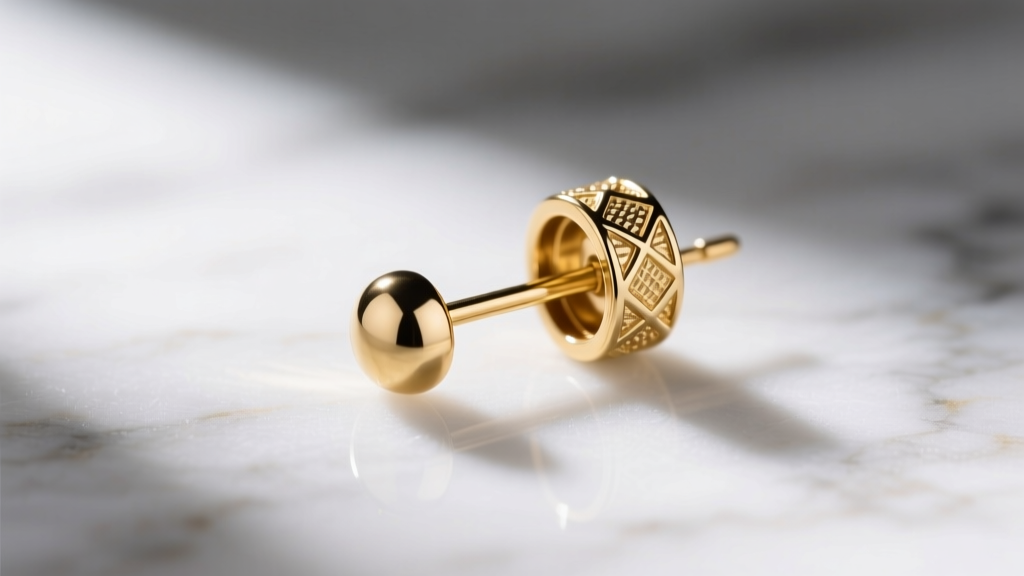
Step-by-Step: How to Put On a Front Back Earring
Applying a double-sided earring requires a slightly different technique than a standard stud. Forcing the post at an incorrect angle can permanently bend the metal or damage the threading. Follow this framework for a secure, pain-free application:
- Prepare the Components: Separate the front stud, the back jacket, and the silicone stopper. Hold the front piece by the gemstone or metal head, not the post, to avoid transferring oils to the metal.
- Insert the Front Stud: Gently guide the post through your ear piercing from the front. If you meet resistance, do not push. Rotate the post slightly to find the natural channel of the piercing.
- Slide on the Jacket: Once the post is fully protruding from the back of your earlobe, slide the decorative back jacket onto the post. Ensure the flat side of the jacket rests flush against your skin.
- Secure the Stopper: Push the silicone or metal backing onto the post until it meets the back of the jacket. Pro Tip: Leave a microscopic gap (about 0.5mm) between the stopper and the jacket to allow for natural blood flow and prevent earlobe swelling.
Material Grades: Protecting Sensitive Lobes
Because a front back earring places physical pressure on both the front and back of the earlobe, material biocompatibility is paramount. The added weight and surface area increase the risk of contact dermatitis if reactive metals are used. According to the Association of Professional Piercers (APP), nickel exposure is the leading cause of jewelry-related allergic reactions.
Quick Material Comparison Chart
| Material | Hypoallergenic? | Price Range | Best For |
|---|---|---|---|
| Implant-Grade Titanium (ASTM F136) | Yes (100% Nickel-Free) | $30 - $80 | Sensitive ears, fresh piercings, heavy jackets. |
| 14k / 18k Solid Gold | Yes (If alloyed properly) | $150 - $500+ | Fine jewelry collectors, daily wear, heirloom pieces. |
| 316L Surgical Steel | No (Contains trace nickel) | $15 - $40 | Budget shoppers with fully healed, non-reactive lobes. |
| Niobium | Yes (Highly biocompatible) | $25 - $60 | Color-anodized designs, extreme metal sensitivities. |
For authoritative guidance on precious metal standards and hallmarking, the Jewelers of America recommends always verifying the karat weight and alloy composition when investing in solid gold ear jackets to ensure you are not purchasing gold-plated brass disguised as fine jewelry.
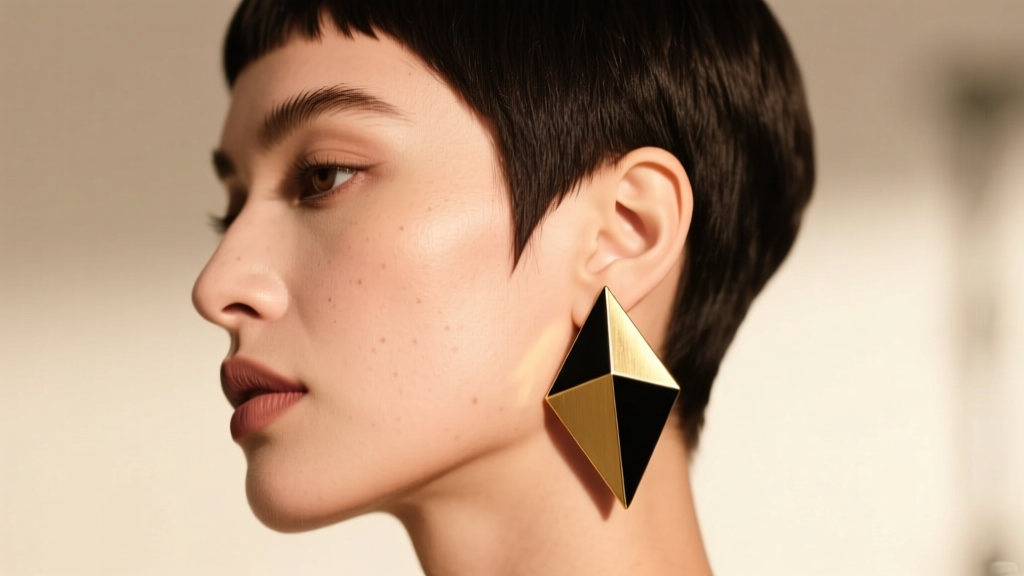
Styling Framework: Matching Jackets to Face Shapes
The defining feature of the front back earring is its ability to alter the visual weight of the lower half of your face. By choosing the right silhouette for the 'back' component, you can balance your natural proportions.
- Round Faces: Opt for elongated, vertical back jackets (such as a dropping bar or a pear-shaped pearl). This draws the eye downward, creating the illusion of a longer, more oval facial structure. Avoid wide, circular fan jackets that add horizontal volume.
- Square Faces: Soften a strong jawline with curved, organic shapes. A back jacket featuring a cluster of round pearls or a fluid, molten-gold wave design will contrast beautifully with angular bone structure.
- Heart-Shaped Faces: Since the forehead is wider and the chin is narrow, choose back jackets that add volume at the bottom of the earlobe. Wide, geometric fans or triangular jackets that point downward will balance the narrower chin.
- Oval Faces: The universal face shape can pull off any front back earring style. Experiment with extreme architectural asymmetry or oversized spherical backings for a high-fashion editorial look.
Stylist Tip: When wearing a bold front back earring, keep your necklace minimal or skip it entirely. The ear jacket acts as both an earring and a framing device for the neck; competing with a heavy chain can clutter your overall aesthetic.
Troubleshooting Common Issues
Even experienced jewelry wearers encounter mechanical frustrations with double-sided earrings. Here is how to troubleshoot the most common failure modes.
The 'Droop' Effect
The Problem: Heavy back jackets cause the front stud to tilt forward, making the earring look sloppy and causing the post to dig into the front of the piercing channel.
The Solution: Ditch the standard metal butterfly backs. Invest in silicone earring stabilizers (often called 'earring backers' or 'BlingWraps'). These wide, flat silicone pads distribute the weight of the jacket across a larger surface area of the rear earlobe, providing the structural support needed to keep the front stud perfectly upright.
Losing the Back Jacket
The Problem: Because the back jacket slides on before the stopper, friction from hair, scarves, or phone calls can push the stopper back, allowing the expensive decorative jacket to slide off and get lost.
The Solution: Look for front back earrings that utilize a 'screw-back' mechanism rather than a push-back friction clutch. Alternatively, apply a microscopic dot of clear, jewelry-safe museum wax to the post before sliding on the stopper to create a temporary, non-damaging adhesive bond.
Skin Irritation Behind the Lobe
The Problem: The back jacket traps moisture, sweat, and hair products against the rear of the earlobe, leading to contact dermatitis or localized breakouts.
The Solution: Implement a strict cleaning regimen. Wipe the back jacket with a lint-free cloth and 70% isopropyl alcohol after every wear. Ensure your earlobe is completely dry after showering before applying the earring.
Final Thoughts on Building Your Collection
The front back earring is a masterclass in modern jewelry design, offering the elegance of a stud with the visual impact of a chandelier earring. By prioritizing correct post lengths, investing in biocompatible materials like ASTM F136 titanium, and utilizing silicone stabilizers for heavy jackets, you can wear this style comfortably from morning meetings to evening galas. Start your collection with a versatile, medium-sized pearl or geometric gold jacket, and gradually experiment with bolder, asymmetrical silhouettes as you master the mechanics of this striking accessory.


