How to Choose the Perfect Purple Colour Earrings: Beginner Guide
Discover how to choose, style, and care for purple colour earrings. Learn about amethyst, tanzanite, enamel, skin undertones, and hypoallergenic metals.

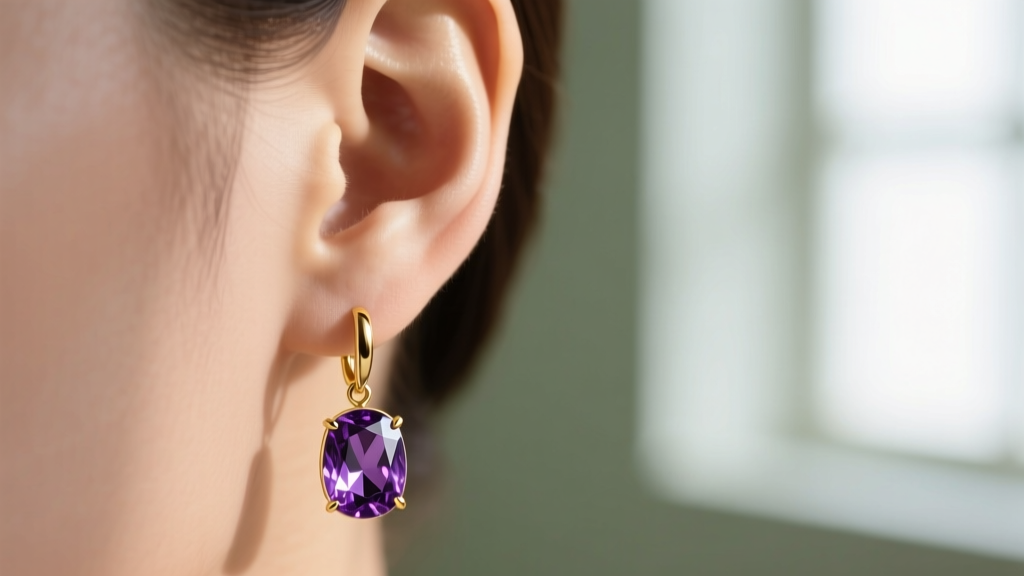
Why Purple is the Ultimate Statement Hue
When building a versatile jewelry wardrobe, most beginners start with neutral metals and clear diamonds. However, incorporating colour is what elevates a personal style from basic to memorable. Purple colour earrings occupy a unique space in jewelry design: they carry the historical weight of royalty while offering a playful, modern edge. Whether you are drawn to the deep, moody tones of a twilight sky or the vibrant, electric shades of a neon sign, purple offers a spectrum that suits every aesthetic.
But buying coloured jewelry requires more than just picking a shade you like. You must navigate gemstone hardness, metal reactivity, and piercing anatomy. This guide will break down everything a beginner needs to know about selecting, styling, and maintaining purple earrings, ensuring your investment lasts for years.
Decoding Purple Materials: Gemstones vs. Enamel
Not all purple earrings are created equal. The material dictates not only the price but also how you can wear and clean them. Below is a breakdown of the most common purple materials used in modern earring design.
| Material | Mohs Hardness | Average Price Range | Best Use Case |
|---|---|---|---|
| Amethyst | 7.0 | $30 - $150 | Everyday wear, studs, and hoops |
| Tanzanite | 6.5 | $200 - $1,000+ | Special occasions, fine jewelry drops |
| Sugilite | 5.5 - 6.5 | $50 - $250 | Statement pieces, cabochon settings |
| Vitreous Enamel | N/A (Glass-based) | $20 - $80 | Bold, modern, and geometric designs |
According to the Gemological Institute of America (GIA), amethyst is the most durable and accessible purple gemstone, making it the gold standard for beginners. Tanzanite, while breathtaking, possesses perfect cleavage, meaning a hard knock against a desk or doorframe can cause the stone to split. Enamel, on the other hand, offers opaque, electric purples that do not exist in nature, but it is prone to chipping if dropped on hard tile floors.
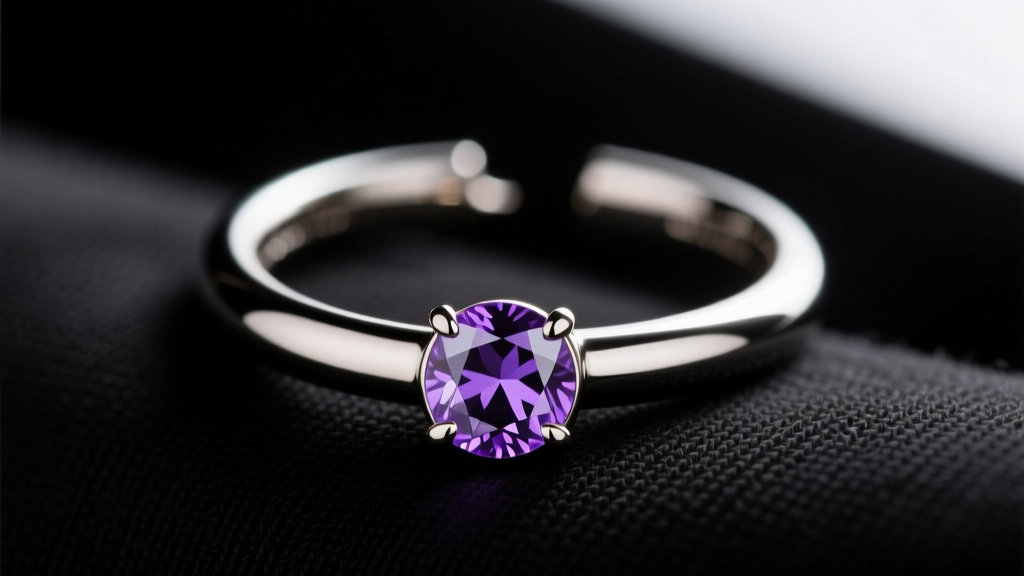
Matching Purple to Your Skin Undertone
The biggest mistake beginners make is buying a purple stone that clashes with their skin's undertone. Purple is a secondary colour made of red and blue, meaning it can lean warm or cool.
Cool Undertones (Veins appear blue/purple)
If you have cool undertones, look for blue-based purples. Iolite and Tanzanite are excellent choices. These stones have a violet-blue depth that complements pink and rosy skin tones. Pair these stones with white gold, platinum, or silver to maintain a crisp, icy aesthetic.
Warm Undertones (Veins appear green/olive)
Warm undertones shine when paired with red-based purples. Look for Rubellite Tourmaline or deep, reddish Amethyst (often marketed as 'Siberian Amethyst'). Setting these stones in 14k or 18k yellow gold enhances the warmth of the stone and creates a rich, harmonious contrast against golden or olive skin.
Piercing Anatomy and Gauge Sizing
Before purchasing purple colour earrings, you must know your piercing gauge. Wearing the wrong thickness can cause irritation, tearing, or the dreaded 'cheese-cutter effect' where a thin wire slices through the earlobe.
- Standard Earlobes: Usually pierced at 20G (0.8mm) or 18G (1.0mm). Most commercial amethyst studs and enamel hoops are made in these sizes.
- Cartilage / Helix: Typically pierced at 16G (1.2mm) or 14G (1.6mm). If you are buying a purple gemstone for your upper ear, ensure the post or hoop is thick enough to support the weight of the stone without bending.
- Tragus / Conch: Often 16G, but flat-back labrets are required here. Look for bezel-set purple stones with internally threaded titanium posts.
For those with sensitive ears or new piercings, the metal holding the purple stone is just as critical as the stone itself. The Association of Professional Piercers (APP) strongly recommends ASTM F136 implant-grade titanium for initial healing and reactive skin. Avoid cheap 'surgical steel' which often contains nickel that can cause contact dermatitis, turning your beautiful purple earring experience into an itchy nightmare.
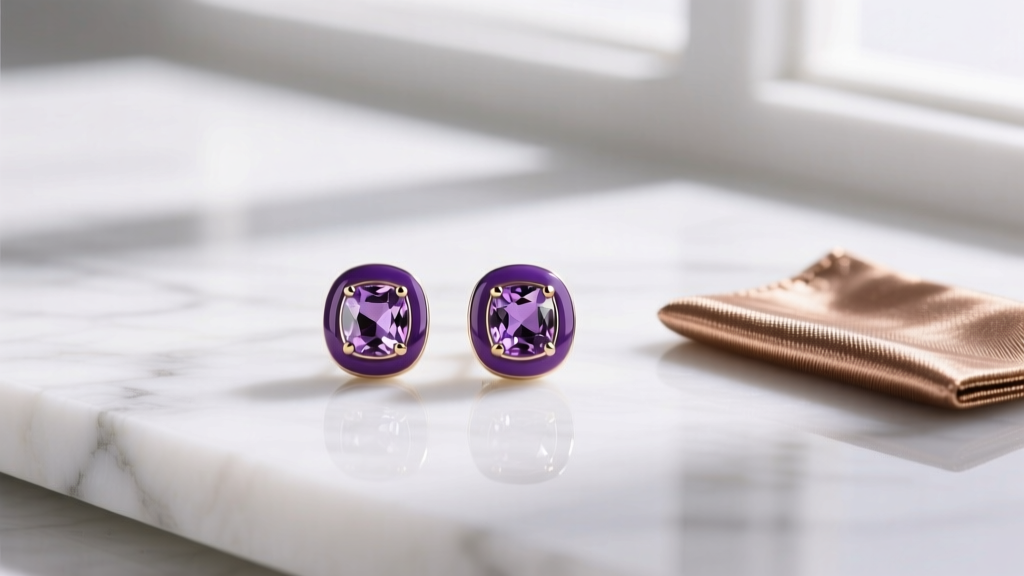
Care, Cleaning, and Failure Modes
Proper maintenance ensures your purple earrings retain their brilliance. Different materials require vastly different care routines.
Warning: Never put Tanzanite, Sugilite, or Enamel earrings in an ultrasonic jewelry cleaner. The high-frequency vibrations can shatter tanzanite due to its cleavage planes and cause enamel to crack or pop off its metal backing.
The Safe Cleaning Method for All Purple Earrings
- Soak: Mix a few drops of mild, fragrance-free dish soap (like Dawn) into a bowl of lukewarm water. Let the earrings soak for 3 to 5 minutes.
- Agitate: Use a brand-new, ultra-soft baby toothbrush to gently sweep behind the gemstone or inside the hoop. Dirt and skin oils accumulate behind the setting, blocking light and making purple stones look grey and dull.
- Rinse & Dry: Rinse under lukewarm running water (ensure the drain is plugged!). Pat dry with a lint-free microfibre cloth. Do not use paper towels, as the wood pulp can scratch softer stones like sugilite.
Final Thoughts on Building Your Collection
Start your journey with a pair of 18k gold or titanium bezel-set amethyst studs. They are affordable, incredibly durable, and transition seamlessly from the office to a night out. Once you understand how purple interacts with your wardrobe and skin tone, you can confidently invest in higher-end tanzanite drops or contemporary enamel huggies. By prioritizing material quality, correct gauge sizing, and proper cleaning, your purple colour earrings will remain a vibrant staple in your collection for a lifetime.


