The Ultimate Gage Earring Gift Guide: 2026 Sizing Tips
Discover the ultimate 2026 gage earring gift guide. Learn how to match wire thickness, materials, and threading to any ear piercing.

The Art of Gifting Body Jewelry: Beyond the Aesthetic
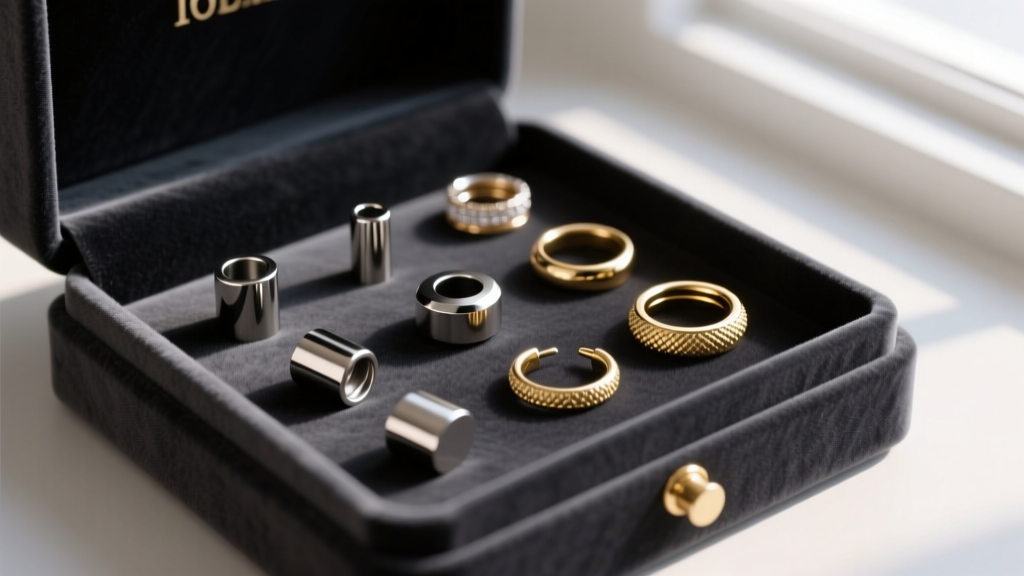
Gifting fine jewelry for pierced ears is a deeply personal gesture, but it is also a technical minefield for the uninitiated. When well-meaning shoppers search for a 'gage earring' to buy for a loved one, they are often unaware that they are navigating the complex world of body jewelry sizing, metallurgy, and anatomical placement. While 'gage' is a common phonetic spelling used by beginners, the industry-standard term is 'gauge'—a measurement of the jewelry's wire thickness. Giving the wrong size, material, or threading type can result in discomfort, allergic reactions, or even piercing rejection.
In this comprehensive 2026 gift guide, we bridge the gap between high-end jewelry aesthetics and professional piercing science. Whether you are shopping for a freshly pierced cartilage, a healed daith, or standard lobe upgrades, understanding the exact specifications of the jewelry you are gifting is the hallmark of a truly thoughtful present.
Decoding the Gauge: Why Thickness Matters
The American Wire Gauge (AWG) system dictates the thickness of the post or wire that passes through the fistula (the piercing channel). Counterintuitively, the lower the gauge number, the thicker the jewelry. Gifting an earring that is too thin for a specific piercing can trigger the 'cheese cutter effect,' where the thin wire slowly migrates and slices through the tissue under the weight of the jewelry. Conversely, forcing a post that is too thick into a healed hole causes micro-tears and severe irritation.
Standard Gauge Dimensions
- 20 Gauge (0.81mm): Standard for traditional earlobe piercings done with a piercing gun (though we strongly advise against gun piercings). Commonly used for delicate butterfly-back studs.
- 18 Gauge (1.02mm): The standard for professional needle-pierced lobes and some delicate nostril piercings. Ideal for lightweight huggies and seamless hoops.
- 16 Gauge (1.29mm): The universal standard for professional cartilage piercings (helix, forward helix, tragus, and conch). This thickness provides structural integrity to prevent migration.
- 14 Gauge (1.63mm): Typically reserved for thicker cartilage placements like the daith, snug, and rook, as well as industrial barbells.
Occasion & Placement Matching: Which Size to Gift?
To select the perfect gift, you must first determine the recipient's piercing placement. If you are unsure, a gift card to a high-end studio is always a safe bet, but if you know their anatomy, here is how to match the occasion to the jewelry.
Anniversaries & Milestones: Standard Lobe (18g - 16g)
For major milestones, upgrade their basic lobe studs to high-end threadless ends. While many commercial lobe earrings are 20g, professional piercers usually pierce lobes at 16g or 18g to support the weight of fine gems. Gifting a pair of 18g solid 14k gold threadless labret posts with prong-set diamonds offers a secure, luxurious upgrade that will never tarnish or fall out like traditional friction-back earrings.
Holidays & Birthdays: Cartilage & Helix (16g)
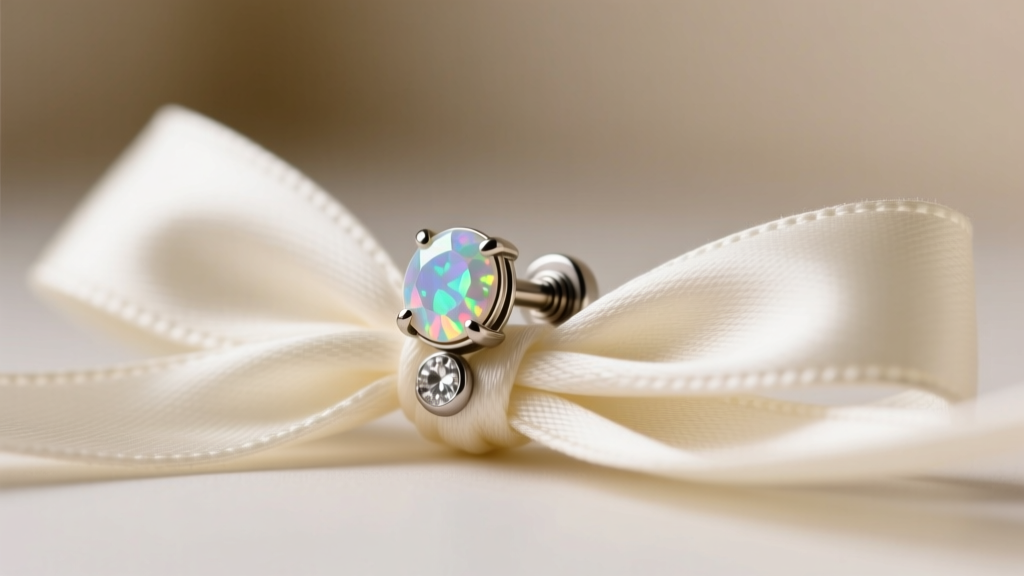
The helix and flat piercings are the most popular canvas for ear curation. A 16g labret post with an intricate cluster end makes a phenomenal holiday gift. Because cartilage lacks blood flow, it heals slowly and is highly reactive to poor metals. Always opt for mirror-finished, implant-grade titanium for anyone whose piercing is less than a year old.
Just-Because Treats: Daith, Rook, & Snug (14g)
These inner-ear piercings are notoriously difficult to change due to their tight angles. Gifting a 14g internally threaded clicker ring with a hinged segment is a game-changer. The recipient can easily snap the ring open and closed without needing pliers or a professional's help, making it a deeply practical yet beautiful gift.
Material Grades: The Secret to a Safe Gift
Not all gold or steel is created equal. The Association of Professional Piercers (APP) strictly regulates which materials are safe for long-term wear. Gifting jewelry made from unverified 'surgical steel' from a mall kiosk is a fast track to contact dermatitis.
| Material | Industry Grade | Best For | Price Range (Ends Only) |
|---|---|---|---|
| Implant-Grade Titanium | ASTM F-136 | Healing piercings, metal allergies, everyday wear | $35 - $85 |
| Solid Gold | 14k or 18k (Nickel-Free) | Healed piercings, luxury gifting, milestones | $120 - $600+ |
| Niobium | 99.9% Pure | Anodized colors, extreme metal sensitivities | $40 - $90 |
| Surgical Steel | ASTM F-138 | Healed piercings only (contains trace nickel) | $20 - $50 |
Note: Never gift sterling silver for body piercings. Silver oxidizes, traps bacteria, and can cause permanent skin discoloration (argyria) inside a fistula.
Threading Types: A Crucial Buying Detail
If there is one detail that separates a novice gift-giver from an expert, it is understanding threading. Threading refers to how the decorative end attaches to the post.
- Externally Threaded (Avoid): The screw is on the post itself. Passing this sharp threading through a piercing tears the tissue. Never gift this type.
- Internally Threaded (Excellent): The screw is on the decorative end, and the post is completely smooth. This is the gold standard for thick jewelry (14g and 12g).
- Threadless / Push-Pin (Superior for Gifting): Pioneered by brands like NeoMetal, threadless jewelry uses a tiny bent pin that creates tension inside a hollow post. It is incredibly secure, requires no tiny screws, and is the easiest for recipients to insert and remove at home.
2026 Pricing Guide & Top Tier Brands
When investing in fine body jewelry, you are paying for precision machining, ethical gemstone sourcing, and biocompatible metallurgy. Here are the industry-leading brands to search for when buying your gift:
- BVLA (Body Vision Los Angeles): The undisputed king of luxury 14k and 18k gold body jewelry. Their prong-set gemstones and intricate bezel designs are breathtaking. Expect to pay $150 to $800+ for a single decorative end. Perfect for engagements, weddings, and major anniversaries.
- Anatometal: Renowned for their flawless mirror finish on ASTM F-136 titanium and their precision internal threading. A reliable, high-quality choice ranging from $40 to $120.
- Maria Tash: Blends high-fashion jewelry design with body jewelry mechanics. Their floating diamond studs and curved barbells are iconic, though they command a premium luxury price point.
The Ultimate Gifting Checklist
Before you click 'checkout' on that gage earring, run through this expert checklist to ensure your gift is a perfect match:
- Confirm the Gauge: Do they wear 18g, 16g, or 14g? (When in doubt, 16g is the most common cartilage standard, while 18g is common for lobes).
- Measure the Length/Diameter: For labret posts, standard healed lengths are 6mm (1/4') or 8mm (5/16'). For hoops, measure the inner diameter of their current jewelry.
- Verify the Material: Stick to Implant-Grade Titanium or solid 14k/18k nickel-free gold.
- Check the Threading: Ensure it is internally threaded or threadless.
- Include a Care Kit: Pair your jewelry gift with a bottle of sterile wound wash (0.9% sodium chloride) and a pack of non-woven gauze to show you truly understand piercing aftercare.
By prioritizing anatomical safety and material integrity alongside visual beauty, your jewelry gift will not only dazzle the recipient but will also be a comfortable, lifelong addition to their curated ear.


