The Gemology and Mechanics of Garnet Dangle Earrings
Explore the gemology, structural mechanics, and metal pairings of garnet dangle earrings. An expert technical guide for collectors and jewelers.

The Intersection of Kinetic Energy and Gemology
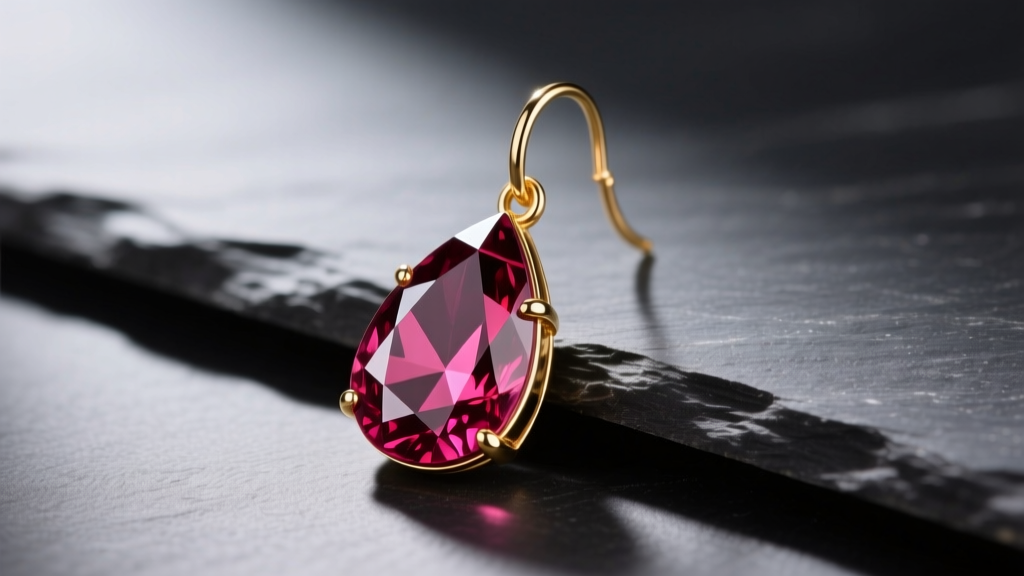
Garnet dangle earrings represent a unique intersection of gemological brilliance and kinetic jewelry design. Unlike static studs or rigid hoops, dangle earrings rely on continuous movement to catch and refract light. This kinetic energy transforms the deep, saturated hues of garnet into a dynamic visual display. However, the very movement that makes garnet dangles so captivating also introduces specific mechanical stresses and gemological vulnerabilities that buyers and collectors must understand. As of 2026, advancements in precision casting and gem cutting have elevated the standards for these pieces, but the fundamental physics of a swinging gemstone remain unchanged.
To evaluate high-end garnet dangles, one must look beyond basic color grading and scrutinize the articulation points, wire tensile strength, and the specific mineralogical variety of the garnet in question. This technical deep dive explores the structural and gemological parameters that dictate the longevity, brilliance, and overall quality of garnet drop and dangle earrings.
The Gemological Profile of Garnet in Kinetic Settings
The term 'garnet' does not refer to a single mineral, but rather a complex group of silicate minerals that share a common crystal structure but vary in chemical composition. According to the Gemological Institute of America (GIA), this variation results in a wide spectrum of physical properties that directly impact how the stone behaves when set in a kinetic dangle mounting.
Garnets possess a Mohs hardness ranging from 6.5 to 7.5, depending on the specific variety. While this makes them suitable for everyday wear, they lack true cleavage. Instead, garnets exhibit a conchoidal to uneven fracture. In the context of dangle earrings, this is a critical detail. Because dangles swing freely, the gemstone's girdle (the outer edge) is highly susceptible to impact against hard surfaces. A sharp blow to the girdle of a garnet will not cause it to split along a cleavage plane like a diamond or topaz; instead, it will chip or crater. Therefore, expert jewelers often recommend settings that protect the girdle, such as semi-bezels or V-prongs, especially for longer dangle silhouettes that extend below the earlobe.
Evaluating Garnet Varieties for Dangle Silhouettes
Not all garnets are created equal. The refractive index (RI) and specific gravity (SG) of the stone will dictate both its visual performance in motion and the physical weight load placed on the earring's articulation mechanism.
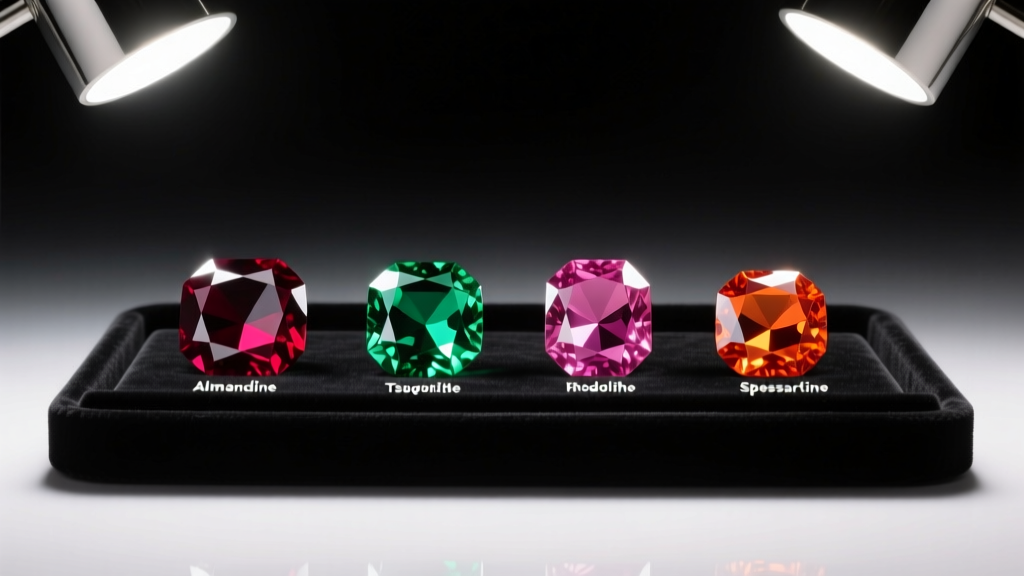
| Variety | Chemical Base | Refractive Index | Mohs Hardness | Kinetic Suitability |
|---|---|---|---|---|
| Almandine | Iron-Aluminum | 1.790 | 7.0 - 7.5 | High durability, but dark tone requires precise cutting to avoid a 'dead' look in low-light motion. |
| Pyrope | Magnesium-Aluminum | 1.714 - 1.742 | 7.0 - 7.5 | Classic blood-red; excellent light return in teardrop cuts. |
| Rhodolite | Pyrope-Almandine Mix | 1.760 | 7.0 - 7.5 | Superior brilliance and purplish-red hue; the industry standard for high-end dangles. |
| Tsavorite | Calcium-Aluminum | 1.740 | 7.0 - 7.5 | Rare green grossular; highly included, requires protective bezel settings in kinetic mounts. |
| Spessartine | Manganese-Aluminum | 1.790 - 1.815 | 6.5 - 7.5 | Vibrant orange; slightly softer, prone to surface abrasion if dangles tangle in hair. |
For dangle earrings, Rhodolite and Spessartine are often preferred by master jewelers. Their higher refractive indices ensure that even when the earring swings away from direct light sources, the stone retains internal fire and brilliance. Tsavorite, while breathtaking, is often heavily included and commands such a high price per carat that the risk of girdle chipping in a free-swinging dangle makes it a less practical choice unless heavily protected by a custom bezel.
Structural Mechanics: Wire, Hinges, and Jump Rings
The failure point of most poorly manufactured drop earrings is not the gemstone, but the articulation hardware. The connection between the ear wire and the garnet charm must withstand thousands of micro-movements without suffering from metal fatigue.
Wire Gauge and Tensile Strength
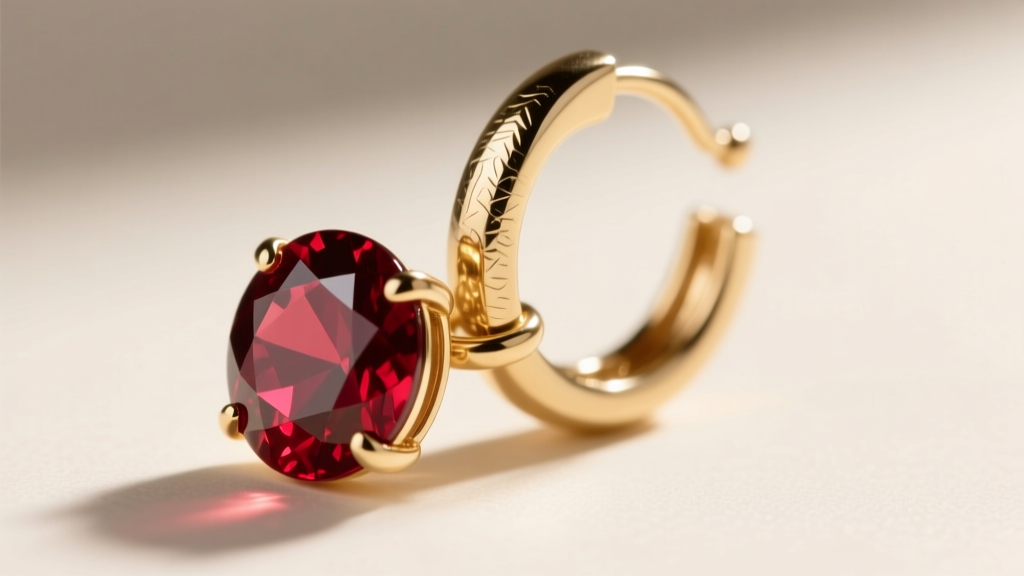
The main ear wire (whether a French wire or leverback) should ideally be crafted from 20-gauge wire. This thickness provides the necessary rigidity to support the weight of a 3-to-5-carat garnet teardrop without bending out of shape when inserted into the ear piercing. However, the jump ring—the small circular link that connects the ear wire to the garnet setting—must be thinner to allow for fluid articulation. A 22-gauge or 24-gauge jump ring is standard.
Critically, this jump ring must be work-hardened. Soft, unhardened 22-gauge wire will quickly ovalize and snap under the pendulum-like stress of a heavy garnet dangle. Expert manufacturers use tumbling or specialized drawing processes to increase the tensile strength of these micro-components.
Failure Modes in Dangle Articulations
According to structural analyses documented in the Mindat.org mineral database regarding jewelry stress testing, the primary failure modes in dangle earrings include:
- Jump Ring Gap Expansion: Over time, the microscopic gap in a soldered-open jump ring can widen, allowing the garnet charm to detach and fall. Laser-welded or fully soldered jump rings are mandatory for stones over 2 carats.
- Leverback Hinge Fatigue: Leverback earrings feature a hinged closure. If the hinge pin is cast rather than mechanically set, repeated opening and closing will cause the cast metal to snap. Forged hinges with steel or high-carat gold pins are vastly superior.
- French Wire Unraveling: The curved 'fishhook' wire can slowly straighten out over years of wear. High-quality French wires are tempered to retain their memory and curvature.
Metallurgical Pairings and Prong Tension
The metal chosen to cradle the garnet must balance aesthetic warmth with mechanical grip. Because garnets have a high specific gravity (ranging from 3.5 to 4.3), they are physically heavy for their size. A 4-carat rhodolite garnet will exert significantly more downward force on a prong setting than a 4-carat diamond.
14k vs. 18k Gold: While 18k gold offers a richer, warmer color that beautifully complements the deep reds of pyrope and almandine, it is a softer alloy. For heavy garnet dangles, 14k gold is often the technically superior choice for the setting head. The higher alloy content (copper, silver, zinc) increases the yield strength of the prongs, ensuring they do not bend backward and release the stone during kinetic movement.
Platinum: For high-value tsavorite or demantoid garnet dangles, platinum is the ultimate choice. Platinum's unique property of 'galling'—where the metal displaces rather than flakes away when scratched—means that prongs will not wear thin over decades of friction. Furthermore, platinum's natural white luster maximizes the color contrast of green garnets without the need for rhodium plating, which inevitably wears off at the high-friction articulation points of dangle earrings.
Expert Insight: Never rely on standard four-prong settings for large, elongated garnet briolettes in dangle designs. The kinetic swinging creates lateral torque that can easily snap a thin prong. Opt for a capped bail or a drilled-top setting with a reinforced wire wrap to distribute the mechanical load evenly.
Care, Ultrasonic Risks, and Maintenance
Maintaining the brilliance of garnet dangle earrings requires an understanding of their internal chemistry. Many commercial-grade almandine and pyrope garnets contain microscopic internal fractures or liquid inclusions.
The Ultrasonic Danger: Never place garnet earrings in an ultrasonic cleaner. The high-frequency acoustic cavitation bubbles generated by these machines can cause catastrophic shattering in included garnets. The vibrations will rapidly expand existing micro-fractures, effectively turning a beautiful teardrop into cloudy gravel. Furthermore, the harsh chemical solutions used in some ultrasonic baths can degrade the polish on softer spessartine varieties.
Safe Cleaning Protocol: To restore the light return of your garnet dangles, prepare a solution of lukewarm distilled water and a few drops of pH-neutral dish soap. Use a ultra-soft, baby-hair brush to gently agitate the pavilion (the bottom facets) of the stone, where skin oils and cosmetics accumulate. Because dangle earrings swing against the neck and hair, they are particularly prone to collecting hairspray and sebum, which drastically reduces the stone's refractive performance. Rinse with distilled water and dry with a lint-free microfiber cloth, ensuring you do not snag the delicate jump rings during the wiping process.
By understanding the precise gemological traits and mechanical requirements of garnet dangle earrings, collectors can invest in pieces that are not only visually stunning but structurally engineered to last generations.


