Gay Earrings Explained: History, Myths, and Modern Queer Style
Discover the truth behind the gay earrings myth. Explore the history of queer ear codes and find modern, expressive earring styles for today.


If you have recently found yourself searching for "gay earrings," you are likely looking for one of two things: the historical truth behind the infamous left-vs-right ear code, or modern ways to express your queer identity through jewelry. As a beginner navigating the vast world of earrings, it is easy to stumble upon outdated internet forums and decades-old urban legends. The truth is that the jewelry landscape has evolved dramatically. Today, queer expression in jewelry is less about secret geographical codes on your earlobes and more about intentional symbolism, material choices, and breaking traditional gender binaries.
In this comprehensive guide, we will debunk the historical myths surrounding the so-called "gay earring," explore how queer coding in jewelry has evolved, and provide you with a highly specific, actionable framework for choosing earrings that authentically represent your identity in the modern era.
The History of the "Gay Earring" Code
To understand the search term, we have to look back to the 1970s and 1980s. During an era when LGBTQ+ individuals faced severe legal and social persecution, subtle signaling was a matter of safety and community building. Alongside the "hanky code" (where colored bandanas in specific back pockets indicated sexual preferences), an ear-piercing code emerged in Western pop culture. The prevailing urban legend dictated that a piercing in the left ear meant a man was heterosexual, while a piercing in the right ear signaled that he was gay. This was often summarized by the harmful, outdated rhyme: "Left is right, and right is wrong."
While this code was recognized in certain subcultures and rural areas, it was never a universal rule. Many gay men pierced both ears, just as many straight men eventually pierced their right ears simply as a rebellious fashion statement. By the time the 1990s rolled around, the mainstreaming of men's jewelry—driven by pop stars, athletes, and grunge culture—completely diluted the code. According to cultural historians and archives documented by publications like Out Magazine, the idea of a strictly coded "gay ear" was largely a myth perpetuated by mainstream media trying to categorize queer subcultures into easily digestible tropes.
Why the Left vs. Right Ear Rule is Dead
If you are stepping into the jewelry world today, you can completely discard the left-vs-right rule. In contemporary fashion, the placement of an earring has zero correlation with sexual orientation or gender identity. Men, women, and non-binary individuals pierce both ears, single ears, and various cartilage points based entirely on aesthetic preference, facial symmetry, and personal comfort.
Rather than hiding behind an ambiguous ear placement, modern queer expression relies on intentionality. Whether you are looking for subtle nods to the community or bold, gender-subverting statements, the focus has shifted to the design of the jewelry itself. Organizations like GLAAD continually highlight how modern LGBTQ+ visibility is about living authentically out in the open, which translates directly into how we accessorize. You no longer need a secret code; you have access to a massive market of designers creating pieces specifically for queer aesthetics.
Modern Queer-Coded Earrings: What to Wear Now
For beginners looking to explore queer-coded jewelry, the market offers incredible variety. Here are the three primary categories of expressive earrings that resonate with the LGBTQ+ community today.
1. Subtle Symbolism and Enamel Details
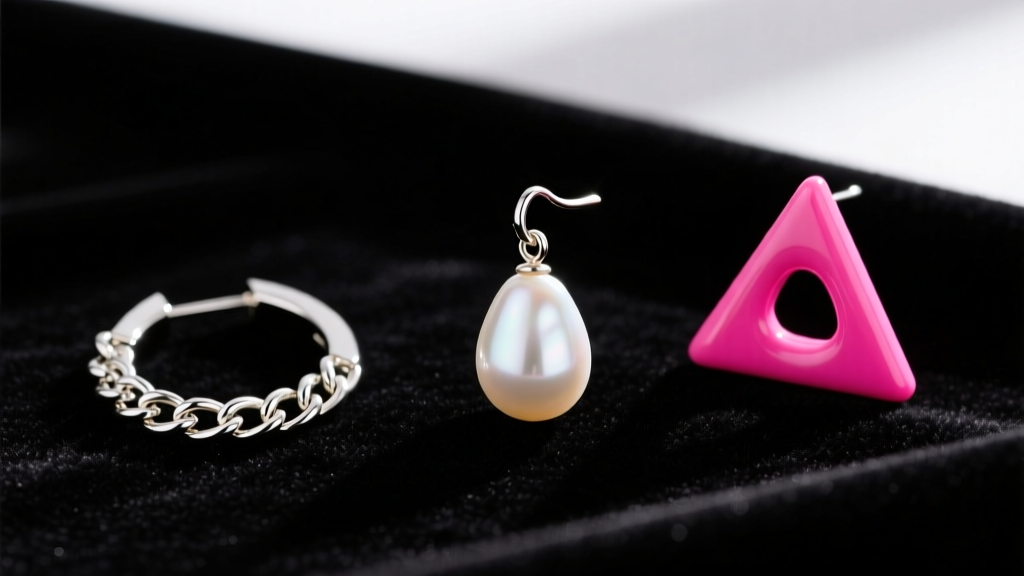
For those who want to signal their identity to those "in the know" without wearing a massive rainbow flag, subtle enamel studs are the perfect entry point. Look for 18-gauge or 20-gauge flat-back labret studs featuring micro-enamel details. Popular symbols include the Lambda (a historical symbol of gay liberation), the Pink Triangle (reclaimed from its dark WWII history into a badge of pride and remembrance), or subtle interlocking Mars and Venus symbols. These designs are typically no larger than 3mm to 4mm, making them perfect for the helix, tragus, or standard lobe. They offer a quiet, sophisticated nod to queer history.
2. The Pearl and Chain Subversion
Historically, pearls were strictly coded as hyper-feminine. In recent years, the queer community—particularly gay men and non-binary folks—has aggressively reclaimed the pearl as a tool for gender subversion. A single, high-quality freshwater pearl drop earring worn with a masculine or androgynous wardrobe creates a striking visual tension. Similarly, delicate silver or gold chain hoops that drape down to the jawline offer a fluid, kinetic movement that defies rigid gender norms. When shopping for pearls, look for "baroque" or irregular shapes, which feel more organic and less traditional than perfectly round, classic pearls.
3. Industrial and Architectural Hardware
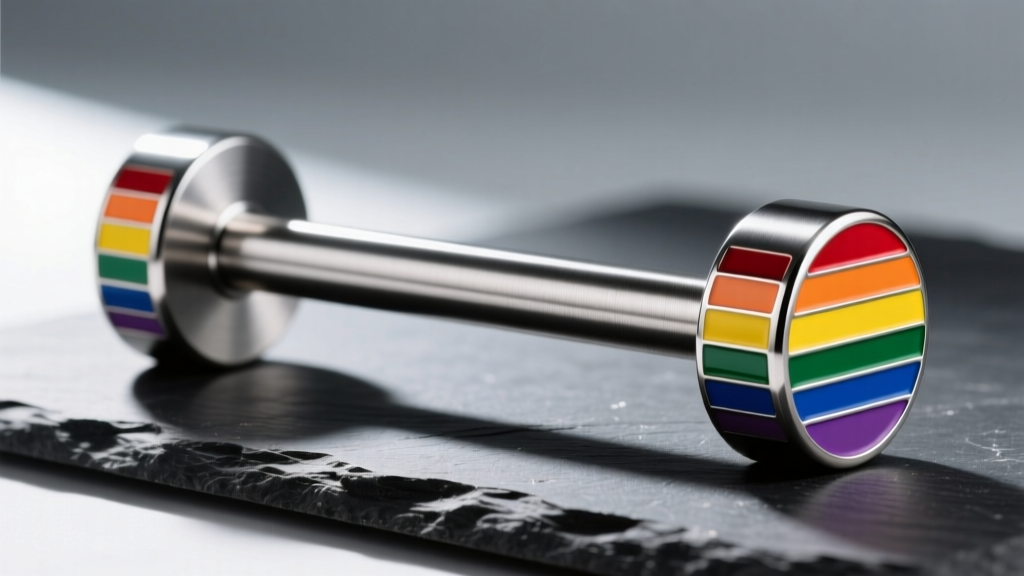
On the other end of the spectrum is the industrial, cyberpunk, and leather-adjacent aesthetic. This involves heavier, architectural pieces like industrial barbells (which span across the upper ear cartilage), septum-style clickers adapted for the daith piercing, and matte black titanium cuffs. This style draws heavily from queer club culture, BDSM aesthetics, and the punk movements of the 1980s. It is bold, unapologetic, and highly visible.
A Beginner’s Guide to Sizing, Anatomy, and Materials
Choosing the right earring is not just about aesthetics; it is about anatomy and material science. Many beginners make the mistake of buying cheap, mass-produced jewelry that leads to contact dermatitis or piercing rejection. Here is the technical data you need to know before making a purchase.
Understanding Gauge (Thickness):
Standard earlobe piercings done with a gun are usually 20-gauge (0.81mm) or 18-gauge (1.02mm). However, professional needle piercings, especially in the cartilage (helix, conch, industrial), are typically done at 16-gauge (1.29mm) or 14-gauge (1.60mm). Always verify your piercing gauge before buying jewelry, as forcing a 16g post into an 18g hole will cause micro-tearing and scar tissue buildup.
The Material Hierarchy:
Avoid the term "surgical steel" at all costs. It is a largely unregulated marketing term, and many cheap steel alloys contain nickel, which is the number one cause of metal allergies. Instead, invest in ASTM F-136 Implant-Grade Titanium. This is the exact same metal used in medical joint replacements. It is completely nickel-free, lightweight, and will not react with your body’s chemistry. For those wanting precious metals, opt for solid 14k or 18k gold (yellow, white, or rose), but avoid gold-plated jewelry, as the plating will eventually wear off and expose base metals to your piercing channel.
| Material | Best For | Common Gauges | Price Range (Per Piece) |
|---|---|---|---|
| ASTM F-136 Titanium | Fresh piercings, sensitive skin, daily wear | 18g, 16g, 14g | $25 - $65 |
| Solid 14k / 18k Gold | Healed piercings, luxury aesthetics | 20g, 18g, 16g | $80 - $300+ |
| Niobium | Hypoallergenic alternative, anodized colors | 16g, 14g | $30 - $70 |
| "Surgical" Steel | Healed lobes only (Avoid if nickel allergic) | 20g, 18g | $10 - $25 |
Styling Framework: Matching Earrings to Your Vibe
To help you narrow down your choices, use this quick styling framework based on popular queer aesthetics. Match your jewelry to the energy you want to project:
- The Soft Butch / Androgynous Minimalist: Opt for small, geometric titanium studs, matte black huggie hoops, or a single, subtle baroque pearl drop. Keep the metals consistent (all silver-toned or all gold-toned) for a curated, intentional look.
- The High-Femme / Camp Maximalist: Embrace oversized rhinestone chandeliers, dramatic resin dangles, and ear cuffs that wrap around the entire auricle. Mix metals and don't be afraid of heavy, theatrical movement.
- The Cyber-Queer / Industrial Edge: Focus on the cartilage. Stack multiple 16g titanium flat-back labrets with opal or onyx inlays along your helix. Add an industrial barbell and a seamless black niobium ring in the daith.
- The Subtle Signaler: Choose 20g micro-studs featuring the lambda, a tiny six-stripe pride enamel flag, or an interlocking symbol. Place them in the upper lobe or tragus where they catch the light only when someone is standing close to you.
Final Thoughts: Authenticity Over Codes
The concept of "gay earrings" as a strict, geographical rule is a relic of a bygone era. Today, the jewelry you choose to wear is a canvas for your personal narrative, your aesthetic preferences, and your unique place within the LGBTQ+ spectrum. Whether you are piercing your ears for the first time and need safe, implant-grade titanium, or you are curating a stack of subtle, historically significant enamel studs, the most important rule is authenticity. Wear what makes you feel powerful, visible, and entirely yourself. The code is no longer about which ear you pierce; it is about the confidence with which you wear it.


