Gay Men and Earrings: A Step-by-Step Ear Curation Guide
Discover the modern rules for gay men and earrings. Follow our step-by-step guide to curate a masculine, intentional ear layout beyond outdated myths.


When discussing gay men and earrings, the conversation historically defaults to outdated cultural tropes and clandestine signaling. For decades, the placement of a single earring served as a quiet identifier in spaces where queer visibility was dangerous. However, as we navigate the fashion landscape of 2026, the rigid "left vs. right" ear codes are entirely obsolete. Today, queer men are leading the charge in intentional, high-end ear curations that prioritize anatomy, premium metallurgy, and personal aesthetics over archaic rules.
This step-by-step guide will walk you through building a sophisticated ear curation. We will cover anatomical mapping, material grades, jewelry mechanics, and aftercare protocols, ensuring your piercings are as structurally sound as they are visually striking.
The Evolution of the "Gay Ear" Myth
In the 1970s and 1980s, the right-ear piercing became a recognized subcultural marker among gay men, translating the "hanky code" into jewelry. According to archives from the GLBT Historical Society, these subtle visual cues were essential for community building before mainstream acceptance. Today, bilateral symmetry, asymmetrical constellations, and heavy cartilage stacking are embraced across all demographics. Modern queer style focuses on intentional curation—treating the ear as a canvas for fine jewelry rather than a billboard for sexual orientation.
Step 1: Mapping Your Ear Anatomy
Before purchasing jewelry, you must understand your unique ear topography. A professional piercer will assess your folds, ridges, and flat spaces to determine which placements will heal properly. Here are the standard placements and their corresponding gauge sizes:
- Standard Lobe: Usually pierced at 18g (1.0mm) or 16g (1.2mm). 16g is highly recommended for men to prevent the "cheese-cutter effect," where thin wires migrate through the tissue under the weight of heavier jewelry.
- Helix (Outer Cartilage): Standardized at 16g (1.2mm). Ideal for small hoops or flat-back studs.
- Tragus (Small flap over the ear canal): Typically 16g (1.2mm). Excellent for a subtle, masculine flash of metal.
- Conch (Inner cup): Often pierced at 14g (1.6mm) or 16g (1.2mm) to accommodate larger studs or conch hoops that hug the inner ear ridge.
Step 2: Selecting Metals for Healing and Longevity
The most common mistake men make when starting a curation is buying cheap, mystery-metal jewelry from mall kiosks. For fresh piercings and long-term wear, metallurgy is non-negotiable. The Association of Professional Piercers (APP) strictly recommends specific implant-grade materials to prevent contact dermatitis and rejection.
| Material | Grade Standard | Nickel-Free? | Price Range (Per Piece) | Best Application |
|---|---|---|---|---|
| Titanium | ASTM F136 Implant-Grade | Yes | $25 - $75 | Initial piercings, highly sensitive skin, everyday wear |
| Gold | 14k or 18k Solid (Nickel-free alloy) | Yes | $90 - $350+ | Healed curations, luxury aesthetics, statement pieces |
| Surgical Steel | 316L or 316LVM | No (Contains 8-12% Nickel) | $10 - $30 | Strictly avoid for fresh piercings; risky for healed ears |
Expert Insight: Always look for the "ASTM F136" stamp when buying titanium. "Surgical steel" is a marketing term that often harbors nickel, which causes the itchy, flaky irritation bumps commonly mistaken for infections.
Step 3: Choosing the Right Jewelry Mechanics
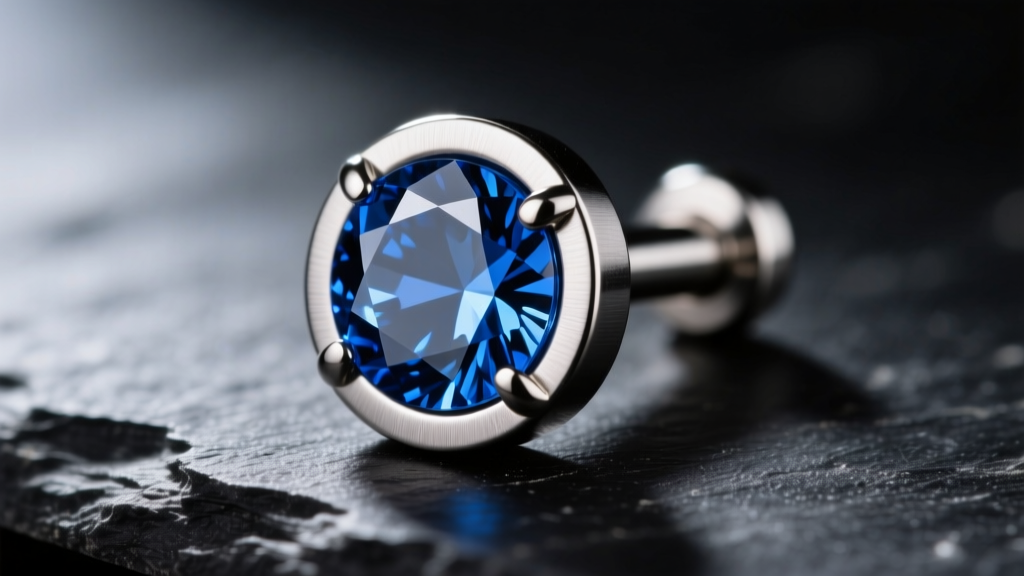
For men's ear curations, the mechanics of the earring are just as important as the aesthetic. Traditional butterfly-back earrings are a trap: they harbor bacteria, dig into the neck while sleeping, and easily fall out. Instead, upgrade to threadless (push-pin) flat-back labrets.
Why Threadless Flat-Backs?
Brands like BVLA, Anatometal, and Maria Tash utilize a two-piece system. The post is a flat titanium disc that sits flush against the back of the ear, making it completely comfortable for side-sleepers. The decorative end features a slightly bent pin that snaps securely into the hollow post via tension. This eliminates the cross-threading damage caused by internally threaded jewelry and ensures the gemstone never spins or falls out.
Step 4: Building a Cohesive Layout
A curated ear should look deliberate, not accidental. Follow these structural design rules to achieve a masculine, refined aesthetic:
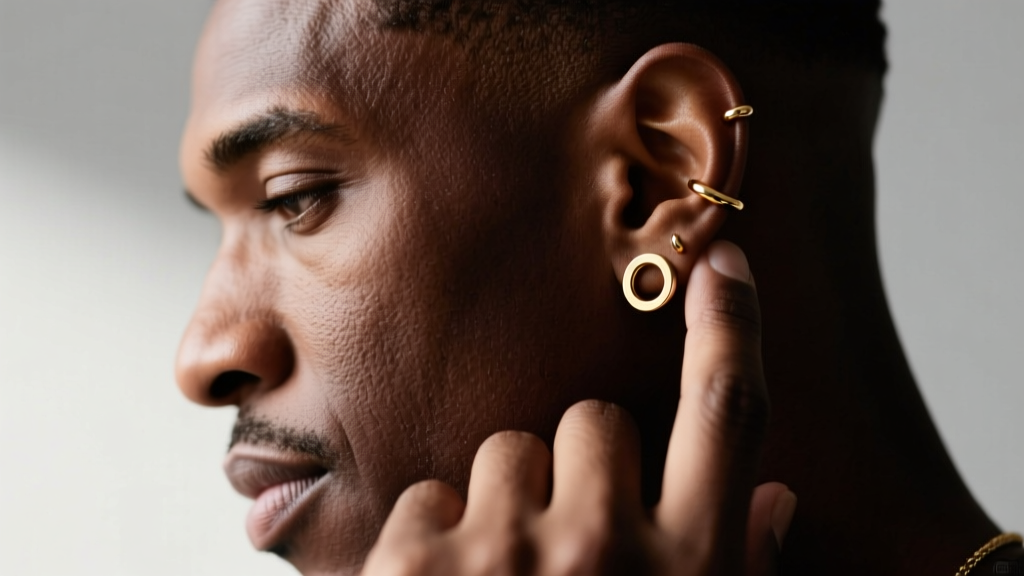
- The Rule of Odds: Groupings of three or five piercings are visually more dynamic than even numbers. A classic masculine layout includes a 16g lobe stud, a mid-helix hoop, and a subtle tragus stud.
- Balance the Weight: If you wear a heavier, ornate piece in the conch, balance it with a minimalist, bezel-set gem in the upper helix. Avoid overcrowding; the skin needs physical space to breathe and prevent jewelry from rubbing against adjacent piercings.
- Color Story Consistency: Stick to one metal tone per ear. Mixing yellow gold, white gold, and titanium in the same ear often looks chaotic. Choose a metal that complements your skin's undertone—yellow gold for warm undertones, and white gold or titanium for cool undertones.
Step 5: The Aftercare and Maintenance Protocol
Cartilage piercings are notoriously temperamental. Healing takes anywhere from 6 to 12 months. To ensure your curation survives the healing phase, adopt the LITHA method: Leave It The Hell Alone.
Daily Cleaning Routine
- Spray the front and back of the piercing twice daily with sterile saline wound wash (0.9% sodium chloride with no additives). NeilMed Piercing Aftercare is the industry gold standard.
- Gently dry the area with a non-woven gauze pad. Avoid cotton swabs, as the micro-fibers can wrap around the jewelry post and cause severe irritation.
- Never rotate or twist the jewelry. This tears the delicate fistula (the skin tube forming around the jewelry) and introduces bacteria.
Troubleshooting Irritation Bumps
If you develop a small, flesh-colored bump near the piercing hole, it is likely an irritation bump, not a keloid. This is usually caused by sleeping on the ear, improper jewelry angles, or harsh chemicals like tea tree oil. Switch to a travel pillow to keep pressure off the ear, ensure your piercer used a flat-back post cut to the exact millimeter of your swelling, and stick strictly to sterile saline.
Ultimately, the modern approach to gay men and earrings is about claiming your space with high-quality, anatomically correct fine jewelry. By prioritizing implant-grade metals, threadless mechanics, and intentional spacing, you elevate your ear curation from a simple accessory to a masterclass in personal style.


