The Beginner's Guide to Genuine Turquoise Heart Earrings
Learn how to choose, style, and care for genuine turquoise heart earrings. Discover metal pairings, gauge sizes, and how to spot dyed stones in our guide.

The Anatomy of a Turquoise Heart Earring
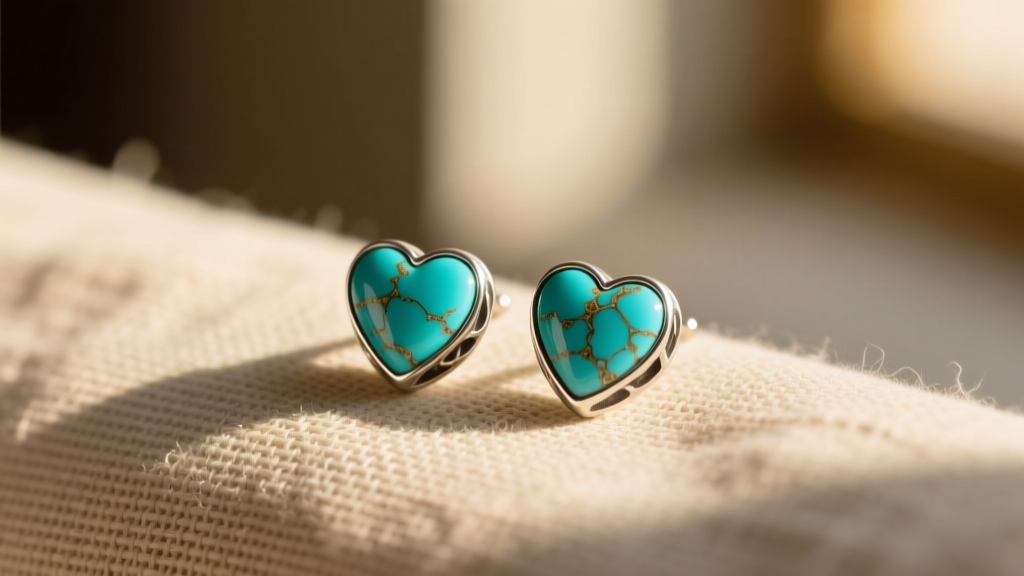
Turquoise has captivated jewelry lovers for millennia, prized for its striking blue-to-green hues and rich cultural history. When it comes to turquoise heart earrings, beginners often assume they are purchasing a faceted gemstone. However, understanding the mineralogy of turquoise is your first step toward making an informed purchase. Turquoise is an opaque, microcrystalline mineral. Because it lacks the refractive index and clarity required for faceting, genuine turquoise is almost exclusively cut en cabochon (smooth and domed) or carved. Therefore, a heart-shaped turquoise earring will feature either a smoothly domed cabochon heart or a flat-carved heart, never a faceted one. If you encounter a highly sparkly, faceted heart earring marketed as turquoise, you are likely looking at dyed quartz, glass, or a synthetic spinel.
According to the Gemological Institute of America (GIA), turquoise is a hydrous phosphate of copper and aluminum. The copper content is responsible for the highly sought-after sky blue tones, while higher concentrations of iron shift the color toward green. This unique chemical makeup not only dictates the stone's beautiful color palette but also its physical vulnerabilities, which heavily influences how heart-shaped earrings must be set and worn.
Identifying Real Turquoise vs. Treated and Dyed Imitations
The turquoise market is heavily saturated with treated stones and outright imitations. Because natural, untreated turquoise is relatively soft and porous, a significant portion of the market undergoes stabilization. As a beginner, it is crucial to understand the terminology used by jewelers and gemologists to describe these treatments.
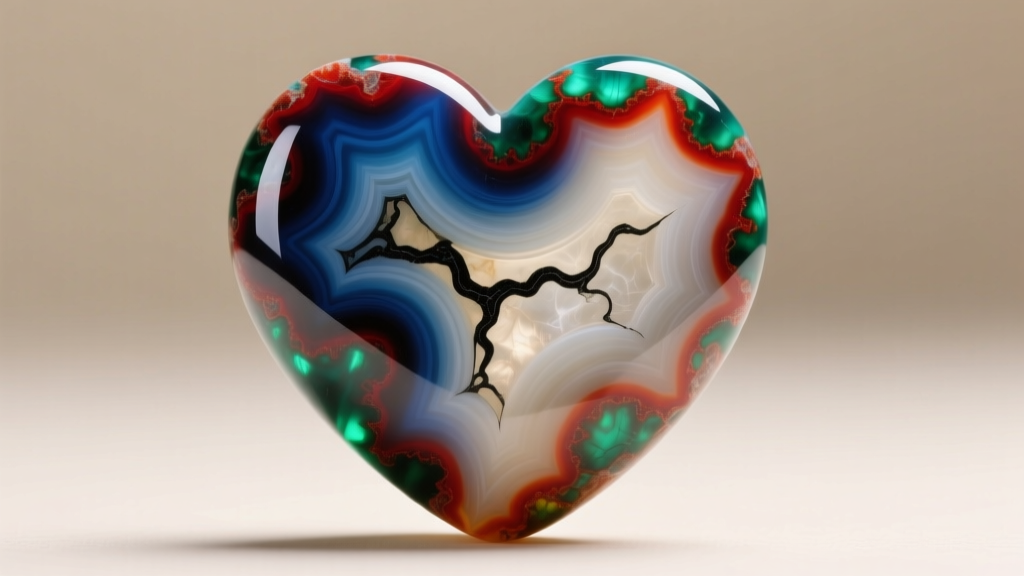
The most common imitation you will encounter in the affordable jewelry market is dyed howlite or magnesite. Howlite is a naturally white, heavily veined borate mineral that is highly porous, making it a perfect sponge for synthetic blue dyes. When carved into a heart shape, dyed howlite can easily trick the untrained eye. However, under magnification, you can often spot concentrated dye pooling in the natural crevices and veining of the stone, and the color may appear unnaturally uniform or neon compared to the complex matrix of genuine turquoise.
Comparing Turquoise Treatments and Imitations
| Category | Description | Durability & Care | Typical Price Range (per pair) |
|---|---|---|---|
| Natural (Untreated) | Completely unaltered, cut and polished directly from the rough. | Highly porous; vulnerable to oils and chemicals. Mohs 5-6. | $150 - $500+ |
| Stabilized | Infused with a clear epoxy resin under pressure to harden the stone. | Excellent durability; color is locked in. Industry standard. | $40 - $150 |
| Dyed / Color-Treated | Chalky turquoise or howlite infused with blue dyes to enhance color. | Prone to fading or color bleeding if exposed to acetone/alcohol. | $15 - $45 |
| Reconstituted | Turquoise dust and chalk bound together with resins and molded. | Very durable but lacks the natural matrix and value of solid stone. | $10 - $30 |
Metal Pairings and Setting Styles
The metal you choose for your turquoise heart earrings dramatically impacts both the aesthetic and the longevity of the piece. Turquoise has a rich history in Southwestern and bohemian jewelry, making sterling silver the most traditional and visually harmonious pairing. However, modern jewelry design has embraced gold and rose gold for a more contemporary, elevated look.
Sterling Silver vs. Gold Vermeil
When purchasing silver earrings, always look for the "925" stamp, indicating 92.5% pure silver. Because sterling silver tarnishes when exposed to sulfur and moisture, many jewelers apply a rhodium plating. While rhodium prevents tarnish, some turquoise purists prefer unrhodiumed, oxidized silver, as the darkened patina beautifully complements the earthy matrix (the host rock veins) within the turquoise.
If you prefer gold, be wary of cheap "gold-plated" brass, which can cause contact dermatitis and quickly wear off. Instead, look for Gold Vermeil. According to the Federal Trade Commission (FTC) Jewelry Guides, vermeil must consist of a sterling silver base coated with gold that is at least 10 karat fineness and a minimum of 2.5 microns thick. This ensures a hypoallergenic base and a durable gold layer that will not immediately flake away from the friction of daily wear.
Why Bezel Settings are Non-Negotiable
Turquoise ranks between 5 and 6 on the Mohs scale of hardness, making it significantly softer than diamonds (10) or sapphires (9). Because of this relative softness, turquoise is highly susceptible to chipping at the edges. Bezel settings—where a continuous rim of metal wraps entirely around the perimeter of the heart-shaped cabochon—are the absolute best choice for turquoise. Prong settings, which leave the edges of the stone exposed and rely on pressure points, are a major red flag for soft, opaque cabochons. A well-crafted bezel not only protects the delicate curves of the heart shape but also provides a secure grip that prevents the stone from popping out if the earring is snagged on clothing.
Gauge Sizes and Piercing Placements
Understanding earring gauge (the thickness of the post or wire) is essential for comfort and piercing health, especially if you plan to wear your turquoise heart earrings in secondary piercings or cartilage.
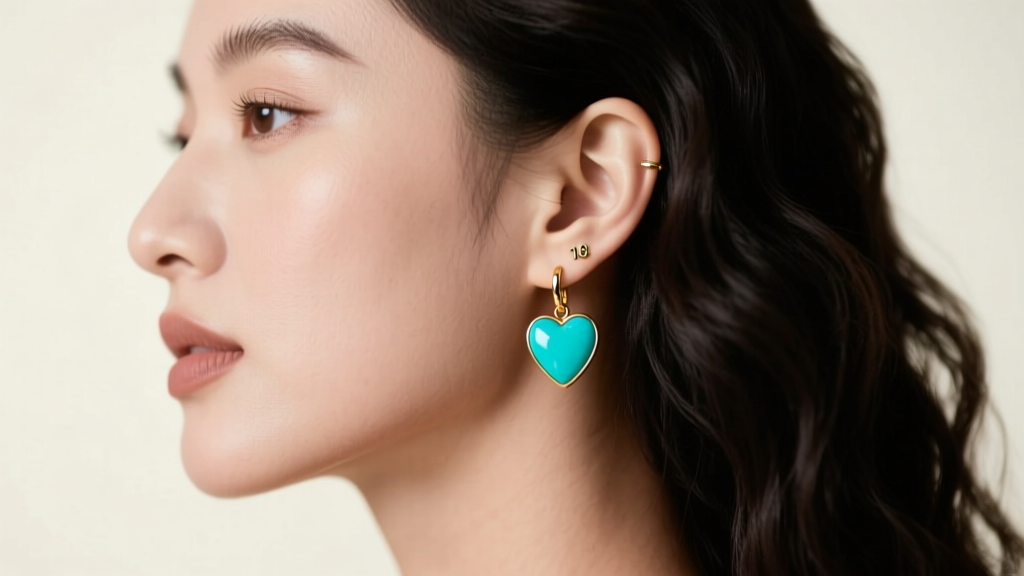
- Standard Lobe Piercings (20g to 18g): Most commercial stud and drop earrings use a 20-gauge (0.81mm) or 18-gauge (1.02mm) post. If your turquoise heart earrings are heavy drops, an 18-gauge wire is preferable to prevent the earring from drooping or stretching the lobe over time.
- Cartilage and Helix Piercings (16g): If you are wearing a small turquoise heart stud in an upper cartilage piercing, you will likely need a 16-gauge (1.29mm) post, which is the standard for professional cartilage piercings. Inserting a thinner 20g post into a healed 16g cartilage hole can cause irritation bumps and allow the piercing channel to shrink.
- Threadless vs. Internally Threaded: For high-quality body jewelry, seek out internally threaded or threadless (push-fit) posts. Externally threaded posts (where the screw is on the post itself) can tear the delicate fistula of the piercing channel during insertion.
Styling Heart Earrings for Different Face Shapes
The heart is a universally flattering motif, but the scale and drop of the earring should be adjusted based on your facial geometry to achieve the most balanced look.
Round Faces: To create the illusion of length, avoid wide, chunky heart studs that sit flush against the lobe. Instead, opt for turquoise heart drop or dangle earrings. The vertical movement draws the eye downward, elongating the jawline and cheekbones.
Square Faces: Angular jawlines are beautifully softened by the curved, organic shape of a cabochon heart. Medium-sized bezel-set heart studs in oxidized silver provide a softening contrast to sharp facial angles without adding unnecessary bulk.
Heart-Shaped Faces: With a wider forehead and a narrow chin, you want to draw attention to the lower half of the face. Delicate turquoise heart huggies or small studs keep the visual weight balanced, preventing the upper half of the face from looking top-heavy.
Caring for Porous Gemstones
The most critical mistake beginners make with turquoise jewelry is treating it like a diamond or sapphire. Turquoise is highly porous. It acts like a microscopic sponge, readily absorbing oils, lotions, perfumes, and household chemicals. When turquoise absorbs skin oils and cosmetics over time, it can undergo a permanent color shift, often turning from a bright sky blue to a muddy green or brown.
To maintain the vibrant color of your turquoise heart earrings, always follow the "last on, first off" rule. Put your earrings on after applying hairspray, perfume, and makeup, and remove them before washing your face or showering. Never use ultrasonic jewelry cleaners or steam cleaners on turquoise; the high-frequency vibrations can fracture the stone, and the heat can melt the resins used in stabilized stones. For routine cleaning, simply wipe the cabochon gently with a soft, slightly damp microfiber cloth, and dry it immediately. Store your earrings in a soft pouch away from direct sunlight and harder gemstones that could scratch the surface.
Conclusion
Investing in a pair of genuine turquoise heart earrings is a wonderful way to add a pop of organic color and historical richness to your jewelry collection. By prioritizing bezel settings, understanding the difference between stabilized and dyed stones, and respecting the porosity of the gem, you can ensure your earrings remain vibrant and secure for years to come. Whether you choose a classic sterling silver stud for your daily lobe piercing or a gold vermeil drop for a night out, the timeless appeal of the turquoise heart is an enduring staple in any well-curated jewelry box.


