Giant Earrings: Best Materials for Lightweight Comfort
Discover the best materials for giant earrings. Compare titanium, aluminum, and hollow gold to maximize comfort and prevent earlobe damage.

The Physics of Giant Earrings: Why Material Density Matters
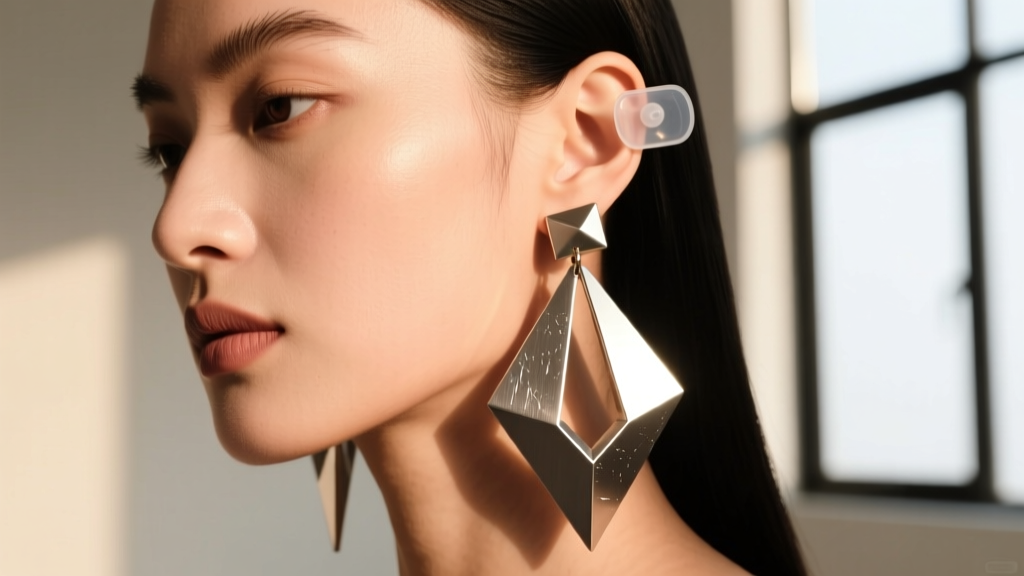
When styling avant-garde or high-fashion looks, giant earrings serve as the ultimate focal point. However, the sheer scale of these statement pieces introduces a significant biomechanical challenge: weight. As we navigate the 2026 jewelry market, designers are pushing the boundaries of oversized silhouettes, making material selection more critical than ever. The primary enemy of the stretched or standard earlobe is the 'cheese-cutter effect.' This occurs when the downward force (mass × gravity) of a heavy earring is concentrated onto the microscopic surface area of a thin earring wire. The resulting pressure slices through the delicate fistula tissue, leading to micro-tears, migration, and permanent lobe stretching.
To combat this, jewelers and wearers must prioritize materials with a low specific gravity (density). By swapping out traditional heavy metals like solid brass or sterling silver for advanced lightweight alternatives, you can maintain the dramatic visual footprint of giant earrings while keeping the actual gram weight comfortably under the 15-gram threshold recommended for prolonged daily wear.
Top Lightweight Metals for Oversized Silhouettes
Not all metals are created equal when it comes to structural integrity and weight. According to the Association of Professional Piercers (APP), biocompatibility and weight are the two most crucial factors for body jewelry. Here is how the top lightweight metals perform in oversized applications.
Implant-Grade Titanium (ASTM F136)
Titanium is the gold standard for lightweight, hypoallergenic jewelry. With a density of 4.43 g/cm³, it is roughly 45% lighter than steel and significantly lighter than solid gold. For giant earrings, titanium offers exceptional tensile strength, meaning thin structural elements (like the wire or internal armatures of a chandelier earring) will not bend or warp under their own weight. Furthermore, titanium can be anodized to produce vibrant, permanent colors without the use of heavy metal platings that could trigger contact dermatitis.
Aerospace-Grade Aluminum
Aluminum is astonishingly light, boasting a density of just 2.70 g/cm³. For massive, sculptural hoops or geometric cuffs that cover the entire ear, aluminum is unparalleled. However, raw aluminum is soft and prone to oxidation, which can leave a harmless but unsightly gray residue on the skin. High-quality aluminum giant earrings must be either hard-anodized or sealed with a jewelry-safe clear epoxy to prevent surface degradation and ensure a smooth, non-porous finish against the skin.
Hollow Electroformed Gold
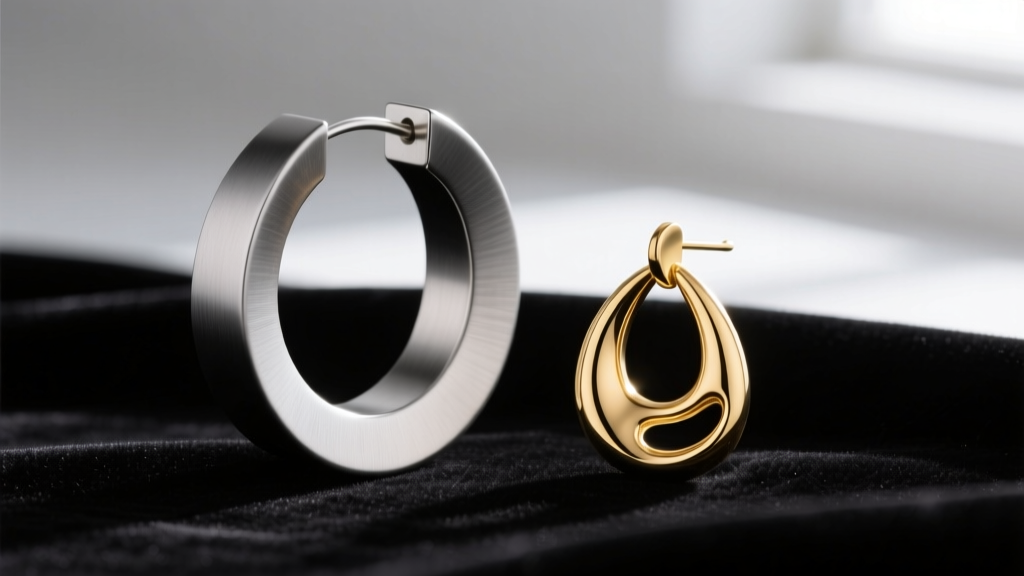
Solid 14k or 18k gold is incredibly dense (ranging from 13 to 15 g/cm³), making solid gold giant earrings unbearably heavy. The 2026 market solution is hollow electroformed gold. This manufacturing process deposits a microscopically thin layer of gold over a wax or resin mold, which is later melted or dissolved away. The result is a giant earring that retains the luxurious luster and intrinsic value of gold but weighs up to 70% less than its solid cast counterpart.
Material Density & Performance Comparison
| Material | Density (g/cm³) | Hypoallergenic | Best Earring Style | Price Range (USD) |
|---|---|---|---|---|
| Aluminum (Anodized) | 2.70 | Yes (if sealed) | Massive sculptural hoops | $30 - $85 |
| Titanium (ASTM F136) | 4.43 | Yes (Implant Grade) | Intricate chandelier drops | $60 - $150 |
| Niobium | 8.57 | Yes | Medium-large seamless rings | $40 - $110 |
| Hollow 14k Gold | ~4.00 (Effective) | Yes | Luxury statement dangles | $250 - $800+ |
| Solid Sterling Silver | 10.49 | Variable (Nickel risk) | Avoid for giant sizes | $50 - $200 |
Non-Metal Alternatives: Acrylic, Resin, and Wood
When metals still prove too heavy for extreme oversized designs, non-metal materials step in. These materials offer incredible visual volume with negligible weight, but they require specific care and manufacturing standards to remain safe for prolonged skin contact.
- Cast Epoxy Resin: Resin allows for massive, translucent, or heavily pigmented geometric shapes. High-grade UV-stabilized resin prevents yellowing over time. However, the earring post must always be a metal insert (preferably titanium); never rely on a resin hook to bear the structural load of the piercing, as resin can snap under sheer stress.
- Acrylic (PMMA): Acrylic is lightweight and cheap, making it popular for festival wear. Be warned: acrylic is micro-porous and can harbor bacteria if scratched. The Gemological Institute of America (GIA) and various dermatological studies note that porous plastics can trap sebum and dead skin cells, leading to localized infections in the fistula. Limit acrylic giant earrings to short-term wear.
- Carved Hardwoods: Woods like ebony, maple, or mahogany are exceptionally light and offer a beautiful organic aesthetic. To be worn safely, wood must be sanded to a glass-like finish and sealed with natural jojoba oil or a biocompatible cyanoacrylate sealant. Unsealed wood will absorb sweat, swell, and eventually crack or harbor mold.
Structural Engineering: How to Wear Giant Earrings Safely
Material is only half the battle; the structural interface between the earring and your anatomy is equally vital. To safely wear giant earrings without causing tissue damage, you must upgrade your hardware and utilize support mechanisms.
Upgrading the Wire Gauge
Standard fashion earrings typically use 20-gauge (0.81mm) or 22-gauge (0.64mm) wires. For any earring exceeding 15 grams, these thin wires act like a blade against the earlobe. You must transition to a 16-gauge (1.2mm) or 14-gauge (1.6mm) wire. This increases the surface area distributing the weight, drastically reducing the localized pressure on the piercing hole. If your piercing is currently stretched to accommodate thinner wires, consult a professional piercer to safely taper the fistula to a thicker gauge.
Utilizing Lobe Support Patches
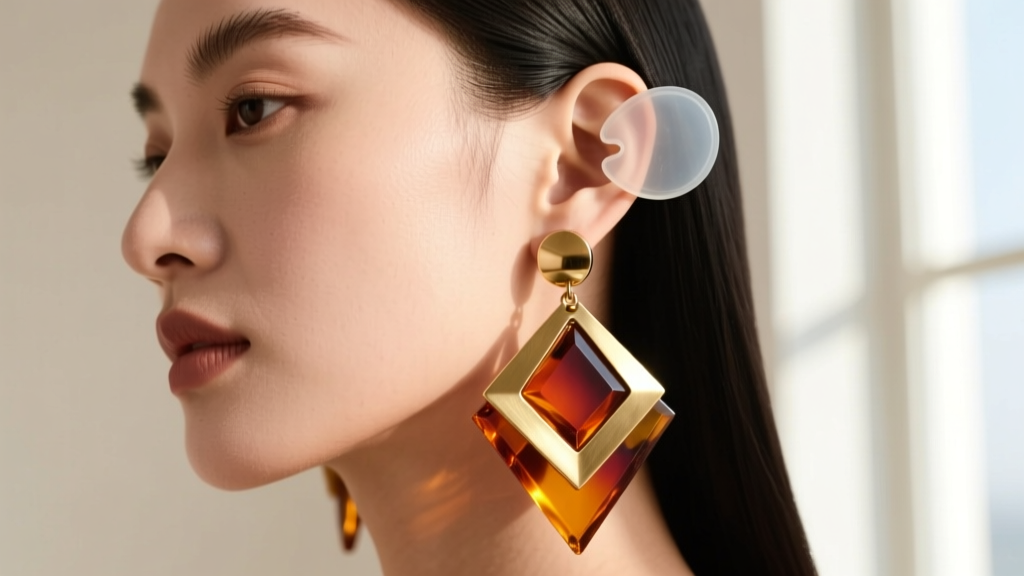
For giant earrings that rely on a French wire (fishhook) design, the downward pull can cause the earring to tilt forward, creating an awkward profile and stressing the back of the piercing hole. Transparent silicone or medical-grade adhesive support patches (such as Lobe Wonder) adhere to the back of the earlobe. They feature a reinforced center hole that distributes the weight of the earring across a 15mm wide area of the earlobe, entirely neutralizing the cheese-cutter effect and keeping the giant earring perfectly perpendicular to the face.
Clutch and Backing Mechanics
Forget standard butterfly push-backs. They offer insufficient friction for heavy pieces and can easily slip off, resulting in a lost earring and a torn lobe. For giant stud-style or drop-style earrings, utilize jumbo silicone disc backs (minimum 10mm diameter) or La Poussière style screw-backs which thread securely onto the earring post, making accidental loss physically impossible.
Final Verdict: Choosing Your Statement Piece
The era of sacrificing comfort for high fashion is over. By understanding the material properties of titanium, anodized aluminum, and hollow gold, you can confidently curate a collection of giant earrings that command attention without compromising your anatomical health. Always prioritize 16-gauge or thicker wires, utilize silicone lobe supports for heavy drops, and ensure any non-metal materials are properly sealed. In 2026, true luxury in statement jewelry is defined not just by visual impact, but by the engineering that makes it effortlessly wearable.


