Butterfly Earring Backs: A Complete Buying Guide & Fit Tips
Discover everything about butterfly earring backs. Learn about material grades, gauge sizing, hygiene tips, and how to choose the right clutch.

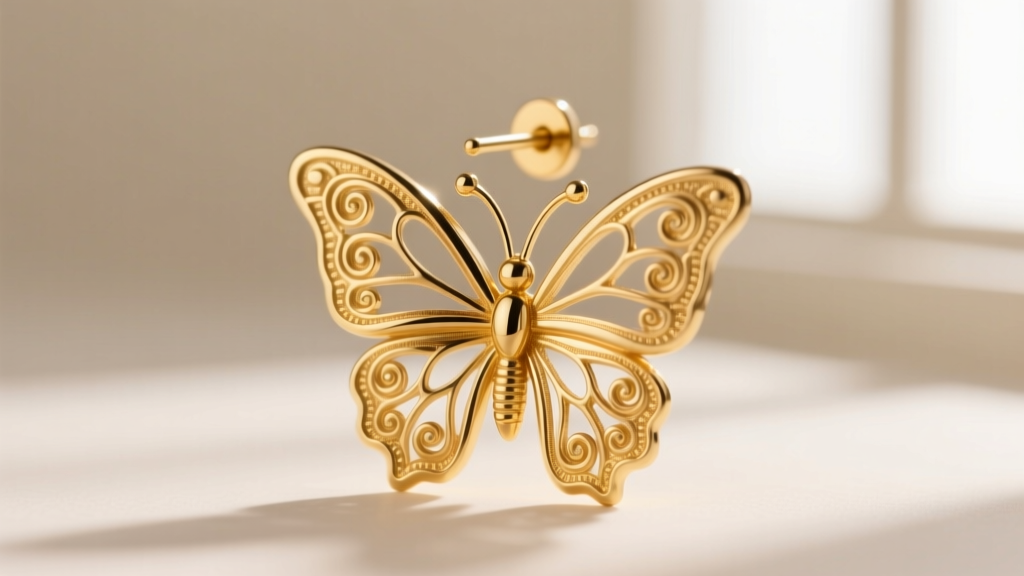
When you purchase a new pair of stud earrings, the focal point is inevitably the gemstone or the precious metal design on the front. Yet, the component that actually secures your investment to your earlobe—the butterfly earring back—is often an afterthought. Also known as push backs, friction backs, or scroll clutches, these tiny mechanical fasteners are the industry standard for lobe and cartilage jewelry. However, not all butterfly earring backs are created equal. A poorly manufactured clutch can lead to lost diamonds, contact dermatitis, and chronic piercing irritation.
In this comprehensive buying guide, we deconstruct the engineering, metallurgy, and sizing nuances of butterfly earring backs. Whether you are replacing lost backs, upgrading from cheap base metals, or seeking hypoallergenic solutions for sensitive piercings, understanding what to look for will fundamentally change how you buy and wear your jewelry.
The Engineering of Friction: How Butterfly Backs Work
The term 'butterfly back' is a colloquialism derived from the visual resemblance of the clutch's dual-loop scrollwork to a butterfly's wings. From an engineering perspective, this component is a friction clutch. It relies entirely on the elastic deformation of metal to maintain tension against the earring post.
The earring post features one or more recessed grooves (notches) near the tip. When you push the butterfly back onto the post, the inner metal tabs of the clutch spread apart. Once these tabs align with the groove, they snap inward, creating a mechanical interference fit. The security of your earring depends on three critical factors:
- Tab Tension: The inherent springiness of the metal alloy used in the scrollwork.
- Notch Depth: Deeper grooves on the post provide a more secure lock but can make removal difficult if the clutch is too tight.
- Friction Coefficient: The surface finish of the post and the inner tabs.
If the metal used in the clutch lacks adequate tensile strength, the tabs will permanently deform outward over time, resulting in a loose fit and an inevitably lost earring.
Material Metallurgy: What is Actually Touching Your Piercing?
The most common point of failure with butterfly earring backs is not mechanical, but biological. The skin in and around the earlobe is highly susceptible to contact dermatitis, making the metallurgical composition of your clutch paramount. According to the Association of Professional Piercers (APP), the presence of nickel in jewelry alloys is the leading cause of allergic reactions in healed and healing piercings.
Implant-Grade Titanium (ASTM F138)
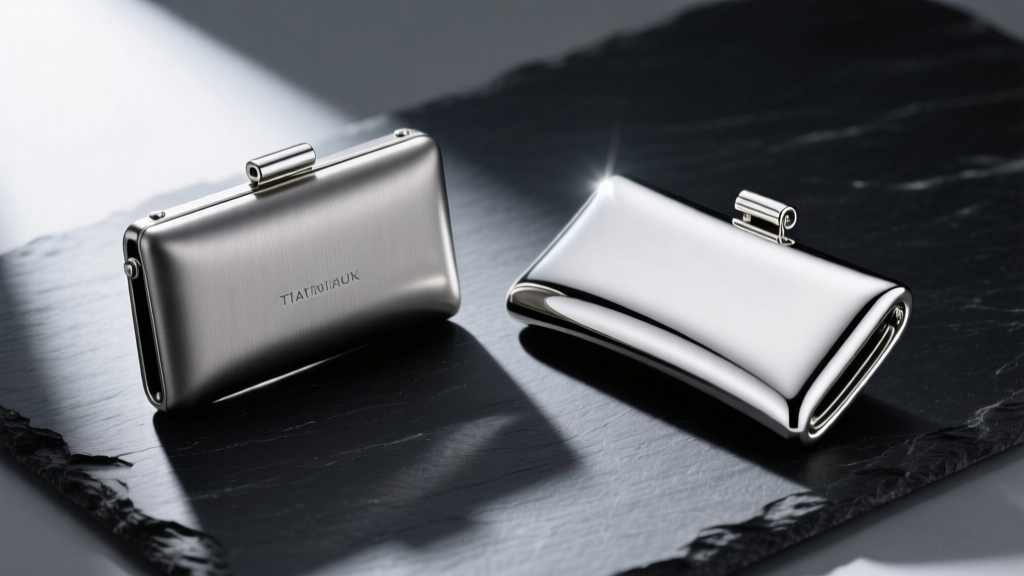
If you have sensitive skin or a known nickel allergy, ASTM F138 implant-grade titanium is the undisputed gold standard. Titanium is entirely nickel-free, highly resistant to corrosion, and possesses excellent tensile strength. A titanium butterfly back will maintain its gripping tension for years without the metal 'fatiguing' or losing its springiness. Furthermore, titanium's surface passivation layer prevents the buildup of bacteria and sebum.
Surgical Stainless Steel (316L)
316L stainless steel is the most common material for commercial butterfly backs due to its low cost and high polish. However, 316L contains between 8% and 10.5% nickel. While the chromium oxide layer on the surface generally traps the nickel inside the alloy, the micro-abrasions caused by repeatedly sliding the clutch on and off the post can compromise this layer, leading to nickel leaching and subsequent allergic reactions.
Gold Alloys and the Nickel Trap
When purchasing solid gold butterfly earring backs, the karat weight dictates both the color and the durability. Pure 24k gold is far too soft to hold the tension required for a friction clutch; the tabs would bend outward after a single use. Therefore, 14k and 18k gold alloys are used. According to the Gemological Institute of America (GIA), gold must be alloyed with other metals for structural integrity.
A critical warning regarding White Gold: Many commercial white gold alloys are mixed with nickel to achieve a bright, silvery appearance. If you are buying white gold butterfly backs, explicitly verify with the jeweler that the alloy uses palladium or silver as the whitening agent, rather than nickel.
| Material | Nickel Content | Tension Retention | Best Use Case |
|---|---|---|---|
| ASTM F138 Titanium | None | Excellent | Sensitive skin, daily wear, healing piercings |
| 14k/18k Yellow Gold | None (usually) | Very Good | High-end jewelry, heirloom pieces |
| 316L Surgical Steel | 8% - 10.5% | Good | Budget-friendly, non-allergic wearers |
| Silicone / Polyurethane | None | High Friction | Temporary use, sports, sleeping |
Gauge Sizing and Post Length: The Hidden Variables
A frequent mistake consumers make when buying replacement butterfly earring backs is ignoring the gauge (thickness) of the earring post. In jewelry, the gauge system is inverse: the higher the number, the thinner the metal.
- 20 Gauge (0.81mm): The standard for most commercial, mall-kiosk, and fashion jewelry studs.
- 18 Gauge (1.02mm): The standard for professional piercing studios and fine jewelry.
- 16 Gauge (1.29mm): Commonly used for thicker earlobes or cartilage piercings.
If you attempt to force a 20-gauge butterfly clutch onto an 18-gauge post, you will overstretch the internal metal tabs. This permanently destroys the elastic memory of the clutch, meaning it will never securely grip a standard post again. Conversely, using an 18-gauge clutch on a 20-gauge post will result in a loose fit that slides off with minimal friction.
Post Length Matters: Standard earring posts are typically 10mm to 11mm long. If you have thicker earlobes, a standard post will not leave enough exposed metal for the butterfly back to securely lock into the notch. In this case, you must source 'long post' studs (12mm to 14mm) to ensure the clutch has adequate room to engage the groove without compressing the earlobe tissue, which can restrict blood flow and cause necrosis or embedding.
The Hygiene Reality: Managing Sebum and Keratin Buildup
The intricate scrollwork design of a butterfly back is a notorious trap for biological debris. The combination of dead skin cells (keratinocytes), sebum (skin oils), sweat, and cosmetic residues accumulates in the dual loops of the clutch. Over time, this mixture breaks down into a pungent, cheese-like odor often colloquially referred to as 'earring cheese'.
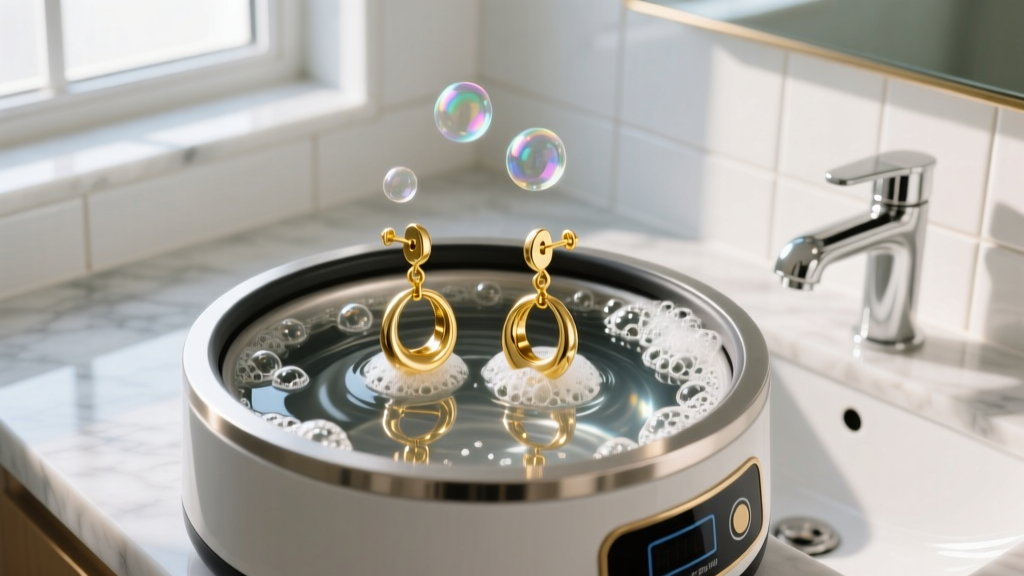
Beyond the odor, this buildup creates a breeding ground for Staphylococcus aureus and other bacteria, which can lead to localized infections or persistent piercing irritation. Because the loops are so small, wiping the back with a cloth is insufficient.
Expert Cleaning Protocol
- Ultrasonic Cleaning: For metal clutches (gold, titanium, steel), an ultrasonic jewelry cleaner filled with a mild dish soap and warm water solution will vibrate the microscopic debris out of the scrollwork in just three minutes.
- Isopropyl Alcohol Soak: Soaking metal butterfly backs in 70% isopropyl alcohol for 10 minutes will disinfect them and dissolve stubborn sebum. Note: Do not use alcohol on silicone or plastic backs, as it will dry out and degrade the polymers.
- Interdental Brushes: A soft, 0.4mm interdental brush can be gently threaded through the loops of the butterfly back to physically dislodge trapped keratin.
Pro Tip: Never sleep with standard metal butterfly backs in your ears. The rigid scrollwork can press into the skin behind your earlobe, causing pressure necrosis or painful indentations. Swap to flat silicone stoppers or specialized 'sleep-backs' with a smooth, rounded profile for overnight wear.
Troubleshooting and When to Upgrade
Even the highest quality butterfly earring backs have a finite lifespan due to the repetitive mechanical stress of being pushed and pulled. Here is how to diagnose when it is time to replace your clutches or upgrade your backing system entirely:
- The 'Slide' Test: If your butterfly back glides over the post's notch without a distinct 'click' or tactile bump, the internal tabs have fatigued. Replace the clutch immediately.
- Scratching the Neck: If the outer edges of the butterfly back feel sharp or scratch the skin behind your ear, the metal has experienced micro-fractures or poor manufacturing polishing. Discard it.
- Upgrading to La Pousette or Screw Backs: If you frequently lose earrings or wear high-value diamond studs, consider abandoning friction backs altogether. La Pousette locking backs utilize a tiny internal spring mechanism that physically locks onto the post, while screw backs feature threaded posts that require twisting, offering a vastly superior security profile for heavy or expensive gemstones.
Ultimately, the butterfly earring back remains a marvel of miniature mechanical design. By prioritizing implant-grade materials, matching your gauge sizes precisely, and maintaining a strict cleaning regimen, you can ensure your earrings remain secure, comfortable, and hygienic for years to come.


