Ginko Leaf Earrings: Metal Comparison & Care Guide
Discover the best metals for ginko leaf earrings. We compare sterling silver, solid gold, and titanium for durability, detailing, and skin safety.

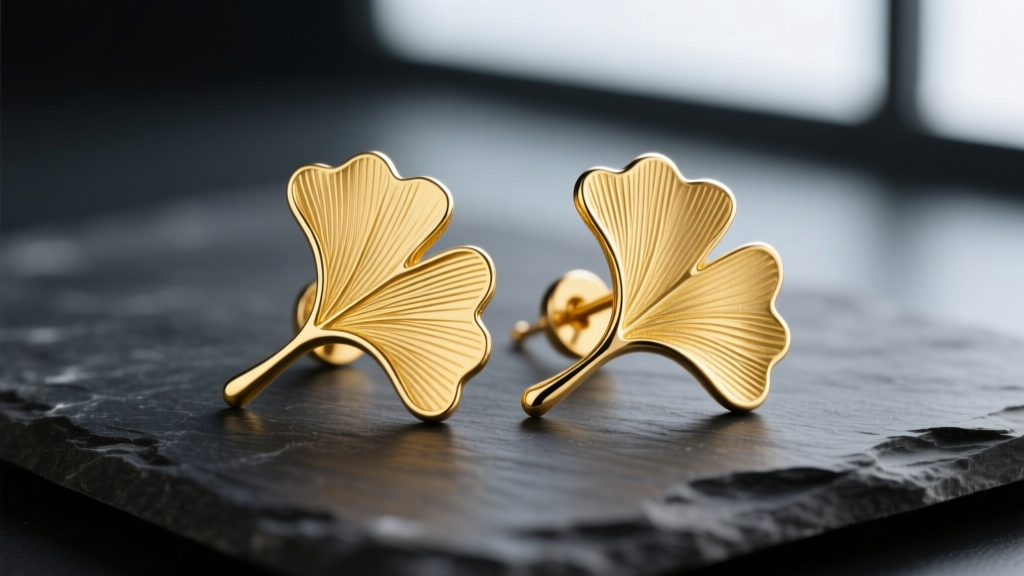
When shopping for nature-inspired jewelry, ginko leaf earrings stand out for their elegant, fan-like silhouette and deep symbolic ties to longevity and resilience. While the botanical name is Ginkgo biloba, the jewelry industry frequently adopts the 'ginko' spelling for stylized, minimalist collections. Because this specific motif relies on a delicate outer rim, radiating veins, and a narrow central stem, the choice of metal is not just an aesthetic decision—it is a structural necessity. A poorly chosen alloy will result in bent stems, lost vein details, or rapid tarnishing in the deep crevices of the design.
In this comprehensive material guide, we break down the exact metallurgical properties, manufacturing methods, and long-term wearability of the most common metals used for ginko leaf earrings in 2026.
The Anatomy of a Ginko Leaf Earring
To understand why material matters, we must look at the structural vulnerabilities of the ginko leaf shape. Unlike a simple geometric stud, a ginko leaf features:
- The Fan Margin: The wide, sweeping top edge is prone to catching on hair and sweaters, requiring a metal with high tensile strength to avoid warping.
- The Radiating Veins: Deeply cast veins trap environmental sulfur and skin oils, accelerating tarnish in reactive metals.
- The Central Stem: Often acting as the post or the connecting loop for a dangle, the stem must withstand lateral stress. A standard earring post is 20-gauge (0.81mm), but a ginko stem needs to be at least 1.2mm thick to prevent snapping.
Material Comparison Chart
Below is a comparative analysis of the primary metals used for ginko leaf designs, evaluating their hardness, tarnish resistance, and ability to hold fine detail.
| Metal / Alloy | Mohs Hardness | Tarnish Resistance | Detail Retention | Avg. Price Range (2026) |
|---|---|---|---|---|
| 14k Solid Gold | 2.5 - 3.0 | Excellent | Superior | $150 - $450 |
| .925 Sterling Silver | 2.5 | Poor | Good | $35 - $95 |
| Gold Vermeil | 2.5 (Base) | Moderate | Good | $60 - $140 |
| Implant-Grade Titanium | 6.0 | Excellent | Moderate | $40 - $120 |
| Raw Brass / Bronze | 3.0 - 4.0 | Poor | Excellent | $25 - $65 |
Deep Dive: Best Metals for Intricate Leaf Details
14k and 18k Solid Gold (The Premium Standard)
According to the Gemological Institute of America (GIA), pure 24k gold is far too soft for intricate jewelry. Alloying it to 14k (58.5% gold) introduces copper and silver, significantly increasing the metal's yield strength. For ginko leaf earrings, 14k gold is the ultimate choice. It is hard enough to hold the crisp, microscopic lines of the leaf veins without wearing smooth over years of friction, yet malleable enough for jewelers to perform a high-polish finish on the sweeping fan margin. 18k gold offers a richer, warmer yellow hue but is slightly softer, making it better suited for smaller, thicker stud designs rather than large, sweeping dangles.
Sterling Silver (The Accessible Choice)
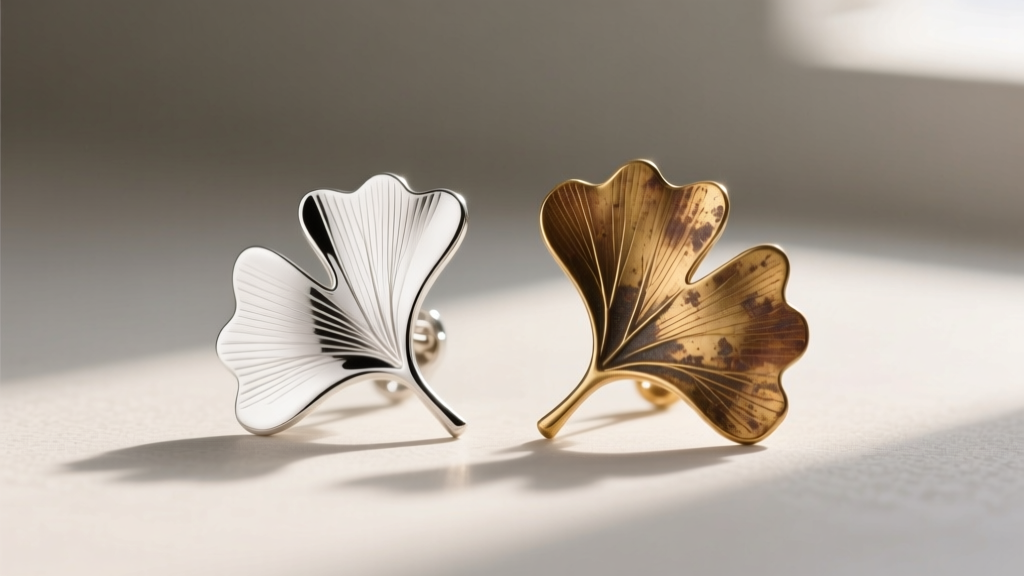
Stamped as .925, sterling silver is the most common metal for affordable ginko leaf earrings. However, silver reacts with hydrogen sulfide in the air to form silver sulfide (tarnish). In a ginko leaf design, this tarnish rapidly accumulates in the deep vein crevices. While some collectors love this natural 'antiquing' effect because it highlights the leaf's texture, those who prefer a bright finish will need to clean them regularly. Pro Tip: Never use a liquid silver dip on a ginko leaf earring if the jeweler has applied a deliberate oxidized (blackened) finish to the veins, as the dip will strip the contrast and leave the earring looking flat and washed out.
Gold Vermeil vs. Flash Plating
If you want the look of gold without the solid gold price tag, vermeil is mandatory. True vermeil requires a .925 sterling silver base plated with at least 2.5 microns of gold. Because the high edges of a ginko leaf experience constant friction from hair and clothing, cheap 'flash-plated' brass (which often has less than 0.5 microns of gold) will wear off within months, exposing the reactive brass underneath and turning your earlobes green. Always verify the vermeil thickness before purchasing.
Casting vs. Die-Striking: How Manufacturing Affects Durability
The way the metal is formed is just as important as the metal itself. There are two primary methods for creating ginko leaf earrings:
- Lost-Wax Casting: This method allows for 3D, domed, and highly sculptural leaves. However, cast metals are inherently more porous and slightly softer than wrought metals. A cast sterling silver ginko stem is more likely to snap if bent.
- Die-Striking (Stamping): A steel die stamps the leaf shape out of a flat sheet of metal under immense pressure. This compresses the grain structure of the metal, making it significantly harder and more durable. Die-struck ginko leaves are usually flatter but offer superior resistance to bending and snapping.
Post and Wire Considerations for Leaf Shapes
Weight distribution is a common failure point in nature-inspired jewelry. A solid-cast ginko leaf can be surprisingly top-heavy. If the earring uses a standard, lightweight butterfly clutch, the heavy leaf will cause the earring to droop forward on the earlobe.
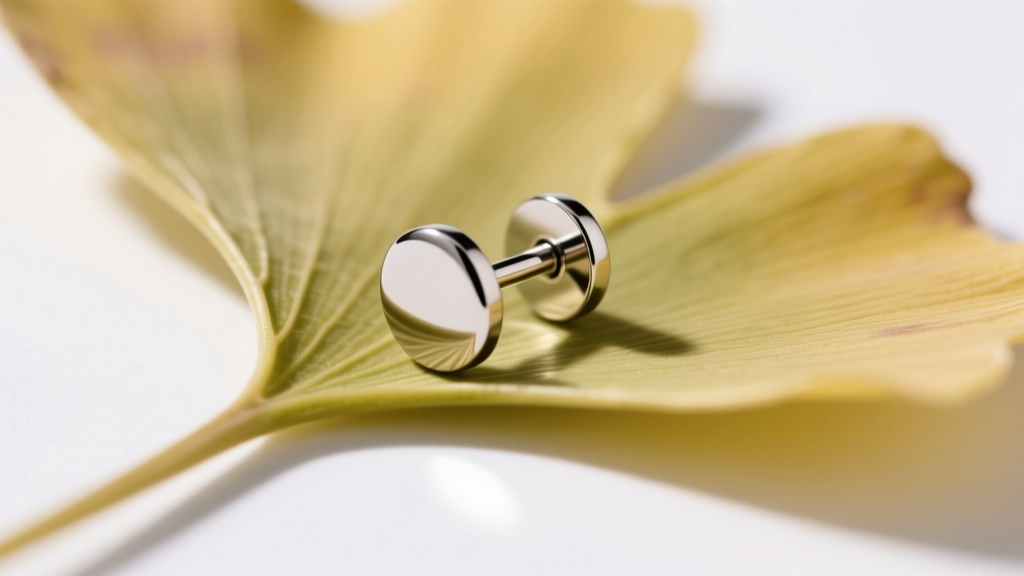
To solve this, look for ginko leaf studs that utilize a flat disc backing or a specialized la pousette (locking) clutch. The wider surface area of a disc back distributes the weight of the leaf evenly against the back of the earlobe, keeping the fan shape oriented perfectly forward. For those with sensitive skin or nickel allergies, ensuring the post is made from implant-grade titanium (ASTM F136) is crucial, even if the leaf itself is cast in silver or gold. Many high-end jewelers now laser-weld titanium posts to gold leaf fronts to combine hypoallergenic properties with premium aesthetics.
Maintenance and Common Failure Modes
To ensure your ginko leaf earrings last a lifetime, be aware of these specific failure modes and how to prevent them:
- Stem Fatigue: If your ginko leaf is a dangle, the jump ring connecting the leaf to the ear wire is a stress point. Check this ring every six months to ensure it hasn't warped open.
- Vein Clogging: Lotions, perfumes, and dead skin cells will pack into the radiating veins of the leaf. Clean your earrings monthly using a soft-bristled baby toothbrush, warm water, and a drop of mild dish soap. Avoid ultrasonic cleaners for vermeil or oxidized pieces.
- Margin Snagging: The wide top edge of the leaf can easily catch on knitwear. Always put your ginko leaf earrings on after dressing to prevent the delicate outer rim from bending or scratching.
By understanding the interplay between the ginko leaf's unique geometry and the metallurgical properties of your chosen alloy, you can select a pair of earrings that remains as crisp and vibrant as the day you bought it. For further reading on precious metal care and alloy compositions, the Rio Grande Jewelry Supply archives offer excellent technical resources on preventing tarnish and maintaining intricate castings.


