Paper Clip Earrings Troubleshooting: Fix Tangles and Lobe Pull
Fix common paper clip earrings problems. Learn expert solutions for link tangling, lobe stretching, clasp failure, and metal friction tarnishing.

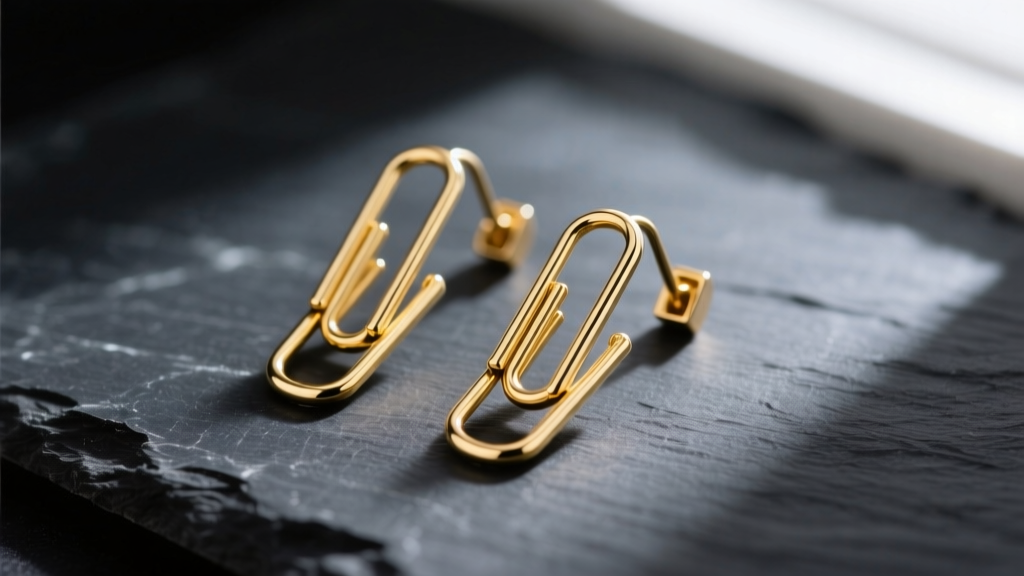
The Anatomy of Paper Clip Link Failures
Paper clip earrings have dominated the jewelry market, but their signature elongated link design introduces unique structural vulnerabilities that standard round chains do not face. The primary culprit is the friction point. Unlike circular cable links that rotate freely, the flat, broad surface area of rectangular paper clip links creates high-friction zones where the metal rubs during wear.
If you purchase gold vermeil (a thin layer of gold over sterling silver), this friction point will often wear down to the base silver within three to six months of daily use. According to fabrication standards outlined by Rio Grande, the constant micro-abrasion between unsoldered flat links strips electroplated finishes rapidly. To troubleshoot this before purchasing, opt for PVD (Physical Vapor Deposition) coated stainless steel or titanium, which offers up to ten times the abrasion resistance of traditional vermeil, or invest in solid 14k gold where the friction point simply polishes rather than flakes.
Troubleshooting Tangles and Hair Snags
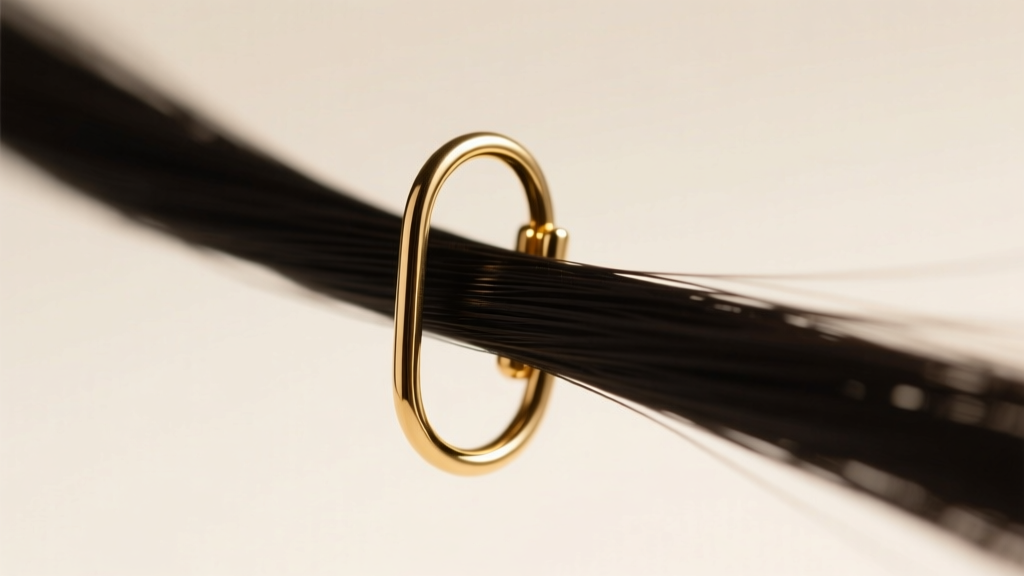
The elongated rectangular loops of paper clip chains act as perfect catchment zones for fine hair, loose threads, and layered necklaces. Because the inner diameter of the link is wide but the gap between links is narrow, hair easily slips in but gets trapped when tension is applied.
The Silicone O-Ring Dampener
For drop earrings that constantly tangle with your hair, the most effective non-destructive fix is applying a micro-silicone O-ring at the jump ring connecting the drop to the ear wire. This restricts the 360-degree rotation of the link, limiting its ability to wrap around stray hairs. You can source 1mm inner-diameter silicone rings from jewelry supply stores.
Upgrading to Soldered Links
If your paper clip chain necklace or earring layering set is perpetually knotted, inspect the links under a jeweler's loupe. Mass-produced fashion jewelry rarely solders the seams of paper clip links due to the high heat required for flat, broad seams. Taking your pieces to a local bench jeweler to have the link seams laser-welded or soldered will eliminate the microscopic gaps that catch fine threads and hair.
Solving Lobe Stretching and Weight Issues
A common complaint with oversized paper clip drop earrings is the "cheese wire effect," where a thin post cuts into the earlobe due to the heavy, swinging weight of the elongated links. A standard 20-gauge (0.81mm) post is entirely insufficient for drops exceeding 8 grams. The tensile strength of earlobe tissue requires a wider surface area to distribute the load.
Always match the post gauge to the total swing weight of the earring, not just the static weight. The pendulum effect of long paper clip links multiplies the downward force on the piercing hole during movement.
Use the following troubleshooting matrix to determine if your current earrings require a structural upgrade or a different backing system to prevent permanent lobe stretching.
| Earring Weight | Minimum Post Gauge | Required Backing Type | Troubleshooting Fix |
|---|---|---|---|
| Under 5g | 20g (0.81mm) | Standard push back | None required for standard lobes |
| 5g - 12g | 18g (1.02mm) | Wide silicone disc | Replace metal butterfly backs with 8mm silicone discs |
| 12g - 20g | 16g (1.29mm) | Locking screw back | Use an ear chain or invisible thread harness for support |
| Over 20g | 14g (1.63mm) | Custom harness / Clip-on | Convert to clip-on or use a silicone lobe support patch |
Clasp and Hinge Malfunctions in Link Hoops
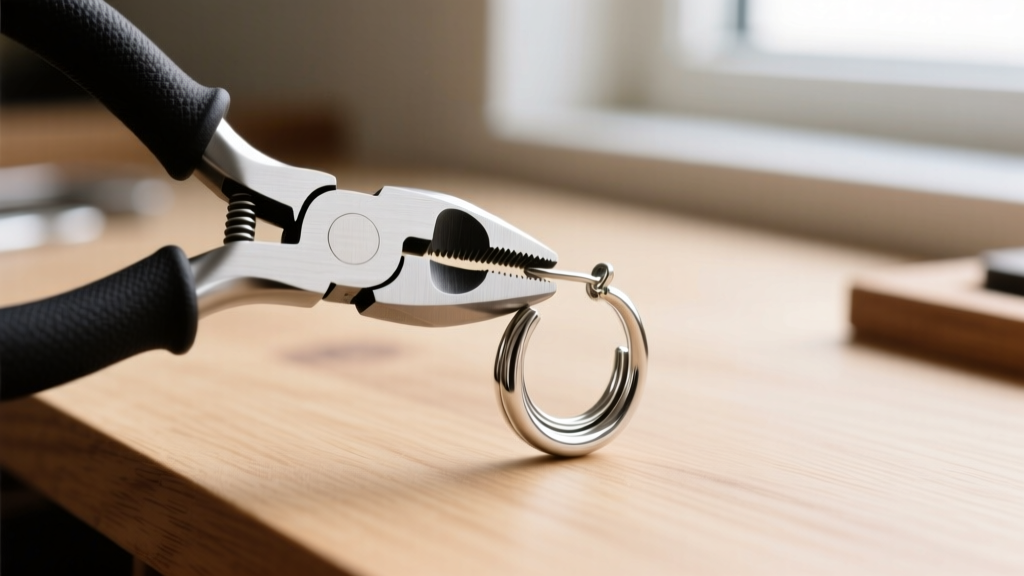
Paper clip hoops often utilize a clicker hinge mechanism. However, because the elongated links are prone to twisting when caught on clothing or hair, the hinge barrel frequently falls out of alignment. When this happens, the clicker will no longer snap shut securely, posing a severe loss risk.
Realignment Protocol
Do not use standard steel jewelry pliers to bend the hinge back into place; you will mar the finish and potentially crack the solder joint. Instead, use nylon-jaw pliers. Grip the link immediately adjacent to the hinge barrel and apply gentle, torsional pressure in the opposite direction of the twist. According to the Gemological Institute of America (GIA), maintaining the structural integrity of hinge barrels is critical, as repeated bending causes metal fatigue and eventual snapping. If the clicker pin itself is bent, the earring must be sent to a professional for pin replacement rather than forced shut.
Restoring Tarnished Friction Points
The crevices where paper clip links meet are notorious for trapping sebum, dead skin cells, and environmental pollutants, leading to rapid tarnishing and a dull, grayish buildup. Harsh chemical silver dips will strip the patina and can damage any porous gemstone accents (like turquoise or opals) set within the links.
For a safe, deep clean, utilize an ultrasonic jewelry cleaner filled with a mild, warm alkaline solution (a few drops of ammonia-free dish soap in distilled water). Run the cleaner for exactly 90 seconds. The high-frequency cavitation bubbles will dislodge the microscopic debris trapped in the flat friction seams without abrading the metal. Dry immediately with a microfiber cloth to prevent water spots, and apply a microscopic layer of jeweler's anti-tarnish wax to the friction points to seal the metal against future oxidation.
For more advanced metal care and ultrasonic cleaning techniques, resources like Jewelry Making Daily offer extensive guides on maintaining complex chain weaves without compromising delicate finishes.
Expert Maintenance Checklist
- Weekly: Wipe friction points with a dry, untreated polishing cloth to remove acidic skin oils.
- Monthly: Inspect clicker hinges and jump rings for torsional misalignment using a 10x loupe.
- Bi-Annually: Check the post thickness for micro-bending; if the post wiggles in the piercing, the gauge is too thin for the link weight.
- Storage: Never store paper clip earrings loose in a box. The flat links will interlock and tangle. Hang them vertically on a jewelry tree or lay them flat in individual felt-lined compartments.


