How to Wear Giant Hoop Earrings Without Tearing Your Lobes
Learn how to choose, style, and wear giant hoop earrings safely. Discover weight limits, tubing vs. wire, and lobe-saving tips for beginners.

The Hidden Cost of Oversized Jewelry
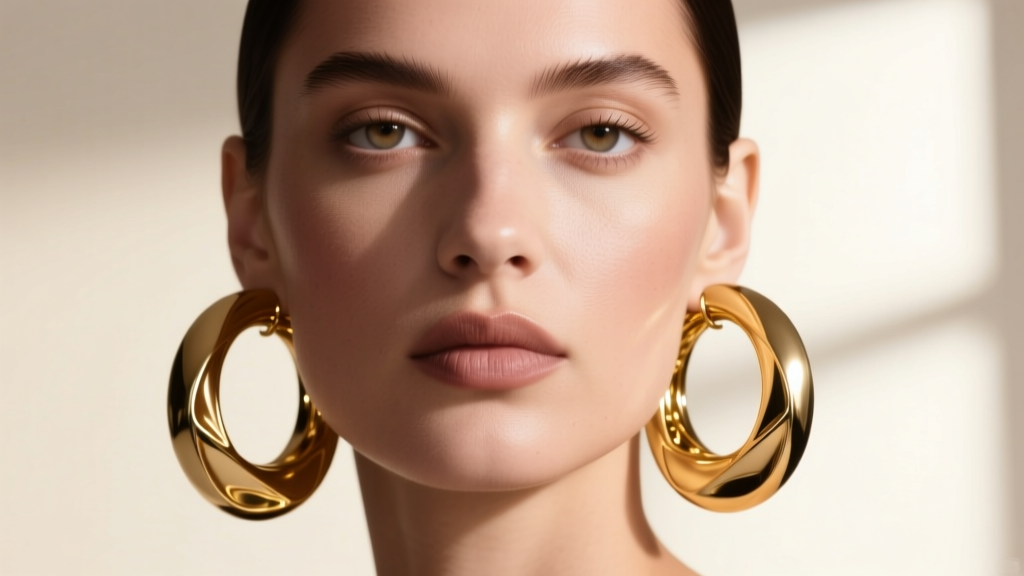
Giant hoop earrings are an undeniable statement. They frame the face, catch the light, and instantly elevate a minimalist outfit. However, for beginners, they often come with a hidden physical cost: earlobe fatigue, micro-tearing, and permanent stretching. When you scale up the diameter of a hoop, you exponentially increase the leverage and kinetic energy it exerts on your piercing. A simple turn of your head can cause a heavy, poorly balanced 90mm hoop to pull aggressively on the delicate collagen matrix of your earlobe.
This beginner-friendly guide will teach you the exact mechanics of choosing, wearing, and styling giant hoop earrings safely. By understanding gauge sizes, weight distribution, and material science, you can rock massive proportions without sacrificing your lobe health.
The Anatomy of a Comfortable Giant Hoop
The biggest mistake beginners make is confusing the post gauge (the wire that goes through your ear) with the hoop thickness (the body of the earring). Understanding this distinction is critical for comfort and structural integrity.
Post Gauge vs. Hoop Thickness
Standard earlobe piercings are typically done at 20-gauge (0.8mm) or 18-gauge (1.0mm). If you buy giant hoops with a thick 14-gauge post, you will force your piercing to stretch every time you insert them, causing inflammation. Always look for giant hoops that feature an 18g or 20g post or wire for the insertion point.
However, the body of the hoop should be thick. A thin wire on a massive 80mm hoop will warp, bend, and eventually snap. You want a hoop constructed from hollow tubing. Hollow tubing allows the earring to have a thick, luxurious outer diameter (often 12g or 10g equivalent) while remaining featherlight because the core is empty.
The 10-Gram Rule for Earlobes
According to professional piercers and dermatologists, a healthy, standard earlobe can comfortably support 7 to 10 grams per earring for an 8-hour day. Anything exceeding 15 grams will cause micro-tears in the tissue over time, leading to permanent sagging (ptosis). When shopping, always check the product specifications for the exact gram weight.
Material Matters: Avoiding the Heavy Metal Trap
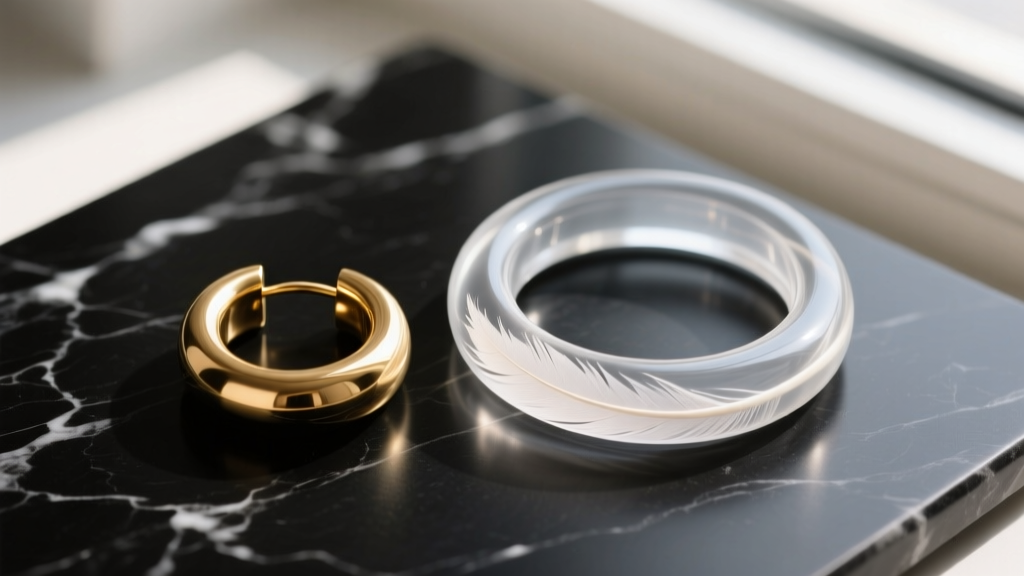
Not all metals are created equal when scaled up to giant proportions. A 70mm hoop made of solid brass will drag your lobe down, while the exact same size in Grade 23 Titanium will feel like wearing nothing at all.
| Material | Avg. Weight (70mm) | Lobe Strain | Price Range |
|---|---|---|---|
| Hollow 14k Gold | 6 - 9g | Low | $180 - $350 |
| Grade 23 Titanium | 4 - 6g | Very Low | $40 - $90 |
| Solid Brass / Bronze | 18 - 25g | High | $20 - $60 |
| Acetate / Resin | 3 - 5g | Very Low | $25 - $75 |
Note: The Association of Professional Piercers (APP) highly recommends implant-grade titanium (Ti6Al4V ELI) for sensitive lobes, as it is hypoallergenic and significantly lighter than steel or brass.
For beginners on a budget, cellulose acetate is a fantastic alternative. It mimics the look of tortoiseshell or bold opaque colors, is completely waterproof, and weighs a fraction of metal, allowing you to wear 100mm+ hoops with zero fatigue.
Face Shape & Proportion: Sizing Your Giant Hoops
There is no universal definition of a "giant" hoop, but in the jewelry industry, anything exceeding 65mm in diameter enters statement territory. Here is how to match extreme proportions to your facial geometry:
- Round Faces: Avoid perfectly circular, oversized hoops, which can exaggerate facial width. Instead, opt for 70mm-90mm hoops with a slightly elongated, oval drop or a squared-off geometric shape to create a vertical lengthening effect.
- Square Faces: Soften a strong jawline with massive, perfectly circular hoops (80mm+). The continuous curve contrasts beautifully with angular bone structure.
- Oval Faces: You have the most versatility. Oval faces can pull off extreme 100mm+ proportions and ultra-thick tubing without looking overwhelmed by the jewelry.
- Heart Faces: Look for giant hoops that are slightly wider at the bottom (teardrop-shaped hoops) to add visual weight to a narrower chin.
The Lobe Health Check: Preventing Permanent Damage
Wearing giant hoop earrings requires active maintenance of your earlobe tissue. If you ignore the warning signs of tissue fatigue, you risk the piercing migrating downward or tearing completely—a condition that often requires surgical repair, as noted by dermatological health resources.
Three Golden Rules for Lobe Preservation
- Never Sleep in Giant Hoops: Even if they are lightweight, the leverage of a 70mm hoop catching on a pillowcase can instantly rip the lobe. Always remove them before bed.
- Use Silicone Support Patches: If you want to wear a slightly heavier pair (12-15g) for a special event, use invisible silicone earring support patches. These adhesive discs stick to the back of your earlobe and distribute the weight of the earring post across a wider surface area, preventing the "cheese-cutter" effect.
- The 24-Hour Rest Period: If you wear giant hoops all day, give your lobes a 24-hour break the next day. Switch to ultra-lightweight 3mm studs or small huggies to allow the collagen fibers in the piercing channel to recover and contract.
"The health of your earlobe is entirely dependent on weight distribution. A 10-gram earring with a wide, flat post will cause less damage than an 8-gram earring with a razor-thin wire that cuts into the tissue." — Master Jeweler & Piercing Specialist
Styling Giant Hoops for Everyday Wear
Because giant hoops command so much visual attention, the rest of your styling should act as a deliberate frame.

Necklines and Hair
When wearing hoops larger than 80mm, high necklines like turtlenecks, mock necks, or structured collars provide a clean, unbroken canvas that allows the metal to pop. Avoid busy, ruffled blouses or intricate necklaces; the visual competition will look cluttered. For hair, a sleek low bun, a high ponytail, or a sharp bob tucked behind the ears ensures the silhouette of the hoop remains the focal point.
Makeup Pairing
Massive metallic hoops reflect light onto the lower half of your face. To balance this, keep your skin finish matte or softly satin, and opt for a bold lip or a sharp, graphic eyeliner wing. The juxtaposition of a minimalist makeup base with a maximalist earring creates a high-fashion, editorial aesthetic that feels intentional rather than overwhelming.
Where to Buy Quality Lightweight Giant Hoops
Avoid fast-fashion retailers for oversized jewelry, as they frequently use heavy, nickel-laced alloys that cause contact dermatitis and lobe dragging. Instead, invest in specialized brands:
- Mejuri & Missoma: Excellent for hollow 14k gold and gold vermeil tubing hoops in the 60mm-80mm range ($80 - $150).
- Etsy Artisans (Titanium Specialists): Search for "implant grade titanium seamless hoop" for custom-sized, ultra-lightweight options that cater to sensitive lobes ($40 - $90).
- Vintage & Estate Jewelers: 1970s and 1980s vintage jewelry often features masterfully crafted hollow gold giant hoops that are incredibly light due to older, specialized manufacturing techniques ($150 - $300).
By prioritizing hollow construction, strict weight limits, and proper lobe care, you can confidently wear giant hoop earrings as a signature element of your personal style—without ever paying the price in earlobe health.


