Best Ear Earring Metals for Sensitive Ears: 2026 Guide
Discover the safest ear earring materials for sensitive skin. We compare implant-grade titanium, 14k gold, and niobium to prevent allergic reactions.

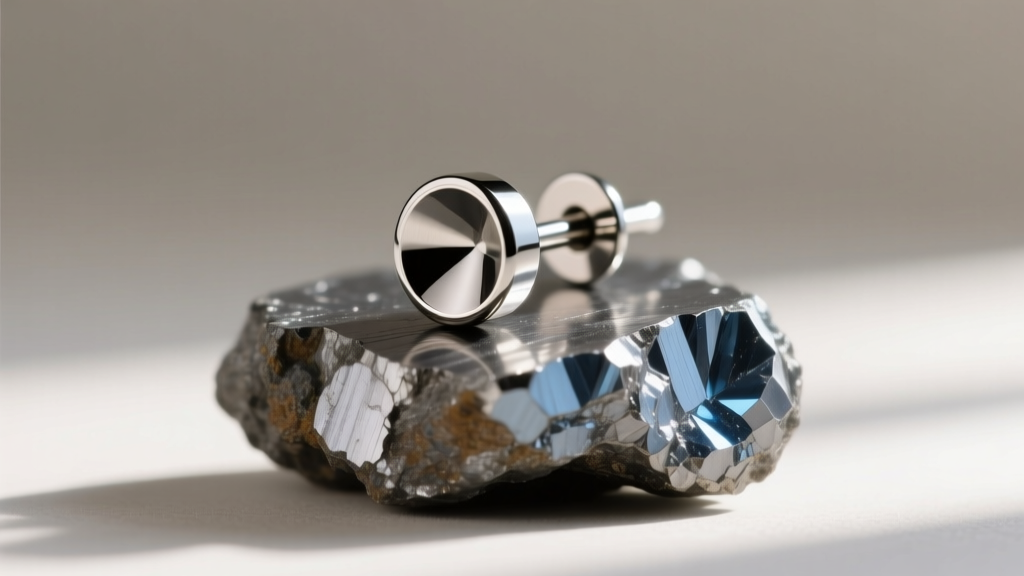
The Hidden Culprit: Nickel and Contact Dermatitis
When shopping for a new ear earring, the aesthetic design often overshadows the metallurgical reality of the piece. However, for the estimated 15% of the global population with a nickel allergy, the wrong metal choice can lead to allergic contact dermatitis. According to the Mayo Clinic, nickel allergy is an immune response triggered when the skin is exposed to nickel leaching from jewelry, particularly when combined with the acidic environment of human sweat.
The European Union's Nickel Directive sets the safe limit for nickel release at less than 0.5 µg/cm²/week. Many mass-market fashion earrings exceed this threshold by up to 400%. As of 2026, discerning consumers and professional piercers demand verifiable material grades rather than vague marketing terms like 'hypoallergenic' or 'surgical steel.' Let us break down the exact material properties you need to know.
Tier 1: The Safest Ear Earring Materials (Implant-Grade)
Titanium (ASTM F136)
Not all titanium is created equal. Commercially pure titanium (ASTM B265) is safe for healed piercings, but for fresh piercings or hyper-sensitive ears, you must look for Implant-Grade Titanium (ASTM F136), specifically Ti-6Al-4V ELI (Extra Low Interstitial). This alloy is completely nickel-free and is the exact same metal used in orthopedic joint replacements.
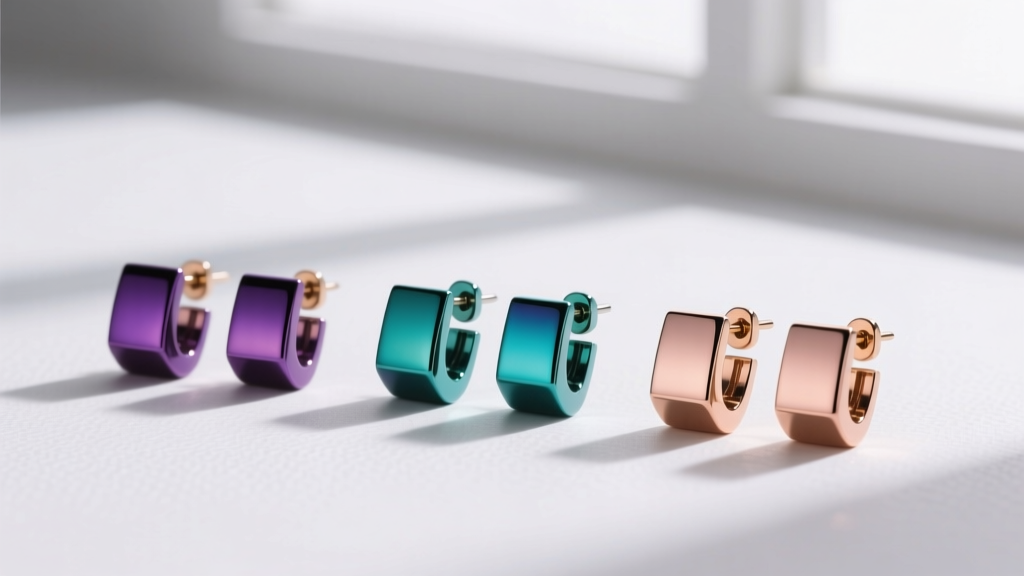
- Pros: 45% lighter than stainless steel, highly corrosion-resistant, can be anodized to create vibrant colors without using dyes or paints.
- Cons: Cannot be cast easily; jewelry must be CNC-machined, which increases the manufacturing cost.
- Price Range: $35 - $120 per piece for high-end, gem-set titanium studs.
Niobium
Niobium (Element 41) is a highly malleable, nickel-free refractory metal. The Association of Professional Piercers (APP) recognizes niobium as a top-tier material for initial piercings. Because it is exceptionally soft, it is the preferred metal for seamless rings and clickers that require bending to fit the ear's cartilage contours.
Like titanium, niobium can be anodized via voltage manipulation. However, it is noticeably heavier than titanium, making it less ideal for large, heavy dangle earrings that might stretch a delicate earlobe over time.
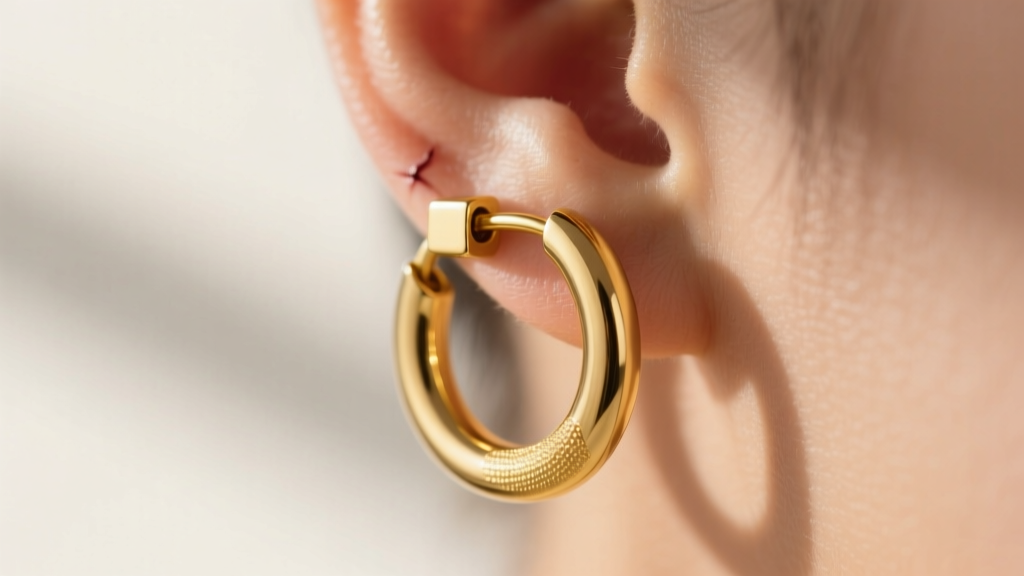
Tier 2: Precious Metals Done Right
14K and 18K Solid Gold
Pure 24K gold is too soft for functional ear earring clasps and posts. Therefore, it is alloyed with other metals. 14K gold (58.5% pure gold) offers the best balance of durability and biocompatibility, while 18K gold (75% pure gold) provides a richer color but scratches more easily.
Critical Warning regarding White Gold: Traditional white gold is alloyed with nickel to achieve its silvery hue and is then plated with rhodium. Once the rhodium plating wears off (typically within 6 to 12 months of daily wear), the nickel is exposed to the skin, triggering reactions. If you prefer white gold, specifically seek out Palladium-alloyed white gold, which uses palladium instead of nickel to achieve the white color.
Platinum (Pt950)
Platinum is the undisputed king of hypoallergenic precious metals. Standard jewelry platinum is 95% pure (Pt950), usually alloyed with ruthenium or iridium—both of which are entirely nickel-free and highly biocompatible. It is exceptionally dense, heavy, and expensive, but it will never tarnish, fade, or leach allergens. Expect to pay a premium of 200% to 300% over equivalent 18K gold pieces.
The 'Surgical Steel' Myth
The term 'Surgical Steel' is an unregulated marketing buzzword, not a recognized metallurgical standard. Most earrings labeled as such are made from 316L or 316LVM stainless steel. While 316L contains 10% to 14% nickel, the nickel is theoretically trapped within the iron-chromium crystal lattice.
However, the American Academy of Dermatology notes that individuals with severe contact dermatitis can still react to 316L stainless steel, especially in high-sweat environments like the gym or during hot summer months. For a fresh piercing or a known severe nickel allergy, 316L steel should be strictly avoided in favor of ASTM F136 titanium.
Comprehensive Material Comparison Chart
| Material | Nickel Content | Best Application | Relative Weight | Average Cost |
|---|---|---|---|---|
| ASTM F136 Titanium | 0% (Nickel-Free) | Fresh piercings, severe allergies | Very Light | $$ |
| Niobium | 0% (Nickel-Free) | Seamless hoops, cartilage rings | Medium-Heavy | $$ |
| 14K/18K Yellow Gold | 0% (Typically) | Healed lobes, everyday luxury | Heavy | $$$$ |
| Palladium White Gold | 0% (Nickel-Free) | Healed lobes, diamond settings | Heavy | $$$$$ |
| Platinum (Pt950) | 0% (Nickel-Free) | Heirloom pieces, hyper-sensitive | Very Heavy | $$$$$$ |
| 316L Surgical Steel | 10% - 14% | Healed ears, non-sensitive skin | Medium | $ |
Expert Maintenance Tips for Hypoallergenic Earrings
Owning high-quality, biocompatible metals is only half the battle; proper maintenance ensures the metal's surface integrity remains uncompromised.
- Avoid Harsh Chemicals: Chlorine in swimming pools and harsh household bleach can cause micro-pitting in gold alloys and strip the natural oxide layer on titanium, making the surface rough and more likely to harbor bacteria.
- Clean with Sterile Saline: For routine cleaning, use a sterile 0.9% sodium chloride wound wash. Spray directly onto the earring post and wipe gently with a non-woven gauze pad. Avoid cotton swabs, which can leave microscopic fibers snagged on the jewelry's threading or gemstone prongs.
- Polishing Precious Metals: If your 14K gold or platinum ear earring becomes dull, use a dedicated, untreated microfiber polishing cloth. Never use abrasive silver dips or ultrasonic cleaners on anodized titanium or niobium, as the high-frequency vibrations and chemical baths will instantly strip the anodized color layer, reverting the metal to its natural gunmetal grey.
By prioritizing verifiable metallurgical grades over ambiguous marketing terms, you can curate an ear earring collection that is as biologically harmonious as it is visually stunning.


