The 2026 Gift Guide to Earrings for Two Piercings
Discover the ultimate 2026 gift guide for earrings for two piercings. Learn gauge sizes, spacing rules, and occasion-matched sets for double lobes.

The Anatomy of a Double Piercing: What Gifters Must Know
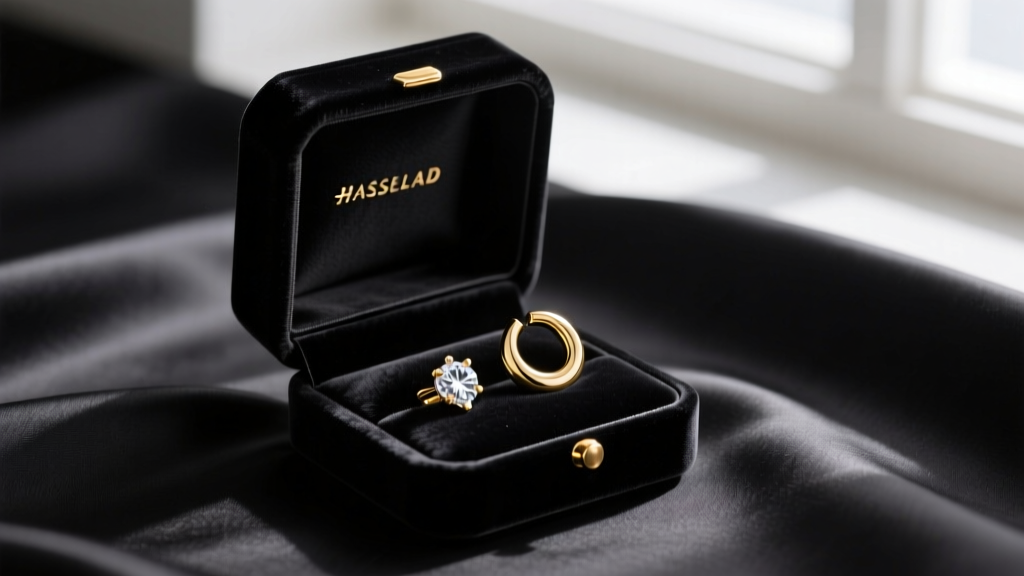
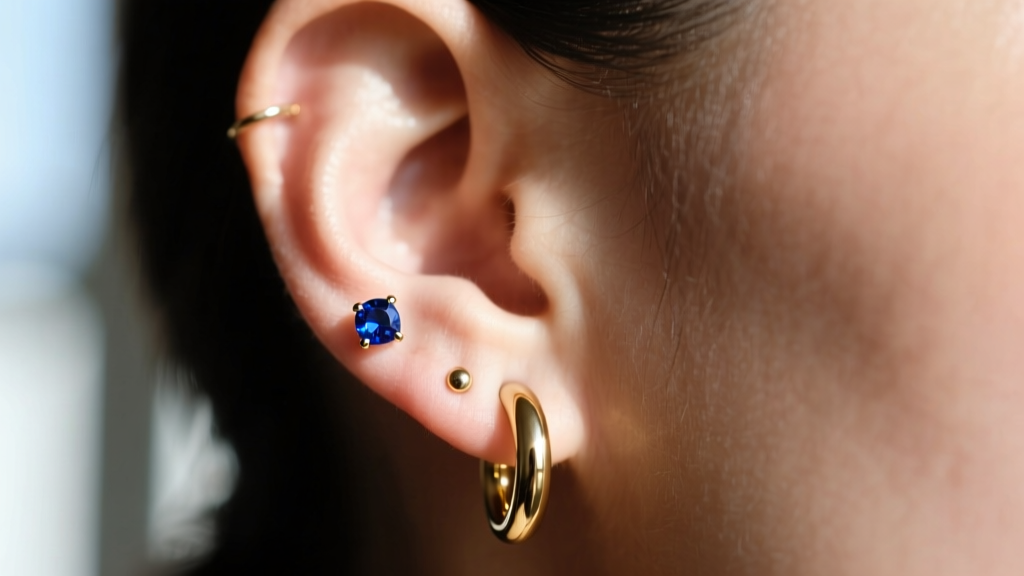
Gifting earrings for two piercings requires far more spatial awareness and anatomical knowledge than buying a standard single pair of studs. The modern 'curated ear' trend has evolved significantly by 2026, moving away from identical matching pairs toward coordinated, asymmetrical, and staggered setups. When you are shopping for someone with a double lobe piercing—or a standard lobe paired with an upper cartilage piercing like a helix—you must account for spacing, gauge thickness, and metal biocompatibility.
The most common mistake gifters make is ignoring the physical footprint of the jewelry. Standard lobe-to-lobe spacing is typically between 6mm and 8mm. If you gift a large 8mm halo stud for the first hole and a tight huggie hoop for the second, the jewelry will physically overlap, causing discomfort and an awkward aesthetic. Understanding these micro-measurements is the difference between a gift that gets worn daily and one that stays trapped in a velvet box.
Lobe vs. Cartilage: Gauge and Spacing Realities
Before purchasing, you must determine the exact location of the second piercing. First lobes are traditionally pierced at 20-gauge (0.81mm) or 18-gauge (1.02mm). However, second lobes and upper cartilage piercings are frequently done at 16-gauge (1.29mm) to provide structural stability. Forcing a 16-gauge hoop through an 18-gauge hole will cause micro-tearing and pain. Always verify the recipient's gauge size, or opt for universally accommodating threadless ends that can be fitted to various pin sizes by a professional piercer.
Occasion-Matched Pairings: The 2026 Gifting Matrix
Different milestones call for different levels of permanence and brilliance. Below is a strategic matrix to help you match the occasion to the ideal double-piercing configuration.
| Occasion | Piercing Setup | Recommended Style | Budget Range |
|---|---|---|---|
| Anniversary | Double Lobe | 14k Gold Bezel Diamond Stud + Pave Huggie Hoop | $450 - $900 |
| Graduation | Lobe + Helix | Matching Sapphire or Emerald Threadless Ends | $250 - $500 |
| Milestone Birthday | Stacked Lobe | Interlocking Chain Connectors or Ear Cuffs | $150 - $350 |
| Holiday / Just Because | Double Lobe | Minimalist Titanium Geometric Shapes | $80 - $180 |
For anniversaries, the combination of a secure stud in the primary lobe and a huggie in the secondary lobe offers a sophisticated, high-impact look. For graduations, gifting high-quality gemstone ends from reputable brands allows the recipient to mix and match their curated ear over time.
Material Grades: Avoiding the Allergic Reaction Gift Fail
Nothing ruins a thoughtful jewelry gift faster than contact dermatitis. The second lobe piercing is often more prone to irritation than the first due to its proximity to the ear's cartilage and reduced blood flow. According to the Association of Professional Piercers (APP), jewelry meant for long-term wear must meet strict biocompatibility standards.
Expert Rule of Thumb: Never gift 'surgical steel' or 'stainless steel' for a curated ear. These terms are unregulated marketing buzzwords that often mask high nickel content. Always look for specific alloy designations.
The Titanium vs. Gold Debate for Sensitive Lobes
- ASTM F136 Implant-Grade Titanium: The gold standard for sensitive ears and fresh piercings. It is completely nickel-free, lightweight, and hypoallergenic. Brands like Neometal and Anatometal specialize in this material.
- 14k or 18k Solid Gold: Must be nickel-free and alloyed for biocompatibility (often using palladium or silver instead of nickel). Avoid gold-plated or gold-vermeil jewelry, as the base metal (usually sterling silver or brass) will eventually cause reactions once the plating wears off.
- Sterling Silver: While popular in commercial mall stores, sterling silver contains copper and can tarnish, leading to argyria (a gray staining of the skin) in healing or irritated double piercings.
For a comprehensive understanding of how metal alloys interact with the skin, the Gemological Institute of America (GIA) provides extensive educational resources on precious metal compositions and their suitability for fine jewelry.
Curated Ear Sets: Top Brands for Coordinated Gifting
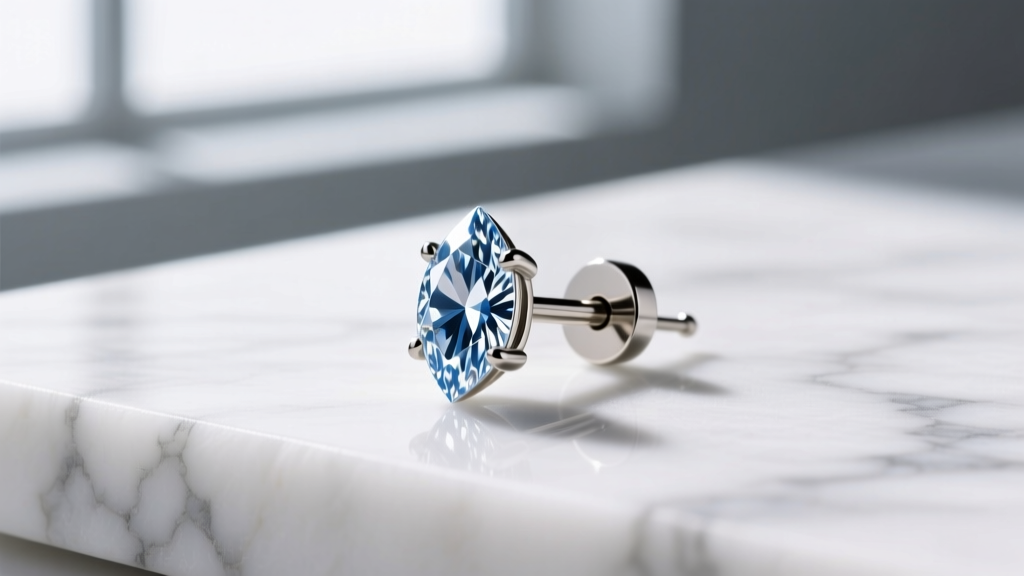
If you want to gift a cohesive look, purchasing from brands that specialize in modular, high-end body jewelry is your best strategy. The 'threadless' jewelry system—where a slightly bent pin pushes into a hollow post, held together by tension—is the current industry standard for secure, comfortable double piercings.
Investment Pieces vs. Accessible Luxury
BVLA (Body Vision Los Angeles): The pinnacle of luxury body jewelry. Gifting a pair of BVLA threadless ends (e.g., a 3mm and a 5mm bezel-set diamond or tourmaline) allows the recipient to use their existing titanium posts. Expect to pay $200 to $600+ per end. This is the ultimate flex for a serious jewelry enthusiast.
Maria Tash: Famous for popularizing the curated ear aesthetic. Their floating diamond studs and delicate clicker hoops are designed specifically to sit flush against the ear, solving the overlap issue common in double piercings. Price points generally range from $300 to $1,200.
Studs & Mejuri: For more accessible gifting ($50 - $250), these brands offer excellent 14k gold and titanium options. Look for their 'ear party' sets, which are pre-curated to ensure the sizes of the studs and hoops complement each other without clashing.
How to Secretly Measure Their Existing Jewelry
If you are planning a surprise gift, you need to know their current post length and gauge. Here is a practical framework for stealthy measurement:
- Borrow a Backup Pair: Sneak a pair of their standard stud earrings from their jewelry dish.
- Use Digital Calipers: Do not use a standard ruler. Purchase a cheap digital caliper online. Measure the thickness of the post (the gauge) and the length from the base of the gem to the backing notch.
- Check the Inner Diameter: If they wear hoops in their second piercing, measure the 'inner diameter' (the empty space inside the hoop). If their current hoop is 8mm, gifting a 10mm or 12mm hoop will provide a relaxed, trendy look, while a 6mm hoop will likely be too tight to close comfortably.
Final Gifting Checklist
Before you finalize your purchase, run through this quick E-E-A-T checklist to ensure your gift is a success:
- Did I confirm whether the second piercing is a lobe or cartilage?
- Is the metal explicitly listed as ASTM F136 Titanium or Nickel-Free 14k/18k Gold?
- Have I accounted for the 6mm-8mm spacing rule to prevent jewelry overlap?
- Am I buying solid jewelry rather than plated or hollow-cast alternatives?
By treating the anatomy of the ear with the same respect as the quality of the gemstones, you elevate your gift from a simple accessory to a highly personalized, wearable piece of art that honors their unique style.


