How to Style Double Earring Hoops: A Step-by-Step Guide
Learn how to style double earring hoops with our step-by-step guide. Master gauge sizes, proportions, and material pairings for a curated ear look.

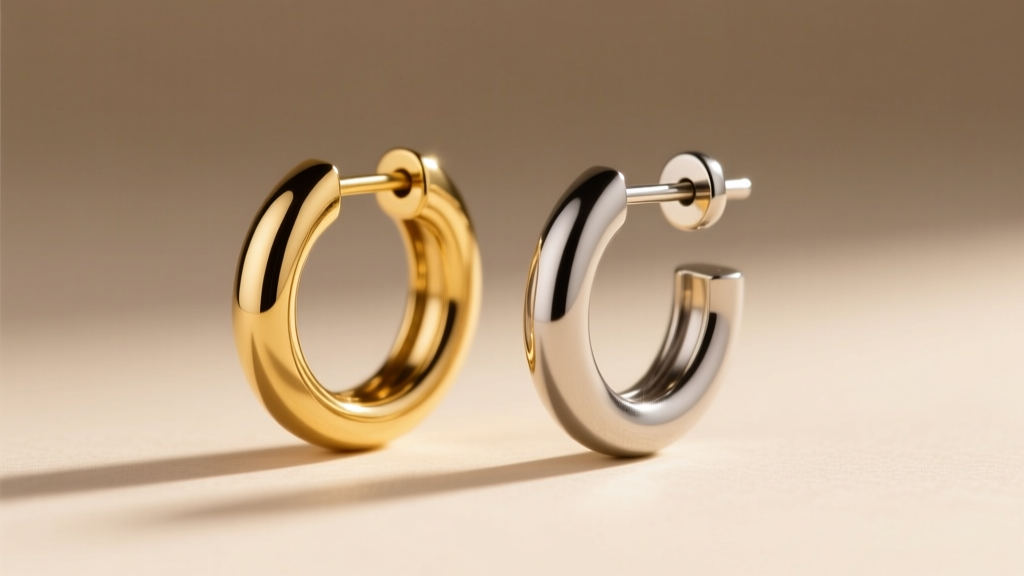
The Anatomy of a Perfect Double Hoop Setup
The curated ear trend has evolved significantly, and mastering the art of wearing double earring hoops is a cornerstone of modern ear styling. Whether you are pairing a standard lobe hoop with an upper lobe or helix hoop, or opting for a single concentric double-hoop design, the key to a polished look lies in precise proportions, correct gauge sizing, and high-quality materials. A poorly planned double hoop setup can lead to visual clutter, tangling, and even piercing migration. This step-by-step guide will walk you through the technical and aesthetic requirements to achieve a flawless double earring hoops configuration that is both comfortable and visually striking.
Step 1: Mapping Your Piercings and Gauge Sizes
Before selecting your jewelry, you must understand the structural limitations of your piercings. The most common mistake when styling double earring hoops is ignoring gauge thickness, which can lead to the 'cheese cutter effect'—a phenomenon where heavy jewelry slowly migrates through thin tissue.
- Standard Lobe Piercings: Typically pierced at 20-gauge (0.8mm) or 18-gauge (1.0mm). If you are wearing a hoop larger than 15mm in diameter, it is highly recommended to wear at least an 18-gauge wire to distribute the weight evenly.
- Cartilage and Helix Piercings: Usually pierced at 16-gauge (1.2mm) or 14-gauge (1.6mm). Cartilage is denser but more prone to irritation bumps if subjected to pressure from ill-fitting hoops.
According to the Association of Professional Piercers (APP), matching the jewelry gauge to the original piercing needle size is critical for long-term tissue health. If your helix is pierced at 16g, do not force a 18g hoop into it, as the movement and friction can cause micro-tears and subsequent hypertrophic scarring.
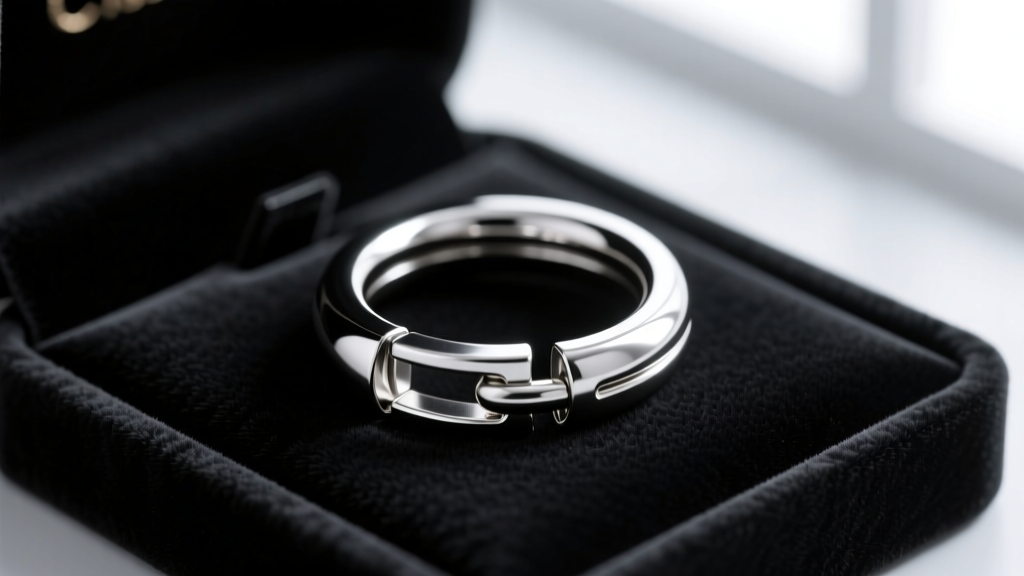
Step 2: Choosing the Right Proportions (The Golden Ratio)
When styling two hoops in adjacent piercings, visual balance is paramount. If both hoops are the exact same diameter, they will compete for space, overlap awkwardly, and create a heavy, unrefined silhouette. The industry standard for a harmonious double earring hoops look relies on a descending size ratio.
| Primary Piercing (Lobe) | Secondary Piercing (Upper Lobe/Helix) | Visual Effect | Minimum Distance Required |
|---|---|---|---|
| 12mm Hoop | 8mm Huggie or Clicker | Subtle, everyday minimalist | 6mm - 8mm |
| 15mm Hoop | 10mm Hoop | Balanced, classic curated ear | 8mm - 10mm |
| 20mm Statement Hoop | 12mm Cartilage Hoop | Bold, high-fashion editorial | 12mm+ |
Always measure the distance between your two piercings. If the distance from the bottom of your lobe piercing to the top of your upper lobe piercing is only 10mm, wearing two 12mm hoops will cause them to interlock and pull on the tissue. In tight spaces, opt for a huggie or a small, tight clicker for the secondary piercing.
Step 3: Material Selection and Skin Sensitivities
Because double earring hoops cover a larger surface area of the ear and involve multiple points of contact, material purity is non-negotiable. The friction of two hoops swinging against the ear and hair increases the likelihood of contact dermatitis if base metals are present.
- Implant-Grade Titanium (ASTM F136): The absolute gold standard for sensitive ears and newly healed piercings. It is completely nickel-free and highly polished to a mirror finish, reducing bacterial adhesion.
- 14k or 18k Solid Gold: Excellent for long-term wear, provided it is alloyed without nickel. Avoid gold-plated or gold-filled hoops for cartilage piercings, as the friction from the double-hoop setup will quickly wear away the plating, exposing reactive brass or copper cores.
- Niobium: A highly biocompatible, lightweight metal that is an excellent alternative to titanium, especially if you want anodized colors (like deep blues or purples) without using reactive paints or coatings.
The American Academy of Dermatology strongly advises avoiding 'surgical steel' or 'stainless steel' for prolonged wear, as these terms are largely unregulated and often contain up to 10% nickel, which triggers allergic reactions in a significant portion of the population.
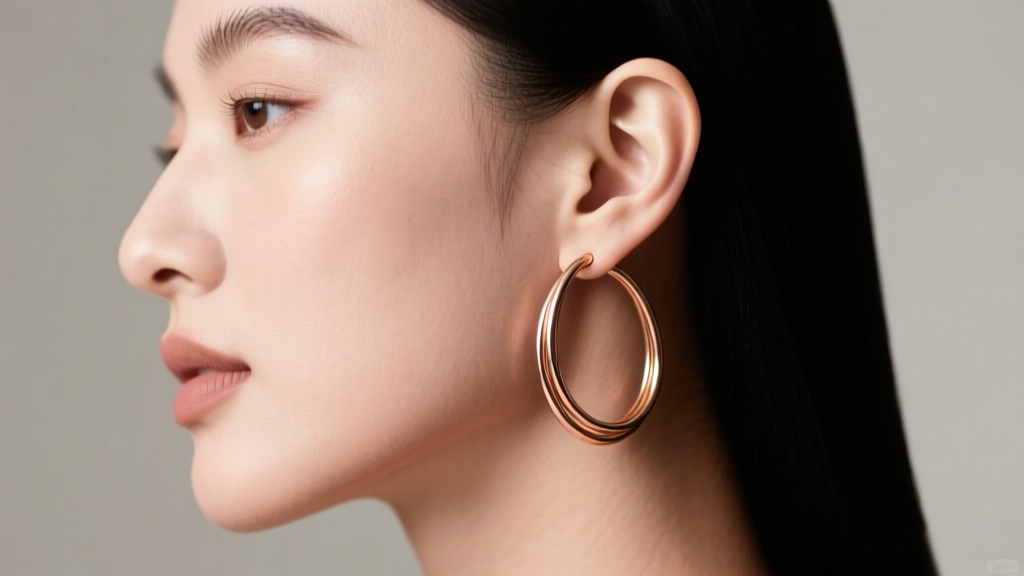
Step 4: Step-by-Step Insertion and Securing
The type of closure you choose dictates how your double earring hoops will behave throughout the day. Here is how to properly insert and secure the two most common hoop styles for a multi-piercing setup:
Inserting Hinged Clickers (Best for Cartilage)
- Wash your hands thoroughly with antibacterial soap.
- Gently pull the hinged segment open. Do not bend the metal; rely on the hinge mechanism.
- Guide the post through the piercing channel from front to back.
- Push the hinged segment closed until you hear and feel a distinct 'click'. If it does not click, the seam is not fully closed and will catch on your hair.
Inserting Seamless or Continuous Hoops (Best for Lobes)
- Grip the hoop on either side of the slit with your thumb and forefinger.
- Twist the ends laterally (side-to-side), never pull them apart vertically, which will warp the circle.
- Slide the hoop through the ear, then gently twist it back until the ends meet perfectly flush.
- Run your fingernail over the seam; it should feel completely smooth. If it catches, adjust the tension slightly.
Maintenance and Troubleshooting Common Issues
Wearing double earring hoops introduces unique mechanical challenges. Here is how to troubleshoot the most frequent issues encountered by jewelry wearers:
Issue: Hair Tangling in the Closures
Solution: Switch to front-facing hinged clickers or seamless hoops. Captive bead rings (CBRs) are notorious for trapping hair between the bead and the wire tension gap. If you must wear CBRs, ensure the bead is tightly seated using proper ring-opening pliers, not your bare hands.
Issue: Irritation Bumps on the Cartilage Hoop
Solution: Cartilage bumps are usually caused by pressure or sleeping on the jewelry. If your secondary hoop is too large, it will press against your pillow, creating an angle of pressure on the fistula. Downsize to a snug-fitting 8mm huggie or switch to a flat-back labret stud for sleeping, reserving the double hoop setup for daytime wear. For aftercare, clean the area twice daily using a sterile 0.9% sodium chloride wound wash, as recommended by professional piercing guidelines.
Issue: The Hoops Look Unbalanced
Solution: Introduce a textural contrast. If your lobe hoop is a high-polish, smooth gold wire, choose a secondary helix hoop that features a subtle detail, such as a single diamond accent, a twisted wire texture, or a matte brushed finish. This breaks up the visual repetition and guides the eye upward naturally.
By meticulously planning your gauge sizes, adhering to proportional scaling, and investing in biocompatible materials, your double earring hoops will elevate your personal style while maintaining the structural integrity and health of your piercings.


